

A common misconception in DeFi is that a multi-chain wallet solves the main difficulty of moving assets across networks. It does not. A wallet can make several blockchains visible through one interface, but it cannot erase the differences in fees, liquidity, settlement time, bridge design, or transaction risk that exist between them. Cross-chain convenience is therefore less like using one universal bank account and more like operating several markets from the same trading desk. That distinction matters for anyone using decentralized finance in the United States, where a swap that looks simple on screen can involve multiple contracts, changing gas costs, and different security assumptions.
The useful question is not merely whether a wallet supports many chains. It is whether the wallet helps the user understand what is about to happen: which network is involved, what the transaction will cost, where tokens will arrive, and what can go wrong. That is where modern wallet design, including tools such as Rabby, becomes practically important. The interface is not the protocol, but it can improve the quality of the decisions made around the protocol.
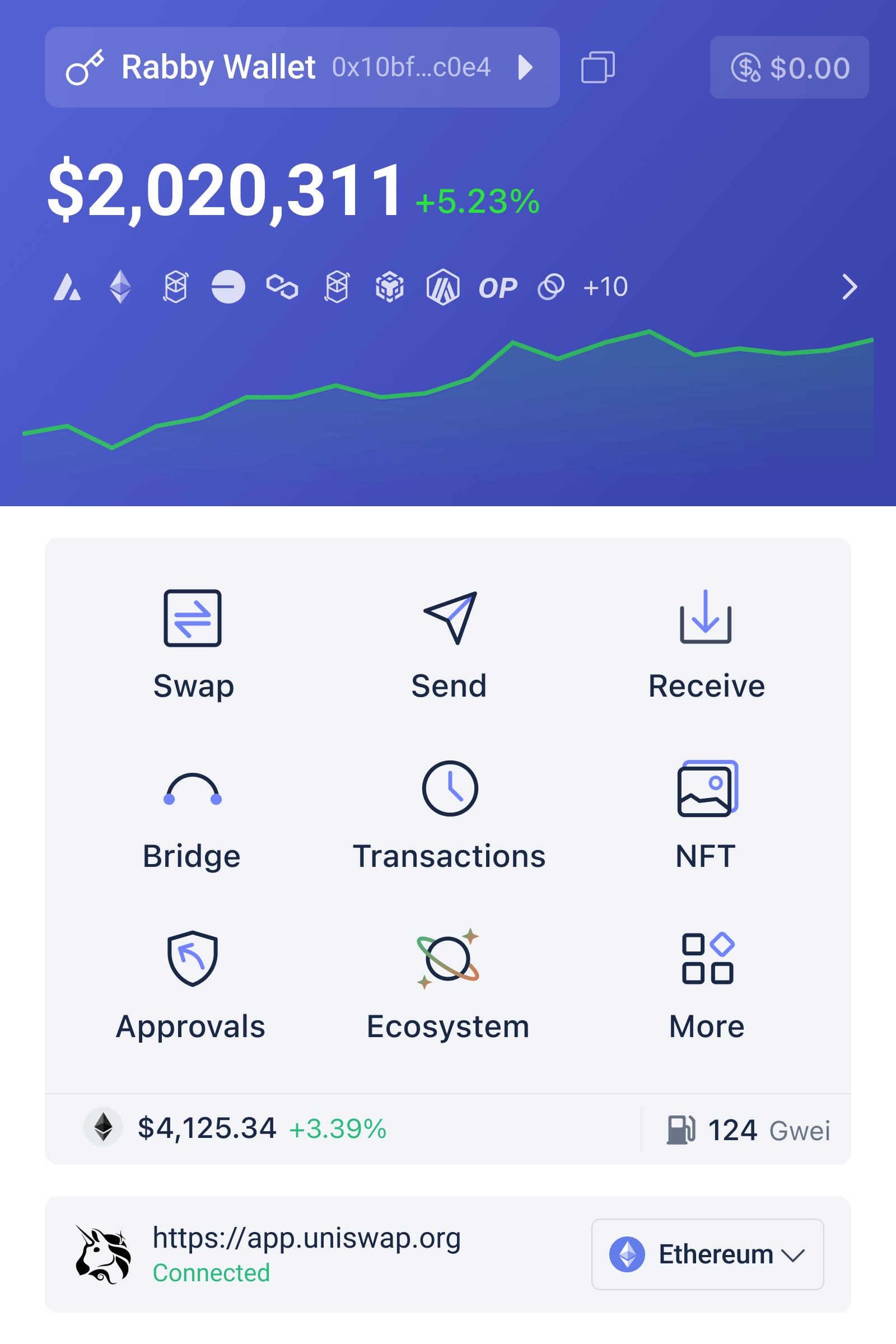
From single-chain wallets to multi-chain operating systems
Early Ethereum wallets were built around a relatively simple mental model: one address, one principal network, and a set of applications deployed in the same ecosystem. As alternative smart-contract networks and scaling systems developed, that model became inadequate. Users began holding the same type of asset on multiple chains, while decentralized exchanges, lending markets, and bridges competed for liquidity in different environments.
A multi-chain wallet responds by separating the user experience from the underlying networks. The same account may be represented across compatible chains, but the balances are not interchangeable merely because the address looks familiar. USDC on one network is not automatically the same spendable balance as USDC on another. The distinction may involve native assets, token contracts, bridge-issued representations, and the specific application accepting the token.
This is the first non-obvious lesson: a multi-chain wallet is primarily an information and authorization layer, not a cross-chain settlement layer. It displays positions and signs transactions, while blockchains and cross-chain systems determine how those transactions settle. A polished interface can reduce confusion, but it cannot make a weak bridge secure or create liquidity where none exists.
For a user preparing to install the Rabby browser extension, the sensible objective is not simply to add another wallet. It is to gain a clearer transaction workflow. Downloading the extension from a trusted source, checking the installation origin, and creating or importing an account carefully are basic security steps. A browser wallet should be treated as a signing instrument: it can authorize asset transfers and contract interactions, but it cannot reverse a mistaken approval or recover funds sent to the wrong network.
What a cross-chain swap actually involves
The phrase “cross-chain swap” hides several different mechanisms. In one case, a service may use a bridge to move an asset to a destination chain and then route a trade through a decentralized exchange. In another, liquidity providers or market makers may quote a cross-chain exchange and settle each side using their own inventory. A third design may use messaging between chains to trigger actions without transferring the original asset in a simple, visible way.
These approaches have different risk profiles. A bridge may depend on validators, multisignature signers, cryptographic proofs, or smart contracts that lock and mint representations of an asset. A liquidity route may depend more heavily on the solvency and execution quality of the intermediary or market maker. A wallet can present the route, but the user still needs to understand whether the transaction is a local swap, a bridge transfer, a routed exchange, or a combination.
There is also a timing issue. A local swap usually asks one network to execute a series of contract calls. A cross-chain operation may require a source-chain transaction, an observation or confirmation period, and a destination-chain transaction. If either side becomes congested, the experience can diverge from the initial estimate. “Completed” may mean that the source transaction succeeded, not that the destination asset is already usable.
Slippage adds another layer. Slippage is the difference between the expected and executed exchange rate. It can arise because a pool is shallow, a price changes while the transaction waits, or several steps are combined into one route. A cheap-looking route with high slippage may be more expensive than a higher-fee route with deeper liquidity. The correct comparison is total execution cost, not the gas number shown in isolation.
Gas optimization is a portfolio of decisions
Gas is the fee paid to a blockchain for computation and block space. On networks that use a native token to pay fees, the user needs that token on the specific chain where the transaction is executed. Holding ETH on one network does not necessarily pay for a transaction on another network, even when the address is identical. This simple operational detail is responsible for many failed or delayed transactions.
Gas optimization begins before the user clicks “confirm.” A practical workflow is to identify the destination chain, check whether the required native fee asset is available there, and inspect how many transaction steps the route contains. A bridge followed by a swap may cost more than a direct route, not because either action is unreasonable, but because the system is performing more work across more contracts.
Timing can matter, particularly during periods of heavy activity. Waiting for lower congestion may reduce execution fees on some networks, but waiting also exposes the user to price movement. This is a genuine trade-off rather than a universal rule. If the asset price is moving quickly, a small gas saving may be overwhelmed by market slippage. If the position is not time-sensitive, postponing a complex transaction can be rational.
Batching can sometimes reduce the number of wallet prompts or combine operations, but fewer prompts do not always mean lower economic risk. A single approval can authorize a contract to move tokens, and a single bundled transaction can contain several actions that are harder to inspect. Users should distinguish operational convenience from security improvement. Fewer clicks may be easier; they are not automatically safer.
Wallet simulation and transaction warnings can provide useful defenses by showing likely balance changes, contract interactions, or suspicious permissions before signing. These tools are best understood as screening systems, not guarantees. Simulations can be incomplete, especially when applications use unusual logic, rapidly changing state, or interactions that depend on another chain. A warning-free transaction can still be economically poor or exposed to a compromised application.
For readers who want to use Rabby in a browser-based DeFi workflow, the rabby extension download should be approached as a security-sensitive installation step rather than a routine software update. Verify the source, protect the recovery phrase offline, and use a small test transaction before moving a meaningful balance. The most sophisticated interface cannot compensate for a leaked seed phrase or a malicious signature.
The hidden trade-off: convenience versus legibility
Multi-chain interfaces reduce the need to switch between separate wallets, which is valuable. They can also create a dangerous sense that all networks are equally familiar. In practice, chain-specific differences remain important: finality may differ, token standards may behave differently, and applications may use distinct contract addresses for assets with similar names.
Legibility is therefore more valuable than visual simplicity. A good wallet should help answer four questions before signing: what asset leaves the account, what asset arrives, on which chain does each action occur, and what permissions remain afterward? If the answer to any of these is unclear, the transaction is not yet ready to approve.
One useful personal rule is to separate three budgets: the trading budget, the fee budget, and the error budget. The trading budget is the amount intended for the position. The fee budget covers native gas and possible route costs. The error budget is the amount one can afford to lose while testing an unfamiliar bridge, application, or network. This framework is deliberately conservative, but it reflects the reality that technical mistakes are part of the risk surface.
Another useful distinction is between “cheap to submit” and “cheap to complete.” A transaction may have a low source-chain fee but require an expensive destination step, a second approval, or a costly recovery process if the recipient application does not support the asset representation. Total cost should include gas, slippage, bridge or routing charges, opportunity cost from delays, and the probability of failure.
What to watch as the category matures
The next phase of multi-chain wallets will likely be judged less by the number of supported networks than by the quality of transaction explanation. If cross-chain systems become more composable, wallets will need to explain sequences rather than isolated signatures. That could mean clearer route diagrams, better distinction between native and bridged assets, and more explicit warnings when a transaction depends on an external relayer or destination-chain action.
This is a conditional outlook, not a promise. Better interfaces can reduce user error only if the underlying applications expose enough information to interpret. They also cannot eliminate protocol risk, liquidity shocks, smart-contract vulnerabilities, or the possibility that a user approves a malicious request. The important signal to monitor is whether wallets make those dependencies visible instead of hiding them behind a single “swap” button.
For US DeFi users, the practical conclusion is straightforward: use a multi-chain wallet as a control panel, not as a guarantee. Before a cross-chain swap, verify the network, asset representation, destination address, route, approvals, expected slippage, and native gas balance. Start small when the path is unfamiliar. Convenience is helpful, but understanding remains the more durable form of optimization.
Frequently asked questions
Does a multi-chain wallet merge balances across networks?
No. It can display balances from several networks in one interface, but each balance remains recorded on its own blockchain. Moving value between networks requires a bridge, a cross-chain service, or another settlement mechanism.
Why can a cross-chain swap cost more than expected?
The route may contain several contract calls, source- and destination-chain fees, bridge charges, and slippage. Network congestion or a price change can also alter the final result. Compare the complete execution cost rather than relying only on the initial gas estimate.
What is the safest way to try a new cross-chain route?
Use a small test amount, confirm the destination network and token representation, keep native gas available on the relevant chain, review approvals, and check that the destination application supports the asset. Treat wallet warnings as useful evidence, not an absolute security guarantee.