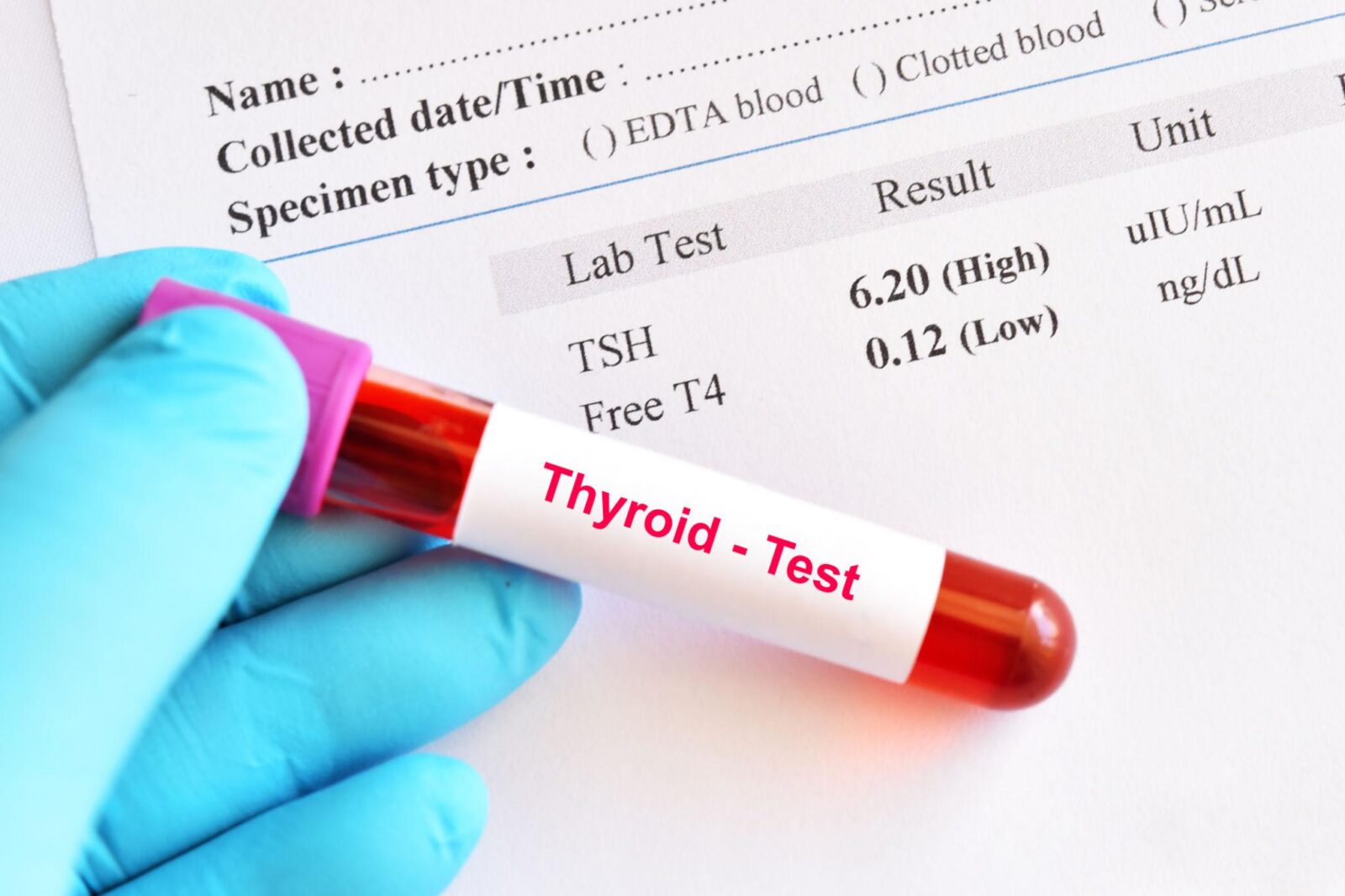


If you are considering hormone replacement therapy (HRT), you may assume the first step is getting an extensive hormone panel.
Estradiol. Progesterone. FSH. Testosterone. Cortisol. Thyroid hormones.
It sounds logical: If the treatment involves hormones, shouldn’t you measure all of your hormones before deciding what to do?
Not necessarily.
For women going through typical perimenopause or menopause, major medical guidelines generally do not recommend routine hormone blood testing simply to prove that menopause is happening before starting menopausal hormone therapy.
That does not mean bloodwork has no value.
The more useful question is:
What information does your clinician actually need before treatment, and which tests could change the treatment plan?
There is an important difference between ordering a hormone test simply to “diagnose menopause” and performing a broader health evaluation to understand symptoms, identify other possible causes, establish useful baselines, and determine whether treatment is appropriate.
That distinction is central to how 1st Optimal approaches functional health.
Rather than treating one isolated laboratory value, the goal is to evaluate symptoms, medical history, health risks, lifestyle factors, and relevant biomarkers together. Testing should answer a clinical question, not simply produce a long list of numbers.
Here is what you should know before ordering an HRT blood panel.
Do You Need Blood Tests Before Starting HRT?
For many otherwise healthy women over 45 experiencing typical symptoms of perimenopause or menopause, routine reproductive hormone testing is not required to diagnose the menopause transition.
The American College of Obstetricians and Gynecologists (ACOG) states that hormone testing is not generally recommended before starting hormone therapy for menopausal symptoms because hormone concentrations can fluctuate significantly during the menopause transition. A clinician can often make treatment decisions based on symptoms, menstrual changes, medical history, and individual risks.
NICE guidelines similarly recommend identifying perimenopause and menopause without laboratory testing in otherwise healthy people aged 45 or older who have typical symptoms. NICE specifically advises against routinely using estradiol and several other ovarian tests to identify perimenopause or menopause in this population.
Why?
Because perimenopause is not simply a state in which estrogen steadily falls from “normal” to “low.”
Hormones fluctuate.
A woman can have one estradiol result that appears relatively high and another that looks dramatically different later in the same cycle or during another cycle.
The laboratory value may be accurate at the moment the sample was collected while still providing an incomplete picture of what her hormones are doing over time.
That means a single “normal” hormone result does not necessarily rule out perimenopause.
And a single “abnormal” result does not automatically tell you which treatment you need.
Why Hormone Testing During Perimenopause Can Be Misleading
One of the biggest misconceptions surrounding HRT is that every symptom can be matched to a precise hormone number.
Human endocrine physiology is more complicated.
During the reproductive years, estrogen and progesterone naturally fluctuate throughout the menstrual cycle.
During perimenopause, those patterns can become increasingly unpredictable as ovarian function changes.
Estradiol may rise and fall substantially.
Progesterone production may change as ovulation becomes less consistent.
FSH can fluctuate as the brain attempts to stimulate the ovaries.
Periods may become shorter, longer, heavier, lighter, more frequent, or less frequent.
At the same time, women may experience symptoms including:
- Hot flashes
- Night sweats
- Sleep disruption
- Mood changes
- Brain fog
- Vaginal dryness
- Changes in sexual function
- Irregular menstrual cycles
- Changes in body composition
Because hormone concentrations can vary, a blood draw provides a snapshot rather than a continuous picture.
ACOG notes that hormone levels change considerably during the menopause transition, which is one reason routine testing may not provide useful information before initiating menopausal hormone therapy.
This is why experienced clinicians generally do not look at a single estradiol or FSH result in isolation and conclude:
“Your hormones are normal, so your symptoms cannot be hormonal.”
The clinical context matters.
Hormone Testing vs. Baseline Health Testing
This distinction is important.
When people hear that “you don’t need blood tests before HRT,” they may interpret that to mean:
Testing has no value.
That is not the same thing.
There are at least two different reasons a clinician might order laboratory tests.
1. Testing to diagnose menopause
In a typical woman over 45 with classic symptoms and menstrual changes, routine estradiol or FSH testing may add little information.
2. Testing to understand the broader health picture
Laboratory testing can sometimes help investigate symptoms that overlap with menopause, identify other health issues, establish useful baselines, or inform a broader treatment and monitoring strategy.
This is where a more comprehensive functional health evaluation may be useful.
At 1st Optimal, the purpose of testing is not simply to generate a “hormone score.”
The objective is to ask:
What else could be contributing to how this person feels?
Fatigue, weight gain, sleep disruption, hair changes, low libido, mood changes, poor exercise recovery, and brain fog are not exclusive to menopause.
They can overlap with many other health issues.
Looking beyond reproductive hormones can therefore provide a more complete picture.
What Blood Tests May Be Considered Before HRT?
There is no universal laboratory panel that every woman must complete before menopausal hormone therapy.
Testing should be individualized according to age, symptoms, medical history, medications, risk factors, and the type of therapy being considered.
Depending on the clinical situation, a clinician may consider some of the following.
1. Estradiol
Estradiol is the predominant circulating estrogen during the reproductive years.
A blood test can measure serum estradiol, but its usefulness depends heavily on why it is being ordered.
During perimenopause, estradiol can fluctuate significantly. That limits the value of a single measurement for confirming whether a woman is experiencing perimenopause.
NICE specifically recommends against using estradiol to identify perimenopause or menopause in otherwise healthy people aged 45 or older with typical symptoms.
Estradiol testing may still be relevant in selected clinical circumstances, but it should not automatically be treated as the definitive answer to whether someone “needs estrogen.”
2. Follicle-Stimulating Hormone (FSH)
FSH is produced by the pituitary gland and stimulates ovarian follicles.
As ovarian function declines, FSH frequently increases.
This is why many people associate a high FSH result with menopause.
But FSH can fluctuate during perimenopause.
A single measurement may therefore fail to provide the certainty patients expect.
For otherwise healthy women over 45 with typical menopausal symptoms, NICE recommends making the diagnosis clinically rather than routinely using laboratory testing.
FSH becomes more useful in specific situations.
NICE recommends considering serum FSH to help confirm menopause in people aged 40 to 45 with menopause-associated symptoms and menstrual changes, as well as people younger than 40 when menopause is suspected.
Age changes the clinical question.
3. Progesterone
Progesterone is primarily produced after ovulation.
That means its concentration depends strongly on whether ovulation occurred and when the blood sample was collected relative to the menstrual cycle.
A random progesterone measurement therefore does not automatically tell a clinician whether someone needs progesterone therapy.
For women with a uterus using systemic estrogen, progesterone or another progestogen may be prescribed to protect the endometrium.
That decision is generally based on the treatment being used and the presence of a uterus rather than simply whether a serum progesterone result appears “low.”
4. Testosterone
Women produce testosterone as well as estrogen.
Testosterone plays physiological roles in sexual function, bone, muscle, and other tissues.
But testosterone testing in women presents its own challenges.
Concentrations are much lower than those typically found in men, and assay accuracy becomes important.
ACOG notes that certain direct testosterone assays can be unreliable at concentrations commonly found in women and discusses the role of higher-quality analytical methods when testosterone measurement is clinically indicated.
A testosterone result therefore needs to be interpreted within clinical context rather than treated as an isolated optimization target.
What About Thyroid Testing?
This is where looking beyond sex hormones becomes especially important.
Several symptoms associated with thyroid dysfunction overlap with symptoms commonly attributed to perimenopause and menopause.
These can include:
- Fatigue
- Weight changes
- Constipation
- Temperature intolerance
- Hair changes
- Mood changes
- Sleep problems
- Changes in menstrual patterns
If a 47-year-old woman reports exhaustion, unexplained weight changes, brain fog, and irregular cycles, menopause may be part of the picture.
But assuming every symptom is caused by estrogen changes could overlook other potential contributors.
Depending on the patient’s history and symptoms, thyroid evaluation may therefore be appropriate.
The point is not that every woman seeking HRT requires an enormous thyroid panel.
The point is that symptoms should be investigated rather than automatically assigned to one hormone.
Why 1st Optimal Looks Beyond a Basic Hormone Panel
Traditional HRT conversations can sometimes become overly focused on estrogen and progesterone.
Functional medicine asks a broader question:
What systems may be contributing to this person’s symptoms and long-term health?
At 1st Optimal, testing is used as part of a broader functional health assessment rather than as a standalone diagnostic scorecard.
Depending on the individual, clinicians may evaluate relevant markers related to areas such as:
- Sex hormones
- Thyroid function
- Metabolic health
- Glucose regulation
- Lipids
- Nutrient status
- Blood counts
- Liver and kidney function
- Other clinically appropriate biomarkers
The exact testing strategy should depend on the patient.
More testing is not automatically better medicine.
The goal is useful testing.
Every test should ideally help answer a question:
What could be driving the symptoms?
Is another condition worth investigating?
Is there a baseline we should know before treatment?
Does this result change the treatment plan?
What should be monitored over time?
That is very different from ordering dozens of biomarkers simply because they are available.
Symptoms Matter as Much as Numbers
One of the problems with laboratory-driven hormone care is that patients can become fixated on achieving an “optimal” number.
But HRT is not a competition to produce the highest estradiol or testosterone level.
The purpose of menopausal hormone therapy is primarily to appropriately manage symptoms and health considerations in suitable patients.
ACOG notes that the primary goal of hormone therapy is relief of menopause-related symptoms and that most people do not require additional serum hormone testing to guide treatment.
This means clinicians need to ask questions that a laboratory cannot answer.
Are hot flashes waking you every night?
Has sleep deteriorated?
Has vaginal dryness made sex uncomfortable?
Are symptoms affecting your ability to work or exercise?
Has your menstrual cycle changed?
When did symptoms begin?
How severe are they?
What treatments have you already tried?
What medications are you taking?
What is your personal and family medical history?
Those answers can sometimes be more clinically useful than a single estradiol result.
When Hormone Testing May Be More Important
Routine testing is not necessary for every woman, but there are situations where laboratory evaluation becomes more relevant.
You Are Younger Than Expected for Menopause
Menopause occurring unusually early deserves a different evaluation.
For people younger than 40 with suspected premature ovarian insufficiency, NICE recommends diagnosis based on clinical symptoms and elevated FSH levels on two blood samples taken four to six weeks apart, rather than relying on a single test.
ACOG likewise notes that younger women experiencing menstrual changes may be offered hormone testing when early or premature menopause is suspected.
This is an important example of why blanket statements such as “hormone tests are useless” are inaccurate.
The usefulness of a test depends on the clinical situation.
Your Symptoms Are Atypical
Not every case fits neatly into the typical menopause transition.
Testing may become more useful when symptoms do not match the expected clinical picture or when another endocrine or medical condition is suspected.
The purpose is often not merely to measure estrogen.
It is to answer:
Could something else explain these symptoms?
Your Menstrual History Cannot Be Used Reliably
Certain situations make menstrual history more difficult to interpret.
For example, hormonal contraception can alter bleeding patterns and hormone measurements.
Previous hysterectomy can also remove menstrual bleeding as a clinical marker of menopause even when the ovaries remain.
NICE specifically notes that menopause can be more difficult to identify in people taking hormonal treatments.
This is another reason individualized assessment matters.
You Are Already Taking Hormones
Interpreting laboratory results becomes more complicated after hormone therapy has started.
The type of hormone, dosage, route of administration, timing of the dose, and timing of the blood draw can all affect measured concentrations.
ACOG states that routine individualized hormone testing for dosing compounded menopausal hormone therapy is not supported by strong evidence. It also notes selected circumstances in which serum measurements may help clinicians assess patients who are already using certain compounded therapies or pellets.
Testing should therefore have a defined clinical purpose.
What About Saliva Hormone Testing?
Saliva testing is frequently marketed as a more advanced way to “balance” hormones.
The evidence is considerably less impressive than the marketing.
ACOG states that salivary testing does not provide sufficiently accurate or precise assessment of hormone levels for tailoring menopausal hormone therapy and notes limitations in using adjunct hormone tests to prescribe and dose compounded bioidentical hormone therapy.
Hormones measured in saliva also do not necessarily tell clinicians how much hormone is reaching or acting within individual tissues.
So before paying for expensive hormone panels, ask:
Will the result actually change what my clinician does?
If the answer is unclear, the test may not provide much clinical value.
Do You Need Hormone Testing to Adjust Your HRT Dose?
Not necessarily.
For conventional menopausal hormone therapy, symptom response and tolerability are often more important than repeatedly chasing serum hormone concentrations.
The questions after treatment begins include:
- Are symptoms improving?
- Are there side effects?
- Is bleeding occurring unexpectedly?
- Is the treatment being used correctly?
- Has the patient’s health status changed?
- Is the dose still appropriate?
- Does the route of administration still make sense?
ACOG notes that most patients do not need additional serum hormone testing and that treatment is generally titrated according to menopausal symptom relief.
This does not mean monitoring is unnecessary.
It means monitoring and repeatedly measuring reproductive hormone levels are not the same thing.
Follow-up remains an important part of responsible HRT care.
HRT Blood Tests for Men Are Different
The conversation changes significantly when discussing testosterone replacement therapy (TRT) for men.
Unlike typical menopause care, blood testosterone measurements are central to diagnosing male hypogonadism.
The Endocrine Society recommends diagnosing hypogonadism only when a man has symptoms or signs consistent with testosterone deficiency and consistently and unequivocally low testosterone concentrations.
The diagnosis should generally be confirmed by repeating a morning fasting total testosterone measurement.
In a July 2026 statement, the Endocrine Society reiterated that diagnosis requires symptoms plus consistently low, accurately measured testosterone and highlighted the importance of at least two early-morning testosterone measurements.
This distinction matters.
For a woman over 45 with classic perimenopausal symptoms, an estradiol test may not be necessary to establish that she is going through perimenopause.
For a man being evaluated for testosterone deficiency, laboratory confirmation is a fundamental part of the diagnosis.
The phrase “hormone therapy” therefore describes several very different clinical situations.
What Else Should Be Evaluated Before HRT?
Starting hormone therapy should involve more than asking:
“What is my estrogen level?”
A thoughtful evaluation may include discussion of:
Medical History
Your clinician should understand relevant personal medical conditions and previous treatments.
Family History
Certain family health histories may influence the risk-benefit discussion.
Menstrual and Reproductive History
Age, cycle changes, pregnancies, hysterectomy, contraception, and other reproductive factors can change how symptoms and laboratory results are interpreted.
Current Medications and Supplements
These can affect symptoms, laboratory results, interactions, and treatment decisions.
Cardiometabolic Health
Blood pressure, glucose regulation, lipids, body composition, smoking history, and other factors may be relevant to the overall assessment.
Cancer History and Risk
Personal history of hormone-sensitive cancers or other significant risk factors requires individualized medical evaluation.
Abnormal Bleeding
Unexplained vaginal bleeding should not simply be assumed to be a hormone imbalance.
It deserves appropriate medical evaluation.
The goal is not to create fear around HRT.
It is to make sure treatment is being considered in the context of the whole person.
The Functional Medicine Perspective: Test With a Purpose
There are two extremes in hormone care.
At one extreme:
“Your labs are normal. Nothing is wrong.”
At the other:
“We need to test every hormone and optimize every number.”
Neither approach captures the complexity of human physiology.
A better framework is:
Symptoms + history + targeted testing + clinical judgment + ongoing monitoring.
That is the philosophy behind 1st Optimal’s functional testing approach.
Laboratory data are valuable when they are connected to a clinical question.
For example, a woman may come in believing that low estrogen is responsible for her fatigue.
A broader evaluation might reveal that her situation involves several overlapping factors.
Perhaps menopause-related sleep disruption is contributing.
Perhaps metabolic health deserves attention.
Perhaps thyroid function should be investigated.
Perhaps nutrition, recovery, or another medical issue is part of the picture.
HRT may still be appropriate.
But now the treatment plan is addressing the person rather than assuming every symptom originates from one laboratory value.
More Data Does Not Always Mean Better Care
This deserves emphasis.
Functional health should not mean ordering the largest laboratory panel possible.
Testing carries costs.
It can produce incidental findings.
Reference ranges can be misunderstood.
Normal physiological variation can be mislabeled as dysfunction.
And patients can end up chasing numbers that have little connection to symptoms or meaningful health outcomes.
The purpose of comprehensive care is not maximum testing.
It is better decision-making.
Sometimes that requires additional laboratory investigation.
Sometimes it does not.
What Should You Ask Your Clinician Before Getting Hormone Tests?
Before completing an extensive hormone panel, consider asking:
1. What question is this test trying to answer?
There should be a reason for ordering it.
2. Will the result change my treatment?
If treatment would be identical regardless of the result, ask what value the test provides.
3. Does the timing of the test matter?
For certain hormones, timing can significantly affect interpretation.
4. Could my symptoms have another cause?
Fatigue, weight gain, low libido, mood changes, and poor sleep are not specific to menopause.
5. Are we testing reproductive hormones or evaluating my overall health?
These are different objectives.
6. What will we monitor after treatment starts?
Starting treatment should not be the end of the evaluation.
Can You Have “Normal” Hormone Levels and Still Need HRT?
Potentially, yes.
A laboratory result falling within a reference interval does not automatically determine whether menopausal hormone therapy is appropriate.
Reference ranges describe measured concentrations within a population.
They do not perfectly capture symptoms, hormonal fluctuations, individual health history, or quality of life.
This is particularly relevant during perimenopause.
Hormone levels may fluctuate significantly while symptoms remain very real.
That is why ACOG advises that hormone therapy decisions can generally be made based on symptoms, menstrual changes, and medical history rather than routine hormone testing.
The opposite is also important.
An unusual hormone result does not automatically mean someone needs HRT.
Numbers require context.
Can Blood Tests Tell You the Perfect HRT Dose?
Usually not.
There is no universal estradiol number that tells every woman exactly how much estrogen she needs.
Treatment decisions depend on factors such as:
- Symptoms
- Age
- Menopause stage
- Medical history
- Treatment goals
- Type of hormone
- Route of administration
- Response to treatment
- Side effects
- Individual risk factors
A laboratory value can sometimes contribute useful information.
It should not replace clinical judgment.
What Does a More Complete HRT Evaluation Look Like?
A thoughtful hormone evaluation might follow a process like this:
Step 1: Understand the symptoms
When did they begin?
Which symptoms are most disruptive?
How have menstrual cycles changed?
How is sleep?
What has changed with energy, mood, sexual health, body composition, or recovery?
Step 2: Review medical history
The clinician evaluates relevant health conditions, medications, family history, reproductive history, and risk factors.
Step 3: Determine whether testing is actually necessary
For some women, the clinical picture may already strongly indicate perimenopause or menopause.
For others, targeted laboratory testing may help answer unresolved questions.
Step 4: Look beyond sex hormones when appropriate
If symptoms could have other causes, broader testing may be considered.
Step 5: Discuss treatment options
HRT is one potential tool.
The appropriate treatment depends on the individual.
Step 6: Monitor response
Treatment should be followed by reassessment of symptoms, tolerability, safety considerations, and overall progress.
This is far more useful than treating one laboratory result.
The Bottom Line: Do You Need Hormone Testing Before HRT?
For many women over 45 experiencing typical symptoms of perimenopause or menopause, routine hormone testing is not necessary simply to confirm menopause before considering HRT.
Major guidelines support a primarily clinical diagnosis based on factors such as age, symptoms, menstrual history, and medical history.
But that does not make laboratory testing irrelevant.
Testing may be appropriate when:
- Menopause is suspected at a younger age
- Symptoms are unusual or unclear
- Another condition may be contributing
- The patient’s medical history creates additional questions
- A clinician needs useful baseline information
- Certain therapies require specific evaluation or monitoring
The key is not testing more.
It is testing smarter.
At 1st Optimal, functional testing is designed to provide context around the whole patient rather than reduce hormone health to one estradiol, progesterone, or testosterone result.
Hormones interact with sleep, metabolic health, thyroid function, nutrition, stress, recovery, body composition, and many other aspects of health.
Understanding those relationships can help clinicians build a more individualized strategy.
Because ultimately, the goal is not to create perfect lab numbers.
The goal is to understand what is happening, determine what is clinically relevant, and build a treatment plan around the individual.
Frequently Asked Questions About HRT Blood Tests
Do I need a blood test before starting HRT?
Not necessarily. For otherwise healthy women over 45 with typical perimenopausal or menopausal symptoms, major guidelines generally do not require routine reproductive hormone testing to diagnose menopause before considering treatment. Medical history, symptoms, menstrual changes, and individual risk factors are central to the evaluation.
What hormone levels should be checked before HRT?
There is no universal hormone panel required for every patient. Estradiol, FSH, progesterone, testosterone, thyroid markers, and other laboratory tests may be considered depending on age, symptoms, medical history, and the clinical question being investigated.
Should FSH be tested before HRT?
Not routinely for most women over 45 with typical menopausal symptoms. FSH testing can be more useful when menopause is suspected between ages 40 and 45 or before age 40.
Can you start HRT if your estrogen level is normal?
A single estradiol measurement does not determine by itself whether menopausal hormone therapy is appropriate. Estradiol can fluctuate significantly during perimenopause, so symptoms, menstrual history, medical history, risks, and potential benefits need to be considered together.
Does HRT require regular hormone blood tests?
Routine serum hormone testing is not necessary for every patient using menopausal hormone therapy. Follow-up is still important, but clinicians often assess symptom response, side effects, bleeding patterns, treatment adherence, and changing health risks rather than repeatedly attempting to achieve a particular hormone number.
Are saliva hormone tests accurate for HRT?
ACOG does not recommend salivary hormone testing for tailoring menopausal hormone therapy because of limitations in accuracy, precision, and clinical interpretation.
Is hormone testing different for men considering TRT?
Yes. Laboratory confirmation is much more central to diagnosing male hypogonadism. The Endocrine Society recommends diagnosing hypogonadism when compatible symptoms are accompanied by consistently low testosterone concentrations, with confirmation using repeat morning testosterone testing.
Why would 1st Optimal order broader bloodwork if menopause can be diagnosed without it?
The purpose of broader functional testing is not necessarily to prove that menopause exists. It can help clinicians investigate other contributors to symptoms, understand metabolic and general health, establish clinically useful baselines, and create a more individualized treatment and monitoring strategy.
References:
- American College of Obstetricians and Gynecologists (ACOG). Should I Have Hormone Testing Before Starting Hormone Therapy? December 2025.
- American College of Obstetricians and Gynecologists (ACOG). Do I Need to Have Testing of My Hormone Levels During Perimenopause? September 2025.
- National Institute for Health and Care Excellence (NICE). Menopause: Identification and Management (NG23). Recommendations on identifying perimenopause, menopause, and premature ovarian insufficiency.
- American College of Obstetricians and Gynecologists (ACOG). Compounded Bioidentical Menopausal Hormone Therapy. Clinical Consensus.
- Endocrine Society. Testosterone Therapy for Hypogonadism Guideline Resources. Clinical Practice Guideline.
- Endocrine Society. Statement on Testosterone Replacement Therapy. July 16, 2026.
1st Optimal combines functional testing, medical evaluation, and personalized treatment strategies to look beyond isolated hormone numbers and understand the bigger picture of your health.
Medical disclaimer: This article is for educational purposes only and is not a substitute for individualized medical advice, diagnosis, or treatment. Hormone therapy has potential benefits, risks, contraindications, and monitoring considerations. Treatment decisions should be made with a qualified healthcare professional based on your individual medical history and circumstances.