
Why You Wake Up at 3 AM: Hormones, Cortisol, Glucose, and Sleep
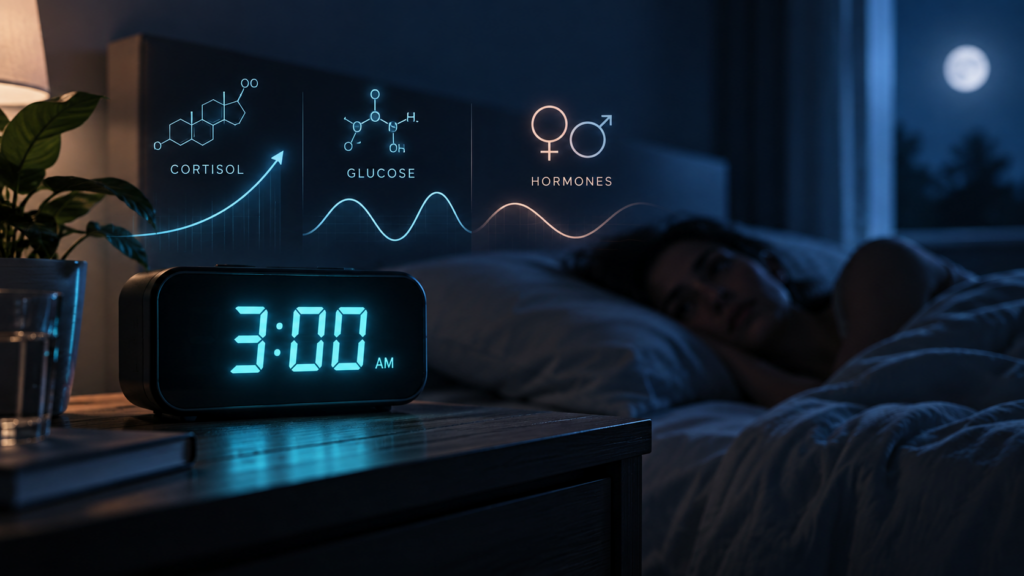
You fall asleep without a problem. Then, seemingly like clockwork, your eyes open at 2:47 AM, 3:06 AM, or 3:30 AM. You check the clock. Your body feels tired, but your brain suddenly feels awake. Maybe your heart is beating a little faster. Maybe you feel warm. Maybe your mind immediately starts running through tomorrow’s […]
What Estrogen Does Throughout the Body: Reproductive Health, Bones, Brain, Blood Vessels, and More
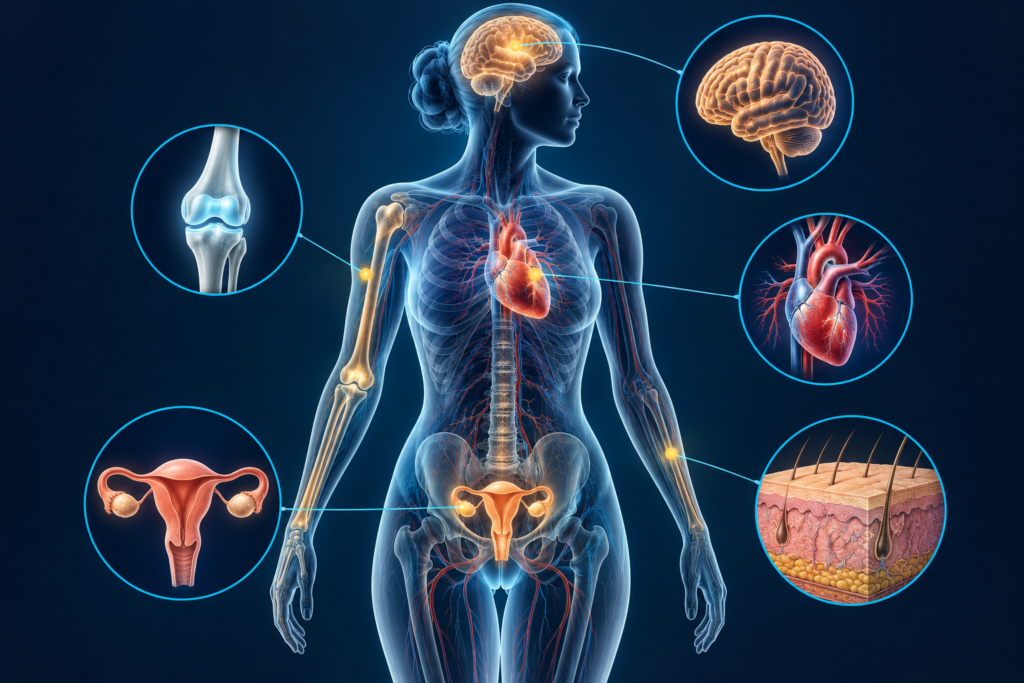
Estrogen is often described as a “female reproductive hormone.” That description is technically true, but it leaves out most of the story. Estrogen receptors are found throughout the body, including in the reproductive system, bones, brain, cardiovascular system, skin, and other tissues. That means changing estrogen levels can affect far more than menstrual cycles or […]
What Happens to Hormones During Perimenopause? Why Estrogen and Progesterone Can Feel Unpredictable

One month, you feel almost completely normal. The next, your sleep is disrupted, your period arrives early, your mood feels different, and you suddenly wonder what happened to the body you thought you understood. This unpredictability is one of the defining features of perimenopause. Contrary to the idea that hormones simply decline in a straight […]
The Perimenopause Belly: Why Fat Distribution Changes After 40

You may be eating the same foods. You may still be exercising. The number on the scale may not have changed dramatically. Yet somewhere after 40, your body starts looking different. Your waist feels thicker. Jeans fit differently. Fat that once seemed to settle around your hips and thighs now seems more interested in your […]
Testosterone for Women in Menopause: What We Know and What We Still Don’t
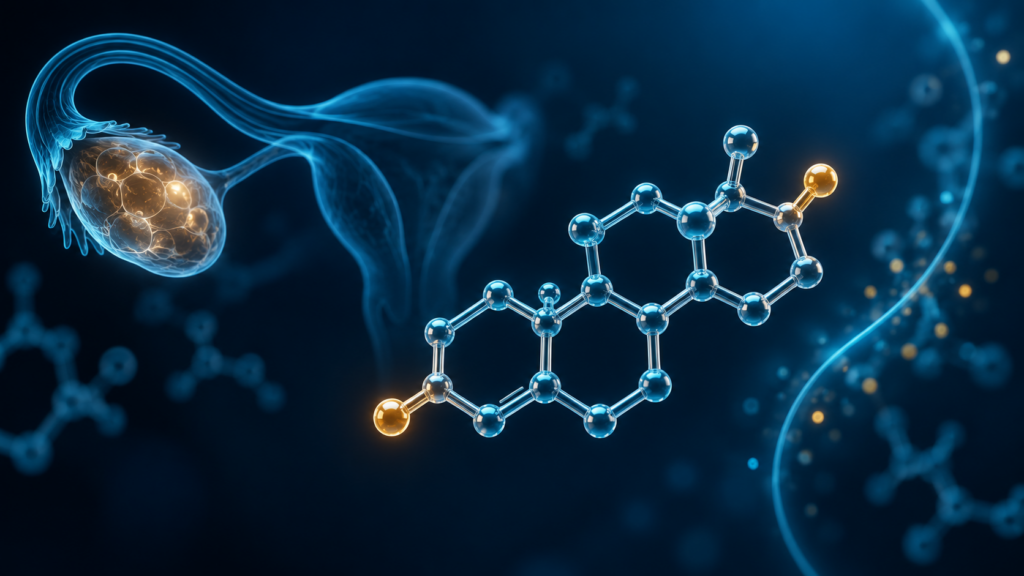
Testosterone is often thought of as a male hormone. But women produce testosterone too. And during midlife, questions about testosterone are becoming increasingly common: “Could low testosterone be causing my low libido?” “Will testosterone help my energy?” “Can it help me maintain muscle?” “Should testosterone be part of menopause hormone therapy?” The answer is more […]
Why Perimenopause Can Change Your Metabolism Before Menopause Begins

Many women notice something changing in their 40s. The workouts that used to work are not producing the same results. Fat seems to accumulate more easily around the waist. Energy may become less predictable. Sleep gets worse. Maintaining muscle becomes harder. And despite eating and exercising much the same way as before, body composition starts […]
The Hormone Reset Strategy for Women 35–55: What Actually Helps Your Hormones, Energy, Weight, and Metabolism

Your Hormones Probably Don’t Need a “Detox.” They Need a Better Strategy. If you are between 35 and 55 and suddenly feel like the habits that used to work are no longer working, you are not imagining the change. You may notice: More stubborn abdominal fat Lower energy Poorer sleep Changes in your menstrual cycle […]
Estrogen Patch vs. Estrogen Pill: Differences in Delivery and Risk

When women consider hormone therapy for menopause symptoms, one of the first decisions may seem surprisingly simple: Should estrogen come from a patch or a pill? Both can deliver systemic estrogen and may help treat symptoms such as hot flashes, night sweats, sleep disruption, and other menopause-related symptoms. But they do not travel through the […]
Estrogen, Testosterone and Desire: What Each Hormone Actually Does
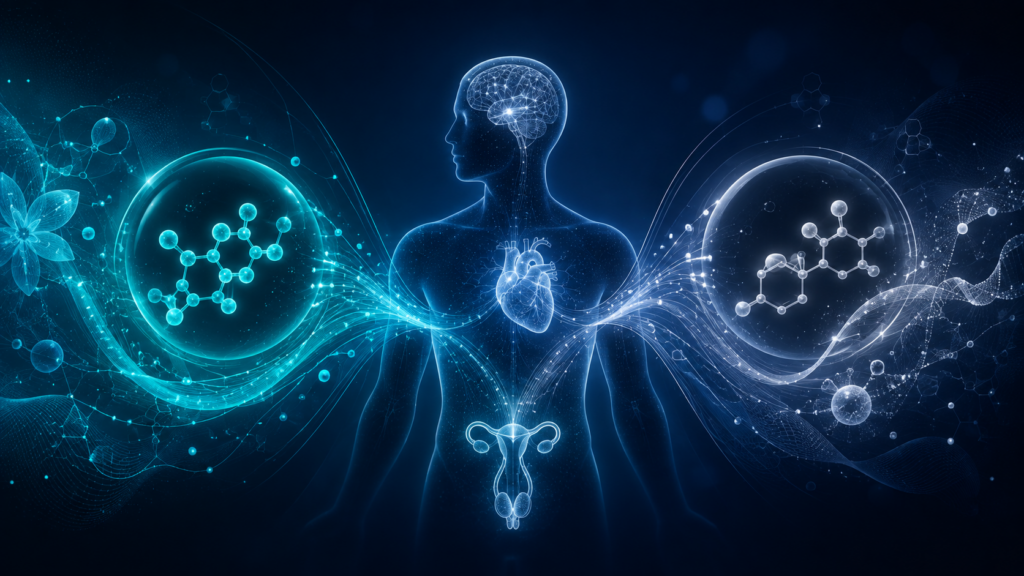
Sexual desire is often reduced to a simple hormone equation: Low estrogen = low libido. Low testosterone = low libido. Fix the hormone, and desire comes back. Human sexual function is more complicated than that. Estrogen and testosterone both influence sexual health, but they affect different parts of the sexual-response system. Hormones also interact with […]
Why More Testosterone Does Not Always Mean Better Energy or Libido

When testosterone is low, symptoms such as fatigue, reduced sex drive, lower motivation, and decreased muscle mass can sometimes improve when testosterone levels are restored to an appropriate range. That does not mean that continually increasing testosterone will produce continually better results. In reality, more testosterone does not always mean more energy, a stronger libido, […]