
Your birth certificate tells you how long you’ve been alive.
It doesn’t necessarily tell you how well you’re aging.
Two people can both be 50 years old and have dramatically different levels of strength, mobility, balance, cardiovascular fitness, and physical independence.
One may climb stairs without thinking about it, carry heavy groceries, get off the floor easily, and maintain muscle.
The other may already notice slower walking, declining strength, poor balance, longer recovery times, or difficulty performing movements that once felt effortless.
That difference is one reason researchers increasingly look beyond chronological age when studying health span, the number of years we spend functioning well.
And some surprisingly simple physical tests can provide useful clues.
Grip strength, walking speed, the ability to repeatedly stand from a chair, balance, and exercise capacity have all been associated with important health outcomes in research.
These tests cannot tell you exactly how long you will live. They also cannot diagnose your “biological age” by themselves.
But they can reveal something valuable:
How well is your body maintaining the physical capacity you need to stay strong, mobile, and independent as you age?
Here are five physical tests worth paying attention to.
What Does “Aging Well” Actually Mean?
Healthy aging is about more than avoiding disease.
It includes maintaining enough physical and metabolic capacity to continue doing the things that matter to you.
That means preserving:
- Muscle mass
- Muscular strength
- Power
- Balance
- Coordination
- Mobility
- Cardiovascular fitness
- Metabolic health
- Bone strength
- Cognitive function
- Independence
These systems are interconnected.
For example, declining muscle strength can make someone less active. Reduced activity may contribute to further muscle loss, poorer insulin sensitivity, reduced cardiovascular fitness, and eventually difficulty performing everyday tasks.
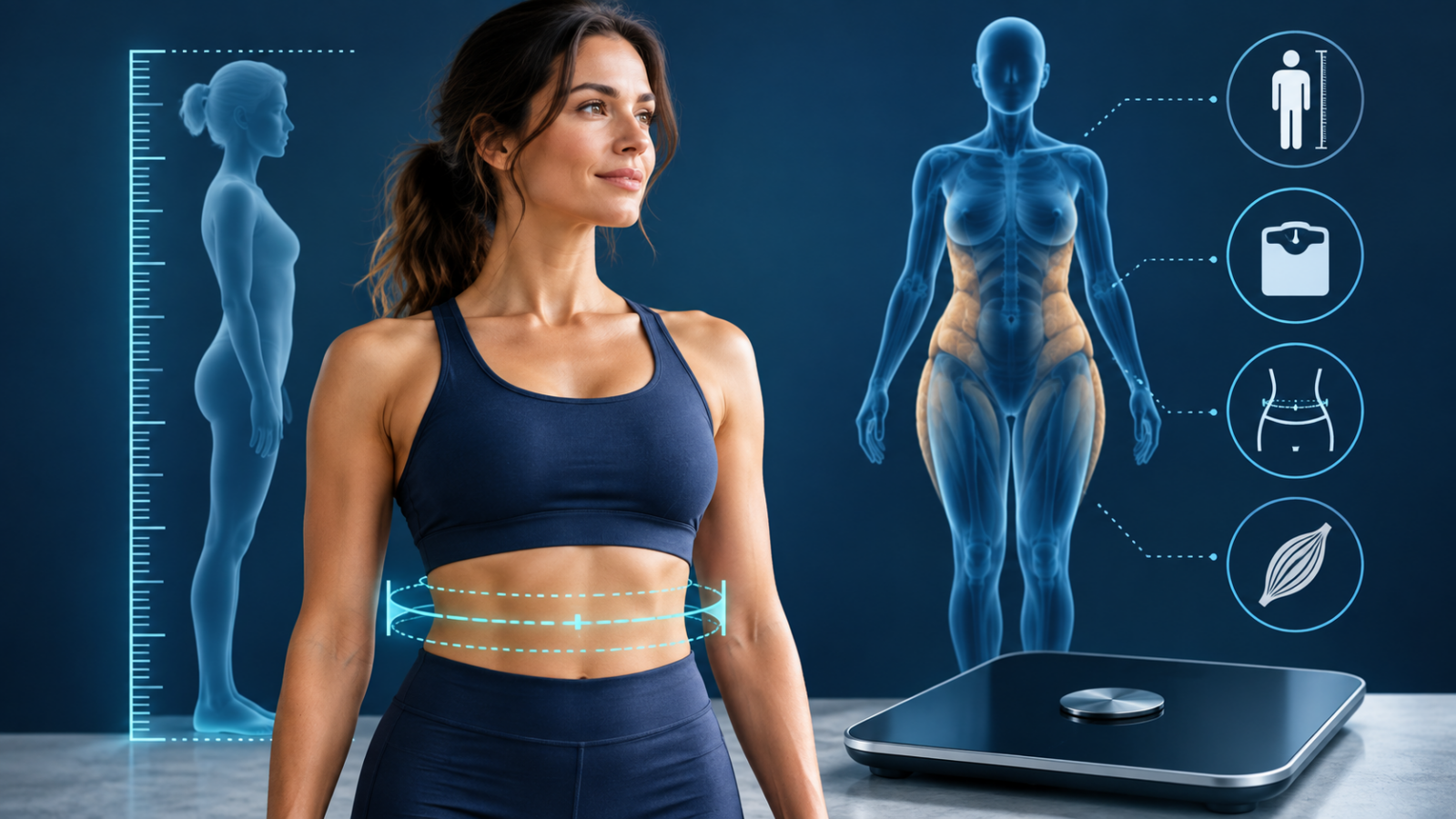
This is why functional measurements can sometimes reveal information that body weight alone cannot.
A scale may tell you that you weigh the same as you did five years ago.
It cannot tell you whether you lost muscle, gained visceral fat, became weaker, or slowed down.
Physical performance testing adds another layer to the picture.
1. Grip Strength
One of the simplest measurements in longevity research is also one of the most informative:
How strongly can you squeeze?
Grip strength is typically measured using a handheld dynamometer. You squeeze the device as hard as possible, usually several times with each hand.
Although the test measures your hand and forearm, grip strength appears to reflect much more than the muscles responsible for gripping.
It can act as a general marker of overall muscular function.
Research involving older adults has repeatedly linked lower grip strength with poorer functional outcomes and higher mortality risk. An umbrella review also concluded that grip strength can be a useful indicator of general health status, disability, and mortality risk.
A large systematic review and meta-analysis found that participants in the weakest quarter for grip strength had a significantly higher rate of all-cause mortality than those in the strongest quarter.
Why Grip Strength Matters With Age
Beginning in midlife, maintaining skeletal muscle becomes increasingly important.
Without adequate resistance training, protein intake, recovery, and overall health support, muscle mass and strength can gradually decline.
Strength loss can eventually affect:
- Carrying groceries
- Opening containers
- Lifting luggage
- Household tasks
- Training performance
- Stability
- Independence later in life
Muscle is also metabolically active tissue.
Healthy skeletal muscle plays an important role in glucose disposal and metabolic health, making muscle preservation relevant far beyond appearance.
How Is Grip Strength Tested?
The most standardized approach uses a handgrip dynamometer.
Your clinician or trainer may have you:
- Hold the dynamometer in one hand.
- Keep the arm in the standardized testing position.
- Squeeze as hard as possible.
- Repeat the test.
- Compare results between hands and against appropriate reference values.
There is no universal number everyone should achieve.
Grip strength differs according to factors including age, sex, body size, injury history, and testing protocol.
What may be particularly useful is monitoring your performance over time.
A noticeable decline can be a reason to investigate what has changed.
2. Walking Speed
How fast do you normally walk?
It sounds almost too simple to matter.
But walking speed has been studied extensively as a marker of physical function in older adults.
In a pooled analysis involving 34,485 community-dwelling adults aged 65 and older, faster gait speed was associated with better survival. Researchers found that survival increased across the range of walking speeds measured.
Other research has similarly found associations between walking speed and health outcomes.
Why Walking Speed Can Reveal So Much
Walking is actually a complex physiological task.
Your body must coordinate:
- Muscle strength
- Balance
- Joint mobility
- Nervous-system function
- Vision
- Cardiovascular capacity
- Lung function
- Coordination
When one or several of these systems begin declining, walking may gradually become slower.
That is why gait speed can function as a broad snapshot of physical capacity.
A Simple Walking Speed Test
Clinical gait tests commonly measure how long someone takes to walk a predetermined distance at their normal pace.
For example, someone may walk several meters while their time is recorded.
Walking speed is then calculated:
Walking speed = distance ÷ time
However, testing protocols differ.
Rather than becoming obsessed with one number, consider the bigger question:
Are you maintaining the ability to walk quickly and confidently as you get older?
You may also notice changes outside formal testing.
Do you:
- Walk slower than people your age?
- Avoid stairs?
- Become unusually tired walking uphill?
- Need more frequent breaks?
- Feel less stable while walking?
- Notice that your stride has become shorter?
These changes may be worth discussing with a healthcare professional.
3. The Sit-to-Stand Test
Try standing up from a chair.
Now sit back down.
Repeat it several times.
Simple?
That movement requires a surprising combination of lower-body strength, balance, coordination, and power.
That is why variations of the chair stand test are frequently used when assessing physical function.
A systematic review found that the five-repetition chair stand performed at a fast pace was among the most commonly used protocols in research involving older adults. The authors noted that chair stand testing can provide valuable information about mobility and frailty.
What Does the Sit-to-Stand Test Measure?
Primarily, it challenges the muscles responsible for extending the hips and knees.
That includes major muscle groups such as your:
- Quadriceps
- Glutes
- Hamstrings
- Core musculature
These muscles matter enormously for long-term independence.
You use them when you:
- Get out of a chair
- Get off the toilet
- Climb stairs
- Pick something up
- Get out of a car
- Rise from the floor
- Hike
- Run
- Train
Losing lower-body strength can therefore affect daily life surprisingly quickly.
The Five-Times Sit-to-Stand Test
A common version involves:
- Sitting in a stable chair.
- Crossing your arms or avoiding pushing with your hands.
- Standing completely.
- Sitting back down.
- Repeating until you have completed five stands.
The total time is recorded.
Testing protocols and interpretation can differ based on age and clinical population, so this should not be treated as a universal pass-or-fail longevity test.
Instead, think of it as another way to measure whether your lower-body function is improving, maintaining, or declining.
Why Power Matters Too
Muscle mass receives a lot of attention in longevity discussions.
But muscle power matters as well.
Strength describes how much force you can produce.
Power incorporates how quickly you can produce that force.
That becomes important when you suddenly need to catch yourself, climb stairs quickly, or recover from losing your balance.
Maintaining the ability to move forcefully and confidently may therefore be an important part of healthy aging.
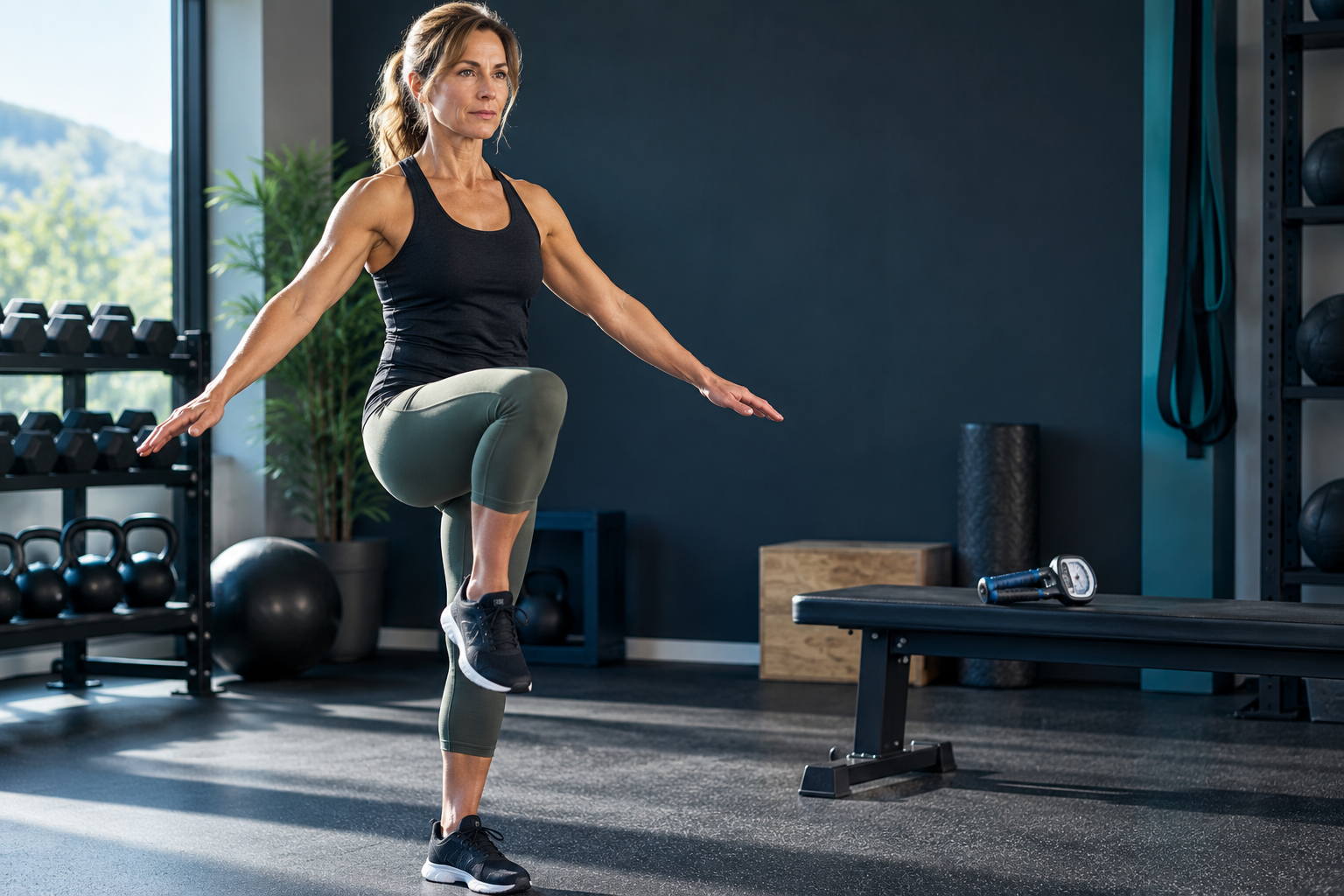
4. Single-Leg Balance
Stand next to something sturdy for safety.
Lift one foot off the ground.
How long can you maintain your balance?
Balance tends to receive less attention than muscle or cardiovascular fitness, but it is an essential component of physical function.
Research examining physical capability has found associations between standing balance and mortality in older populations, although balance performance should never be interpreted as a direct prediction of an individual person’s lifespan.
Why Balance Changes With Age
Balance depends on multiple systems communicating simultaneously.
Your brain receives information from:
- Your eyes
- Your inner ear
- Sensory receptors in muscles and joints
It then coordinates muscular responses that keep you upright.
Aging, inactivity, neurological problems, medications, vision changes, muscle weakness, and other health conditions can interfere with this process.
Try the Single-Leg Stand
If it is safe for you:
- Stand beside a sturdy counter or support.
- Keep your eyes open.
- Lift one foot from the floor.
- Start timing.
- Stop if the raised foot touches down or you need support.
Safety matters more than your score.
Anyone with a history of falls, significant dizziness, neurological disease, joint problems, or known balance impairment should consider doing balance testing under professional supervision.
Can Balance Be Improved?
Yes.
Balance is trainable.
Depending on your health and ability, useful exercises may include:
- Single-leg stands
- Split-stance exercises
- Lunges
- Step-ups
- Loaded carries
- Controlled direction changes
- Strength training
- Tai chi
- Yoga
- Appropriate agility work
Resistance training can also indirectly support balance by improving the muscular strength needed to correct your position quickly.
5. Push-Up Capacity
The final test is different from the first four because the evidence is more population-specific.
Push-ups combine upper-body strength, muscular endurance, core stability, and cardiovascular demand.
One widely cited study followed 1,104 occupationally active adult men for approximately 10 years.
Researchers found that higher push-up capacity at baseline was associated with lower incidence of cardiovascular disease events. Men capable of completing more than 40 push-ups had substantially fewer cardiovascular events than men completing fewer than 10.
That result generated considerable attention.
But there is an important limitation.
The participants were active adult men, specifically firefighters. Therefore, the results should not be interpreted as meaning everyone must perform 40 push-ups to have a healthy heart.
Women, older adults, sedentary populations, and people with different health conditions may have very different performance ranges.
Why Push-Ups Can Still Be Useful
A push-up requires several systems to work together.
You need:
- Chest strength
- Shoulder stability
- Triceps strength
- Core stability
- Muscular endurance
- Coordination
That makes it a useful functional fitness benchmark for people capable of safely performing the movement.
Rather than chasing an arbitrary number, consider tracking your own capacity.
Can you perform more high-quality push-ups than six months ago?
Can you maintain good technique?
Has your strength declined?
Those trends may tell you more than comparing yourself with someone else.
What These 5 Tests Have in Common
Grip strength.
Walking speed.
Chair stands.
Balance.
Push-ups.
They appear very different.
But together, they reflect several characteristics strongly connected to functional aging:
Strength. Mobility. Power. Coordination. Balance. Exercise capacity.
These are the physical reserves that help determine what your body can actually do.
And that distinction matters.
A normal body weight does not guarantee good muscular function.
Normal-looking routine bloodwork does not automatically mean someone has excellent cardiovascular fitness.
And looking fit does not necessarily mean someone has adequate balance, mobility, or metabolic health.
Healthy aging requires looking at the whole system.
Physical Age Is More Than Muscle Strength
These five tests are useful, but they represent only one part of the aging equation.
At 1st Optimal, we believe longevity assessment should go beyond asking:
“How old are you?”
A more useful question is:
“How well are the systems responsible for keeping you healthy functioning?”
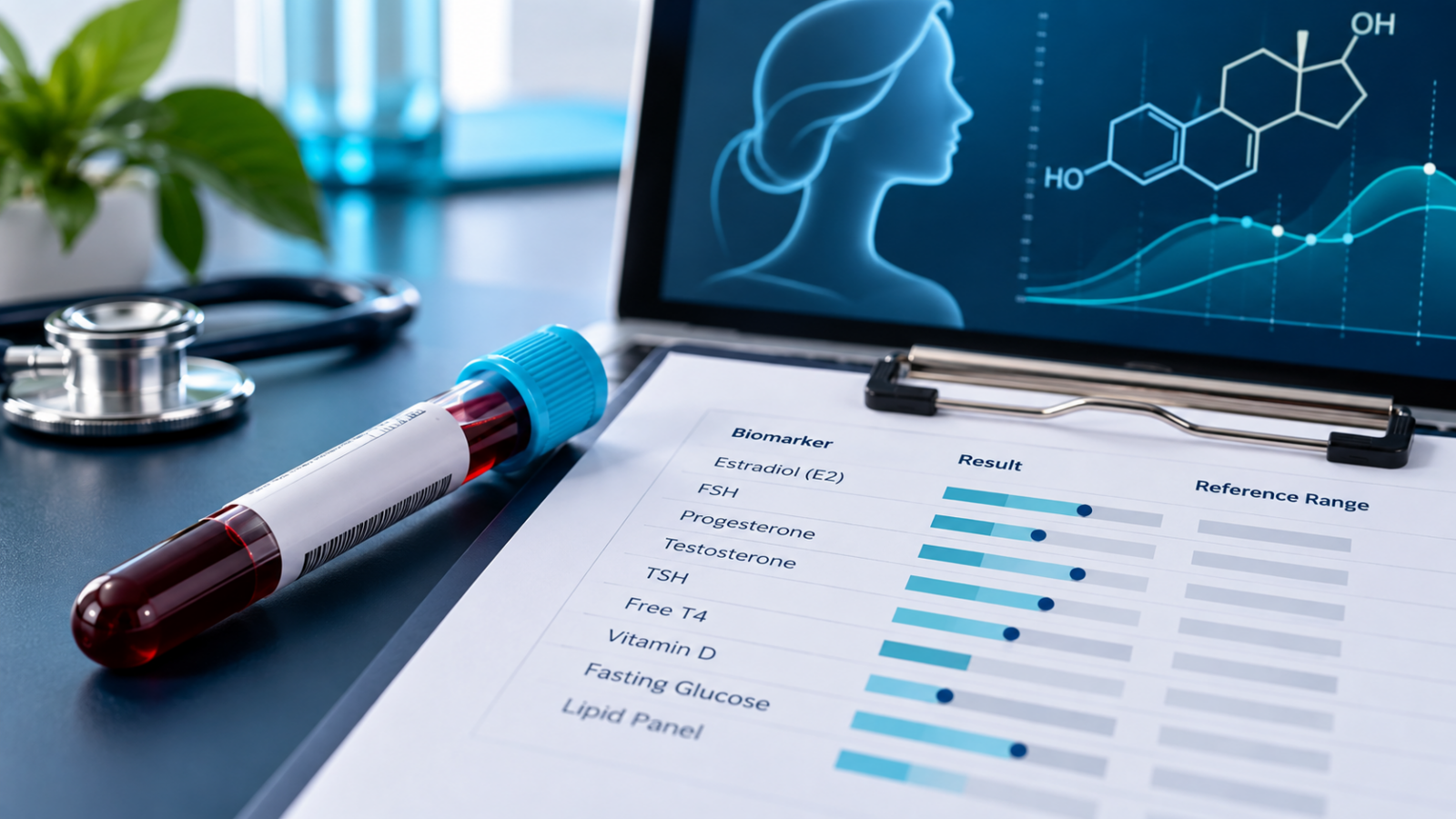
That may involve examining physical performance alongside biomarkers and health history.
Depending on the individual, a more comprehensive functional health evaluation may include assessment of:
Metabolic Health
Markers may include:
- Fasting glucose
- Fasting insulin
- HbA1c
- Lipid markers
- Blood pressure
- Waist circumference
- Body composition
Hormone Health
Depending on symptoms, age, sex, and medical history, clinicians may evaluate markers related to:
- Testosterone
- Estradiol
- Progesterone
- Thyroid function
- DHEA-S
- Cortisol physiology
Hormones should never be interpreted from one isolated value without considering symptoms, medications, health history, timing, and other relevant laboratory findings.
Inflammation and Cardiovascular Risk
A clinician may also consider markers such as:
- hs-CRP
- ApoB
- Lipoprotein(a)
- Triglycerides
- HDL cholesterol
- Blood pressure
Testing needs to be individualized based on risk and medical history.
Nutrient Status
Deficiencies or suboptimal nutritional status may contribute to fatigue, impaired training, poor recovery, or other symptoms.
Depending on the situation, evaluation might include:
- Vitamin D
- Vitamin B12
- Folate
- Iron markers
- Ferritin
Again, more testing is not automatically better.
The goal is to use appropriate testing to answer specific clinical questions.
What If You Perform Poorly on One of These Tests?
A low score does not mean you are destined to age poorly.
It is information.
And information can be useful because many components of physical function are modifiable.
For example, declining strength may lead you to examine:
- Resistance training frequency
- Protein intake
- Total calorie intake
- Sleep
- Recovery
- Hormonal health
- Injury history
- Medications
- Nutrient deficiencies
- Chronic disease
- Training consistency
Poor walking performance might warrant evaluating cardiovascular fitness, lower-body strength, mobility, pain, balance, or neurological function.
Poor balance might suggest the need for strength and balance training or a clinical evaluation if the change is unexplained.
The point is not to fear the result.
The point is to identify where your physical reserve may need attention.
How to Improve Your Functional Age
You cannot stop chronological aging.
But you can influence many of the systems that determine how aging feels.
1. Strength Train Consistently
Resistance training is one of the most important tools available for preserving muscular strength and function.
A balanced program can include movements such as:
- Squats
- Hinges
- Rows
- Presses
- Pulling movements
- Lunges
- Step-ups
- Loaded carries
Training should match your experience, health status, and orthopedic limitations.
Progressive overload is important.
Your body needs a reason to maintain muscle.
2. Eat Enough Protein
Protein provides amino acids necessary for maintaining and repairing skeletal muscle.
Protein requirements vary based on:
- Age
- Body size
- Training
- Health status
- Calorie intake
- Goals
Rather than relying on one universal target, distribute adequate high-quality protein throughout the day based on your individual needs.
3. Build Cardiovascular Fitness
Strength is only one side of healthy aging.
Your heart, lungs, blood vessels, and mitochondria also need regular demand.
A well-rounded program may combine:
- Walking
- Cycling
- Swimming
- Hiking
- Zone 2-style aerobic work
- Higher-intensity intervals when appropriate
The best approach depends on your health and fitness level.
4. Protect Your Sleep
Training creates the stimulus.
Recovery helps you adapt.
Chronic sleep restriction can interfere with appetite regulation, glucose metabolism, exercise performance, recovery, and overall well-being.
Most adults should treat consistent, high-quality sleep as part of their health strategy rather than something they sacrifice after everything else gets done.
5. Maintain Mobility and Balance
You do not need hour-long stretching sessions every day.
But maintaining usable ranges of motion and practicing balance can help preserve movement confidence.
Include movements that challenge:
- Hip mobility
- Ankle mobility
- Shoulder mobility
- Single-leg stability
- Coordination
The goal is not extreme flexibility.
It is maintaining enough mobility to move comfortably and effectively.
6. Investigate Unexplained Declines
This is especially important.
If you are training consistently but suddenly becoming weaker, more fatigued, slower, or less capable, do not automatically assume:
“I’m just getting older.”
There may be another explanation.
Potential contributors can include:
- Poor sleep
- Inadequate nutrition
- Iron deficiency
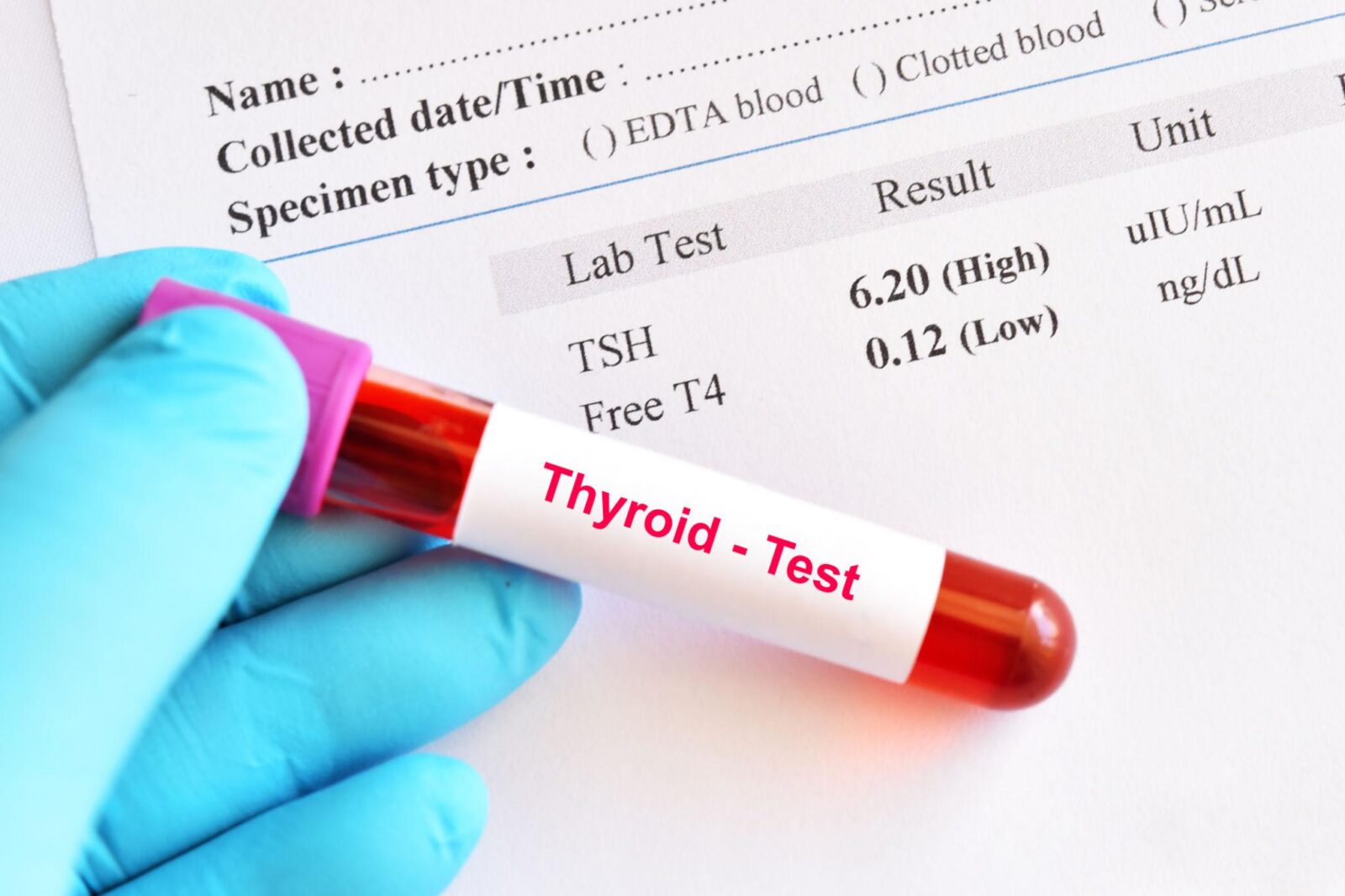
- Thyroid dysfunction
- Hormonal changes
- Medication effects
- Chronic stress
- Cardiovascular issues
- Metabolic dysfunction
- Injury
- Illness
This is where functional testing and medical evaluation can become valuable.
Your Functional Health Dashboard
Instead of treating one test as the ultimate longevity score, think of these measurements as a dashboard.
You might track:
| Physical Capacity | Simple Measurement |
|---|---|
| Strength | Grip strength |
| Mobility | Walking speed |
| Lower-body function | Sit-to-stand |
| Stability | Single-leg balance |
| Muscular endurance | Push-ups |
Then combine these observations with appropriate laboratory testing, body composition, cardiovascular health, sleep, nutrition, symptoms, and medical history.
The goal is not to create anxiety about aging.
The goal is to catch declining function early enough to do something about it.
The Bigger Question: How Much Physical Reserve Do You Have?
Imagine two 45-year-olds.
Both feel relatively healthy.
Both have normal body weight.
Both work demanding jobs.
But one strength trains three times per week, walks regularly, sleeps seven to eight hours, maintains muscle, and has strong metabolic markers.
The other has slowly lost muscle, rarely exercises, sleeps five hours most nights, has declining insulin sensitivity, and becomes winded climbing several flights of stairs.
Their chronological age is identical.
Their physiological reserve may not be.
That reserve becomes increasingly important with each passing decade.
The goal of longevity should not simply be reaching 80, 90, or 100.
It should be preserving enough strength, energy, mobility, cognition, and independence to actually enjoy those years.
When Should You Start Paying Attention to Functional Aging?
Earlier than most people think.
You do not need to wait until your 60s or 70s.
Your 30s, 40s, and 50s are valuable decades for building and maintaining physical reserve.
This is particularly important because many age-related changes can occur gradually.
You may not notice a small reduction in strength this year.
Or slightly slower walking next year.
Or gradually worsening metabolic markers.
But those small changes can accumulate.
Tracking functional capacity provides another way to notice the trend before it becomes a major limitation.
Frequently Asked Questions
What is the best physical test for longevity?
There is no single physical test that can accurately predict an individual’s lifespan. Grip strength, walking speed, chair-rise ability, balance, and other measures of physical capacity have all been associated with health outcomes in research.
They are best considered complementary measurements rather than competing longevity scores.
Is grip strength really linked to longevity?
Research has consistently found associations between lower grip strength and higher mortality risk in population studies. However, grip strength is a marker of physical function, not a direct cause-and-effect longevity calculator.
Does walking speed predict lifespan?
Studies of older adults have found strong associations between gait speed and survival. One pooled analysis of more than 34,000 adults aged 65 and older found that faster gait speed was associated with longer survival.
That does not mean walking faster itself guarantees a longer life. Gait speed likely captures information from several physiological systems simultaneously.
How long should I be able to balance on one leg?
Balance performance varies considerably with age, health, testing conditions, and other factors. Rather than treating one cutoff as universal, track your performance over time and discuss significant difficulties or unexplained deterioration with a healthcare professional.
Are 40 push-ups a sign of good heart health?
Not universally.
A study of occupationally active adult men found substantially fewer cardiovascular events among participants capable of more than 40 push-ups compared with those capable of fewer than 10. But the study population was specific, so its findings should not be generalized into a universal 40-push-up target.
Can you improve your biological age?
“Biological age” can mean different things depending on how it is measured.
However, many factors associated with healthy aging are modifiable, including muscle strength, cardiovascular fitness, metabolic health, sleep, nutrition, and body composition.
Rather than chasing one biological-age score, focus on improving the underlying systems.
Final Takeaway
Your age tells us how many birthdays you have had.
Your physical function tells us something different.
Can you generate force?
Can you move quickly?
Can you stand up easily?
Can you balance?
Can you maintain muscular endurance?
These abilities are not just fitness achievements.
They are part of the physical reserve that supports independence, performance, and healthspan.
Grip strength, walking speed, chair stands, balance, and push-up capacity cannot predict exactly how long you will live.
But research suggests that physical capability contains meaningful information about how well the body is functioning as it ages.
And the most important part is that these measurements give you something actionable.
Measure. Identify weaknesses. Train them. Retest.
At 1st Optimal, we take a broader approach to healthy aging by looking beyond a single number or symptom. Functional testing, comprehensive lab work, health history, lifestyle, recovery, metabolic health, and hormone health can help create a clearer picture of what may be limiting your performance today and what deserves attention for the years ahead.
Because longevity is not simply about adding years to your life.
It is about maintaining the capacity to use them.
References
- Studenski S, et al. Gait Speed and Survival in Older Adults. JAMA. 2011;305(1):50-58.
- Cooper R, et al. Objectively Measured Physical Capability Levels and Mortality: Systematic Review and Meta-analysis. BMJ. 2010;341.
- Mehmet H, Yang AWH, Robinson SR. What Is the Optimal Chair Stand Test Protocol for Older Adults? A Systematic Review. Disability and Rehabilitation. 2020;42(20):2828-2835.
- Wu Y, et al. Handgrip Strength and Health Outcomes: Umbrella Review of Systematic Reviews With Meta-analyses of Observational Studies. Journal of Sport and Health Science. 2021.
- García-Hermoso A, et al. Thresholds of Handgrip Strength for All-Cause, Cancer, and Cardiovascular Mortality: A Systematic Review With Dose-Response Meta-analysis. Ageing Research Reviews. 2022.
- Yang J, et al. Association Between Push-up Exercise Capacity and Future Cardiovascular Events Among Active Adult Men. JAMA Network Open. 2019;2(2).
Medical Disclaimer: This article is for educational purposes only and is not intended to diagnose, treat, cure, or prevent disease. Physical performance tests may not be appropriate for everyone. Consult a qualified healthcare professional before attempting testing or making significant changes to your exercise, nutrition, or medical treatment.