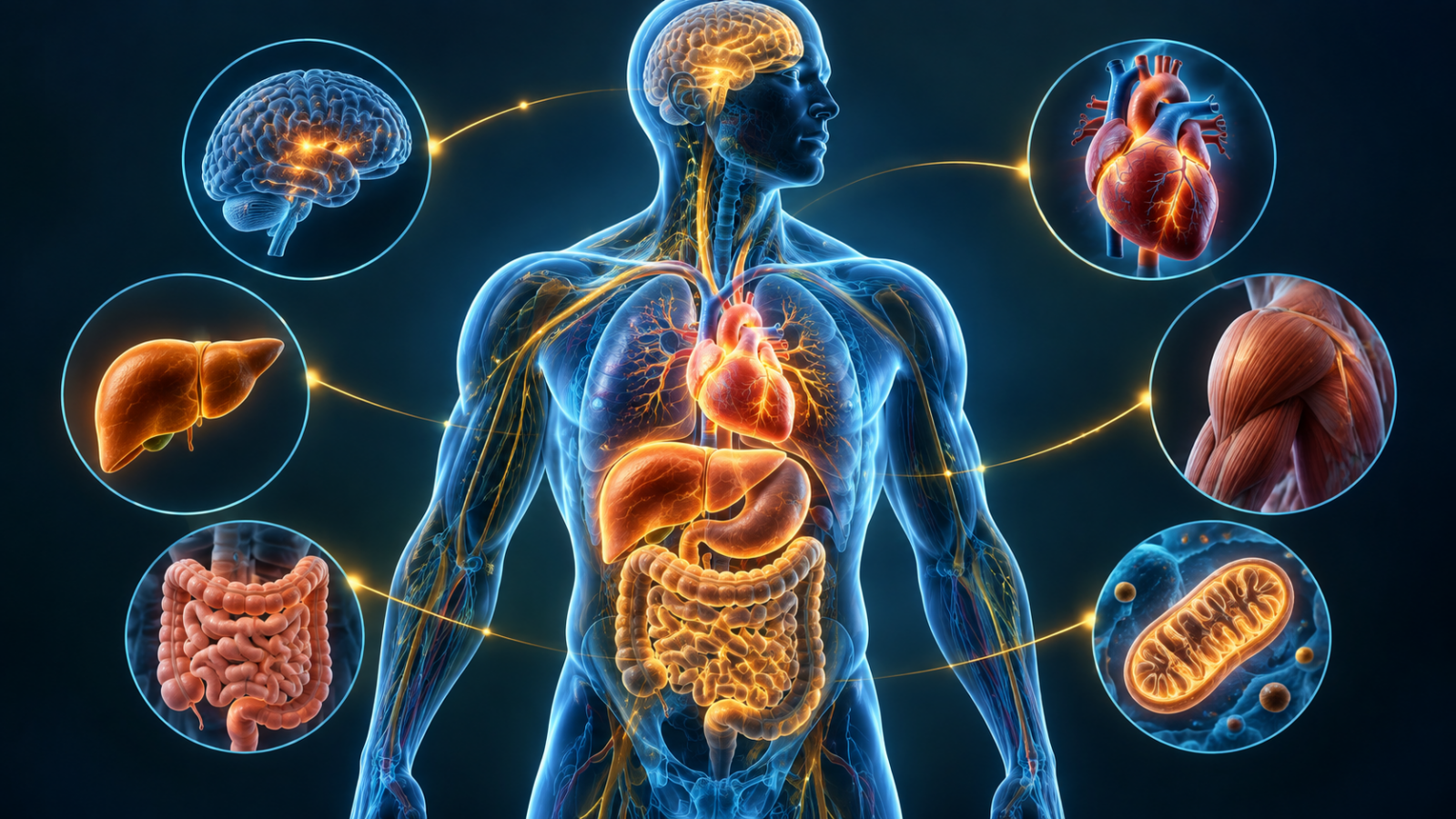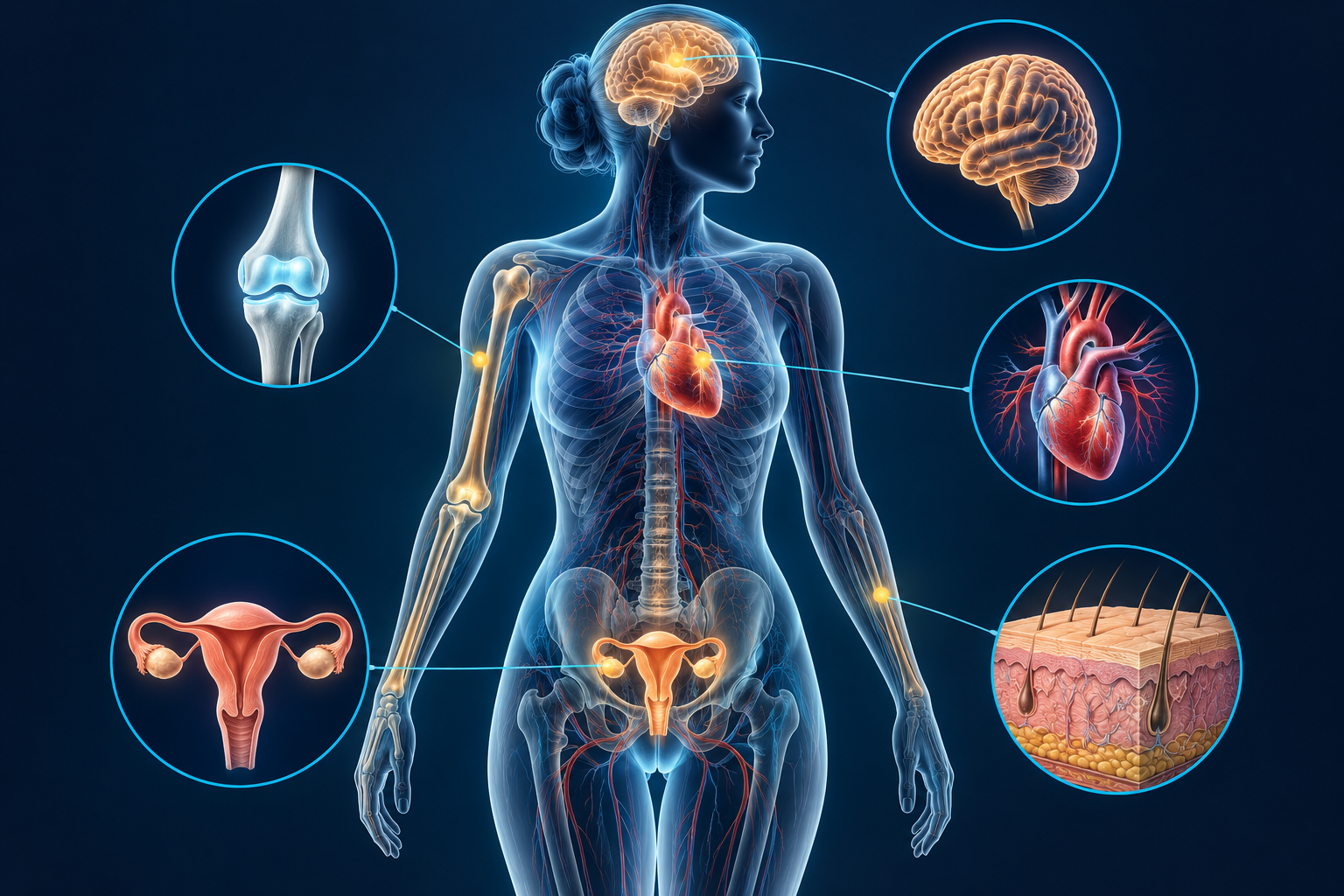

Two people can weigh the same, have a similar BMI, and even wear the same clothing size, yet have very different metabolic health.
One reason is where their body stores fat.
Body fat is not one uniform tissue. Fat stored directly beneath your skin behaves differently from fat stored deep inside your abdomen around your organs. That distinction matters because visceral fat and subcutaneous fat are associated with different health risks.
Visceral fat, in particular, has been strongly linked with insulin resistance, cardiovascular disease, type 2 diabetes, metabolic dysfunction, and other cardiometabolic problems.
Understanding the difference can help explain why the number on the scale does not always tell the full story about your health.
What Is Body Fat Actually For?
Fat often gets treated as something the body simply needs to eliminate.
That is not accurate.
Adipose tissue, the scientific term for body fat, serves several important functions. It helps:
- Store energy
- Insulate the body
- Protect organs
- Produce and regulate hormones and signaling molecules
- Support normal metabolic function
The problem is not simply “having fat.”
The amount, location, and function of that fat all matter.
Two of the most important categories are subcutaneous adipose tissue and visceral adipose tissue.
What Is Subcutaneous Fat?
Subcutaneous fat is the fat stored directly underneath your skin.
It is the soft fat you may be able to pinch around your:
- Abdomen
- Hips
- Thighs
- Buttocks
- Upper arms
Most of the body’s stored fat is subcutaneous. Research suggests that roughly 80% or more of total body fat may be stored in subcutaneous tissue in many people.
Subcutaneous fat is not automatically harmless. Excessive amounts can still contribute to overweight, obesity, impaired mobility, and other health concerns.
But metabolically, it generally behaves differently from visceral fat.
In fact, certain subcutaneous fat depots, particularly fat stored around the hips and thighs, may act as a relatively safe place for the body to store excess energy rather than allowing those lipids to accumulate around organs.
What Is Visceral Fat?
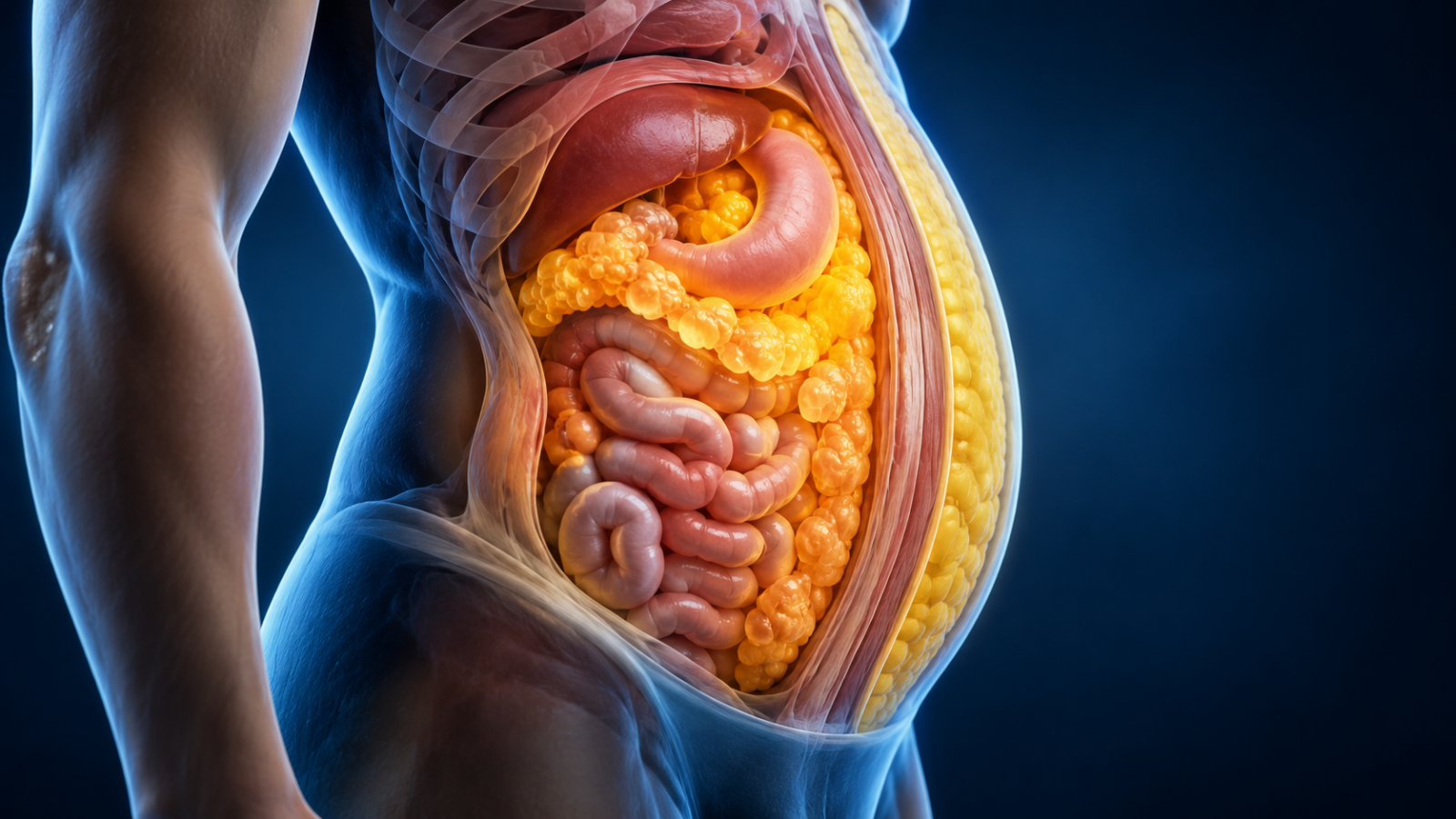
Visceral fat is stored deeper inside the abdominal cavity.
Instead of sitting directly underneath your skin, it surrounds internal organs such as the:
- Liver
- Intestines
- Pancreas
- Stomach
You cannot simply grab visceral fat with your fingers because it sits beneath the abdominal muscles.
Someone can therefore have significant visceral fat without necessarily looking dramatically overweight.
That distinction is important.
Research consistently associates excessive visceral fat with greater cardiometabolic risk than subcutaneous fat.
Visceral Fat vs. Subcutaneous Fat: What’s the Difference?
| Visceral Fat | Subcutaneous Fat |
|---|---|
| Stored deep within the abdomen | Stored directly underneath the skin |
| Surrounds internal organs | Common around the abdomen, hips, thighs and arms |
| Cannot usually be pinched | Can often be pinched |
| More metabolically active | Generally less metabolically harmful |
| More strongly associated with insulin resistance | Health impact varies by amount and location |
| Strongly associated with cardiometabolic risk | Some lower-body storage may be metabolically protective |
The biggest difference is not simply location.
It is how these fat tissues behave biologically.
Why Is Visceral Fat More Dangerous?
Visceral fat is not just passive energy storage.
It is metabolically active tissue capable of releasing fatty acids and signaling molecules that influence inflammation, glucose regulation, blood vessels, liver function, and other metabolic processes.
One important theory involves visceral fat’s proximity to the liver.
Blood draining from portions of visceral fat travels through the portal circulation toward the liver. When visceral fat becomes dysfunctional, increased fatty acids and inflammatory signals can directly influence liver metabolism.
This may contribute to problems involving:
- Insulin resistance
- Blood sugar regulation
- Triglycerides
- Cholesterol
- Blood pressure
- Fat accumulation in the liver
- Cardiovascular risk
Visceral fat also tends to contain more inflammatory and immune cells and demonstrate greater metabolic activity than subcutaneous fat.
Visceral Fat and Insulin Resistance
Insulin helps move glucose from the bloodstream into cells where it can be used or stored.
When tissues become resistant to insulin, the pancreas needs to produce more insulin to maintain normal blood sugar.
Excess visceral adiposity is strongly associated with insulin resistance and metabolic dysfunction.
Over time, metabolic dysfunction may contribute to:
- Prediabetes
- Type 2 diabetes
- Elevated triglycerides
- Lower HDL cholesterol
- Fatty liver disease
- Metabolic syndrome
This is one reason abdominal fat distribution may provide information that body weight alone cannot.
Why BMI Doesn’t Tell the Whole Story
Body mass index, or BMI, compares your weight with your height.
It can be useful for screening large populations, but it has important limitations.
BMI does not directly tell you:
- How much muscle you have
- Your percentage of body fat
- Where your fat is stored
- How much visceral fat you carry
- Your metabolic health
A muscular person may have a higher BMI without excessive body fat.
On the other hand, someone with a “normal” BMI may still have significant abdominal or visceral adiposity.
The National Institute of Diabetes and Digestive and Kidney Diseases notes that BMI does not directly measure body fat and that abdominal fat can increase health risks even when BMI is not particularly high.
That is why looking beyond body weight can be valuable.
Does Waist Circumference Tell You How Much Visceral Fat You Have?
Not exactly.
Waist circumference does not directly measure visceral fat, but it can provide a useful estimate of abdominal fat distribution.
According to the NIDDK, waist measurements associated with increased obesity-related health risk include:
- 35 inches or more for women
- 40 inches or more for men
These numbers should not be treated as a diagnosis or universal cutoff for every individual. Appropriate interpretation can vary based on factors including body composition and ethnicity.
However, waist circumference can give clinicians another piece of information that BMI alone misses.
How to Measure Your Waist
The CDC recommends placing a tape measure around your middle just above the hip bones and measuring after breathing out.
For long-term tracking, consistency matters.
Measure under similar conditions each time rather than obsessing over tiny day-to-day changes.
Can You Have Too Much Visceral Fat Even If You Are Thin?
Yes.
Appearance alone does not determine metabolic health.
A person can have relatively little visible subcutaneous fat while carrying disproportionate amounts of fat internally.
Research increasingly supports evaluating body composition and fat distribution in addition to BMI because people with similar body weights can have very different amounts of visceral and ectopic fat.
That is why health assessment should not stop with the scale.
Blood pressure, glucose regulation, lipids, waist circumference, physical activity, muscle mass, sleep, family history, and other clinical markers can all provide additional context.
Why Does Visceral Fat Increase With Age?
Body composition frequently changes as people get older.
Even when scale weight remains relatively stable, people may:
- Lose muscle
- Gain body fat
- Become less physically active
- Store more fat around the abdomen
- Experience changes in hormones and metabolic health
The NIDDK notes that older adults commonly lose muscle and bone while gaining body fat with age, meaning health risk can change without a dramatic change in BMI.
Hormonal changes also influence fat distribution.
For example, differences in sex hormones contribute to where men and women tend to store fat, and changes in these hormones across adulthood can alter body-fat distribution.
For adults over 40, this makes preserving muscle while managing abdominal fat increasingly important.
Can Menopause Affect Visceral Fat?
For many women, body-fat distribution changes during the menopausal transition.
Even without dramatic overall weight gain, fat may increasingly accumulate around the abdomen rather than primarily around the hips and thighs.
Changes in estrogen are believed to play an important role in this redistribution of fat.
This does not mean menopause makes abdominal weight gain inevitable.
It does mean that strategies involving strength training, nutrition, sleep, physical activity, and appropriate medical evaluation can become increasingly important during midlife.
What Causes Visceral Fat to Accumulate?
There usually is not one single cause.
Body-fat distribution is influenced by a combination of factors including:
- Genetics
- Age
- Sex
- Hormonal environment
- Energy intake
- Physical activity
- Muscle mass
- Sleep
- Alcohol intake
- Certain medical conditions
- Some medications
This is why telling someone with abdominal weight gain to simply “eat less” often misses the bigger picture.
The goal should be understanding the individual’s overall metabolic environment rather than blaming one food or one hormone.
How Do You Reduce Visceral Fat?
There is no exercise, supplement, medication, or diet capable of selectively burning fat from one exact location on command.
You cannot spot-reduce abdominal fat by doing more crunches.
But visceral fat can respond to improvements in overall energy balance, fitness, and metabolic health.
1. Strength Train Consistently
Strength training becomes increasingly valuable with age because losing weight without protecting muscle can create a different problem.
Building and maintaining muscle supports:
- Physical function
- Glucose disposal
- Insulin sensitivity
- Metabolic health
- Healthy aging
Your goal should not simply be making the scale smaller.
It should be improving body composition.
2. Add Cardiovascular Exercise
You do not need endless cardio.
But regular aerobic activity can be particularly valuable for reducing visceral adiposity.
A systematic review and meta-analysis of 40 randomized controlled trials involving 2,190 participants found that exercise significantly reduced visceral fat. Researchers also observed a dose-response relationship between exercise-related energy expenditure and visceral-fat reduction.
Walking, cycling, swimming, jogging and other forms of cardiovascular activity can all contribute.
The best approach is the one you can perform consistently while still recovering adequately.
3. Prioritize Protein
Protein becomes particularly important when your goal is reducing fat while preserving lean mass.
Protein-rich meals can support:
- Muscle maintenance
- Recovery from training
- Satiety
- Healthy body composition
Rather than simply pursuing the lowest possible calorie intake, build meals around nutrient-dense foods and sufficient protein.
4. Eat More Minimally Processed Foods
You do not need a perfect diet.
A strong foundation typically includes:
- Lean proteins
- Vegetables
- Fruits
- Legumes
- Whole grains when tolerated
- Nuts and seeds
- High-fiber foods
- Minimally processed carbohydrates
- Healthy sources of dietary fat
The goal is creating an eating pattern you can sustain long enough for meaningful changes in body composition to occur.
5. Avoid Extreme Calorie Restriction
More aggressive dieting is not always better.
Severe restriction can make it harder to train effectively, preserve muscle, recover, manage hunger, and maintain results.
Interestingly, research examining exercise and calorie restriction found that both approaches can reduce visceral fat, but exercise demonstrated a clearer dose-response relationship with visceral-fat reduction.
Fat loss should not become a competition to see how little you can eat.
6. Take Sleep Seriously
Sleep is part of metabolic health, not an optional recovery tool.
Chronically poor sleep can interfere with appetite regulation, training performance, recovery, food choices, and glucose metabolism.
If you are exercising and eating well but consistently sleeping five hours per night, there may be another piece of the puzzle worth addressing.
7. Look at More Than the Scale
If your goal is better metabolic health, track more than body weight.
Depending on your situation, useful measurements may include:
- Waist circumference
- Strength
- Body composition
- Blood pressure
- Fasting glucose
- Hemoglobin A1C
- Triglycerides
- HDL and LDL cholesterol
- Liver markers
- Sleep quality
- Fitness
Your weight can stay relatively stable while meaningful changes occur in muscle mass and fat distribution.
What About GLP-1 Medications?
For people who meet appropriate medical criteria, obesity medications may sometimes form part of a comprehensive treatment strategy.
Research has found that GLP-1 receptor agonist treatment can reduce visceral and hepatic fat alongside overall weight reduction in appropriate populations.
But medication does not eliminate the importance of:
- Protein intake
- Resistance training
- Muscle preservation
- Sleep
- Appropriate calorie intake
- Long-term behavioral support
Medication should also be individualized and managed with an appropriately licensed medical professional.
The Goal Isn’t Zero Body Fat
Fat is not the enemy.
Your body needs adipose tissue.
The goal is not eliminating every visible roll, crease, or ounce of body fat.
What matters more is maintaining a healthy amount and distribution of fat while preserving muscle, metabolic function, physical performance, and long-term health.
That distinction is especially important because subcutaneous fat and visceral fat do not carry identical metabolic consequences.
The Bigger Picture: Where You Store Fat Matters
If you have been judging your health entirely by body weight, you may be missing valuable information.
Two people at the same weight can have very different:
- Muscle mass
- Visceral fat
- Subcutaneous fat
- Insulin sensitivity
- Cardiovascular risk
- Metabolic health
Visceral fat deserves particular attention because excess accumulation around the organs is more strongly associated with insulin resistance, cardiovascular disease, metabolic syndrome, and type 2 diabetes than subcutaneous fat alone.
The goal is not simply weight loss.
The better question is:
What is happening to your body composition and metabolic health as your weight changes?
If abdominal fat has become harder to lose, your waist circumference is increasing, or your metabolic markers are moving in the wrong direction, a more complete health evaluation may help identify what needs attention.
Ready to Look Beyond the Scale?
If you are doing “everything right” but still struggling with stubborn abdominal fat, low energy, changing body composition, or metabolic health, the next step may be understanding what is happening underneath the surface.
Book a Health Consult with 1st Optimal to take a more comprehensive look at your hormones, metabolic health, lifestyle, body composition, and lab data.
Educational content only. This article is not intended to diagnose, treat, cure, or prevent any disease and should not replace individualized medical care.
Frequently Asked Questions About Visceral Fat vs. Subcutaneous Fat
Which is worse, visceral fat or subcutaneous fat?
In general, excessive visceral fat carries greater cardiometabolic risk than subcutaneous fat. Visceral fat is located around abdominal organs and is strongly associated with insulin resistance, type 2 diabetes, cardiovascular disease, abnormal lipids, and other metabolic problems.
How can you tell if belly fat is visceral or subcutaneous?
You cannot accurately determine your visceral-fat level simply by looking in the mirror. Soft fat that you can pinch is primarily subcutaneous. Visceral fat sits deeper inside the abdomen. Waist circumference can help estimate abdominal adiposity, while CT and MRI can directly quantify visceral fat.
Can skinny people have visceral fat?
Yes. People with normal body weight or BMI can still accumulate excess visceral fat and experience metabolic dysfunction. BMI does not measure fat distribution, which is one reason waist circumference and metabolic markers can provide additional information.
Does visceral fat make your stomach hard?
A larger amount of visceral fat can contribute to a more prominent abdomen, but the firmness or appearance of someone’s stomach cannot reliably diagnose how much visceral fat they have. Bloating, muscle tone, subcutaneous fat, anatomy, and other factors can also affect abdominal appearance.
What exercise burns the most visceral fat?
There is no single exercise that selectively “burns” visceral fat. Research shows that regular exercise can reduce visceral adipose tissue, with greater exercise-related energy expenditure associated with larger reductions in visceral fat in randomized trials. A combination of resistance training and cardiovascular activity is generally a strong strategy for improving overall body composition and metabolic health.
Can you lose visceral fat without losing weight?
Potentially. Exercise may improve visceral fat and body composition even when scale weight changes relatively little. Changes in fat mass, muscle mass, waist circumference, and metabolic health are not always reflected accurately by body weight alone.
References
- Lee MJ. The Pathophysiology of Visceral Adipose Tissues in Cardiometabolic Diseases. 2024.
- Khawaja T, Nied M, Wilgor A, et al. Impact of Visceral and Hepatic Fat on Cardiometabolic Health. 2024.
- Obesity, Body Composition, and Sex Hormones: Implications for Cardiovascular Risk.
- Adipose Tissue and Metabolic Health.
- Recchia F, Leung CK, Yu AP, et al. Dose-response effects of exercise and caloric restriction on visceral adiposity in overweight and obese adults: a systematic review and meta-analysis of randomised controlled trials.
- National Institute of Diabetes and Digestive and Kidney Diseases. Am I at a Healthy Weight?
- Centers for Disease Control and Prevention. Healthy Weight and Diabetes.