

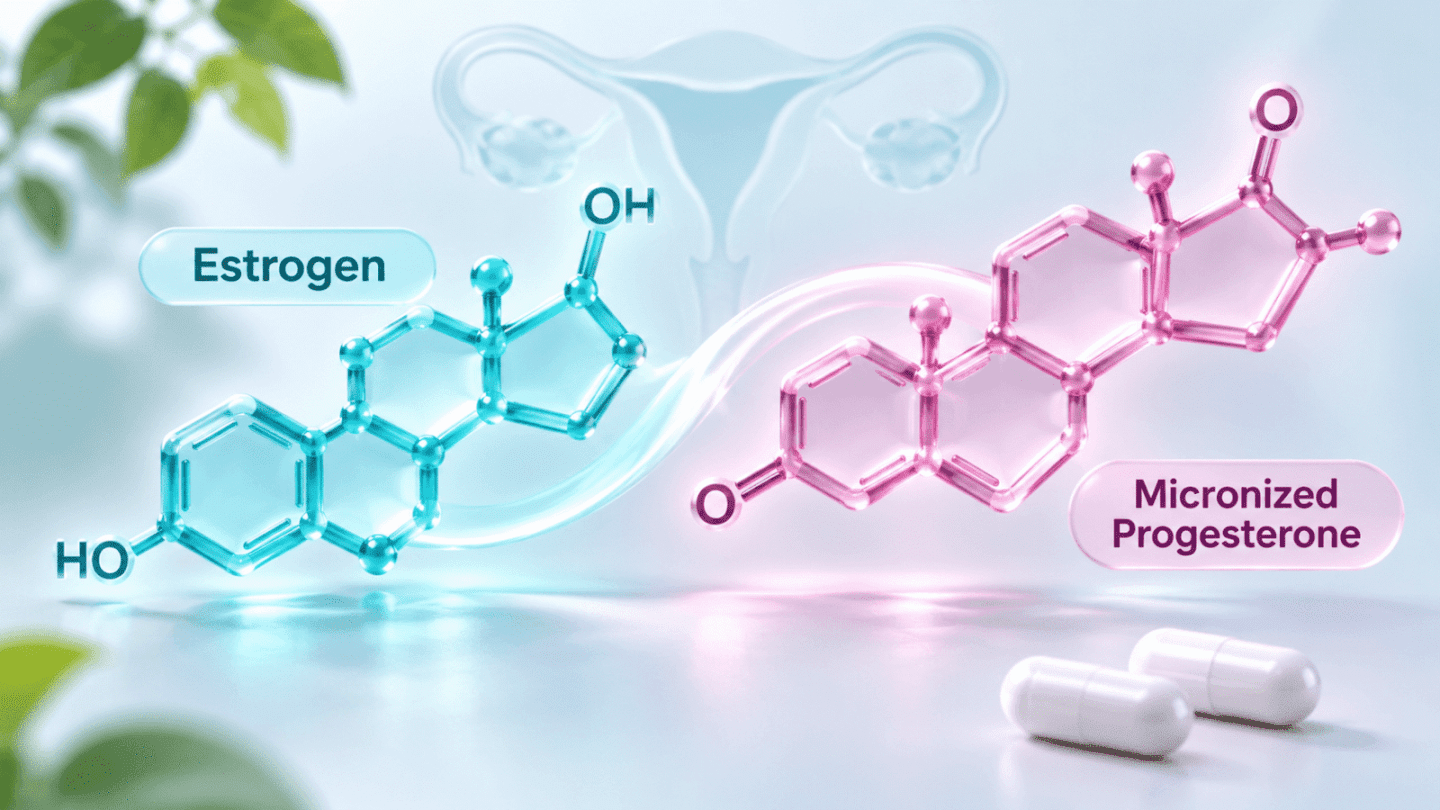
There is some truth behind these conversations, but progesterone’s medical role is more specific than many online explanations suggest.
Understanding why progesterone is prescribed, how it differs from synthetic progestins, and what side effects to watch for can help you make informed decisions with your healthcare provider.
Key Takeaways
- Micronized progesterone contains progesterone that is chemically identical to the hormone naturally produced by the body.
- When a woman with a uterus takes systemic estrogen, adequate progesterone or another appropriate progestogen is generally needed to protect the endometrium.
- Research suggests oral micronized progesterone may improve certain sleep measures, although it is not an established treatment for every type of insomnia.
- Common side effects include sleepiness, dizziness, breast tenderness, bloating, headaches, and changes in bleeding patterns.
- Micronized progesterone and synthetic progestins are not interchangeable in every situation. The appropriate treatment depends on medical history, risks, and individual goals.
What Is Micronized Progesterone?
Progesterone is a naturally occurring steroid hormone involved in reproductive health, menstrual cycles, pregnancy, and regulation of the uterine lining.
During a typical menstrual cycle, progesterone production increases after ovulation. It helps prepare the endometrium, the lining of the uterus, for a possible pregnancy.
When pregnancy does not occur, progesterone levels decline and menstruation generally follows.
During perimenopause, ovulation may become less predictable. As a result, progesterone exposure can vary considerably between cycles.
After menopause, ovarian progesterone production becomes very low.
What Does “Micronized” Mean?
Micronization is a manufacturing process that reduces progesterone into very small particles, helping improve its absorption when used in an appropriately formulated medication.
Prescription micronized progesterone is chemically identical to naturally produced progesterone. This is why it is sometimes described as bioidentical progesterone.
However, the term “bioidentical” does not automatically mean a medication is safer, more effective, or appropriate for everyone.
FDA-approved progesterone products are available. These should be distinguished from custom-compounded hormone products, which do not undergo the same FDA premarket review for safety, effectiveness, and quality.
One example of an FDA-approved oral product is Prometrium, a prescription micronized progesterone capsule.
According to its FDA-approved prescribing information, Prometrium is indicated for prevention of endometrial hyperplasia in certain postmenopausal women taking estrogen and for secondary amenorrhea.
Why Is Micronized Progesterone Used With Estrogen?
The primary reason progesterone is added to systemic estrogen therapy in women with a uterus is endometrial protection.
Estrogen stimulates growth of the uterine lining. When the endometrium receives prolonged estrogen stimulation without adequate opposition from progesterone or another progestogen, it can become excessively thick.
This condition is known as endometrial hyperplasia.
Some forms of endometrial hyperplasia can increase the risk of endometrial cancer.
Progesterone counteracts estrogen’s growth-promoting effects on the endometrium, helping reduce these risks when used in an appropriate regimen.
The American College of Obstetricians and Gynecologists (ACOG) explains that adding progestogen to systemic estrogen therapy reduces the risk associated with estrogen-related thickening of the uterine lining.
What Happens if You Take Estrogen Without Progesterone?
For women with an intact uterus, using systemic estrogen without adequate endometrial protection can increase the likelihood of:
- Endometrial thickening.
- Endometrial hyperplasia.
- Abnormal uterine bleeding.
- Endometrial cancer over time.
This does not mean progesterone eliminates all possible risks. The estrogen dose, progesterone regimen, treatment duration, bleeding history, and individual health factors still matter.
Do You Need Progesterone if You’ve Had a Hysterectomy?
Women who have undergone a total hysterectomy generally do not need progesterone solely for endometrial protection because the uterus has been removed.
There are exceptions requiring individualized assessment, including certain histories of endometriosis.
Another important distinction involves vaginal estrogen. Low-dose vaginal estrogen used for local menopausal symptoms generally does not require additional progesterone for endometrial protection.
This differs from systemic estrogen delivered through pills, patches, gels, or other whole-body treatment methods.
For more information, review the NICE menopause treatment recommendations.
Potential Benefits of Micronized Progesterone
Micronized progesterone has established medical uses, alongside other potential benefits that remain under investigation.
It is important to distinguish a demonstrated medical benefit from a possible effect reported in smaller studies.
1. Protecting the Uterine Lining During Estrogen Therapy
Endometrial protection is the clearest established benefit of micronized progesterone in menopausal hormone therapy for women with a uterus.
When prescribed in a suitable regimen, progesterone can help prevent excessive endometrial growth caused by systemic estrogen.
FDA-approved oral micronized progesterone has been studied for this purpose, including in postmenopausal women receiving oral conjugated estrogens.
Other estrogen and progesterone combinations are used in clinical practice, but the prescribing clinician must ensure the regimen provides appropriate protection.
2. Possible Improvements in Sleep Quality
Sleep disruption is a common concern during perimenopause and menopause.
Some women experience difficulty falling asleep, frequent nighttime awakenings, or sleep interrupted by hot flashes and night sweats.
Micronized progesterone has attracted interest because oral progesterone produces metabolites that interact with pathways involved in sleep and sedation.
A 2021 systematic review and meta-analysis examined randomized controlled trials involving micronized progesterone and sleep outcomes.
The review identified nine published randomized trials involving 388 participants. Most enrolled postmenopausal women.
The findings suggested improvements in selected measures, including sleep-onset latency. However, results were inconsistent across studies, and pooled evidence did not demonstrate clear improvements in every sleep outcome.
Some studies also involved concurrent estrogen therapy, making it difficult to separate progesterone’s effects from improvements related to estrogen or menopause symptoms.
Bottom line: Micronized progesterone may improve sleep for some women, but it is not a guaranteed solution for insomnia, and sleep improvement is not its primary FDA-approved menopause indication.
3. A Possible Role in Managing Certain Menopause Symptoms
Estrogen therapy has strong evidence for reducing menopausal hot flashes and night sweats.
Progesterone itself has also been investigated for vasomotor symptoms, although the evidence is less established.
A 2023 randomized placebo-controlled trial evaluated oral micronized progesterone in 189 perimenopausal women.
The study did not demonstrate a statistically significant improvement in its primary hot-flash and night-sweat score.
However, participants receiving progesterone reported improvements in perceived night sweats and sleep quality on certain secondary measures.
These findings suggest potential benefits worth investigating, not proof that progesterone alone reliably treats menopausal vasomotor symptoms.
4. An Established Role in Certain Menstrual Conditions
Progesterone also has uses outside menopausal hormone therapy.
FDA-approved oral progesterone capsules are indicated for secondary amenorrhea, which refers to the absence of menstrual periods in someone who previously menstruated.
This does not mean progesterone is appropriate for every missed or irregular period.
Pregnancy, thyroid disorders, polycystic ovary syndrome, changes in energy availability, elevated prolactin, and other conditions may contribute to menstrual irregularities.
The underlying cause should be evaluated before choosing treatment.
5. Supporting an Individualized Menopausal Hormone Therapy Plan
Another practical benefit is that micronized progesterone gives clinicians an established option for providing endometrial protection alongside estrogen.
For some patients, differences in tolerability, bleeding patterns, sleepiness, or medical history may influence the choice between micronized progesterone and another progestogen.
Choosing a medication should be based on more than whether it is described as natural or synthetic.
Micronized Progesterone vs. Synthetic Progestins: What’s the Difference?
The terms progesterone, progestin, and progestogen are often used interchangeably, but they have different meanings.
- Progesterone: The hormone naturally produced by the body, also available in pharmaceutical formulations.
- Progestin: A synthetic medication designed to produce progesterone-like effects.
- Progestogen: A broader term covering progesterone and synthetic progestins.
| Feature | Micronized Progesterone | Synthetic Progestins |
|---|---|---|
| Chemical structure | Identical to endogenous progesterone | Varies by medication |
| Examples | Oral micronized progesterone | Medroxyprogesterone acetate, norethindrone acetate |
| Endometrial protection | Effective when prescribed in an appropriate regimen | Effective with suitable agents and regimens |
| Sleep-related effects | May produce sedation and improve selected sleep outcomes | Effects differ by agent and are not equivalent |
| Breast cancer evidence | Some observational studies suggest lower risk with certain regimens, but definitive comparative trials are lacking | Risks vary by agent, estrogen combination, and treatment duration |
| Individual tolerability | May cause dizziness, drowsiness, bloating, or breast tenderness | Side effects differ depending on the specific medication |
Is Micronized Progesterone Safer Than Synthetic Progestins?
Some observational research suggests that menopausal estrogen therapy combined with micronized progesterone may be associated with a lower breast cancer risk than certain combinations using synthetic progestins.
However, observational studies cannot establish that progesterone itself caused the difference. Large randomized head-to-head trials are still lacking.
The 2025 International Menopause Society recommendations discuss these potential differences while emphasizing gaps in the comparative evidence.
Micronized progesterone should not be described as risk-free or universally safer.
Breast cancer risk and other treatment risks depend on baseline health, medication combinations, duration of therapy, and individual circumstances.
Micronized Progesterone Side Effects
Like other prescription hormones, micronized progesterone can cause adverse effects.
Some effects may be temporary or manageable, but others require medical evaluation.
Commonly Reported Side Effects
- Drowsiness: Oral progesterone can cause sleepiness, which is one reason bedtime administration is commonly specified in prescribing instructions.
- Dizziness: Some people experience lightheadedness or reduced alertness.
- Breast tenderness: Breast discomfort can occur, particularly with combined hormone therapy.
- Bloating: Abdominal fullness or fluid retention may occur.
- Headaches: Headache is a reported adverse effect.
- Nausea: Some individuals experience digestive discomfort.
- Mood changes: Changes in mood, including depressive symptoms, have been reported.
- Vaginal bleeding or spotting: Changes in bleeding patterns may occur with hormone therapy.
The frequency and intensity of these side effects vary. Symptoms reported during combined estrogen-progesterone treatment cannot always be attributed to progesterone alone.
If side effects interfere with your daily activities, contact your prescribing clinician rather than changing treatment yourself.
Can Micronized Progesterone Cause Weight Gain?
Micronized progesterone is not an established weight-loss medication, and it should not be prescribed with a promise of improving body composition.
Some people notice bloating or fluid retention, which can influence how their weight feels or fluctuates.
However, changes in body weight during midlife can also reflect aging, sleep, physical activity, nutrition, muscle mass, and menopause-related changes in fat distribution.
Weight changes alone cannot establish that progesterone is the cause.
When Side Effects Require Immediate Attention
Seek emergency medical care for symptoms that could indicate a serious cardiovascular or allergic event, such as:
- Sudden chest pain or shortness of breath.
- New swelling or pain in one leg, particularly with redness or warmth.
- Sudden weakness, difficulty speaking, or other signs of stroke.
- Severe allergic symptoms, including trouble breathing or swelling of the face or throat.
Report new, unexplained, or persistent vaginal bleeding promptly to your healthcare provider.
How Is Micronized Progesterone Used in Hormone Therapy?
Micronized progesterone is available in oral prescription capsules. Other formulations and routes may be used in specific clinical settings, but evidence and regulatory status differ.
Oral Micronized Progesterone
Oral micronized progesterone is a well-established prescription formulation used for endometrial protection in certain estrogen therapy regimens.
A clinician may prescribe progesterone continuously or during a specified portion of the month.
The appropriate schedule depends on factors including menstrual status, estrogen regimen, bleeding history, and clinical response.
Because oral progesterone may cause drowsiness and dizziness, prescribing instructions commonly specify bedtime use.
Follow the exact instructions for the product prescribed to you.
Continuous vs. Cyclic Progesterone
Two common approaches are:
- Continuous progesterone: Progesterone is taken regularly alongside systemic estrogen, with the goal of providing ongoing endometrial protection.
- Cyclic or sequential progesterone: Progesterone is taken for part of the treatment cycle. Scheduled withdrawal bleeding may occur.
Not every schedule provides equivalent endometrial protection.
The estrogen exposure and progesterone regimen must be considered together, and treatment should be selected by a licensed prescriber.
What About Progesterone Creams?
Over-the-counter or custom-compounded progesterone creams should not be assumed to provide adequate endometrial protection during systemic estrogen therapy.
Absorption through the skin can be variable, and evidence has not established that typical transdermal progesterone cream regimens reliably protect the uterine lining.
The British Menopause Society’s guidance on progestogens and endometrial protection specifically addresses this concern.
Do not replace prescription progesterone with a topical cream without consulting the prescribing clinician.
Micronized Progesterone During Perimenopause
Perimenopause is the transition leading up to menopause, when menstrual cycles and reproductive hormone patterns may become less predictable.
During this stage, ovulation may occur less consistently, which can change progesterone production from one menstrual cycle to another.
Symptoms can include:
- Irregular menstrual cycles.
- Hot flashes and night sweats.
- Difficulty sleeping.
- Changes in mood.
- Breast tenderness.
- Changes in menstrual flow.
These symptoms are not specific to low progesterone. Many can result from fluctuating estrogen, sleep disruption, thyroid disorders, medications, or other medical factors.
A single progesterone blood test generally cannot explain every perimenopause symptom because levels change across the menstrual cycle.
For women using systemic estrogen during perimenopause who still have a uterus, adequate endometrial protection remains important.
However, progesterone treatment is not automatically appropriate for everyone experiencing irregular periods or poor sleep.
Read more in our related guide: Can Perimenopause Start in Your 30s? Early Signs to Watch For.
Does Progesterone Replace Birth Control During Perimenopause?
No. Micronized progesterone prescribed for menopausal hormone therapy is not a reliable contraceptive.
Pregnancy may remain possible during perimenopause because ovulation can still occur, even when periods are irregular.
Women who do not want to become pregnant should discuss contraception separately with their healthcare provider.
Who Should Avoid Micronized Progesterone?
Micronized progesterone is not suitable for every patient.
According to FDA-approved labeling for Prometrium, contraindications include:
- Known or suspected breast cancer, or a history of breast cancer.
- Unexplained abnormal genital bleeding.
- Active or previous deep vein thrombosis or pulmonary embolism.
- Active or previous arterial thromboembolic disease, such as stroke or myocardial infarction.
- Known liver dysfunction or liver disease.
- Allergy to ingredients in the formulation.
Important allergy warning: Prometrium capsules contain peanut oil and must not be used by people with a peanut allergy. Excipients vary by product, so review the exact formulation with your pharmacist.
Other medical conditions, medications, and reproductive circumstances may also affect whether treatment is appropriate.
Micronized progesterone should not be started for suspected menopause symptoms without an appropriate clinical assessment.
Understanding the Risks of Combined Estrogen and Progesterone Therapy
When estrogen and progesterone are prescribed together, safety decisions involve the complete hormone therapy regimen, not just one medication.
Relevant considerations can include:
- Age and time since menopause.
- Personal and family history of breast cancer.
- History of blood clots, stroke, or cardiovascular disease.
- Whether estrogen is taken orally or through the skin.
- The specific progestogen and its prescribed regimen.
- Treatment duration and individual symptoms.
In February 2026, the FDA approved updated labeling for an initial group of menopausal hormone therapy products, removing certain cardiovascular, breast cancer, and dementia risk statements from their boxed warnings.
This change did not establish that menopausal hormone therapy has no risks. Relevant risk information remains in product labeling, and individual assessment is still important.
It is also important not to apply findings from studies involving one estrogen-progestin combination automatically to every other formulation.
For appropriate candidates, menopausal hormone therapy can be effective for bothersome menopause symptoms. The decision should reflect the patient’s goals, preferences, and medical history.
What Should Be Monitored During Progesterone Therapy?
Hormone treatment should involve follow-up to assess effectiveness, safety, and tolerability.
The goal is not simply to reach a particular progesterone number on a laboratory report.
A useful follow-up includes reviewing:
- Original symptoms: Have the symptoms that prompted treatment improved?
- Bleeding patterns: Have there been changes in timing, duration, or heaviness?
- Side effects: Are dizziness, drowsiness, breast tenderness, or other concerns affecting daily life?
- Medication use: Is the treatment being used as prescribed?
- Medical history: Have there been changes in health, medications, or risk factors?
- Treatment goals: Does the current plan still make sense for the patient?
Is Bleeding Normal After Starting Hormone Therapy?
Bleeding or spotting can occur when menopausal hormone therapy is started or adjusted, particularly with certain cyclic regimens.
However, bleeding should not automatically be dismissed as a harmless treatment effect.
The NICE menopause guideline identifies unscheduled bleeding as a common issue during the first six months of systemic hormone therapy or within three months of changing the treatment.
Persistent bleeding beyond those periods warrants prompt clinical assessment. Earlier evaluation may also be needed depending on bleeding severity, risk factors, or other symptoms.
Any new bleeding after menopause should be discussed with a healthcare professional.
For practical preparation, see our article: Your First HRT Follow-Up: What to Track and Ask.
Questions to Ask Before Starting Micronized Progesterone
If you are discussing hormone replacement therapy with a licensed clinician, consider bringing these questions to your appointment:
- Do I need progesterone for endometrial protection based on my medical history and estrogen treatment?
- Is micronized progesterone appropriate for me, or should we consider another progestogen?
- What benefits should I realistically expect from progesterone itself versus estrogen?
- How will we evaluate changes in sleep, bleeding, and treatment tolerability?
- Are any of my medical conditions, medications, or allergies reasons to avoid this formulation?
- What bleeding changes should prompt an earlier evaluation?
- How often should we review the treatment plan, and what would justify a change?
These questions help keep treatment decisions focused on your actual symptoms, medical needs, and safety rather than broad claims about hormone optimization.
How 1st Optimal Approaches Women’s Hormone Health
Hormone-related symptoms can affect sleep, energy, concentration, recovery, and everyday quality of life.
But symptoms that occur during midlife do not always have one hormonal explanation.
At 1st Optimal, our approach to functional health emphasizes understanding the bigger picture, including symptoms, medical history, appropriate testing, sleep, nutrition, and lifestyle factors.
For women navigating perimenopause or menopause, this means helping clarify concerns, identify relevant health goals, and explore appropriate next steps with licensed medical providers.
Hormone replacement therapy decisions, including whether micronized progesterone is appropriate, require individualized assessment and prescribing by a qualified clinician.
Functional health coaching can complement medical care by supporting practical habits, symptom tracking, and follow-through with a treatment plan.
Learn more about our approach to perimenopause and women’s hormone health.
Frequently Asked Questions About Micronized Progesterone
1. What is micronized progesterone used for?
Micronized progesterone is used primarily to provide endometrial protection in appropriate menopausal hormone therapy regimens for women with a uterus. FDA-approved oral progesterone is also indicated for secondary amenorrhea. Other uses may be considered by clinicians depending on the patient’s circumstances and the available evidence.
2. Why do you need progesterone when taking estrogen?
Systemic estrogen stimulates the uterine lining. In women who still have a uterus, adequate progesterone or another suitable progestogen helps counteract this effect and reduces the risk of endometrial hyperplasia and cancer. Women without a uterus generally do not need progesterone solely for this purpose.
3. Does micronized progesterone help with sleep?
Randomized trial evidence suggests micronized progesterone may improve selected sleep outcomes, particularly in postmenopausal women. Results are not consistent across every sleep measure, and improvement is not guaranteed. Persistent insomnia may require assessment for other contributing conditions.
4. What are the most common side effects of micronized progesterone?
Reported side effects include drowsiness, dizziness, breast tenderness, bloating, headaches, nausea, mood changes, and changes in vaginal bleeding. Some effects occur during combined estrogen-progesterone therapy and cannot necessarily be attributed to progesterone alone.
5. Is micronized progesterone the same as bioidentical progesterone?
Micronized progesterone is chemically identical to naturally occurring progesterone and is therefore often called bioidentical progesterone. However, bioidentical does not mean risk-free. FDA-approved progesterone products and custom-compounded hormone preparations also have important regulatory differences.
6. Is micronized progesterone safer than synthetic progestins?
Some observational evidence suggests that certain estrogen-micronized progesterone regimens may have a different breast cancer risk profile than some synthetic progestin regimens. However, definitive randomized comparisons are lacking. The safest appropriate treatment depends on the specific medication, medical history, and individual risk factors.
7. Can you take micronized progesterone without estrogen?
Yes, micronized progesterone can be prescribed without estrogen for certain medical indications, including secondary amenorrhea. Progesterone-alone treatment has also been studied for menopause-related symptoms, but those uses are not all FDA-approved, and evidence for symptom relief is more limited than for systemic estrogen therapy.
Final Thoughts: Is Micronized Progesterone Right for You?
Micronized progesterone plays an important role in modern menopausal hormone therapy, particularly for women with a uterus who use systemic estrogen.
Its established ability to protect the uterine lining is different from its potential benefits for sleep or other symptoms, where the strength of the evidence varies.
Understanding those differences matters.
The right hormone therapy plan should consider your medical history, menopause symptoms, safety considerations, treatment preferences, and response over time.
Rather than focusing on whether one hormone is universally better than another, the more useful question is whether a particular treatment is appropriate for your individual circumstances.
Take the Next Step With 1st Optimal
Have questions about your sleep, energy, menstrual changes, or hormone health?
1st Optimal helps adults explore personalized functional health support, appropriate clinical testing, and care options guided by licensed medical providers.
Schedule a Health Consultation With 1st Optimal to discuss your health goals and potential next steps.
A consultation does not guarantee a prescription. Any medical treatment requires evaluation by a licensed provider.
Medical References
- Prometrium: Prescribing Information.
- Hormone Therapy for Menopause.
- The 2022 Hormone Therapy Position Statement.
- Efficacy of Micronized Progesterone for Sleep: A Systematic Review and Meta-analysis of Randomized Controlled Trial Data.
- Oral Micronized Progesterone for Perimenopausal Night Sweats and Hot Flushes: A Randomized Placebo-Controlled Trial.
- Menopause: Identification and Management.
- Recommendations and Key Messages on Women’s Midlife Health and Menopause.
- FDA Approves Labeling Changes to Menopausal Hormone Therapy Products.
Medical Disclaimer: This article is intended for educational purposes only and does not constitute medical advice, diagnosis, or a treatment recommendation. Hormone therapy should be prescribed and monitored by a qualified healthcare professional. Do not start, stop, or adjust prescription hormones without guidance from your prescribing clinician.


