

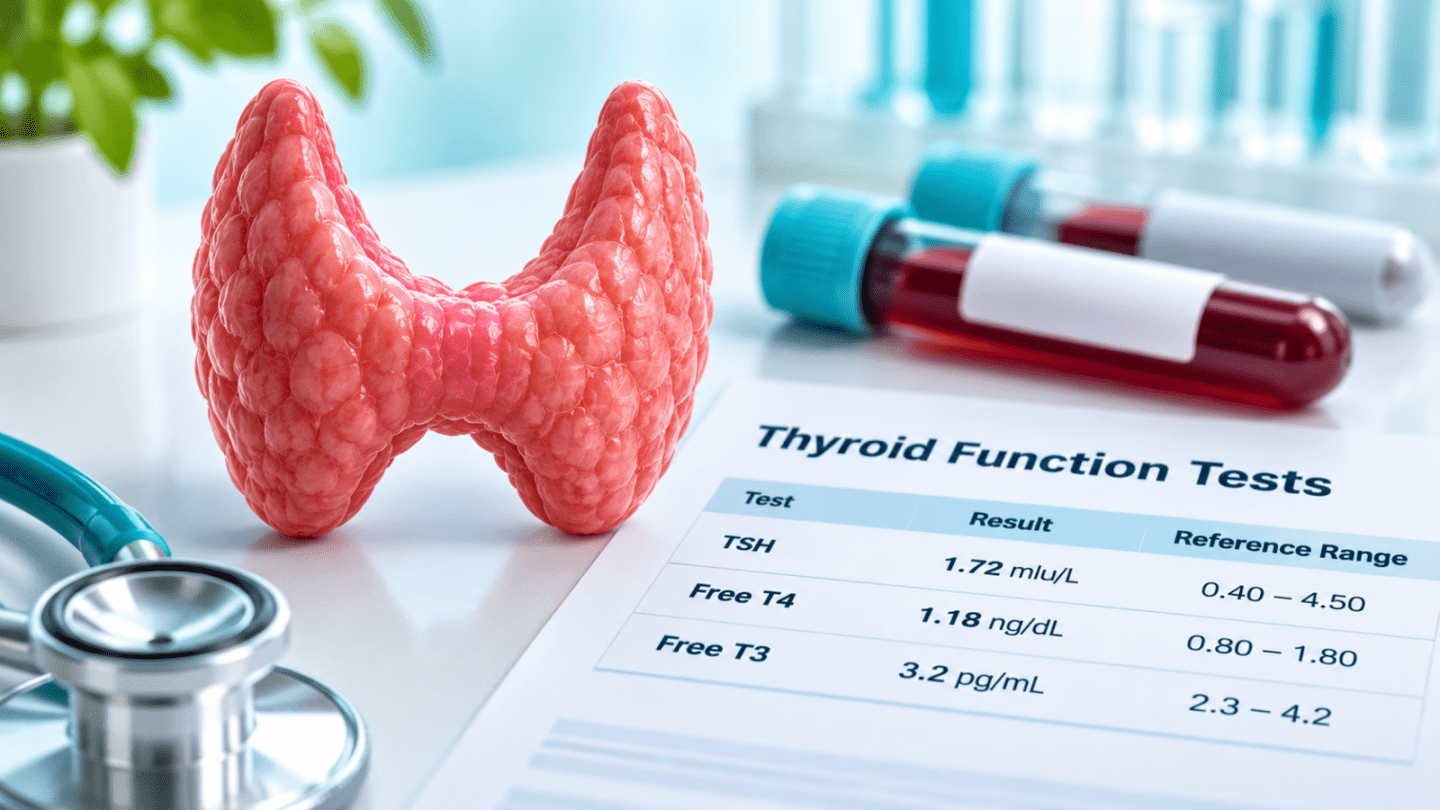
You suspect your thyroid might be responsible, so you get bloodwork done.
Then you hear something frustrating:
“Your thyroid labs are normal.”
But you still don’t feel like yourself.
If you’re experiencing hypothyroid symptoms with normal thyroid labs, you’re not alone. Fatigue, difficulty concentrating, constipation, dry skin, and unexplained weight changes can persist even when thyroid-stimulating hormone (TSH) falls within the laboratory reference range.
There are several possible explanations. Sometimes thyroid testing needs clarification. Sometimes thyroid medication isn’t being absorbed consistently. And often, another health condition produces symptoms that look remarkably similar to hypothyroidism.
Here’s the important distinction: A normal TSH usually makes primary hypothyroidism unlikely, especially when free T4 is also normal. But a normal thyroid result doesn’t mean every possible cause of your symptoms has been identified.
Understanding that difference can help you and your healthcare provider decide what to investigate next.
Key Takeaways
- A normal TSH generally indicates adequate thyroid function in most adults, but certain clinical situations require additional evaluation.
- Fatigue, weight gain, brain fog, hair thinning, and cold intolerance are not exclusive to hypothyroidism.
- People already taking thyroid medication may experience persistent symptoms despite normalized TSH levels.
- Hashimoto’s thyroiditis can be present before thyroid hormone levels become abnormal.
- Sleep disorders, iron deficiency, vitamin B12 deficiency, metabolic conditions, and menopause can overlap with hypothyroid symptoms.
- TSH and free T4 are the primary tests used to assess thyroid function. Additional testing should answer a specific clinical question.
- Improving symptoms requires identifying the underlying contributors, not automatically increasing thyroid medication or pursuing more extensive thyroid panels.
Can You Have Hypothyroid Symptoms With Normal Thyroid Labs?
Yes. You can experience symptoms commonly associated with hypothyroidism even when your thyroid blood tests are within the normal range.
However, experiencing these symptoms does not automatically mean your thyroid is underactive.
Hypothyroidism occurs when your body does not have enough thyroid hormone to meet its needs. In primary hypothyroidism, the thyroid gland itself cannot produce adequate hormone.
The pituitary gland usually responds by increasing TSH, which is why TSH is a sensitive and widely recommended screening test for primary thyroid dysfunction.
According to the American Thyroid Association, a normal TSH usually indicates that the thyroid is functioning appropriately in otherwise healthy individuals.
Yet thyroid-like symptoms can occur for many reasons.
For example:
- Fatigue may be related to sleep apnea, anemia, depression, or insufficient recovery.
- Brain fog can accompany poor sleep, menopause, medication effects, or other medical conditions.
- Weight changes can involve nutrition, activity, medications, fluid retention, or metabolic health.
- Hair thinning may be associated with iron deficiency, hormonal changes, or dermatological conditions.
- Constipation may be related to dietary patterns, medications, or gastrointestinal disorders.
The goal is not to dismiss thyroid disease. It is to determine whether thyroid dysfunction, another condition, or several overlapping factors best explain the symptoms.
What Does a “Normal” Thyroid Test Actually Mean?
When someone says their thyroid labs are normal, they often mean their TSH result is within the laboratory’s reference range.
Reference ranges describe values expected in a defined population and vary between laboratories, tests, and clinical circumstances.
For most adults, TSH is a reliable initial screening test for primary thyroid dysfunction. But interpretation changes when a person is pregnant, taking thyroid medication, has suspected pituitary disease, or has other factors that interfere with testing.
1. TSH: Thyroid-Stimulating Hormone
TSH is produced by the pituitary gland and signals the thyroid to produce thyroid hormones.
When thyroid hormone production decreases because of primary thyroid disease, TSH typically rises.
In general:
- High TSH: May indicate an underactive thyroid.
- Low TSH: May indicate an overactive thyroid, medication overreplacement, or another clinical issue.
- Normal TSH: Usually suggests adequate thyroid function, although exceptions exist.
TSH results should always be interpreted using the laboratory’s reference interval and the individual’s clinical circumstances.
2. Free T4: The Main Circulating Thyroid Hormone
Free T4 measures the unbound portion of thyroxine, the main hormone produced by the thyroid gland.
When interpreted alongside TSH, free T4 helps distinguish different patterns of thyroid dysfunction.
- High TSH and low free T4: Usually indicates overt primary hypothyroidism.
- High TSH and normal free T4: May indicate subclinical hypothyroidism.
- Normal TSH and normal free T4: Generally supports normal thyroid function.
- Low free T4 with low or inappropriately normal TSH: May raise concern for central hypothyroidism or other factors requiring specialist interpretation.
For someone taking levothyroxine who continues to experience symptoms, the NICE thyroid guideline recommends considering free T4 measurement alongside TSH.
3. Free T3: Is It Necessary?
T3 is the biologically active thyroid hormone, and much of it is produced through the conversion of T4 in body tissues.
Although it plays an important physiological role, free T3 testing is not routinely recommended for diagnosing hypothyroidism.
T3 levels can remain normal even when someone has clinically significant primary hypothyroidism, and free T3 testing has important analytical limitations.
In selected circumstances, a specialist may consider T3 measurements, but a low-normal T3 level by itself does not establish a thyroid disorder.
4. Thyroid Antibodies: Evaluating Autoimmune Thyroid Disease
Thyroid peroxidase antibodies (TPOAb) and, in some circumstances, thyroglobulin antibodies (TgAb) can provide information about autoimmune thyroid disease.
These tests may be useful when a clinician suspects Hashimoto’s thyroiditis.
However, positive thyroid antibodies do not necessarily mean thyroid hormone production is currently inadequate.
Learn more in our article: Hashimoto’s vs. Hypothyroidism: What’s the Difference?
7 Reasons You May Still Feel Hypothyroid When Your Labs Are Normal
1. You Have Persistent Symptoms Despite Thyroid Treatment
If you have already been diagnosed with hypothyroidism and take levothyroxine, your thyroid levels may have normalized while some symptoms remain.
This is a recognized clinical challenge.
A 2024 summary published by the American Thyroid Association reviewed research on persistent symptoms following levothyroxine treatment.
Across follow-up visits in the study, approximately 27% to 28% of evaluated patients reported persistent or new hypothyroid-like symptoms despite normalized TSH levels.
Fatigue and weight gain were among the most frequently reported complaints.
Importantly, the study did not establish that ongoing thyroid hormone deficiency caused those symptoms.
Other health conditions were also common among participants.
Read the American Thyroid Association’s research summary.
If you’re taking thyroid medication but still feel unwell, your clinician may review:
- Whether the original thyroid diagnosis was established.
- Recent TSH and free T4 results.
- Medication dosage and consistency.
- Possible interactions affecting absorption.
- Other medical conditions that may explain ongoing symptoms.
Persistent symptoms deserve attention, but increasing thyroid medication without evidence of inadequate replacement can lead to overtreatment.
2. Your Thyroid Medication May Not Be Absorbed Consistently
For people taking levothyroxine, how the medication is taken can influence how much hormone is absorbed.
Food, coffee, certain supplements, and some medications can interfere with absorption.
Common considerations include:
- Taking levothyroxine too close to breakfast or coffee.
- Taking calcium or iron supplements near the medication dose.
- Changes in medications that affect stomach acidity.
- Missing doses or taking medication inconsistently.
- Gastrointestinal conditions affecting absorption, including celiac disease in some patients.
Levothyroxine is commonly taken with water on an empty stomach, with a 30- to 60-minute interval before breakfast. Calcium and iron generally need to be separated from levothyroxine by several hours according to prescribing guidance.
Some patients use a consistent bedtime schedule instead, with guidance from their healthcare provider.
If your TSH is already normal and stable, medication absorption may not explain your persistent symptoms. Nevertheless, reviewing your medication routine is an important part of follow-up care.
Never change your thyroid medication dosage or schedule without discussing it with your prescribing clinician.
3. Hashimoto’s Thyroiditis May Be Present Before Hormone Levels Change
Hashimoto’s thyroiditis is an autoimmune condition in which the immune system targets thyroid tissue.
It is one of the most common causes of hypothyroidism.
However, Hashimoto’s and hypothyroidism are not interchangeable diagnoses.
Someone may have evidence of thyroid autoimmunity while maintaining normal TSH and free T4 levels.
Over time, some individuals develop impaired thyroid hormone production, while others remain euthyroid, meaning their thyroid hormone levels stay normal.
In appropriate clinical situations, thyroid antibody testing can help clarify whether autoimmune thyroid disease is present.
But there is an important limitation:
Positive thyroid antibodies with normal thyroid function do not, by themselves, establish that symptoms are caused by thyroid hormone deficiency or that thyroid hormone therapy is needed.
The American Thyroid Association recommends monitoring thyroid function rather than routinely treating antibody-positive individuals whose TSH and free T4 are normal.
For more information, review the American Thyroid Association’s Hashimoto’s guidance.
4. Iron Deficiency, Anemia, or Vitamin B12 Deficiency May Be Contributing
Several nutritional and hematological conditions can produce symptoms that overlap with hypothyroidism.
Iron deficiency, for example, may contribute to:
- Fatigue and reduced exercise tolerance.
- Difficulty concentrating.
- Hair shedding.
- Weakness or reduced physical performance.
Iron deficiency can sometimes be present before a person develops anemia.
Vitamin B12 deficiency may also contribute to fatigue, neurological symptoms, and difficulty concentrating.
Depending on your symptoms and medical history, a clinician might consider tests such as a complete blood count, ferritin, iron studies, or vitamin B12.
These tests should be selected based on clinical indications rather than automatically ordered for everyone with fatigue.
Taking iron or other supplements without confirming a need is not always beneficial and may introduce risks or medication interactions.
5. Perimenopause or Menopause May Be Overlapping With Thyroid Symptoms
For women in their late 30s, 40s, and 50s, thyroid-like symptoms can overlap with the hormonal changes of perimenopause and menopause.
Common experiences may include:
- Disrupted sleep.
- Changes in body composition.
- Brain fog or difficulty concentrating.
- Mood changes.
- Fatigue and reduced recovery.
- Menstrual cycle changes.
These symptoms do not necessarily indicate thyroid dysfunction.
For example, frequent nighttime awakenings or night sweats can impair sleep quality and contribute to daytime exhaustion.
Menopause-related changes may also coincide with thyroid disease, making a careful assessment important.
Evaluation should consider menstrual history, vasomotor symptoms, sleep quality, existing conditions, and medication use.
Hormone testing is not automatically required to diagnose typical perimenopause, particularly in adults over 45, and results should be interpreted in the context of age and symptoms.
For readers interested in a broader hormone-health approach, explore 1st Optimal’s Functional Health Plans.
6. Sleep, Stress, and Metabolic Health May Be Affecting How You Feel
Feeling exhausted does not always mean your metabolism has slowed because of thyroid disease.
Several overlapping health and lifestyle factors can influence energy, appetite, concentration, and recovery.
Poor Sleep or Sleep Apnea
Sleep apnea can produce persistent fatigue, morning headaches, impaired concentration, and daytime sleepiness.
Some people experience sleep apnea without recognizing that their sleep is repeatedly interrupted.
Loud snoring, witnessed breathing pauses, and significant daytime sleepiness are reasons to discuss sleep evaluation with a healthcare professional.
Insufficient Nutrition or Recovery
Under-fueling, excessive training loads, inadequate recovery, and restrictive dietary practices may contribute to fatigue and reduced physical performance.
For active adults, examining nutrition, training volume, and recovery patterns can sometimes provide information that thyroid testing alone cannot.
Metabolic Conditions
Blood glucose disorders and other metabolic conditions can contribute to fatigue, changes in energy, and difficulty managing weight.
Testing may include glucose or HbA1c when clinically appropriate.
Chronic Stress and Mental Health
Long-term stress, anxiety, and depression can affect sleep, concentration, motivation, and perceived energy.
These conditions deserve the same thoughtful evaluation as physical illnesses.
None of these explanations should be assumed without an appropriate assessment.
7. A Less Common Thyroid Disorder or Testing Problem Requires Clarification
Although a normal TSH usually makes primary hypothyroidism unlikely, there are important exceptions.
Central Hypothyroidism
Central hypothyroidism is an uncommon condition caused by inadequate thyroid stimulation from the pituitary gland or hypothalamus.
Unlike primary hypothyroidism, central hypothyroidism may occur with a low free T4 and a TSH that is low or inappropriately within the normal range.
Because of this, TSH alone may not detect the condition.
Clinical suspicion may be higher in patients with known pituitary disease, certain neurological symptoms, or other pituitary hormone abnormalities.
Suspected central hypothyroidism requires medical evaluation, often by an endocrinologist.
Laboratory Interference
Some supplements and medications can affect laboratory test accuracy.
Biotin, commonly found in hair, skin, and nail supplements, can interfere with certain thyroid immunoassays and produce misleading results.
Tell your clinician and laboratory about your medications and supplements before testing. Follow their instructions about whether and when biotin should be withheld.
Recent Illness or Changes in Thyroid Function
Acute illness, recovery from illness, and certain medications can temporarily alter thyroid test results.
If symptoms change or test results do not match the clinical picture, a clinician may recommend repeat testing at an appropriate interval.
Repeated blood tests every few days generally do not provide useful information for routine thyroid assessment.
What About Low T3 or Poor T4-to-T3 Conversion?
You may have heard that normal thyroid labs can hide a problem with converting T4 into active T3.
There is a physiological basis for studying T4-to-T3 conversion. The body relies on enzymes called deiodinases to regulate thyroid hormone activity in different tissues.
However, measuring circulating T3 does not directly establish whether tissues are receiving an appropriate thyroid hormone signal.
Low T3 concentrations can occur during illness, significant caloric restriction, and other conditions without indicating primary thyroid gland failure.
Current evidence does not support routinely diagnosing a thyroid conversion disorder based on nonspecific symptoms and a low-normal free T3 result.
Similarly, reverse T3 testing is not recommended for routine diagnosis of hypothyroidism in otherwise healthy, nonhospitalized adults.
The priority should remain accurate interpretation of established thyroid tests and investigation of relevant nonthyroid causes.
Should You Take T3 Medication If You Still Feel Hypothyroid?
Levothyroxine, a synthetic form of T4, remains the standard treatment for most people with hypothyroidism.
Some patients continue to experience symptoms despite appropriate treatment, which has led researchers to investigate combination treatment using levothyroxine and liothyronine, a synthetic form of T3.
However, randomized clinical trials have not consistently demonstrated superior symptom relief or quality-of-life improvements from combination therapy.
A 2023 joint consensus statement from the British Thyroid Association and Society for Endocrinology suggests that a carefully monitored trial may be considered for selected patients with established overt hypothyroidism who remain symptomatic despite adequate levothyroxine treatment and evaluation for other conditions.
This is not a routine recommendation for people whose thyroid function is normal and who have never been diagnosed with hypothyroidism.
Thyroid hormone overtreatment can increase risks such as abnormal heart rhythms and bone loss.
Any discussion of combination therapy should occur with an appropriately experienced clinician.
Read the clinical consensus statement on T3 treatment.
What Tests Should You Ask About If Your Thyroid Labs Are Normal but You Still Feel Tired?
The most useful tests depend on your symptoms, medical history, examination findings, and existing laboratory results.
More testing is not always better. A focused evaluation can be more informative than ordering every available hormone or nutrient marker.
Thyroid-Related Tests
- TSH: The usual starting point for evaluating primary thyroid dysfunction.
- Free T4: Useful when TSH is abnormal, pituitary disease is suspected, or symptoms persist despite thyroid treatment.
- TPO antibodies: May help identify autoimmune thyroid disease in selected patients.
- Other thyroid tests: Considered when a specific clinical indication warrants them.
Additional Tests That May Be Appropriate
- Complete blood count: To investigate anemia or related abnormalities.
- Ferritin and iron studies: When iron deficiency is suspected.
- Vitamin B12: When symptoms or risk factors suggest deficiency.
- HbA1c or fasting glucose: When diabetes or other glucose-related concerns are relevant.
- Metabolic panel: When kidney, liver, or electrolyte abnormalities are being considered.
- Other targeted investigations: Based on the clinical picture, such as sleep apnea assessment or evaluation for gastrointestinal disease.
These are examples of possible investigations, not a universal checklist.
A clinician can help determine which tests are likely to change a diagnosis or treatment decision.
Why Chasing the “Optimal” TSH Number May Not Solve Your Symptoms
It’s understandable to wonder whether your TSH is technically normal but not optimal for you.
Thyroid reference intervals vary, and individual factors matter when interpreting results.
But there is no universally established narrower TSH target that reliably eliminates fatigue, brain fog, or weight concerns in everyone.
For someone without established hypothyroidism, prescribing thyroid medication simply to move a normal TSH to another point within the reference range has not been shown to reliably improve symptoms.
For someone already receiving thyroid replacement, treatment targets should be individualized within established clinical guidance.
The goal is to provide sufficient thyroid hormone while avoiding both undertreatment and overtreatment.
The most helpful question isn’t always, “How can I make this number better?”
It may be, “What does this result tell us, and what else needs to be investigated?”
What to Do Next If You Still Feel Hypothyroid
If your thyroid labs are normal but symptoms continue, consider the following steps with your healthcare provider.
Step 1: Document Your Symptoms
Track symptoms such as fatigue, constipation, cold intolerance, hair changes, and difficulty concentrating.
Record when they started, whether they are getting worse, and how they affect daily activities.
Step 2: Review Your Actual Thyroid Results
Ask for copies of your laboratory reports rather than relying only on the description “normal.”
Review which tests were performed, their results, reference intervals, and how they compare with earlier measurements.
Step 3: Review Thyroid Medication If Applicable
If you take thyroid medication, discuss your dose, timing, adherence, supplement use, and possible interactions.
After a levothyroxine dose change, clinicians generally reassess thyroid function after approximately six to eight weeks, although the interval varies with clinical circumstances.
Step 4: Consider Other Potential Causes
Talk with your clinician about sleep, nutrition, medications, iron status, metabolic health, menstrual changes, and other symptoms that may point toward alternative explanations.
Step 5: Build a Targeted Care Plan
Depending on the findings, your plan might include:
- Monitoring thyroid function over time.
- Correcting a confirmed nutritional deficiency.
- Treating a diagnosed sleep disorder.
- Addressing menopause-related symptoms.
- Reviewing medication interactions.
- Improving nutrition, activity, and recovery routines.
- Referral to an endocrinologist or another specialist when appropriate.
Treatment should be matched to the identified problem rather than based on symptoms alone.
When Should You See an Endocrinologist?
Specialist evaluation may be helpful when:
- Thyroid results remain inconsistent or difficult to interpret.
- Free T4 is low despite a non-elevated TSH.
- Pituitary or hypothalamic disease is suspected.
- Thyroid medication requirements are unusual or difficult to stabilize.
- Symptoms remain significant despite an appropriate initial evaluation.
- Complex thyroid disease occurs alongside pregnancy or pregnancy planning.
- A thyroid enlargement, suspicious nodule, or other structural concern needs assessment.
If you are pregnant or planning pregnancy and have known thyroid disease, speak with your clinician promptly because thyroid monitoring and treatment targets may differ during pregnancy.
Seek urgent medical care for severe confusion, fainting, chest pain, significant breathing difficulty, or other rapidly worsening symptoms rather than assuming they are caused by your thyroid.
How 1st Optimal Approaches Persistent Thyroid-Like Symptoms
At 1st Optimal, we believe that your symptoms and your laboratory results both deserve attention.
When someone is experiencing low energy, difficulty managing weight, brain fog, or poor recovery, the next step should be to understand what might be contributing to those concerns.
That may involve thyroid evaluation, but it can also require looking at sleep, nutrition, metabolic health, medications, other hormones, and relevant medical conditions.
Our approach brings together functional health coaching, medical evaluation, and clinically appropriate testing.
Depending on individual needs, care may include:
- Personalized symptom assessment: Understanding what you’re experiencing and how it affects your life.
- Targeted bloodwork: Reviewing thyroid, metabolic, or nutritional markers when clinically appropriate.
- Licensed medical oversight: Interpreting findings, discussing treatment options, and determining whether additional investigation is needed.
- Functional health coaching: Helping translate recommendations into practical nutrition, movement, sleep, and recovery habits.
- Ongoing follow-up: Monitoring symptoms, relevant laboratory markers, and your response to an individualized plan.
Not every symptom requires medication. Not every patient needs an extensive thyroid panel.
The objective is to make informed decisions based on the full clinical picture.
For more information about our approach, read What Your Bloodwork Isn’t Telling You About Your Health.
Frequently Asked Questions About Hypothyroid Symptoms With Normal Labs
Can you have hypothyroidism with a normal TSH?
In most adults, a normal TSH makes primary hypothyroidism unlikely. A rare exception is central hypothyroidism, in which free T4 may be low while TSH is low or inappropriately normal. Symptoms and clinical history help determine whether additional evaluation is necessary.
Why am I so tired if my TSH is normal?
Fatigue has many possible causes, including poor sleep, sleep apnea, anemia, iron deficiency, medication effects, depression, metabolic disorders, and other health conditions. Normal thyroid results make certain thyroid explanations less likely but do not identify the cause of fatigue.
Can Hashimoto’s occur with normal thyroid bloodwork?
Yes. Thyroid autoantibodies can be present before TSH or free T4 become abnormal. However, having Hashimoto’s with normal thyroid function does not automatically mean you need thyroid hormone treatment.
Is a normal TSH enough to rule out every thyroid problem?
No. TSH is an excellent screening test for primary thyroid dysfunction, but it does not exclude every possible thyroid or pituitary disorder. Free T4 and other targeted tests may be appropriate when the clinical situation warrants them.
Should I test free T3 if my TSH is normal?
Free T3 is not routinely recommended for diagnosing hypothyroidism. Its clinical usefulness is limited, and a low-normal value does not prove inadequate thyroid hormone activity in tissues. Your clinician can determine whether T3 testing addresses a specific concern.
Does a low-normal free T4 mean I need thyroid medication?
Not necessarily. Free T4 must be interpreted alongside TSH, the laboratory reference range, medications, and clinical history. A value within the reference interval does not independently establish thyroid hormone deficiency.
Can menopause make you feel hypothyroid?
Yes. Menopause and perimenopause can produce fatigue, poor sleep, brain fog, mood changes, and body composition changes that overlap with thyroid symptoms. Thyroid disease and menopause can also occur together.
Can stress cause hypothyroid symptoms?
Stress can contribute to fatigue, concentration difficulties, sleep disruption, and changes in appetite or well-being. These symptoms may resemble hypothyroidism, but stress does not automatically indicate thyroid hormone deficiency.
What if I’m taking levothyroxine and still don’t feel better?
Discuss your symptoms with your prescribing clinician. They may reassess thyroid function, medication absorption, dosing consistency, and other health conditions. Do not increase or stop thyroid medication on your own.
Is reverse T3 testing useful for persistent hypothyroid symptoms?
Reverse T3 testing is not recommended for routine hypothyroidism diagnosis in otherwise healthy, nonhospitalized adults. Results generally do not guide evidence-based treatment decisions for persistent symptoms.
Can thyroid medication help me lose weight if my labs are normal?
Thyroid hormone medication is not recommended as a weight-loss treatment for people with normal thyroid function. Excess thyroid hormone can cause harmful effects, including abnormal heart rhythms and bone loss.
How long does it take for hypothyroid symptoms to improve after treatment?
Some symptoms begin improving within weeks of appropriate thyroid replacement, while others may take several months. Recovery varies depending on the severity and duration of hypothyroidism and whether other conditions are contributing. Persistent symptoms should prompt reassessment rather than an automatic medication increase.
The Bottom Line: Normal Thyroid Labs Don’t Explain Every Symptom
Hearing that your thyroid labs are normal can feel discouraging when you’re still struggling with fatigue, brain fog, weight changes, or low energy.
But a normal test result is useful information.
In most adults, normal TSH and free T4 make clinically significant primary hypothyroidism unlikely.
That doesn’t mean the symptoms should be ignored. It means the next step may involve looking beyond the thyroid.
Iron status. Sleep quality. Medication effects. Menopause. Metabolic health. Other medical conditions.
These factors can overlap, and understanding their role requires a personalized assessment.
The goal isn’t to find a thyroid problem at any cost. It’s to identify what’s contributing to how you feel and choose the next step that is most likely to help.
Ready to Get a Clearer Picture of Your Health?
If your bloodwork looks normal but you continue experiencing fatigue, brain fog, weight concerns, or other unexplained symptoms, a more complete clinical conversation may help clarify your next steps.
At 1st Optimal, we combine functional health coaching with medical evaluation and individualized testing when appropriate, helping you understand your health beyond a single lab result.
Start with a conversation about your symptoms, concerns, and health goals.
Book a Health Consult With 1st Optimal
Educational only. This article is not medical advice and is not intended to diagnose, treat, cure, or prevent any disease. Laboratory testing, medication decisions, and treatment plans should be individualized with a qualified healthcare professional. Do not start, stop, or change thyroid medication without medical guidance.
Medical References and Further Reading
- American Thyroid Association. Thyroid Function Tests.
- American Thyroid Association. Hypothyroidism.
- American Thyroid Association. Why Do So Many Patients Receiving Levothyroxine Treatment for Hypothyroidism Have Persistent Symptoms? 2024.
- National Institute for Health and Care Excellence. Thyroid Disease: Assessment and Management. Guideline NG145.
- American Family Physician. Hypothyroidism: Diagnosis and Treatment. 2021.
- British Thyroid Association and Society for Endocrinology. Use of Liothyronine (T3) in Hypothyroidism: Joint Consensus Statement. 2023.
- American Thyroid Association. Thyroid Hormone Treatment.


