
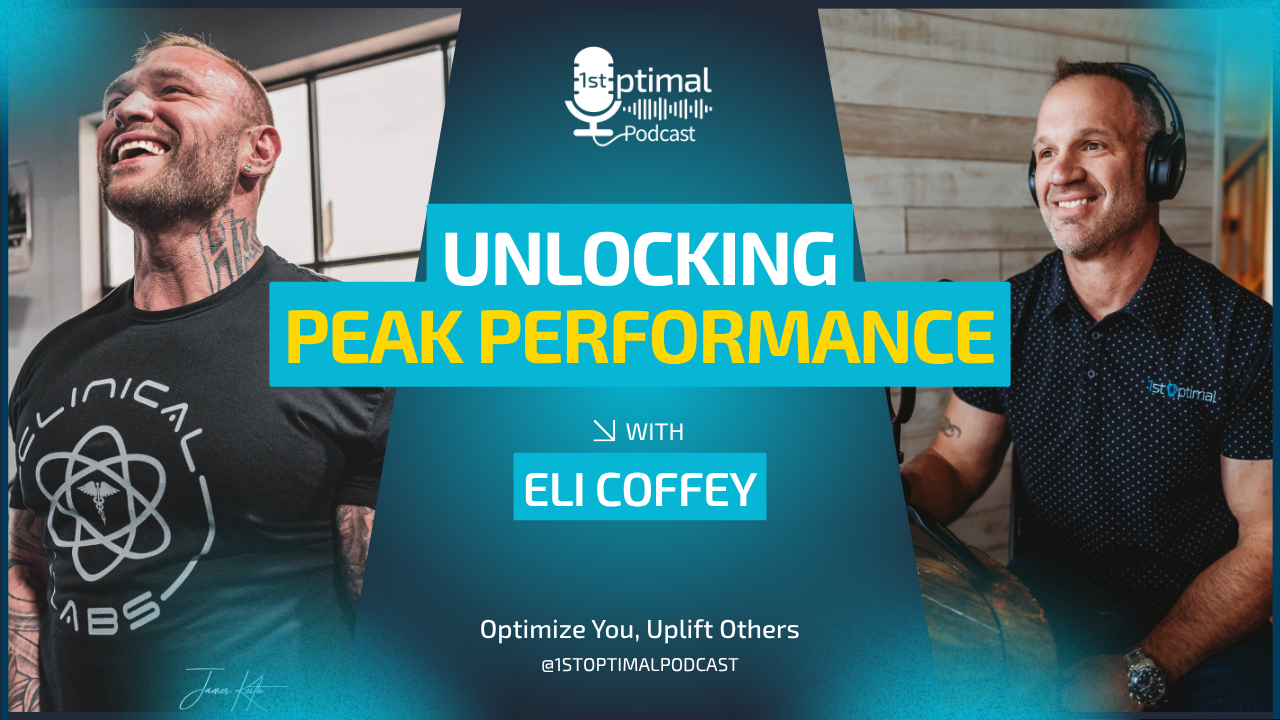
In this episode of the 1st Optimal Podcast, we are thrilled to welcome Coach Eli Coffey, an expert in strength conditioning, MMA, Jiu-Jitsu, and powerlifting.
With a wealth of knowledge across multiple disciplines, Eli brings a unique perspective on optimizing athletic performance through training, recovery, and breathing techniques. Whether you’re an athlete or simply someone looking to enhance your overall fitness, this episode offers valuable insights that apply across the board. Join us as Eli and our host dive into key topics like energy systems, the importance of core power, and how you can optimize your training to perform at your best—no matter your age.
Breathing Techniques: The Key to Strength and Endurance
Breathing is something we often take for granted, but when it comes to both strength training and combat sports, it’s a game-changer. Eli and our host start the conversation by comparing the differences in breathing between weightlifting and Jiu-Jitsu. In lifting, it’s critical to brace and control your breath, particularly during the eccentric phase of a squat or deadlift. Failing to do so can lead to injury under heavy loads. On the other hand, in Jiu-Jitsu, maintaining a steady breath is crucial to avoid gassing out during long rolling sessions. The ability to breathe effectively while exerting effort will not only help you perform better but also extend your endurance.
How Training and Breathing Impact Performance
Throughout the podcast, Eli emphasizes the importance of training for overall functional strength. While traditional bodybuilding and powerlifting focus on increasing muscle mass and strength, Eli highlights the need to incorporate different training modalities to enhance functional movement. His advice on chaos training, or supersetting with the intention of keeping your energy system active while maintaining form integrity, offers listeners a new way to approach training.
One of the most intriguing topics covered is the concept of training to prevent injury by working within the body’s natural movement patterns. Eli advocates for understanding body mechanics and avoiding training methods that strain the body unnecessarily. For example, many people gravitate towards flashy, unproductive exercises under the guise of “functional training,” which often lead to injuries. Eli stresses that working from the fundamentals—whether that’s proper posture or basic core strength—has a far more significant impact on long-term performance.
Strengthening the Core for Success in Strength Training and Combat Sports
Whether you’re deadlifting or sparring, your core plays a critical role in maintaining stability and control. Eli explains how exercises like the Zercher squat and Turkish get-up can help develop overall body strength and engage the core effectively without putting undue stress on the lower back. Core engagement is especially important in grappling sports like Jiu-Jitsu, where maintaining solid posture and preventing injury during intense movements can make the difference between winning and losing.
Addressing Weak Points and Avoiding Injury
Another powerful insight shared by Eli is how understanding your body’s weaknesses and imbalances can prevent injuries in both sports and everyday life. He shares an example of a client with low back pain caused by anterior pelvic tilt—an issue many people unknowingly carry around due to poor posture. By working on muscle activation and stretching key areas like the hip flexors, Eli was able to alleviate tension in his client’s low back and improve their performance in strength training.
Understanding the body’s kinetic chain and how each muscle contributes to overall movement is crucial to addressing imbalances. Whether it’s strengthening weak abductors to avoid knee pain or correcting pelvic tilt to relieve lower back strain, Eli offers a simple yet effective approach to improving both strength and movement efficiency.
Practical Application: From Training to Recovery
When it comes to recovery, Eli emphasizes the importance of addressing both muscular fatigue and movement patterns. Using the analogy of a truck with a six-cylinder engine versus a V8, Eli explains how base power from foundational strength training allows the body to move more efficiently. He also touches on the critical role of recovery in the form of stretching, foam rolling, and proper activation techniques to ensure you’re ready for the next training session.
For athletes and fitness enthusiasts, combining strength training with proper recovery techniques can dramatically improve performance while preventing injuries. This holistic approach ensures that the body is not only strong but also capable of moving in the most efficient and injury-free way possible.
Why Efficiency and Consistency Win the Game
Eli’s focus on efficient movement and breathing patterns ultimately ties back to one key point: skill beats strength. Whether you’re lifting heavy weights or executing a perfect Jiu-Jitsu maneuver, consistency and technique are what separate elite performers from the rest. His approach to training emphasizes the importance of mastering the basics, staying disciplined with form, and constantly seeking improvement—even in seemingly small details like breath control.
By listening to Eli’s insights, athletes at any level can learn how to optimize their training, prevent injury, and become more effective in their chosen sport. Whether you’re a competitive athlete or someone who wants to stay in top shape for everyday life, the lessons shared in this podcast episode will help you unlock your peak performance.
Connect with Eli Coffey
Instagram: @elicoffey_
Facebook: CoachEliCoffey
Website: elicoffeycoaching.com
Team Bionic: @_teambionic_
Ready to Take the Next Step?
Ready to begin your own fitness journey and take control of your health? Book your free consultation with 1st Optimal today and let’s explore how personalized coaching and expert-led strategies can help you achieve your health goals!
🔗 Listen to the full episode on your favorite platform:
🎧 Spotify | Apple Podcasts | Amazon Music | Google Podcasts
📺 Watch it on YouTube: