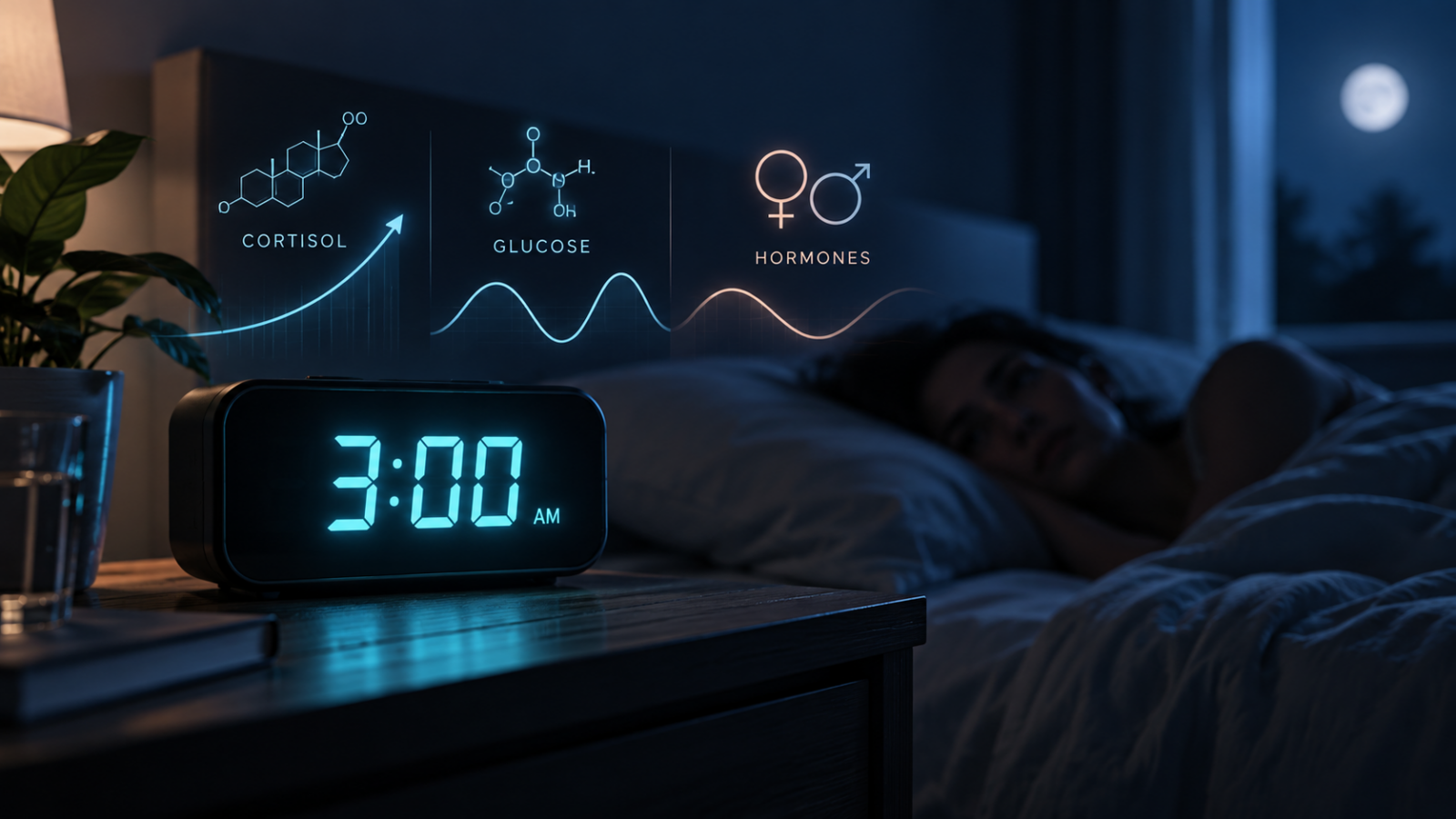

You have done the blood work. Your doctor says everything looks “normal.” But you still feel exhausted, your sleep is wrecked, and your weight will not budge no matter what you try. Sound familiar? The DUTCH test picks up where standard labs leave off, measuring not just your hormone levels but how your body processes, converts, and eliminates them. That deeper view often explains what blood work alone cannot.
Book a free discovery call to find out if the DUTCH test is right for you.
Below, we break down exactly what the DUTCH test measures, how to interpret the results, and why functional medicine providers rely on it to build targeted treatment plans.
What Is the DUTCH Test?
DUTCH stands for Dried Urine Test for Comprehensive Hormones. It is an advanced hormone panel that uses dried urine samples collected at home over a 24-hour period. Created by Precision Analytical and available since 2012, the test measures 35+ markers spanning sex hormones, adrenal hormones, hormone metabolites, and organic acid markers tied to nutrient status and neurotransmitter function.
Unlike a standard blood draw that captures a single snapshot, the DUTCH test tracks how your hormones shift throughout the day and, more importantly, how your body breaks them down. That metabolite data is what sets it apart. A 2019 peer-reviewed study published in BMC Chemistry (Newman et al.) validated that dried urine metabolite measurements correlate reliably with serum results, confirming the test’s clinical accuracy.
Providers who practice functional medicine use the DUTCH test as a primary diagnostic tool because it reveals patterns that blood panels miss entirely.
What Does the DUTCH Test Measure?
The DUTCH test covers four major categories. Here is what each one tells your provider about your health.
Sex Hormones and Their Metabolites
The test measures estrone (E1), estradiol (E2), and estriol (E3), along with their downstream metabolites: 2-OHE1, 4-OHE1, and 16-OHE1. These metabolite pathways matter because they show how your body detoxifies estrogen.
- The 2-OH pathway is generally considered the safest route for estrogen clearance
- The 4-OH pathway produces metabolites linked to DNA damage when not properly neutralized by methylation
- The 16-OH pathway creates more potent estrogen metabolites that can drive tissue growth
If you are dealing with estrogen dominance or low estrogen symptoms, these metabolite ratios tell your provider whether the issue is production, conversion, or clearance.
On the progesterone side, the DUTCH test measures b-pregnanediol (the major metabolite) and a-pregnanediol, which influences mood and sleep quality. Low values here often correlate with progesterone deficiency symptoms like anxiety, insomnia, and irregular cycles.
Androgen markers include testosterone, DHEA-S, 5a-DHT, androsterone, and etiocholanolone. If your DHEA-S comes back low, see our DHEA supplements guide for practical guidance on forms, dosing, and what to test before supplementing. For men whose serum testosterone comes back “normal” but who still experience fatigue and low drive, the metabolite breakdown can reveal whether testosterone is converting too aggressively into DHT or estrogen.
Adrenal Hormones and Cortisol Patterns
Standard blood work measures cortisol at one point in time. The DUTCH test maps your free cortisol and cortisone levels at four different times throughout the day, revealing your complete diurnal cortisol curve.
This is valuable because cortisol should be highest in the morning and taper off by evening. A flattened curve, an inverted pattern, or a cortisol spike at night can point to HPA axis dysfunction, commonly called adrenal fatigue. The test also measures metabolized cortisol, which shows your total cortisol output, not just the free fraction.
The DUTCH Plus version adds the Cortisol Awakening Response (CAR), measured through saliva samples taken in the first 30 minutes after waking. A blunted CAR is associated with chronic stress, burnout, and depression.
Organic Acid Markers
These markers round out the clinical picture:
- Melatonin (6-OHMS): Shows whether your body produces enough melatonin for healthy sleep
- B6, B12, and biotin markers: Nutrient cofactors needed for proper hormone metabolism
- Glutathione marker: Indicates oxidative stress levels
- Dopamine metabolite (HVA): Relevant for motivation, focus, and mood
- 8-OHdG: A marker for DNA and oxidative damage
- Methylation markers: Critical for safe estrogen detoxification through the 2-OH pathway
These organic acids often explain why two people with identical hormone levels feel completely different. One may have poor methylation blocking estrogen clearance, while the other has adequate nutrient cofactors keeping everything running smoothly.
DUTCH Test vs. Blood Work vs. Saliva Testing
Each testing method has strengths. Here is a side-by-side comparison to help you understand where the DUTCH test fills the gaps.
| Factor | Blood (Serum) | Saliva | DUTCH (Dried Urine) |
|---|---|---|---|
| Collection | In-lab blood draw | At-home saliva samples | At-home dried urine over 24 hrs |
| Hormone metabolites | Not measured | Not measured | Extensive metabolite pathways |
| Cortisol pattern | Single snapshot | 4-point diurnal curve | 4-point diurnal curve + metabolized cortisol |
| Estrogen detox pathways | Not assessed | Not assessed | 2-OH, 4-OH, 16-OH pathways mapped |
| Organic acid markers | Not included | Not included | Melatonin, B vitamins, glutathione, dopamine |
| Insurance coverage | Typically covered | Rarely covered | Not covered; HSA/FSA eligible |
| Best for | Standard screening, thyroid, clear deficiencies | Basic cortisol curve, free hormone levels | Complex symptoms, HRT monitoring, adrenal assessment |
| Limitations | Snapshot in time; misses metabolites | Limited markers; contamination risk | No tissue-level data; requires trained provider |
For many patients, blood work and the DUTCH test are complementary. Standard labs handle thyroid function, CBC, and metabolic panels well. The DUTCH test adds the metabolite and adrenal data that blood work results simply cannot capture.
Wondering which tests you actually need? Schedule a free consultation and our team will recommend the right panel based on your symptoms.
Who Should Get a DUTCH Test?
The DUTCH test is not necessary for everyone. But for certain clinical situations, it provides information that no other test can match. Here are the most common scenarios where functional medicine providers recommend it:
- Women with PMS, PMDD, or irregular cycles: Progesterone and estrogen metabolite patterns clarify the root cause
- Perimenopause and menopause evaluation: Tracks how hormone levels and metabolism shift during the transition, helping guide bioidentical hormone replacement therapy (BHRT) decisions
- Anyone on HRT who needs safety monitoring: The estrogen metabolite pathways (especially the 4-OH pathway) help ensure hormones are being metabolized safely
- Men with low-T symptoms but “normal” blood results: The metabolite data reveals whether testosterone is converting favorably or being lost to excessive DHT or estrogen conversion
- Suspected adrenal dysfunction or chronic fatigue: The 4-point cortisol curve and CAR reveal stress response patterns invisible on a single blood draw
- Sleep issues: Melatonin and nighttime cortisol measurements help identify root causes
- Patients with signs of hormonal imbalance despite “normal” labs: The metabolite data often explains the disconnect between lab numbers and how you feel
How Does the DUTCH Test Collection Process Work?
The collection is simple and done entirely at home:
- Receive your kit: The test arrives with collection cards, a prepaid return envelope, and instructions
- Collect samples: You saturate small filter paper cards with urine at 4-5 specific times over a 24-hour period (evening, bedtime, first morning, second morning)
- Dry the samples: Let the cards air-dry for 24 hours
- Ship them back: Drop the prepaid envelope in the mail
- Results in 7-10 business days: Your provider reviews the results and walks you through findings during a consultation
For the DUTCH Plus version, you also collect saliva samples in the first 30 minutes after waking to capture the Cortisol Awakening Response. The DUTCH Cycle Mapping option requires 9+ samples collected across your menstrual cycle, giving a day-by-day hormone picture for cycling women.
What Happens After Your DUTCH Test Results Come In?
This is where most articles about the DUTCH test stop. They tell you what the test measures but not what your provider actually does with the data. At 1st Optimal, here is the typical process:
- Pattern recognition: Your provider reviews the full metabolite map, looking for imbalances in production, conversion, and clearance across all hormone pathways
- Root cause identification: Instead of treating a single low number, they trace the issue upstream. Low progesterone metabolites combined with elevated cortisol, for example, points to stress-driven progesterone steal rather than simple deficiency
- Personalized protocol design: Treatment plans may include hormone optimization, targeted supplements to support methylation or adrenal function, lifestyle modifications, and follow-up testing to track progress
- Ongoing monitoring: Repeat DUTCH testing at 3-6 month intervals confirms that protocols are working and metabolite pathways are normalizing
Because the DUTCH test captures metabolite data, your provider can adjust protocols with precision rather than guessing. This is why telehealth platforms that specialize in hormone optimization increasingly rely on it as a foundational diagnostic tool.
Ready to see what your hormones are actually doing? Book a free discovery call with 1st Optimal to get started.
How Much Does a DUTCH Test Cost?
Pricing varies depending on the version:
- DUTCH Complete: Approximately $300-500 through most providers
- DUTCH Plus: Approximately $400-600 (adds the Cortisol Awakening Response)
- DUTCH Cycle Mapping: Approximately $500-700 (full menstrual cycle hormone tracking)
Most health insurance plans do not cover the DUTCH test directly. However, it is typically eligible for HSA (Health Savings Account) and FSA (Flexible Spending Account) funds. Some patients also submit claims for out-of-network reimbursement with varying success.
1st Optimal members receive discounted pricing on advanced diagnostics including the DUTCH test, with an average savings of 25% compared to retail pricing through the membership program.
Why Don’t Most Doctors Order the DUTCH Test?
This is one of the most common questions patients ask. There are a few reasons:
- Training gap: Most medical school programs focus on serum-based lab interpretation. Dried urine metabolite analysis requires additional training that many conventional physicians have not completed
- Insurance limitations: The test is not covered by most insurance plans, making it harder to recommend in conventional practice settings where patients expect covered diagnostics
- Scope of practice focus: Conventional medicine excels at identifying clear pathology (disease states). Functional medicine focuses on optimizing function within the “normal” range, which is where the DUTCH test adds the most value
This does not mean the test lacks scientific backing. The Newman et al. studies (2019, 2021) published in BMC Chemistry and PMC have validated the methodology. It simply means the DUTCH test sits in the functional and integrative medicine toolkit rather than the conventional one.
Curious about the process? See how 1st Optimal works at 1st Optimal.
If you’re ready to take the next step, explore our 1st Optimal membership to see how we support your health goals.
To learn how personalized care can help, explore our men’s hormone optimization program.
Frequently Asked Questions
What can a DUTCH test diagnose?
The DUTCH test does not diagnose diseases on its own. It identifies hormonal imbalances, metabolite pathway issues, adrenal dysfunction patterns, and nutrient cofactor deficiencies that inform clinical decision-making. Your provider uses the data alongside your symptoms, history, and other lab work to guide treatment.
Is the DUTCH test worth the cost?
For patients with complex or persistent symptoms that standard blood work has not explained, the DUTCH test often provides the missing piece. The metabolite and cortisol pattern data frequently changes the treatment approach. For routine hormone screening without specific concerns, standard blood work may be sufficient.
What should you avoid before taking a DUTCH test?
Follow your provider’s specific instructions, but general guidelines include: avoid biotin supplements for 72 hours before collection, limit excessive water intake during the collection window (overhydrated samples can dilute results), and collect samples on a typical day (avoid collection during illness or unusual stress).
How often should you repeat the DUTCH test?
Most providers recommend repeating the test 3-6 months after starting or adjusting a hormone protocol. Once levels and metabolites stabilize, annual retesting is usually sufficient to confirm ongoing balance.
Can men benefit from the DUTCH test?
Yes. The DUTCH test measures testosterone metabolites, DHEA-S, cortisol patterns, and estrogen conversion, all of which are relevant for men dealing with fatigue, weight gain, brain fog, or low libido. Men with “normal” serum testosterone but persistent symptoms often find answers in the metabolite data.
Next Steps
If your standard labs keep coming back “normal” but you still do not feel like yourself, the DUTCH test may reveal what your blood work is missing. The metabolite pathways, cortisol curve, and organic acid markers it captures give your provider a complete picture of your hormonal health, not just a single-point snapshot.
At 1st Optimal, our providers use the DUTCH test regularly to build personalized hormone optimization protocols for patients across all 50 states through our telehealth platform. Whether you are navigating perimenopause, exploring testosterone therapy, or trying to figure out why you are exhausted despite doing everything “right,” we can help.
Book your free discovery call today to discuss whether the DUTCH test is the right next step for your health.