

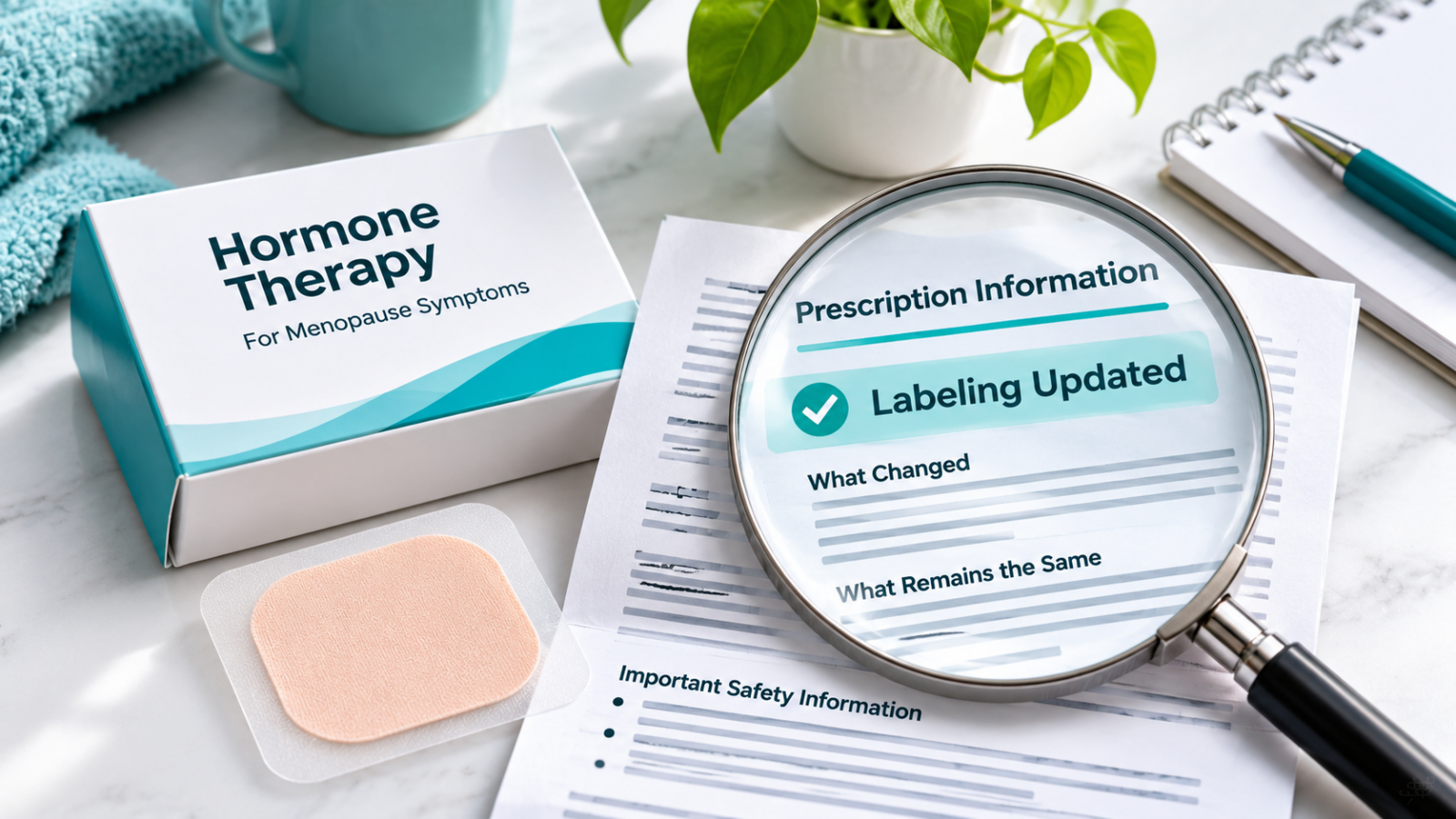
The answer requires more nuance than either “hormones are dangerous” or “hormones are completely safe.” The U.S. Food and Drug Administration updated how certain risks are presented in labeling for menopausal hormone therapy. The agency has not erased every risk, removed every contraindication, or recommended treatment for every woman.
For someone dealing with disruptive hot flashes, night sweats, painful sex, or sleep problems related to menopause, this is an opportunity to revisit an informed conversation with a healthcare professional. For someone already using therapy, it is a reason to review the current label and individualized treatment plan, not to change medication independently.
This guide explains the FDA hormone therapy label updates through November 19, 2026, the history behind them, which products are affected, what safety considerations remain, and practical questions to bring to your next appointment.
Key Takeaways About the FDA Hormone Therapy Updates
- On November 10, 2025, the FDA requested labeling changes for menopausal hormone therapy products; it subsequently approved changes for selected products in 2026.
- Revised boxed warnings remove statements concerning cardiovascular disease, breast cancer, and probable dementia, but relevant risks remain important to clinical decisions.
- The boxed warning for endometrial cancer remains for systemic estrogen-alone therapy, making uterine status and appropriate progestogen protection essential.
- The FDA also requested changes to previous language about using the lowest effective dose for the shortest possible time.
- Local low-dose vaginal estrogen and systemic hormone therapy serve different purposes and have different exposure profiles.
- Age, time since menopause, personal history, formulation, route, and preferences all affect the balance of potential benefit and harm.
- Removing a warning does not turn hormone therapy into a treatment for weight loss, dementia prevention, or routine heart disease prevention.
FDA Hormone Therapy Label Updates: What Happened and When?
The current labeling story unfolded in stages. That matters because an announcement about proposed changes is not the same as approval of revised prescribing information for a specific medication.
November 10, 2025: FDA requests revisions
The FDA announced that it was asking companies to modify warnings for menopausal hormone therapies, often called hormone replacement therapy or HRT. The proposal followed a scientific review, an expert discussion in July 2025, and public input. It covered systemic medications and local vaginal products, while recognizing that their clinical purposes and exposures differ.
February 12, 2026: first approvals
The agency approved updated labeling for six menopausal hormone therapy products. The initial approvals represented combination estrogen and progestogen therapy, estrogen alone, progestogen alone, and vaginal estrogen. Those approvals made the policy change concrete for products whose manufacturers had completed the regulatory process.
October 30, 2026: additional patch updates
Federal health officials announced approval of three more estradiol transdermal patch labels. Officials also discussed manufacturer efforts to respond to increased demand for estradiol patches. Demand or availability should never determine whether a specific product is medically appropriate, but access can influence which approved options a patient and clinician discuss.
As of this article’s November 19, 2026 review date, the FDA’s updated-label listing included nine named products. Other manufacturers may continue through the approval process. Readers should check the exact product’s current prescribing information rather than assume every menopause medication has identical wording.
What Is an FDA Boxed Warning?
A boxed warning is the most prominent safety warning in FDA-approved prescription drug labeling. It draws attention to serious or potentially life-threatening risks that prescribers and patients need to consider. The familiar nickname “black box warning” describes its presentation, but the formal term is boxed warning.
Prescription labels contain many sections beyond that box. These include indications, dosage instructions, contraindications, warnings and precautions, adverse reactions, and information for particular patient populations. A risk can remain clinically important even when it is no longer highlighted in the boxed-warning section.
That distinction is central to the FDA hormone therapy label updates. The agency changed the placement or wording of specified statements because it judged that broad boxed warnings did not adequately convey differences among patient groups and formulations. The revision did not mean that previous trial outcomes never happened or that an individual patient’s medical history no longer matters.
Think of a medication label as a structured clinical reference, not a single safety score. A good decision requires reading the relevant parts together and considering the reason for treatment.
Exactly What Changed in FDA Menopause Hormone Therapy Labeling?
The November 2025 request identified several specific changes. Most importantly, the FDA asked manufacturers to remove boxed-warning language about cardiovascular disease, breast cancer, and probable dementia for menopausal hormone therapy products. It also requested removal of probable dementia warning language from the labeling as a whole.
Another revision concerned endometrial cancer. The agency requested removing that warning from the box for products other than systemic estrogen-alone drugs, while preserving the boxed endometrial cancer warning for systemic estrogen-alone therapy. This protects an important distinction involving people who still have a uterus.
The FDA also requested removing the instruction to use the lowest effective dose for the shortest duration from the boxed-warning wording. This does not require clinicians to prescribe higher doses or continue treatment indefinitely. Appropriate dosing and periodic review remain necessary.
Age and time since menopause receive more attention
For systemic products, the FDA requested language addressing consideration of treatment for moderate to severe vasomotor symptoms in women younger than 60 or within 10 years of menopause. The agency also called for inclusion of relevant Women’s Health Initiative data from participants aged 50 to 59.
For local vaginal estrogen, requested revisions condensed safety information to emphasize evidence more relevant to lower-dose local treatment. Product labels still need to be interpreted individually.
These are labeling changes, not a new finding that every treatment works equally well for every symptom. A woman with vaginal dryness alone may need a very different approach from someone experiencing frequent hot flashes and night sweats.
What Did Not Change: Hormone Therapy Still Has Risks
The most important safety message is simple: removing statements from a boxed warning does not erase all associated risks. The FDA specifically retained cardiovascular disease and breast cancer information elsewhere in relevant systemic product labels, including warnings and precautions.
Systemic estrogen and estrogen-progestogen therapy can carry risks involving blood clots, stroke, certain cancers, and gallbladder disease. The size of those risks varies with factors such as age, health history, formulation, and route. Different outcomes have different evidence, so there is no accurate blanket claim that hormone therapy either always causes or always prevents a specific disease.
Contraindications remain important. A history of hormone-sensitive cancer, thromboembolic disease, stroke, heart attack, certain liver conditions, or unexplained vaginal bleeding may substantially change treatment decisions. Specific product labels should guide assessment, including whether an alternative is more appropriate.
The endometrial cancer boxed warning remains for systemic estrogen used without adequate uterine protection in a woman who has a uterus. That warning is not a technicality: exposure to systemic estrogen without appropriate progestogen can stimulate the uterine lining and raise cancer risk.
Women should not discontinue necessary progestogen or ignore unusual bleeding because they saw a headline about the FDA removing boxed warnings. Likewise, someone whose medical history makes systemic therapy inappropriate should not interpret the revisions as personal clearance to begin treatment.
Why Did Hormone Therapy Carry Such Prominent Warnings?
The history begins with the Women’s Health Initiative, or WHI, a set of major studies evaluating health outcomes in postmenopausal women. Two large randomized hormone trials studied oral conjugated equine estrogens, with or without medroxyprogesterone acetate, in different groups of participants. The combined estrogen-progestin trial was stopped in 2002 and the estrogen-alone trial in 2004.
Results raised concerns about breast cancer in the combined therapy trial and stroke and lack of coronary heart disease prevention in the estrogen-alone trial. Separate memory studies involving women aged 65 to 79 reported higher rates of probable dementia in relevant treatment groups.
Regulatory warnings introduced after these results sought to communicate serious safety concerns. The problem later debated was whether warnings based heavily on particular treatments and populations were being interpreted as applying identically to all women, ages, doses, routes, and vaginal preparations.
The original research remains important. It helped establish that systemic hormone therapy should not be used indiscriminately to prevent chronic disease. Later analyses, however, explored how outcomes varied by treatment timing and participant age. A balanced understanding must acknowledge both the original findings and what subsequent evidence has clarified.
Why Did the FDA Reassess Hormone Therapy Warnings?
One central issue was the difference between the WHI study population and many women seeking treatment for newly bothersome menopause symptoms. The average participant in the original hormone trials was approximately 63 years old, while hot flashes and night sweats often emerge during the 40s and 50s.
Researchers subsequently examined younger participants and longer follow-up periods. They also studied other formulations, including transdermal estradiol, that were not the same as the original trial regimens. These developments prompted discussion of whether all hormone products should carry the same most prominent statements.
The FDA concluded that revised labels could better communicate treatment considerations. This position has received both support and scrutiny. The Menopause Society welcomed the removal of the boxed warning for low-dose vaginal estrogen while stressing that systemic treatment still has potential risks requiring individualized assessment. Some clinicians have called for stronger comparative evidence rather than overgeneralizing from newer interpretations.
For patients, the practical message is neither to distrust earlier safety research nor to treat the label change as proof that all concerns were exaggerated. The evidence has become more nuanced, and good medical decisions should reflect that nuance.
Which Hormone Therapy Products Have Updated FDA Labeling?
The FDA maintains an official list of menopausal hormone therapies with revised prescribing information. At the November 2026 review, the listed products represented four treatment categories.
| Category | Products listed by FDA | General role |
|---|---|---|
| Systemic estrogen plus progestogen | Bijuva | Combined systemic treatment for selected menopausal symptoms |
| Systemic estrogen alone | Divigel, Cenestin, Enjuvia, Minivelle, Vivelle, Vivelle-Dot | Systemic estrogen, with uterine protection added when indicated |
| Progestogen alone | Prometrium | Progesterone used in appropriate regimens, including with systemic estrogen |
| Local vaginal estrogen | Estring | Local treatment for certain vaginal symptoms |
This list identifies updated prescribing information, not every available menopause medicine. Inclusion does not make one brand universally preferable. Treatment choice depends on symptoms, approval, availability, insurance, tolerability, and individual safety considerations.
Check the product’s own current label through the FDA or DailyMed. Similar names can describe different doses and delivery systems. Never assume that a vaginal ring providing systemic estrogen has the same exposure profile as a local low-dose vaginal ring.
Systemic Hormone Therapy Versus Low-Dose Vaginal Estrogen
The distinction between systemic and local treatment is especially important to understanding the warning revisions. Systemic estrogen circulates through the body and is commonly used to treat moderate to severe hot flashes and night sweats. It may be delivered through pills, patches, gels, or other approved systems.
Low-dose vaginal estrogen is intended primarily to treat local symptoms of genitourinary syndrome of menopause, or GSM. These may include vaginal dryness, irritation, discomfort during sexual activity, and some urinary symptoms. Because systemic absorption is generally low, extrapolating all risks from higher-exposure oral hormone regimens can be misleading.
The Menopause Society specifically supported removing the boxed warning for low-dose vaginal estrogen. Local therapy may be appropriate for women who do not need treatment for whole-body symptoms, but it does not generally treat frequent hot flashes.
It is also important not to lump all vaginally administered products together. Some vaginal estrogen rings are designed to deliver systemic doses and have different considerations. Your clinician can clarify the specific product, its approved purpose, and how much hormone reaches the circulation.
Women with a history of estrogen-dependent cancer should have an individualized discussion involving their treating teams. Even a lower-exposure treatment needs context, especially when prior cancer therapy or current symptoms complicate the decision.
What Symptoms Can Menopausal Hormone Therapy Treat?
Systemic estrogen therapy is the most effective established treatment for bothersome menopause-related hot flashes and night sweats. For eligible patients, controlling those symptoms can make it easier to sleep, work, exercise, and participate in everyday life. The aim is symptom relief and improved functioning, not achieving a specific hormone number.
Systemic hormone therapy can also prevent bone loss and reduce fractures during use, although treatment decisions for osteoporosis prevention depend on an individual’s risk and alternative options. Local vaginal estrogen is effective for certain GSM symptoms, particularly dryness and discomfort associated with lower estrogen levels.
Some women experience improvements in sleep when nighttime vasomotor symptoms are reduced. Hormone therapy is not automatically the correct treatment for insomnia without hot flashes, and other causes such as sleep apnea, pain, or mood symptoms should be considered.
Benefits must be judged against personal risks. Someone experiencing mild symptoms may prefer nonhormonal strategies. Someone with severe, disruptive symptoms and no contraindications may consider systemic treatment after discussing available choices.
FDA approval applies to specific indications. Marketing language such as “restores youth,” “reverses aging,” or “balances every hormone” goes beyond what these approvals establish.
Who Needs a More Careful Risk Assessment?
Every patient deserves an appropriate review before systemic hormone therapy, but some histories call for particular caution. Tell your provider about previous breast or endometrial cancer, clotting disorders, deep vein thrombosis, pulmonary embolism, stroke, heart attack, liver disease, and unexplained vaginal bleeding.
Other considerations include smoking, blood pressure, diabetes, migraine patterns, obesity, family history, and cardiovascular risk. These do not all carry identical implications; some may affect the choice of route while others may make a treatment inappropriate.
Ask the prescriber to explain your absolute risk when meaningful data are available, not just whether a relative risk is described as increased. A small relative change from a low starting risk can have a different practical significance from the same relative change in a person with a high baseline risk.
Discuss personal cancer history rather than relying only on general population statistics. Some women may need coordinated input from an oncologist, gynecologist, primary care clinician, or other specialist.
Before starting treatment, clarify what symptoms are being treated, how improvement will be assessed, and which side effects require immediate attention. The FDA label changes support informed decisions, not shortcuts around medical assessment.
Why Uterine Status Still Determines the Hormone Regimen
If you have a uterus, systemic estrogen without sufficient progestogen protection can stimulate the endometrium, the uterine lining. Over time, that exposure can increase the risk of endometrial hyperplasia and cancer. This is why clinicians commonly prescribe a suitable progesterone or progestin regimen alongside systemic estrogen for women with an intact uterus.
If your uterus has been removed, estrogen-alone therapy may be considered when otherwise appropriate. Certain surgical histories and medical circumstances require a different discussion, so report previous procedures accurately.
The boxed warning for endometrial cancer remains on systemic estrogen-alone products. Do not stop a prescribed progestogen merely because the FDA revised other warning statements. Also report unexpected or persistent vaginal bleeding, whether or not you take hormone therapy. Bleeding after menopause deserves medical assessment rather than being assumed to be a harmless medication effect.
Does Starting Hormone Therapy Before Age 60 Matter?
Age and time since menopause are important considerations, not magic safety cutoffs. For many healthy women younger than 60 or within 10 years of menopause, the benefit-risk balance of systemic treatment for bothersome hot flashes appears more favorable than for women starting much later.
The FDA requested labeling language reflecting this context. It does not mean that all women under 60 should begin treatment, nor that every woman above 60 must stop. Starting therapy at an older age or long after the final menstrual period may carry greater absolute risks, particularly for cardiovascular and thromboembolic outcomes.
If menopause occurred early after surgery or medical treatment, the discussion can differ from typical natural menopause. A clinician should evaluate the cause, age, symptoms, and potential benefits of treatment.
Do Pills, Patches, Gels, and Vaginal Rings Have the Same Risks?
No. Route and formulation can influence hormone exposure and some safety outcomes. Oral estrogen passes through the liver before reaching the wider circulation, while transdermal estradiol enters through the skin. Observational evidence suggests transdermal approaches may carry a lower venous blood clot risk than oral estrogen, although individual comparisons and long-term randomized evidence have limitations.
Patch or gel treatment is not automatically risk-free. Products differ in dosing, application instructions, approved indications, and contraindications. Oral formulations may still be suitable for some patients. Local low-dose vaginal treatments generally produce much lower systemic exposure than medications intended for whole-body effects.
Ask whether your medical history favors a specific route, whether you need a progestogen, how to apply the medicine correctly, and which side effects to watch. A shared choice may also consider skin sensitivity, convenience, cost, and reliable pharmacy availability.
Does Removing the “Shortest Duration” Statement Mean Unlimited Treatment?
The FDA requested removal of a broad boxed-warning instruction about using the lowest effective dose for the shortest time. That change should not be interpreted as a recommendation for higher dosing, lifelong treatment, or stopping follow-up appointments.
Some women have symptoms lasting many years and may reasonably consider continued treatment after reevaluating their benefits and risks. Others prefer to taper or stop when symptoms become manageable. There is no single appropriate stopping date for every person.
Use a dose and regimen suited to the clinical indication, and periodically review whether it is still useful. Your clinician can help reassess symptoms, bleeding patterns, medical history, cardiovascular risk, and personal preferences. Do not abruptly alter treatment based on a social media interpretation of the revised label.
What the FDA Label Changes Do Not Prove
The new wording is not evidence that systemic hormone therapy prevents heart disease, Alzheimer’s disease, or every aspect of aging. Hormone therapy should not be prescribed solely to prevent cardiovascular disease or dementia. The FDA’s decision to remove probable dementia language from labeling does not settle all scientific questions about cognitive outcomes.
Hormone therapy also is not an approved weight-loss medication. Improvements in night sweats may help sleep and daily functioning, but those benefits should not be turned into promises about belly fat, athletic performance, or guaranteed mental clarity.
Careful messaging matters. A useful treatment for specific symptoms can still be inappropriate for other goals. Evaluate every claim by asking what outcome was actually studied, in which population, and using which formulation.
Do the Updates Apply to Compounded “Bioidentical” Hormones?
FDA-approved products can contain hormones chemically identical to those made by the human body, including estradiol and micronized progesterone. The term “bioidentical” does not automatically mean that a product is custom compounded or safer.
Compounded hormones are not FDA-approved. The agency does not review each compounded formulation for safety, effectiveness, or quality before marketing. ACOG advises against routinely prescribing compounded menopausal hormone therapy when appropriate FDA-approved formulations are available.
Compounding can meet a genuine individual need, such as an allergy to an ingredient in an approved product, but that requires a clinically justified discussion. Hormone pellets deserve particular caution because exposure can be difficult to adjust or reverse after placement.
The 2025–2026 label revisions for approved medications do not grant approval to compounded preparations or validate claims of superior safety. Ask exactly what you are receiving, its regulatory status, and whether a suitable approved alternative exists.
What if You Cannot or Do Not Want to Use Hormone Therapy?
Women should have meaningful choices regardless of whether systemic hormones are appropriate. Evidence-based nonhormonal medications can reduce hot flashes for selected patients. Options may include certain antidepressants, gabapentin, or FDA-approved neurokinin-targeting medications, each with its own risks and precautions.
For vaginal dryness or discomfort, moisturizers and lubricants may help. Some patients may consider other approved treatments, including vaginal DHEA or oral ospemifene, depending on symptoms and health history.
Persistent insomnia may respond to cognitive behavioral therapy for insomnia, especially when sleep problems are not solely caused by night sweats. Avoid relying on supplements marketed as a universal hormone reset; effectiveness and safety evidence can be limited, and products may interact with prescriptions.
The right plan depends on which symptom matters most. A patient who mainly has painful intercourse needs a different discussion from someone waking drenched in sweat several times nightly.
Questions to Ask Your Healthcare Provider About the New FDA Labels
Bring the exact medication name, dose, delivery method, and a list of other prescriptions or supplements. Explain which symptoms you want to treat and how they affect your daily life. Then use questions like these to guide a practical discussion:
- Has the FDA-approved label for my specific product changed?
- Which risks remain in its warnings, precautions, and contraindications?
- What benefits are realistic for the symptoms I am experiencing?
- How do my age, menopause timing, and medical history affect my options?
- Do I need progesterone or another progestogen because I have a uterus?
- Would a patch, gel, pill, or local vaginal treatment be most appropriate?
- How and when will we evaluate symptom response and adverse effects?
- What alternatives are available if I prefer not to use systemic hormones?
You can ask your clinician to walk through an actual prescribing label. Seeing where a warning moved or what language was revised often makes the headlines much easier to understand.
Monitoring Hormone Therapy After the FDA Label Changes
An individualized care plan should include periodic follow-up. Your provider may review symptom relief, medication tolerance, blood pressure, relevant health conditions, new diagnoses, and whether additional screening is appropriate. Routine age-appropriate breast and cervical screening remains important according to clinical recommendations.
Unexpected vaginal bleeding warrants discussion, especially after menopause. Seek urgent evaluation for warning signs such as sudden chest pain, difficulty breathing, one-sided leg swelling, sudden severe neurological symptoms, or other potentially serious reactions.
Many women do not need repeated broad hormone panels to adjust menopause symptom therapy. Clinical response and a focused history are often more useful than chasing a laboratory target. Testing should address a real diagnostic or safety question.
At 1st Optimal, the value of personalized functional health support lies in connecting medical evaluation with manageable nutrition, activity, sleep, and follow-up habits. Testing or treatment should be guided by clinical needs rather than assumed necessary for every patient.
Frequently Asked Questions About the FDA Hormone Therapy Label Updates
1. Did the FDA remove the boxed warning from hormone replacement therapy?
The FDA requested removal of specific boxed-warning statements concerning cardiovascular disease, breast cancer, and probable dementia from menopausal hormone therapies. It approved revised labels for selected products in 2026. This is not the same as deleting every boxed warning from every treatment. Systemic estrogen-alone products retain an endometrial cancer boxed warning. Check the exact medication’s current prescribing information before drawing conclusions.
2. When did the FDA hormone therapy warning changes take effect?
The FDA announced its request on November 10, 2025. Six product labels received approvals on February 12, 2026, and three additional estradiol patch labels were announced on October 30, 2026. Implementation occurs product by product as manufacturers submit and receive approval for revisions. A news headline about the policy does not guarantee that every brand’s labeling has already changed.
3. Does removing a boxed warning mean menopause hormones are safe for everyone?
No. A revised label changes how specified safety information is presented. Systemic therapy still has potential risks, contraindications, and situations requiring careful evaluation. Age, personal history, uterine status, treatment route, and symptom severity affect whether benefits may outweigh harms. Talk with a qualified clinician before starting, changing, or stopping a prescription.
4. Which hormone therapy products have the new FDA labels?
The FDA’s November 2026 listing includes Bijuva, Prometrium, Estring, Divigel, Cenestin, Enjuvia, Minivelle, Vivelle, and Vivelle-Dot. These products represent different hormone types and delivery systems. The list may change as additional labels are approved. Inclusion shows updated prescribing information, not that one product is the safest or best choice for every patient.
5. Was the breast cancer risk removed from hormone therapy labels?
The FDA requested removal of breast cancer statements from the boxed-warning section, not elimination of relevant breast cancer risk information everywhere. Breast cancer warnings remain elsewhere in systemic product labeling. Risks differ by regimen, duration, and personal history. Women with a history of hormone-sensitive breast cancer require particularly careful individualized assessment and often consideration of nonhormonal alternatives.
6. What happened to heart disease and stroke warnings?
Specified cardiovascular language was removed from boxed warnings in approved revisions, but cardiovascular risk information remains in relevant warnings and precautions. Hormone therapy is not recommended solely to prevent heart disease. A clinician should consider prior blood clots, stroke, cardiovascular disease, blood pressure, and other factors before prescribing systemic hormones.
7. Did the FDA prove hormone therapy cannot cause dementia?
No. The FDA requested removal of probable dementia warning language, reflecting concerns about generalizing findings from older trial participants to younger women seeking symptom treatment. That revision does not establish that hormone therapy prevents dementia or that cognitive effects are identical across ages and regimens. Hormone therapy should not be started solely to prevent Alzheimer’s disease.
8. Why does estrogen-alone therapy still have an endometrial cancer warning?
Systemic estrogen can stimulate the uterine lining in women who have a uterus, increasing the risk of endometrial hyperplasia and cancer without adequate progestogen protection. The FDA retained the boxed warning for systemic estrogen-alone products. If your uterus is intact, ask how your regimen protects it, and report unusual or persistent bleeding promptly.
9. Is low-dose vaginal estrogen different from systemic HRT?
Yes. Low-dose vaginal estrogen targets local genitourinary symptoms and generally produces much lower bloodstream exposure than systemic therapy. The Menopause Society supported removing the broad boxed warning for these local products. Vaginal dryness and painful intercourse may respond, but low-dose local estrogen is not usually intended to treat hot flashes. Product type and dose still matter.
10. Are estrogen patches safer than pills?
Route can affect certain risks. Observational research suggests transdermal estrogen may carry a lower venous clot risk than oral therapy, but that does not make patches universally safe or appropriate. Dose, personal history, and other factors still matter. Discuss your symptoms, convenience, and risk factors with your prescriber before choosing a route.
11. Should women start hormone therapy before age 60?
Women younger than 60 or within 10 years of menopause often have a more favorable benefit-risk balance for systemic treatment of bothersome symptoms, provided contraindications are absent. That is a consideration, not a requirement. Not every woman needs hormones, and symptom severity and personal preferences are important.
12. Can women older than 60 use menopause hormone therapy?
Age alone does not answer every clinical question, but starting systemic hormone therapy after 60 or long after menopause may involve greater absolute risks. Continuing an existing regimen is a separate decision from starting treatment for the first time. Your clinician should review symptoms, medical history, available evidence, and alternatives rather than relying on an automatic age rule.
13. Can women now use HRT indefinitely?
The FDA requested removal of blanket boxed-warning language about the shortest duration, but it did not recommend unlimited treatment. Some women may continue therapy while benefits remain meaningful and risks acceptable. Others may stop or change regimens. Periodic review of symptoms, medical history, side effects, and preferences is still essential.
14. Does hormone therapy help with weight gain or belly fat?
Hormone therapy is not approved as a weight-loss treatment. Menopause-related hormonal changes can influence body fat distribution, but starting estrogen does not reliably produce meaningful weight loss. Discuss sleep, activity, nutrition, medications, and metabolic risk with your provider. If weight management is a major concern, it deserves its own evidence-based care plan.
15. Will hormone therapy prevent Alzheimer’s disease?
Current evidence does not support prescribing menopausal hormone therapy solely to prevent Alzheimer’s disease or other dementias. The changed FDA language should not be interpreted as a new prevention indication. Cognitive symptoms can also reflect poor sleep, mood concerns, medications, or other conditions. Seek an appropriate evaluation if memory difficulties are persistent or worsening.
16. Are compounded bioidentical hormones covered by the update?
FDA labeling approvals apply to specific FDA-approved drugs, not compounded formulations as a category. Compounded hormones are not FDA-approved, and their quality, safety, and effectiveness are not reviewed by the agency before marketing. Some approved products contain body-identical estradiol or progesterone. Ask whether an approved formulation meets your needs before considering compounding.
17. Do I need estrogen or progesterone blood tests to qualify for treatment?
Not necessarily. Typical perimenopause in women older than 45 is often assessed from symptoms and menstrual history. A single hormone level can fluctuate and may not guide treatment. Tests may be appropriate for particular symptoms, younger age, or other suspected conditions. Ask how any proposed test would influence clinical decisions rather than assuming a broad panel is required.
18. What menopause symptoms are most likely to improve with HRT?
Systemic hormone therapy is well established for moderate to severe hot flashes and night sweats. Appropriate vaginal estrogen treatment can improve dryness and discomfort. Some systemic regimens may help protect bone health. Sleep may improve when nighttime sweating is reduced. Treatment is less predictable for isolated fatigue, weight gain, or cognitive concerns without another clear indication.
19. I stopped HRT because of warnings. Should I restart?
Do not restart an old prescription without review. Your health history, medications, age, and treatment goals may have changed since you stopped. A clinician can assess whether the original reasons for stopping still apply, explain the current label for your product, and compare hormone and nonhormonal options. The FDA revision creates an opportunity for discussion, not an automatic instruction to resume.
20. What should I ask my doctor about the FDA hormone therapy updates?
Ask whether your specific medication’s label changed, which risks remain, and what benefits are realistic for your symptoms. Discuss your age, uterus status, cancer and clotting history, and preferred route of treatment. Clarify the follow-up schedule, warning signs, and nonhormonal alternatives. The best outcome is a shared decision you understand, not simply receiving a prescription.
Final Takeaway: Better Information Supports Better Menopause Care
The FDA hormone therapy label updates are significant because they encourage more specific discussions about benefits, risks, treatment timing, and formulation. They should reduce neither reasonable caution nor women’s access to information about effective symptom relief.
For women struggling with hot flashes, night sweats, vaginal symptoms, or disrupted sleep, appropriate therapy can make a meaningful difference. But no warning change can replace an evaluation of your medical history or establish the right choice for you.
At 1st Optimal, personalized functional health care combines medical oversight with coaching to help women address symptoms and sustainable health habits. Explore 1st Optimal and discuss whether a health consultation is appropriate for your goals.
Educational only, not medical advice. Seek personalized guidance before changing hormone therapy.
Research and Resources
- U.S. Food and Drug Administration.
FDA Requests Labeling Changes Related to Safety Information to Clarify the Benefit/Risk Considerations for Menopausal Hormone Therapies.
November 10, 2025.
Read the FDA statement. - U.S. Food and Drug Administration.
FDA Approves Labeling Changes to Menopausal Hormone Therapy Products.
February 12, 2026.
Read the FDA announcement. - U.S. Department of Health and Human Services.
FDA Advances Menopause Care With Additional Labeling Approvals.
October 30, 2026.
Read the October 2026 update. - U.S. Food and Drug Administration.
Menopausal Hormone Therapies With Updated Prescribing Information.
View the updated medication list. - Office on Women’s Health.
Hormone Therapy Safety.
U.S. Department of Health and Human Services.
Read patient safety guidance. - The Menopause Society.
The Menopause Society Comments on the FDA Announcement on Hormone Therapy.
November 10, 2025.
Read the professional society response. - American College of Obstetricians and Gynecologists.
Hormone Therapy for Menopause.
Read clinical patient guidance. - American College of Obstetricians and Gynecologists.
Compounded Bioidentical Menopausal Hormone Therapy.
Clinical Consensus, November 2023; reaffirmed 2026.
Read clinical recommendations. - U.S. Food and Drug Administration.
Menopause.
Women’s Health Topics.
Read FDA menopause guidance. - The Menopause Society.
Hormone Therapy for Women: Benefits and Risks.
Read hormone therapy guidance.