
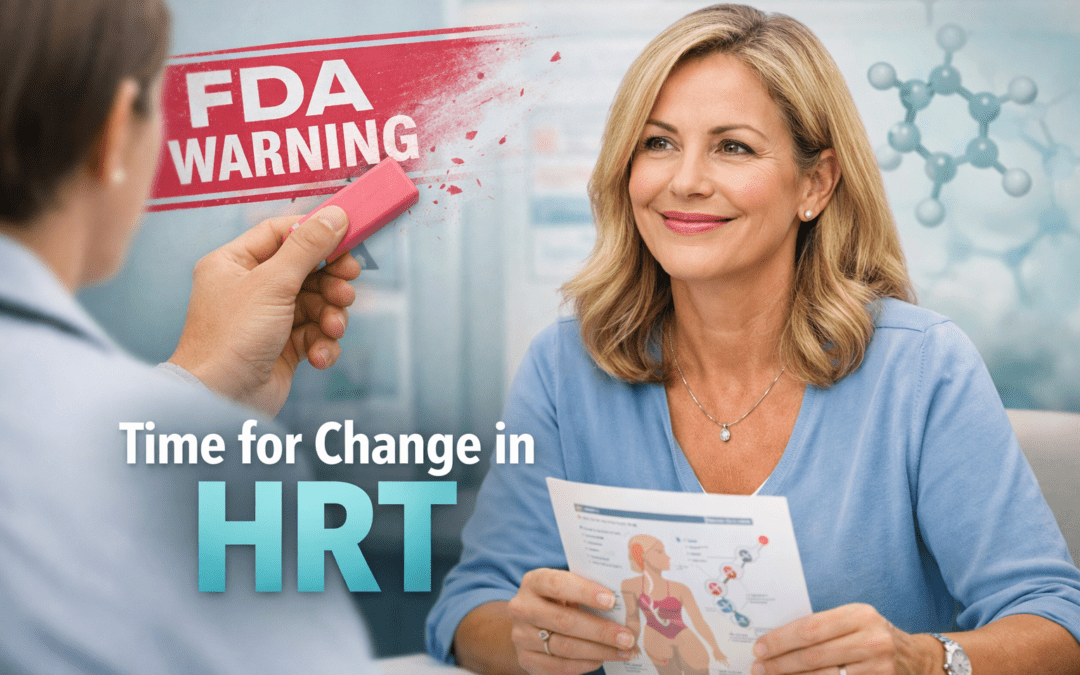
Hormone Replacement Therapy (HRT) has long been a cornerstone in managing the debilitating symptoms of menopause, helping millions of women regain their health, vitality, and quality of life. However, for over two decades, a controversial FDA black box warning on estrogen-based therapies has led to unnecessary fear and hesitation, preventing many women from accessing potentially life-changing treatment. This post delves into the historical background of HRT’s controversial safety warnings, why the data behind these warnings is outdated, and why the FDA should remove the black box label to empower women and improve their health.
Understanding Hormone Replacement Therapy
Hormone Replacement Therapy (HRT) involves supplementing the body’s natural hormones, estrogen and progesterone, to alleviate symptoms of menopause and perimenopause. Menopause causes a significant drop in these vital hormones, leading to hot flashes, night sweats, vaginal dryness, mood swings, sleep disturbances, and increased risk for conditions like osteoporosis and heart disease.
For women experiencing these symptoms, HRT offers a proven, effective way to manage menopause. HRT can help prevent bone density loss, reduce the risk of cardiovascular diseases, improve cognitive function, and offer relief from the mood-related effects of hormonal changes.
Over the last few decades, however, HRT has been shrouded in controversy due to a 2003 FDA warning about its potential risks. This label, which remains in effect today, advises that estrogen products may increase the risk of stroke, blood clots, and breast cancer. But is this warning still relevant with today’s advances in HRT formulations and research?
The FDA’s 2003 Warning: The Backdrop of Fear
In 2003, after the Women’s Health Initiative (WHI) trial results were published, the FDA added a black box warning to all estrogen-based products, citing concerns about breast cancer, stroke, and blood clots. This decision was based on the results of WHI, which showed that women taking estrogen plus progestin had higher rates of breast cancer and stroke compared to those taking a placebo.
This warning triggered widespread panic among healthcare providers and patients, leading to a significant drop in HRT usage. By 2005, the use of HRT in the United States had fallen by more than 70%. This decline in usage has persisted, and many women continue to suffer unnecessarily from menopause symptoms, avoiding HRT out of fear of these risks.
Reevaluating the Risks: New Insights into Breast Cancer and Cardiovascular Health
Breast Cancer Risk: Are the Concerns Valid?
One of the most alarming findings from the WHI study was the reported 26% increased risk of breast cancer in women using HRT. While this result caused significant concern, closer inspection of the data reveals several key flaws.
The absolute risk increase was minimal, about one additional case of breast cancer per 1,000 patient-years. Moreover, the WHI study lumped together women with prior HRT use and those with no prior use, which led to misleading conclusions. In fact, when researchers analyzed only those women who had never used HRT before the trial, the apparent risk increase disappeared.
Further, the types of hormones used in the WHI trial, conjugated equine estrogen (CEE) and medroxyprogesterone acetate (MPA), are outdated. Modern HRT therapies, including micronized progesterone and transdermal estrogen, have been shown to have a much lower risk profile for breast cancer. Recent studies, including a re-analysis of the WHI data, suggest that estrogen alone (without MPA) may even reduce the risk of breast cancer.
Cardiovascular Health: Rethinking the Risks
The WHI also raised concerns about cardiovascular risk, particularly the risk of stroke. The study reported a 41% increased risk of stroke for women on combined estrogen and progestin therapy. However, newer research has shown that this risk is likely due to the oral form of estrogen used in the WHI trial, which increases blood viscosity and can contribute to blood clotting. In contrast, modern transdermal estrogen formulations have not been shown to increase stroke risk.
Moreover, a 2015 Cochrane meta-analysis of 19 randomized controlled trials, including over 40,000 women, found that HRT reduced the risk of cardiovascular events by 48% when started within 10 years of menopause. This analysis suggests that early initiation of HRT offers protective benefits for heart health, particularly for women who begin treatment shortly after menopause.
Modern HRT: Safer, More Effective, and Life-Changing
Newer HRT formulations, including micronized progesterone and transdermal estrogen, have improved the safety profile of HRT dramatically. These therapies have fewer risks for breast cancer, stroke, and blood clots compared to older forms of HRT. In fact, transdermal estrogen has been associated with neutral or even positive effects on cardiovascular health, and micronized progesterone is less likely to cause negative side effects compared to MPA.
Studies show that modern HRT is the most effective treatment for managing menopausal symptoms like hot flashes, night sweats, and vaginal dryness. Most women experience a 60-90% reduction in vasomotor symptoms, leading to better sleep, improved mood, and an overall enhanced quality of life.
Additionally, HRT is an essential tool for maintaining bone density, preventing fractures, and improving muscle mass. Women who start HRT early, especially within 10 years of menopause, experience better overall health outcomes and have a significantly reduced risk of fractures, cardiovascular disease, and cognitive decline.
Why the FDA Should Remove the Black Box Label
The black box warning that the FDA placed on estrogen products in 2003 is now outdated and unsupported by current evidence. Modern HRT formulations are safer and more effective than ever, and the risks associated with older forms of therapy have been largely disproven. By removing this warning, the FDA would help empower women to make informed choices about their health and gain access to the benefits of HRT without the unnecessary fear of risks.
Case Studies: How Modern HRT Improves Quality of Life
- Case Study: Sarah, 52
Sarah struggled with severe hot flashes and night sweats that disrupted her sleep and daily activities. After avoiding HRT for years due to fear of breast cancer, she decided to try a modern HRT regimen with transdermal estrogen and micronized progesterone. Within three months, Sarah saw a 75% reduction in her hot flashes, improved sleep, and better overall energy. She was able to resume her workouts and enjoy her life again. - Case Study: Linda, 49
Linda was experiencing significant bone loss after menopause and was at high risk for fractures. She began HRT with transdermal estrogen and progesterone and, after one year, her bone mineral density improved by 5%, significantly reducing her fracture risk. Linda also experienced improved mood and cognitive function, which allowed her to remain active and engaged with her family.
FAQ About Hormone Replacement Therapy (HRT)
1. Is HRT safe?
Yes, when used properly and under medical supervision, modern HRT is very safe. New formulations like transdermal estrogen and micronized progesterone have shown minimal risks compared to older methods.
2. What are the side effects of HRT?
Common side effects can include headaches, bloating, and mood changes, but these are usually temporary and can be adjusted by changing the dosage or formulation.
3. Can HRT help with bone health?
Yes, estrogen plays a key role in maintaining bone density. HRT has been shown to increase bone mineral density and reduce fracture risk, especially in women who begin treatment early after menopause.
4. Does HRT increase the risk of breast cancer?
Modern HRT formulations, particularly those that use micronized progesterone and transdermal estrogen, do not carry the same risks for breast cancer as the older HRT formulations used in past studies.
5. When should I start HRT?
HRT is most effective when started soon after menopause, typically within 10 years. Early initiation helps alleviate symptoms and protect against long-term health risks.
Resources for Further Reading
- American College of Obstetricians and Gynecologists (ACOG): Hormone Therapy
- The Menopause Society: HRT and Menopause Management
- Cochrane Review on Hormone Therapy and Cardiovascular Health
- Journal of the American Medical Association (JAMA): Long-term Effects of HRT
- The Endocrine Society: Latest Guidelines on Menopause and HRT
Final Thoughts
It’s time for the FDA to remove the outdated black box warning on HRT products. Modern research and safer formulations show that HRT is a highly effective treatment for managing menopause and improving women’s health. The FDA’s removal of the warning label will give women the power to choose the best options for their health without fear. It’s time to embrace a future where women can live healthier, fuller lives after menopause with the help of hormone replacement therapy.
Are you considering HRT for menopausal symptoms? Book a free consultation with 1st Optimal today and discover how personalized hormone therapy can help you regain your vitality and achieve optimal health.