
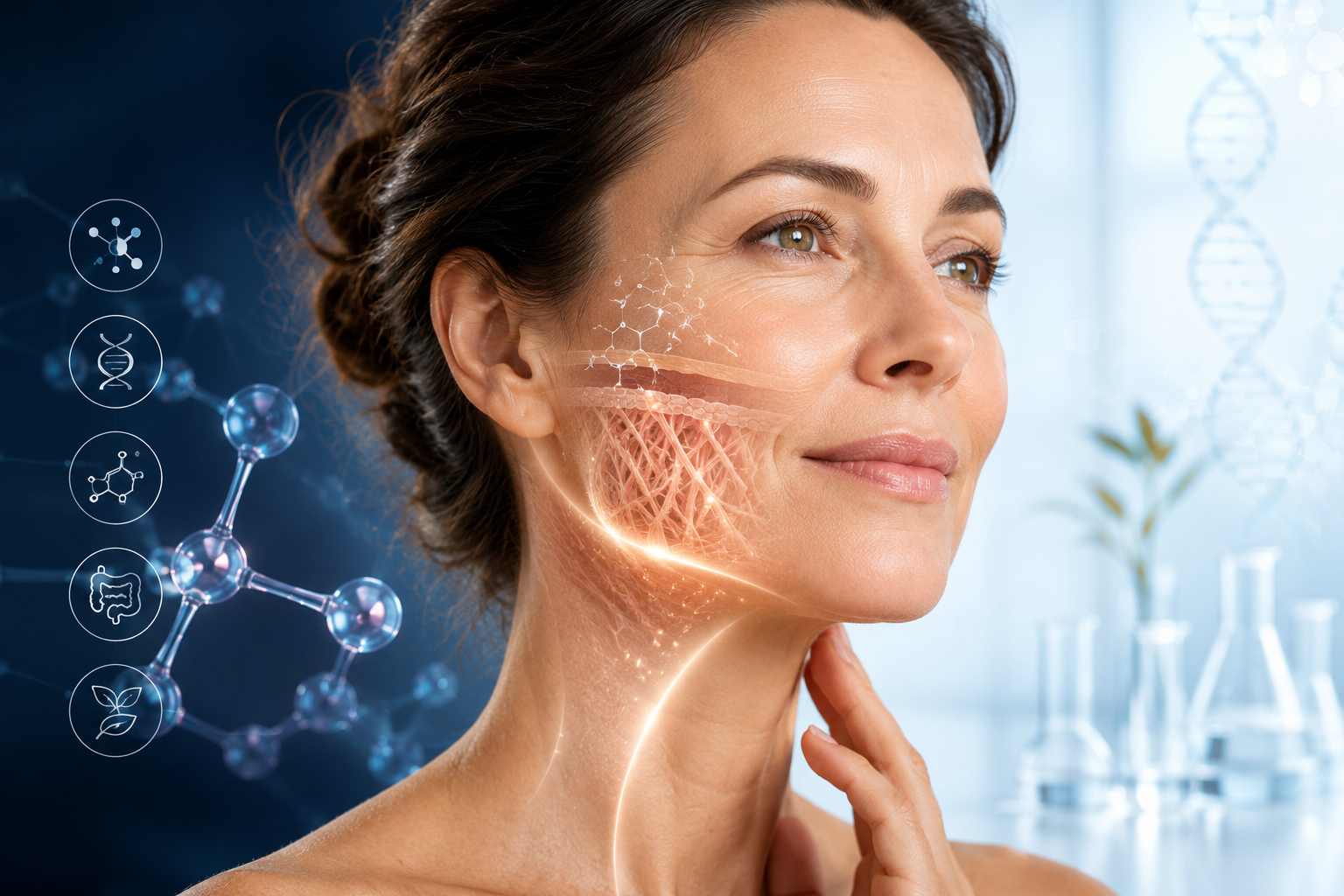
The skincare industry has embraced peptides enthusiastically and with some justification. Walk down any beauty counter or scroll through any skincare community and you will encounter serums, creams, and eye treatments proudly featuring peptide complexes with names that sound more like a chemistry lecture than a moisturizer. Some of these products deliver real benefits. Many are more marketing than mechanism. And nearly all of them represent only a fraction of what peptide science can actually accomplish for skin health when applied at a clinical level.
In my practice at 1st Optimal, skin health is a topic that comes up frequently not because we are a skincare clinic, but because skin is one of the most visible and sensitive indicators of internal health. The quality of your skin reflects your hormonal status, your inflammatory load, your gut health, your nutritional status, and your body’s regenerative capacity. When patients who have been struggling with skin quality changes despite a careful topical routine begin addressing their hormonal environment and internal biology, the skin changes often exceed anything they achieved with products alone.
That said, topical peptides are a legitimate and useful tool. The question is how to think about them in the right context, what they can and cannot do, how they relate to clinical peptide therapy, and how to build a comprehensive skin health strategy that addresses both the surface and the systemic.
The Biology of Skin Aging
Skin aging is driven by two interacting processes: intrinsic (chronological) aging and extrinsic (environmental) aging. Understanding both helps clarify why a topical routine, however well designed can only address part of the problem.
Intrinsic aging is driven by the passage of time and the cumulative effects of cellular senescence, telomere shortening, declining stem cell function, reduced collagen synthesis (collagen production decreases by approximately 1% per year after age 30), increasing matrix metalloproteinase (MMP) activity that degrades collagen, and the hormonal changes that accompany aging particularly declining estrogen, growth hormone, and IGF-1.
Extrinsic aging is driven primarily by UV radiation (photoaging), pollution, tobacco smoke, poor nutrition, chronic sleep deprivation, and chronic stress. Photoaging accounts for approximately 80% of visible facial aging, making sun protection the highest-leverage topical intervention in skin health.
Within the intrinsic aging category, hormonal changes play a particularly significant role that is frequently under addressed in skincare conversations:
- Estrogen directly stimulates dermal fibroblasts to produce collagen and hyaluronic acid. Post-menopausal estrogen decline is associated with up to 30% loss of skin collagen within the first five years, a change that is measurable, visible, and only partially addressed by topical interventions.
- Growth hormone and IGF-1 promote protein synthesis and tissue maintenance throughout the body, including the dermis. GH axis decline with age contributes to thinning, reduced elasticity, and slower healing.
- Testosterone plays a role in sebaceous gland activity and skin thickness.
A topical skincare routine, regardless of how well formulated, cannot compensate for these systemic hormonal changes. This is the fundamental limitation of surface-only approaches and the reason that comprehensive skin health in my patients involves looking inward as well as outward.
What Topical Peptides Can Actually Do
Within their limitations, topical peptides do offer real benefits that are supported by dermatological research. The key is matching realistic expectations to mechanism.
Signal Peptides: These short chains of amino acids mimic natural biological signals in the skin, instructing fibroblasts to produce more collagen, elastin, and hyaluronic acid. Research on palmitoyl peptides (a commonly used class in skincare formulations) has shown measurable increases in dermal collagen density with consistent use over 12 to 24 weeks. A 2020 review in the Journal of Drugs in Dermatology found that signal peptides can produce statistically significant reductions in wrinkle depth with sustained use in the appropriate formulation vehicles (Draelos et al., 2020).
Carrier Peptides: These peptides facilitate the delivery of trace elements (particularly copper) to the dermis, where they support wound healing, collagen cross-linking, and antioxidant enzyme function. Copper peptides are among the best-studied and most established topical peptide categories.
Neurotransmitter-inhibiting Peptides: These compounds work by reducing the intensity of repetitive facial muscle contractions that contribute to expression lines. They are sometimes described as topical “Botox-like” agents, though with considerably smaller effect size than injected neurotoxins.
Enzyme-inhibiting Peptides: These work by inhibiting enzymes that degrade collagen and elastin (matrix metalloproteinases), helping to preserve the structural proteins already present.
The Limits of Topical Penetration
This is the clinical reality that the skincare industry tends to underemphasize: effective skin penetration is the primary challenge for topical peptide products. The skin’s outermost layer (the stratum corneum) is designed to be an impermeable barrier which is excellent for protecting against pathogens and toxins, but creates a significant obstacle for topically applied active ingredients, including peptides.
Peptide molecules are generally larger and more hydrophilic than the lipid-rich stratum corneum prefers to allow through. Without appropriate delivery technology (lipid complexing, nanotechnology encapsulation, specific carrier systems), many topical peptides remain largely in the upper epidermis and do not reach the dermis, where collagen-producing fibroblasts reside.
This does not mean all topical peptides are ineffective, it means that formulation quality matters enormously. Peptides embedded in high-quality delivery vehicles that facilitate dermal penetration can produce meaningful effects. Peptides in cheap emulsions that sit on the skin surface without adequate penetration are largely decorative.
When evaluating any topical peptide product, the key questions are: What delivery technology is used? What concentration of peptide is included? What clinical evidence supports the specific formulation?
Clinical vs. Topical Peptide Therapy for Skin
This is where the conversation in my practice goes much deeper than typical skincare consultations. Clinical peptide therapy, systemic, prescribed, and professionally monitored can address skin health through mechanisms that topical products simply cannot reach.
Growth Hormone Axis Support: As discussed in Post 8, GH-releasing peptides can restore more youthful IGF-1 levels, which supports collagen synthesis systemically throughout the body, including in skin. This is not a surface effect; it is a restoration of the internal signaling environment that drives dermal health from within.
Collagen Synthesis Signaling: Specific systemic peptide categories have shown effects on fibroblast activity and collagen synthesis that go beyond what topical penetration can achieve. When the systemic signals for collagen production are optimized, the dermis responds throughout the entire body, not just in the areas where you applied a product.
Inflammatory Modulation: Systemic peptides with anti-inflammatory properties can reduce the chronic low-grade inflammation that drives collagen degradation and accelerates skin aging. This is a root-cause approach that topical products cannot replicate.
Gut Health Support: Gut-lining supportive peptides can improve the absorption of nutritional cofactors (vitamin C, zinc, copper, amino acids) that are essential for collagen synthesis. Improving the nutritional foundation of skin health systemically is more impactful than trying to deliver those nutrients topically.
At 1st Optimal, we assess skin health as part of the whole-body picture. Patients interested in meaningful skin improvement work with us on optimizing both their hormonal environment and their systemic peptide protocols, alongside a curated topical regimen. Schedule a consultation to discuss your skin health goals.
How Hormones Shape Your Skin
The hormonal dimension of skin health is perhaps the most underappreciated by patients who have been told their skin concerns are a topical problem.
Estrogen is the hormone most directly linked to skin quality in women. It stimulates fibroblasts to produce type I collagen, maintains skin hydration through hyaluronic acid synthesis, supports dermal thickness, and promotes wound healing. Post-menopausal women not on HRT consistently show faster and more dramatic skin aging trajectories than age-matched women on appropriately managed BHRT. A 2019 study in the British Journal of Dermatology found that women on estrogen therapy had significantly greater dermal thickness and collagen content than untreated post-menopausal women (Brincat et al., 2019).
Progesterone has sebaceous gland effects and may influence skin texture and sebum production. Its role in skin health is less well characterized than estrogen’s but clinically relevant.
Growth hormone and IGF-1 support fibroblast activity, protein synthesis in the dermis, and the overall regenerative capacity of skin. Age-related GH decline contributes to thinning, reduced elasticity, and slower healing that most topical products cannot address.
If you are investing significantly in topical skincare and not achieving the results you expect, a hormonal and systemic evaluation may reveal drivers of skin aging that a serum cannot touch. Explore our comprehensive skin and hormone health programs.
Building a Comprehensive Skin Protocol
A genuinely comprehensive approach to skin health in my practice looks something like this:
Foundation (Systemic):
- Optimized hormonal status (BHRT where indicated)
- Growth hormone axis support (GH-releasing peptide therapy where appropriate)
- Anti-inflammatory nutrition and gut health
- Adequate protein intake to provide collagen synthesis substrate (1.2-1.6g/kg body weight)
- Micronutrient optimization (vitamin C, zinc, copper, vitamin A)
Middle Layer (Lifestyle):
- Consistent resistance training (stimulates GH, IGF-1, and supports lean mass)
- Sleep optimization (GH is released during deep sleep; poor sleep accelerates skin aging)
- Stress management (cortisol degrades collagen and accelerates inflammatory aging)
Surface Layer (Topical):
- Broad-spectrum SPF 30+ daily (the highest-leverage topical intervention in photoaging prevention)
- Vitamin A/retinoid (most evidence-backed topical anti-aging ingredient)
- Vitamin C serum (antioxidant protection and collagen co-factor)
- Quality peptide complex in appropriate formulation vehicle
- Hydration support (hyaluronic acid, ceramides)
The topical routine supports and maintains the skin. The systemic interventions are what drive meaningful regenerative change. Both matter, and neither is sufficient alone.
FAQs:
Q: Do topical peptides work for anti-aging? Yes, with appropriate expectations. Topical peptides in well-formulated products with effective penetration technology can meaningfully reduce fine lines, improve skin firmness, and support dermal health over consistent, sustained use. They are not a substitute for addressing systemic hormonal and metabolic drivers of skin aging, but they are a valuable component of a comprehensive skin health strategy.
Q: What is the difference between topical and clinical peptide therapy for skin? Topical peptide products apply peptides to the skin surface to produce localized dermal effects within the limits of penetration technology. Clinical peptide therapy involves systemic administration (typically by injection) of therapeutic peptides that act through body-wide mechanisms, including supporting the growth hormone axis and collagen synthesis throughout the entire body.
Q: Can peptides regrow collagen in the skin? Both topical signal peptides and systemic peptide therapies can support collagen synthesis, though through different mechanisms and to different magnitudes. Topical peptides stimulate local fibroblast activity; systemic peptides (particularly GH-releasing categories) support collagen synthesis through growth factor signaling throughout the body. Neither approach rebuilds collagen as rapidly as many products claim, but consistent use over months produces measurable improvement.
Q: Will hormone therapy improve my skin? For women with declining estrogen — particularly perimenopausal and post-menopausal women — bioidentical HRT can produce meaningful improvements in skin thickness, collagen content, hydration, and wound healing capacity. This is a systemic effect that topical products cannot replicate. Many patients report skin improvements as one of the most noticeable early benefits of optimized HRT.
Q: How do I choose a quality topical peptide product? Look for products that specify the peptide concentration, use appropriate delivery technology for penetration (liposomes, nanoparticles, or lipid-based carriers), are backed by clinical study data (not just ingredient research), and are formulated with stable, shelf-appropriate packaging. Avoid products where “peptides” appear near the bottom of the ingredient list without concentration specification.
Q: What is the best anti-aging approach for skin in your 40s and 50s? A layered approach addressing systemic hormonal health (BHRT if indicated), growth hormone axis support (peptide therapy where appropriate), anti-inflammatory lifestyle, adequate protein, optimized sleep, and a well-formulated topical regimen including SPF, vitamin A, vitamin C, and quality peptides. No single intervention is the answer — the integration is what produces meaningful, lasting results.
Conclusion
Peptides can and should be part of a comprehensive skin health strategy both topically, within the realistic limits of surface delivery, and systemically, through clinical peptide therapy that addresses skin aging from the inside out. But the most important insight I can offer is this: if you are struggling with significant skin quality changes in your 40s, 50s, or beyond and your topical routine is not producing the results you expect, the answer is almost certainly not a better serum. It is a deeper look at your hormonal environment, your growth hormone axis, your inflammatory burden, and your systemic biology.
At 1st Optimal, we build skin health strategies that integrate the topical and the systemic, the surface and the root cause. If you are ready to approach your skin health with the same rigor you bring to any other aspect of your health, we are ready to help you build that strategy.
Schedule your comprehensive skin and hormone health consultation today.
References:
- Draelos ZD, et al. Topical peptides in skincare: clinical evidence review. J Drugs Dermatol. 2020;19(3):302-308.
- Brincat MP, et al. Estrogen and the skin. Br J Dermatol. 2019;181(4):730-736.
- Murad H, et al. Collagen synthesis and skin aging. J Am Acad Dermatol. 2019;81(2):502-510.
- Lopez-Otin C, et al. Hallmarks of aging. Cell. 2023;186(2):243-278.
- Veldhuis JD, et al. Growth hormone secretion and IGF-1 in aging. Endocrinology. 2018.