

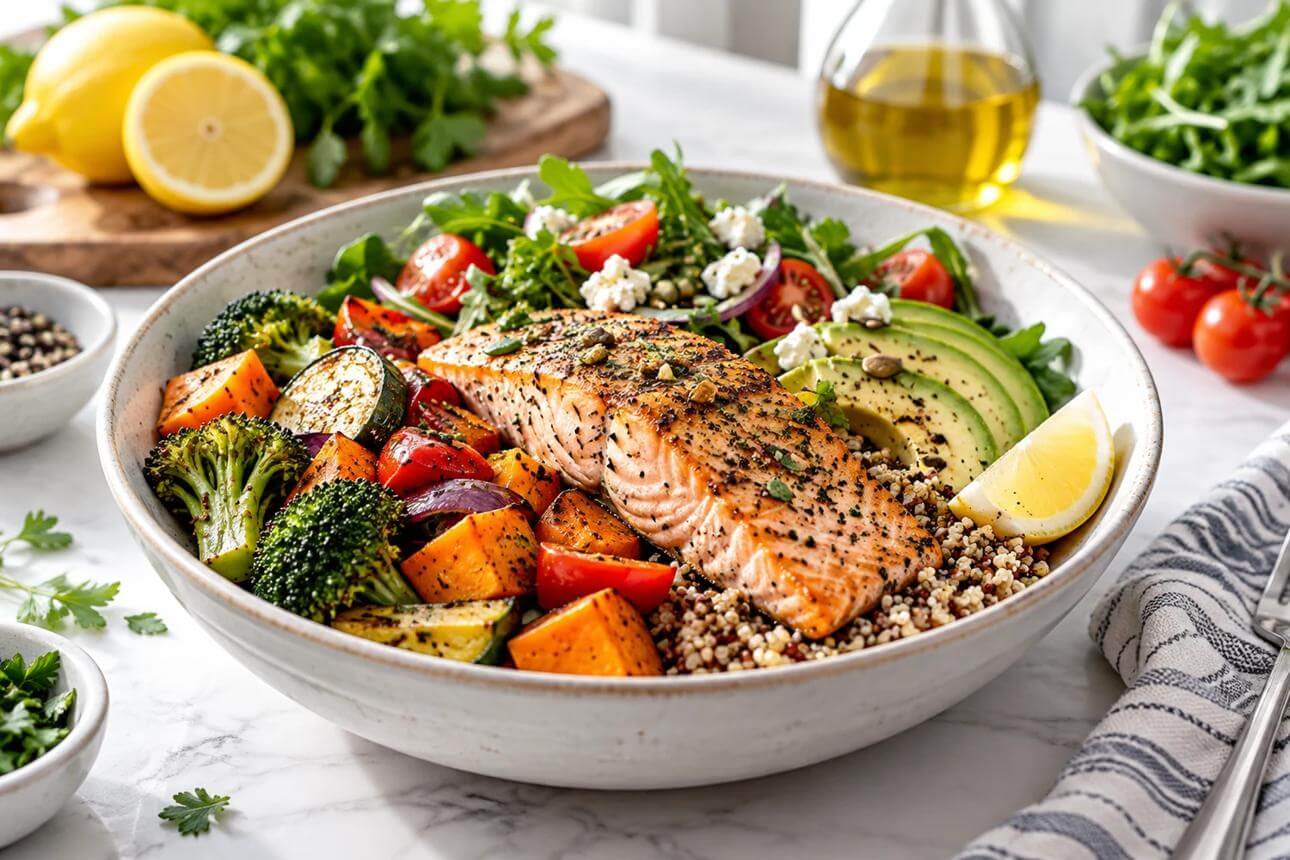
One week, the advice is to add protein to everything. The next, fiber is the nutrient everyone says you are missing.
Meanwhile, you are trying to maintain muscle, manage your weight, support digestion, and make meals that fit a busy life.
Do you need another protein shake? More beans? A fiber supplement? And which choice actually matters during perimenopause?
Protein and fiber serve different purposes. Protein supports muscle maintenance and repair, especially alongside resistance training. Fiber supports bowel function, and certain types help manage cholesterol and blood glucose. The priority is addressing what your current diet lacks, not choosing one nutrient at the expense of the other. Source: PubMed
For midlife women, the most useful nutrition plan brings both into ordinary meals without turning eating into a competition.
Why Does This Conversation Matter During Perimenopause?
Perimenopause is the transition leading to menopause. During this stage, women may notice changes in sleep, menstrual patterns, appetite, digestion, or body composition.
Research from the Study of Women’s Health Across the Nation found that fat gain accelerated and lean mass declined around the menopause transition. The pattern was not fully reflected by changes in body weight alone. Source: JCI Insight
That makes muscle-supporting nutrition relevant. Digestive comfort and cardiometabolic health also deserve attention.
However, there is no single protein-to-fiber ratio proven to resolve perimenopause symptoms.
A more practical question is: Does your eating pattern support your health, activity, and nutritional needs at this stage?
What Is the Difference Between Protein and Fiber?
| Nutrient | Main Roles | Common Food Sources |
|---|---|---|
| Protein | Provides amino acids for tissue maintenance, repair, and other essential functions. | Fish, poultry, eggs, dairy, tofu, tempeh, beans, and lentils. |
| Fiber | Supports bowel function; effects on glucose and cholesterol vary by fiber type. | Vegetables, fruit, whole grains, beans, lentils, nuts, and seeds. |
Some foods provide both. Beans, lentils, edamame, nuts, and seeds can contribute protein and fiber, although the amounts differ considerably.
This makes the debate less complicated than it first appears: a meal can support both goals.
Why Protein Deserves Attention
Protein Supports the Work You Do in Training
Resistance training provides a stimulus for muscle adaptation. Dietary protein supplies amino acids needed to support that process.
A large meta-analysis found that protein supplementation added to resistance training could improve gains in strength and fat-free mass in healthy adults. The research was not specific to perimenopause, and responses varied. Source: PubMed
That distinction matters. Protein can support a training plan, but simply adding more does not guarantee stronger muscles.
Your Daily Total Matters
A breakfast with very little protein, a light lunch, and a protein-heavy dinner may leave you with fewer opportunities to meet your needs comfortably.
Including protein-containing foods across meals can make the daily target easier to achieve. You do not need a perfect schedule or an exact number at every meal.
More Is Not Automatically Better
The same resistance-training meta-analysis found that benefits for fat-free mass did not continue increasing beyond an estimated total intake of approximately 1.6 grams per kilogram daily, on average. That is a population-level estimate, not a universal cutoff or prescription. Source: PubMed
It does challenge the idea that maximizing protein indefinitely produces better results.
Why Fiber Deserves Equal Consideration
Fiber Supports Bowel Regularity
An eating pattern dominated by meat, cheese, shakes, and low-fiber snacks may meet a protein target while leaving little room for plant foods.
NIDDK recommends adequate fiber and fluids as part of constipation care, with gradual increases so the digestive system can adjust. Source: NIDDK
Constipation has multiple causes, so persistent symptoms may require more than a dietary change.
Fiber Contributes to Metabolic Health
Certain soluble fibers can help reduce cholesterol absorption and slow glucose absorption after meals. Other fibers contribute more to stool bulk and bowel function.
These effects vary by fiber type; “fiber” is not one uniform substance. Source: FDA Dietary Fiber
A varied selection of fiber-containing foods provides a broader nutritional pattern than relying on a single added fiber ingredient.
Fiber-Rich Foods Bring More Than Fiber
Fruit, vegetables, legumes, whole grains, nuts, and seeds also contribute different vitamins, minerals, and other food components.
Choosing these foods helps keep nutrition broader than two numbers on a tracking app.
How Much Protein Do Women Need During Perimenopause?
There is no universally established protein target specific to perimenopause.
The adult Recommended Dietary Allowance is 0.8 grams per kilogram of body weight daily. It is designed to meet the needs of most healthy adults, rather than serve as a personalized training or weight-loss target. Source: National Academies
Higher intakes may be appropriate depending on activity, age, energy intake, and goals.
For many healthy women doing resistance training, approximately 1.2–1.6 grams per kilogram daily can be a reasonable range to discuss with a qualified professional. This draws on broader exercise and weight-management evidence rather than a rule that applies to every perimenopausal woman. Source: PubMed
For illustration:
| Body Weight | Protein at 1.2 g/kg | Protein at 1.6 g/kg |
|---|---|---|
| 130 lb | About 71 g/day | About 94 g/day |
| 150 lb | About 82 g/day | About 109 g/day |
| 170 lb | About 93 g/day | About 123 g/day |
These are calculations, not individualized recommendations. Using current body weight may overestimate needs for some people with obesity.
Kidney disease can change protein recommendations. People with chronic kidney disease should obtain individualized guidance rather than adopt a high-protein target independently. Source: NIDDK
How Much Fiber Should Women Eat?
National Academies reference values set an Adequate Intake of:
- 25 grams daily for women ages 19–50.
- 21 grams daily for women ages 51 and older.
The lower reference value after 50 reflects typical lower energy intake, not a sudden biological change on your birthday. Source: National Academies
These values provide context. Individual needs and tolerance vary.
If you currently eat little fiber, the first goal is a comfortable increase, not immediately reaching a much higher target.
Which Should You Prioritize First?
Look at the gap in your current eating pattern.
| Your Current Situation | A Useful First Step |
|---|---|
| You eat plenty of protein but few plants. | Gradually add fruit, vegetables, legumes, or whole grains. |
| You eat a varied plant-rich diet but little protein. | Add a substantial protein source to meals. |
| You are low in both. | Build meals around one protein source and one or two fiber-containing foods. |
| You have constipation or bloating. | Review bowel habits, fiber type, amount, fluids, and possible medical contributors. |
| You are losing weight and struggling to eat enough. | Get help meeting overall nutritional needs rather than maximizing either nutrient. |
This is a practical decision framework, not a diagnostic tool.
Your next useful adjustment may be small: adding yogurt to breakfast, beans to lunch, or vegetables and a whole grain to dinner.
Practical Meals That Include Protein and Fiber
You do not need specialty products to combine the two.
| Meal | Protein-Containing Foods | Fiber-Containing Foods |
|---|---|---|
| Yogurt Breakfast Bowl | Plain Greek yogurt | Berries, oats, chia seeds |
| Egg Breakfast | Eggs and, if desired, cottage cheese | Whole-grain toast, fruit, vegetables |
| Chicken Grain Bowl | Chicken and chickpeas | Quinoa, chickpeas, vegetables |
| Salmon Dinner | Salmon | Barley or brown rice, broccoli |
| Plant-Based Stir-Fry | Tofu or tempeh, edamame | Vegetables, edamame, brown rice |
| Lentil Soup Lunch | Lentils; optional yogurt topping | Lentils, vegetables, whole-grain bread |
Portions determine the final nutrient amounts. Use labels or a reliable food database when precise tracking would help.
The structure is flexible: choose a protein source, include plants, and adjust portions to your needs.
What Could a Realistic Day Look Like?
Here is one example of meal structure rather than a prescribed menu:
Breakfast: Greek yogurt with oats and berries.
Lunch: A chicken or tofu bowl with vegetables and a modest serving of beans and a whole grain.
Snack, if needed: Cottage cheese with fruit, or edamame.
Dinner: Fish, poultry, or tempeh with cooked vegetables and a potato, barley, or another preferred carbohydrate.
This approach spreads nutrition across the day and leaves room for preferences.
Someone with a smaller appetite, digestive symptoms, or different training demands may need a different arrangement.
What If More Fiber Makes You Bloated?
Increase gradually and pay attention to the source.
A large serving of beans, a high-fiber bar, and a fiber supplement added on the same day can be uncomfortable.
NIDDK notes that some people develop more gas symptoms when they consume excessive fiber or particular fermentable carbohydrates. Source: NIDDK
Practical adjustments include:
- Add one fiber-containing food at a time.
- Start with smaller portions.
- Try cooked vegetables if large raw salads are uncomfortable.
- Review added fibers and sugar alcohols in packaged products.
- Keep fluid intake appropriate for your health.
- Seek advice if symptoms persist.
More fiber is not the correct treatment for every digestive disorder. A dietitian can help select an approach that preserves variety without unnecessary restriction.
Are Protein Shakes and Fiber Supplements Useful?
They can be useful tools when they address a specific need.
A protein shake may help someone who cannot comfortably meet a protein target through meals. A fiber supplement may be appropriate for selected bowel symptoms or an intake gap.
However, a supplement should solve a defined problem. It should not crowd out meals or become an automatic purchase because a trend is popular.
Read the ingredient list. A product marketed for protein may also contain added fiber, sweeteners, or other ingredients that affect tolerance.
What About Women Taking a GLP-1?
Reduced appetite can make it harder to meet nutritional needs.
In that situation, trying to maximize both protein and fiber may create meals that are too filling to finish. A joint clinical advisory recommends individualized nutrition, management of gastrointestinal symptoms, and strength training during GLP-1 treatment. Source: American Society for Nutrition
The priority is adequate, tolerable nourishment, not reaching the highest possible numbers.
Persistent vomiting, severe constipation, or inability to eat or drink adequately needs clinical attention.
Can Protein or Fiber Balance Hormones or Eliminate Belly Fat?
Neither should be presented as a stand-alone hormone treatment or a guaranteed way to remove abdominal fat.
Menopause-related body composition changes involve several factors. Nutrition is important, but so are activity, muscle, sleep, medications, and medical circumstances. Source: The Menopause Society
Adequate protein and fiber can support a health plan without being credited with effects they have not been shown to produce.
Frequently Asked Questions
Is Protein or Fiber More Important During Perimenopause?
Both matter. Prioritize the shortfall in your current diet while working toward adequate intake of each. They perform different functions.
Does Every Woman Need 100 Grams of Protein?
No. Needs vary with body size, activity, goals, and health. A fixed target may be suitable for some women and inappropriate for others.
Do Women Need One Gram of Protein Per Pound?
That is not a universal requirement. Many people can meet their goals at lower intakes. Exercise research supports individualized planning rather than automatically prescribing the same pound-based rule to everyone. Source: PubMed
How Much Fiber Should a Woman Over 40 Aim For?
Reference values are 25 grams daily through age 50 and 21 grams from age 51 onward. Adjust the plan for intake, energy needs, symptoms, and tolerance. Source: National Academies
Can You Eat Protein and Fiber Together?
Yes. Many balanced meals include both, and legumes supply both nutrients.
Does a High-Protein Diet Cause Constipation?
Protein itself is not necessarily the cause. Constipation may develop when a dietary change reduces fiber-rich foods or fluids, alongside other possible contributors. Source: NIDDK
Should You Push Through Bloating to Reach a Fiber Target?
No. Increase gradually and reassess the type and amount. Persistent symptoms deserve evaluation. Source: NIDDK
Can Plant-Based Diets Provide Enough Protein?
They can be planned to do so. Include substantial sources such as tofu, tempeh, soy foods, beans, and lentils, with portions matched to your needs.
Does Eating More Protein Replace Strength Training?
No. Nutrition and resistance training have complementary roles in supporting muscle adaptation. Source: PubMed
Do You Have to Track Food Indefinitely?
No. A brief review can help identify gaps. Many women can then use repeatable meal patterns rather than ongoing detailed tracking.
Build Meals Around Your Life and Your Health
You do not need to win a nutrition trend.
You need an eating pattern that supports strength, digestion, and long-term health while remaining practical enough to maintain.
At 1st Optimal, we help women explore nutrition alongside training, sleep, symptoms, and appropriate medical next steps. The goal is to understand your needs and make useful adjustments, not hand every woman the same plan.
Book a free consultation with 1st Optimal to discuss your goals and explore personalized support.
This article provides general education and does not replace individualized medical or nutrition advice. Targets should reflect your health history, activity, and clinical circumstances.


