

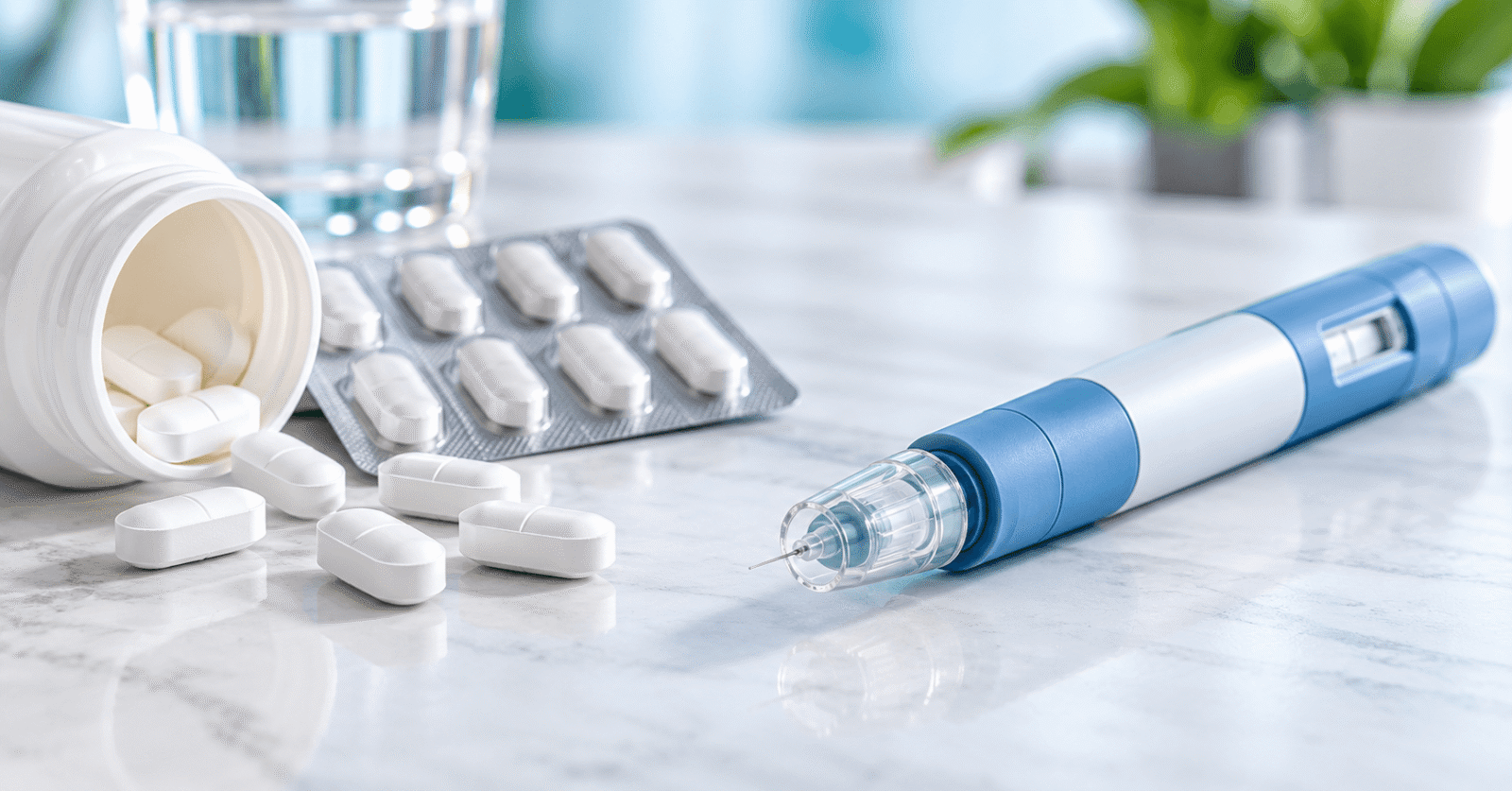
Now, more patients are asking a different question: Could a daily pill be an appropriate option for me?
On April 1, 2026, the FDA approved Foundayo, the brand name for orforglipron, for long-term weight management in eligible adults. Its approval expanded an oral treatment landscape that also includes Wegovy tablets containing semaglutide.
More options can make treatment more accessible and better suited to individual preferences. They can also create confusion.
Is a pill as effective as an injection? Does it cause fewer side effects? Who qualifies? And does avoiding needles make the medication simpler to use?
Neither pills nor injections are automatically the best choice. The appropriate medication depends on its approved uses, expected benefits, risks, daily requirements, affordability, and how well it fits your medical circumstances.
Here is how to approach the decision.
What Changed With GLP-1 Weight-Loss Pills in 2026?
The FDA approved Foundayo for use alongside a reduced-calorie diet and increased physical activity to reduce excess body weight and maintain weight reduction in adults with obesity, or overweight with at least one weight-related condition.
Orforglipron is an oral, small-molecule GLP-1 receptor agonist. It activates the GLP-1 receptor but differs chemically from peptide medications such as semaglutide.
For consumers, the important development is another prescription option, not proof that one form of treatment has replaced the others.
Oral medications also differ from one another. Their dosing routines, interactions, and evidence should be reviewed individually.
Which GLP-1 Options Come as Pills or Injections?
This comparison focuses on selected medications used for adult weight management rather than every diabetes or obesity medication.
| Medication | Form and Frequency | Practical Consideration |
|---|---|---|
| Foundayo: orforglipron | Daily tablet | Can be taken with or without food. |
| Wegovy: semaglutide tablets | Daily tablet | Requires an empty-stomach morning routine and a waiting period before food, drinks, or other oral medicines. |
| Wegovy: semaglutide injection | Weekly injection | Requires injection technique and product-specific storage planning. |
| Zepbound: tirzepatide | Weekly injection | Acts on both GIP and GLP-1 receptors and requires injection instruction. |
The table summarizes administration differences; these are not interchangeable prescriptions.
Diabetes brands containing related ingredients may have different approved indications. A familiar ingredient name does not make every brand or formulation equivalent.
Who Qualifies for Prescription Weight-Loss Medication?
For many adult weight-management medications, clinicians consider treatment when someone has:
- A BMI of 30 or higher, or
- A BMI of 27 or higher with a weight-related health condition, such as high blood pressure or type 2 diabetes.
These common thresholds are a starting point. The specific product’s labeling and the patient’s health history still matter.
An evaluation should also consider previous treatment, medications, pregnancy plans, nutritional status, and conditions that could make a particular drug inappropriate.
You do not need diabetes to qualify for every GLP-1 weight-management medication. However, wanting to lose a few pounds does not automatically establish medical eligibility.
Are Weight-Loss Pills as Effective as Injections?
The answer depends on the medication, dose, study population, and outcome being measured.
In the phase 3 ATTAIN-1 trial, the highest studied orforglipron dose produced an average 11.2% reduction in body weight over 72 weeks, compared with 2.1% with placebo, under the trial’s primary analysis. Participants also received dietary and activity support.
That is meaningful evidence of effectiveness. It is not a direct pill-versus-injection comparison.
Comparing percentages from unrelated trials can be misleading because studies differ in:
- Participants’ health and starting characteristics.
- Treatment duration.
- Dose and formulation.
- Lifestyle support.
- How discontinuation and missing results are handled.
A useful discussion asks how well a medication’s evidence matches your needs, rather than treating the largest advertised percentage as a universal prediction.
Why Do Different Articles Quote Different Results?
Trials may report more than one statistical analysis, for example, one estimating outcomes regardless of treatment discontinuation and another estimating outcomes with continued treatment.
Those numbers answer different questions.
Published research doses may also refer to an investigational formulation. Foundayo’s labeling explains that its approved tablet doses correspond to the formulation studied in the trials. Patients should follow the prescribed product rather than copy a dose from a research article.
Are Daily GLP-1 Pills More Convenient?
They can be, particularly for someone who prefers to avoid injections. But daily administration creates its own responsibilities.
Orforglipron Offers Meal Flexibility
Foundayo is taken once daily, with or without food. Tablets should be swallowed whole.
That may fit some schedules more easily than a medication requiring fasting.
Oral Semaglutide Requires a Specific Morning Routine
Wegovy tablets are taken on an empty stomach in the morning with water, up to four ounces. Patients must wait at least 30 minutes before eating, drinking, or taking other oral medications.
Someone who takes other morning medicines should discuss how to arrange the schedule.
Weekly Injections Reduce Dosing Frequency
Weekly treatment can suit someone who finds a daily medication difficult to remember.
It also requires comfort with administration, appropriate supplies, and attention to storage instructions.
Convenience is personal. The best routine is one you can follow correctly and consistently.
Do GLP-1 Pills Cause Fewer Side Effects Than Injections?
A tablet is not automatically gentler or safer.
Orforglipron’s obesity trial found an adverse-event profile consistent with other GLP-1 receptor agonists, with gastrointestinal symptoms an important consideration.
Common symptoms across these treatments can include:
- Nausea
- Vomiting
- Diarrhea
- Constipation
- Abdominal discomfort
Zepbound’s labeling also lists injection-site reactions among its common adverse reactions.
Tolerability varies. Someone who struggles with one medication may not have the same experience with another, but a switch cannot guarantee symptom relief.
Report side effects that interfere with eating, hydration, work, or normal activities. A falling scale does not make persistent vomiting or inadequate nutrition acceptable.
What Serious GLP-1 Risks Should Patients Discuss?
The full safety review is product-specific. Important issues include:
- Personal or family history of medullary thyroid carcinoma, or MEN 2.
- Previous pancreatitis or gallbladder problems.
- Severe gastrointestinal disease or delayed stomach emptying.
- Dehydration and kidney concerns.
- Diabetes medicines that can increase hypoglycemia risk.
- Pregnancy, breastfeeding, and planned procedures.
Foundayo carries a boxed warning concerning thyroid C-cell tumors and is contraindicated with a personal or family history of medullary thyroid carcinoma or MEN 2. The human relevance of the underlying GLP-1-related rodent findings remains uncertain.
Wegovy labeling includes warnings about pancreatitis, gallbladder disease, volume-depletion kidney injury, and other serious adverse reactions.
These examples are not a substitute for reviewing the exact prescription with a clinician.
Important: Seek prompt medical advice for severe or persistent abdominal pain, repeated vomiting, or inability to keep fluids down. Trouble breathing or a suspected severe allergic reaction requires emergency care.
Can GLP-1 Medications Interact With Other Prescriptions?
Yes. A complete medication review matters for pills and injections.
Foundayo has specific interaction considerations involving medicines that affect its metabolism and certain other drugs, including simvastatin. It also delays gastric emptying, which can affect absorption of oral medications.
Bring a list of prescriptions, over-the-counter medicines, and supplements. Do not assume that taking medicines at different times resolves every interaction.
What Should Women Know About Birth Control?
Product-specific instructions are important.
Foundayo’s labeling advises patients using oral hormonal contraception to switch to a nonoral method or add a barrier method for 30 days after starting and after each dose increase.
Zepbound’s instructions use a four-week period after starting and after each dose increase.
Discuss pregnancy planning before treatment. Weight-management medications should not be used to pursue weight loss during pregnancy.
Can You Switch From a GLP-1 Injection to a Pill?
A clinician may consider switching when appropriate, but it requires a plan.
Reasons might include preferences, tolerability, access, or difficulty following the existing routine.
There is no universal milligram-for-milligram conversion between products. Do not overlap treatments, reuse an old dose, or follow a social media switching schedule.
Ask your prescriber about:
- When to take the final dose of the current medication.
- When and how to start the replacement.
- Whether dose escalation is needed.
- How symptoms and response will be monitored.
Are GLP-1 Weight-Loss Pills Cheaper Than Injections?
Not necessarily.
The relevant cost is what you will actually pay for the prescribed dose and ongoing care. Insurance coverage, eligibility for savings programs, dispensing arrangements, and pricing can change.
Before choosing, request a current estimate that includes medication and follow-up. Ask what happens if coverage changes or a temporary discount ends.
A medication you cannot obtain consistently may be difficult to sustain, even if it works well.
Do Nutrition and Exercise Still Matter During GLP-1 Treatment?
Yes. Neither a pill nor an injection removes the need to support nutrition, muscle, and physical function.
A joint advisory from four professional organizations emphasizes adequate dietary intake, management of gastrointestinal symptoms, strength training, and ongoing support during GLP-1 treatment.
Your care plan should address:
- Meeting individualized protein and nutrient needs.
- Maintaining hydration.
- Including appropriate resistance training.
- Monitoring strength and daily function.
- Managing symptoms that limit food intake.
- Planning for long-term maintenance.
Reduced appetite can be useful. Consistently being unable to eat enough deserves assessment.
9 Questions to Ask Before Choosing a GLP-1 Medication
- Do I meet this medication’s eligibility criteria?
- Why does its evidence fit my health needs?
- How does my history affect the risks?
- Can I follow its daily or weekly instructions?
- Are there interactions with my medicines or birth control?
- What should I do if side effects limit eating or drinking?
- How will we monitor nutrition, strength, and progress?
- What will treatment cost at the prescribed dose?
- What is the plan if access changes or treatment needs adjusting?
Frequently Asked Questions About GLP-1 Pills and Injections
Is Orforglipron FDA Approved?
Yes. FDA approved Foundayo, containing orforglipron, on April 1, 2026, for long-term weight management in eligible adults alongside diet and physical activity.
Is Orforglipron the Same as Oral Semaglutide?
No. They are different medicines. Both act on the GLP-1 receptor, but their chemistry and administration requirements differ.
Can Foundayo Be Taken With Food?
Yes. Its prescribing instructions allow administration with or without food.
Can Wegovy Tablets Be Taken With Breakfast?
They require an empty-stomach morning dose followed by at least a 30-minute wait before food, drinks, or other oral medicines.
Are GLP-1 Injections Stronger Than Pills?
Route alone does not establish effectiveness. Compare the specific medications and evidence, and avoid treating results from separate studies as a direct comparison.
Can You Take a GLP-1 Pill and Injection Together?
Do not combine them on your own. These products are not intended to be stacked as a routine weight-loss strategy; a prescriber should review any transition.
Will a GLP-1 Pill Eliminate Nausea?
No. Oral GLP-1 treatment can still cause gastrointestinal symptoms. Tolerability is individual.
Can You Use GLP-1 Medications Without Diabetes?
Some products are approved for weight management in eligible adults without diabetes. Approval depends on the specific product and patient circumstances.
Are Online GLP-1 Supplements Equivalent to Prescription Pills?
No. A supplement’s marketing does not establish equivalence to an FDA-approved prescription medication. Verify the exact product, prescribing process, and dispensing pharmacy.
What if You Miss a GLP-1 Dose?
Follow the instructions for your particular prescription or contact your pharmacist. Missed-dose rules differ; do not automatically double the next dose.
Find a GLP-1 Weight-Management Option That Fits Your Health and Your Life
More treatment choices create an opportunity for a more individualized conversation.
At 1st Optimal, we help patients explore weight-management goals alongside nutrition, activity, symptoms, and ongoing support. When appropriate, a licensed medical provider can assess medication options and guide prescribing decisions.
Book a free consultation with 1st Optimal to discuss your goals and explore appropriate next steps.
This article provides general education and does not replace individualized medical advice. Medication availability and prescribing information can change; decisions should use current product labeling and a licensed clinician’s evaluation.