
But the claims are expanding faster than the evidence in some areas.
Creatine has its strongest research support for improving repeated, high-intensity exercise performance and supporting training adaptations. Evidence for cognition is developing, while claims that it reliably treats menopause brain fog, balances hormones, or prevents dementia remain unproven. NIH Health Professional Fact Sheet
Understanding those distinctions can help you decide whether creatine deserves a place in your health plan—and what to expect if you use it.
What is creatine?
Creatine is a compound your body makes and also obtains from foods, particularly meat and fish.
It helps support the rapid regeneration of ATP, a molecule cells use for energy. This role is particularly relevant during short, demanding efforts such as lifting weights or repeated sprints.
Supplementation can increase creatine stores, helping some people perform more work during these activities. It is less useful for improving prolonged endurance performance. NIH Office of Dietary Supplements
Creatine is not a hormone, an anabolic steroid, or a substitute for adequate nutrition.
It also does not work like caffeine. You should not expect an immediate stimulant sensation after taking it.
Why are women over 40 interested in creatine?
Midlife often brings a greater focus on maintaining strength, body composition, independence, and long-term health.
Some women also notice changes in training performance, sleep, or concentration during perimenopause and menopause.
Those concerns deserve attention. However, “women over 40” is not a single research population. A healthy 42-year-old endurance athlete and a 68-year-old woman with low strength may have different needs and responses.
Research conducted in postmenopausal women cannot automatically establish benefits for every woman in perimenopause.
A 2026 review of studies in postmenopausal women supports potential muscle and strength benefits, particularly alongside resistance training, while noting remaining evidence gaps. Read the research
What benefits are best supported?
Repeated, high-intensity exercise performance
Creatine’s clearest role is supporting brief, repeated efforts that require substantial muscular energy.
That makes it relevant to activities such as resistance training and repeated sprint exercise. It does not mean every workout improves or every person responds equally. NIH Health Professional Fact Sheet
For someone lifting regularly, even a modest improvement in training capacity may be useful over time.
Strength gains alongside resistance training
Creatine may add to the benefits of a structured strength program.
Research specifically in women is growing. A 2026 review of female exercise studies found possible small benefits in selected strength, power, high-intensity performance, and lean-mass measures. Results were not uniform across outcomes. Frontiers in Nutrition
The reasonable expectation is additional support for training—not a dramatic transformation from supplementation alone.
Lean mass support
Some studies find greater lean mass gains when creatine is combined with resistance training.
However, lean mass includes water as well as other nonfat tissue. Early changes should not all be interpreted as newly built muscle.
A 2026 postmenopausal review describes modest benefits and emphasizes the importance of the exercise stimulus. Read the review
This is another reason to assess strength and function alongside body composition.
What does the evidence show specifically after menopause?
A 2026 systematic review and meta-analysis examined randomized trials of creatine in postmenopausal women, with and without resistance training.
Its findings support potential modest improvements in muscle-related outcomes, especially when supplementation accompanies training. They do not establish consistent improvements in every measure of physical function or bone health. Read the systematic review
A separate two-year randomized trial enrolled 237 postmenopausal women in a resistance-training and walking program. It investigated creatine’s effects on bone health, demonstrating that researchers are studying outcomes beyond gym performance. The existence of that research should not be mistaken for proof that creatine treats osteoporosis. European PMC
For an individual woman, the most relevant question is whether the supplement supports a clear goal within an appropriate training and nutrition plan.
Does creatine help with menopause brain fog?
Possibly in some circumstances, but creatine is not an established treatment for menopause-related brain fog.
“Brain fog” can describe difficulty concentrating, forgetfulness, slower thinking, or feeling mentally less organized. Those experiences are not identical to the outcomes measured in a laboratory memory test.
A 2024 meta-analysis found potential improvements in memory and some timed cognitive tasks. It did not find significant benefits for overall cognition or executive function, and certainty varied across outcomes. The authors called for larger, more robust trials. Frontiers in Nutrition
These results do not establish that creatine reliably improves everyday cognitive symptoms during perimenopause.
The distinction matters:
| Claim | What the evidence supports |
|---|---|
| Creatine participates in cellular energy metabolism. | Established biological role. |
| Creatine may improve selected cognitive test results. | Promising but variable evidence. |
| Creatine reliably treats menopause brain fog. | Not established. |
| Creatine prevents dementia. | Not established. |
A plausible mechanism is a reason to conduct research—not a guarantee of clinical benefit.
What if you are noticing persistent brain fog?
Do not assume that a supplement is the complete answer.
A useful evaluation considers when symptoms began, their severity, sleep, medications, mood, menopause symptoms, and other possible contributors. Testing should follow the clinical question rather than a standard supplement checklist.
Bring specific examples to your appointment: difficulty completing familiar tasks, forgetting appointments, or struggling to concentrate at work.
Sudden confusion, new speech difficulty, or other acute neurological changes require urgent medical attention.
Does creatine balance estrogen or progesterone?
Creatine should not be marketed as hormone replacement or a proven way to “balance” reproductive hormones.
The research supporting performance and training benefits does not establish treatment of estrogen deficiency, hot flashes, or other menopause symptoms. Emerging women-specific research should not be stretched into a broad hormone claim. Read the research
A woman may appropriately discuss creatine and menopause care during the same appointment. They address different questions.
Can creatine improve bone density?
Bone health is an active research area, but creatine is not an established osteoporosis treatment.
Trials and reviews have produced mixed findings. Current research does not support promising that supplementation will prevent fractures or reverse menopause-related bone loss. European PMC
If you have low bone density or fracture risk, discuss established assessment and treatment options rather than relying on a supplement alone.
How much creatine do women typically take?
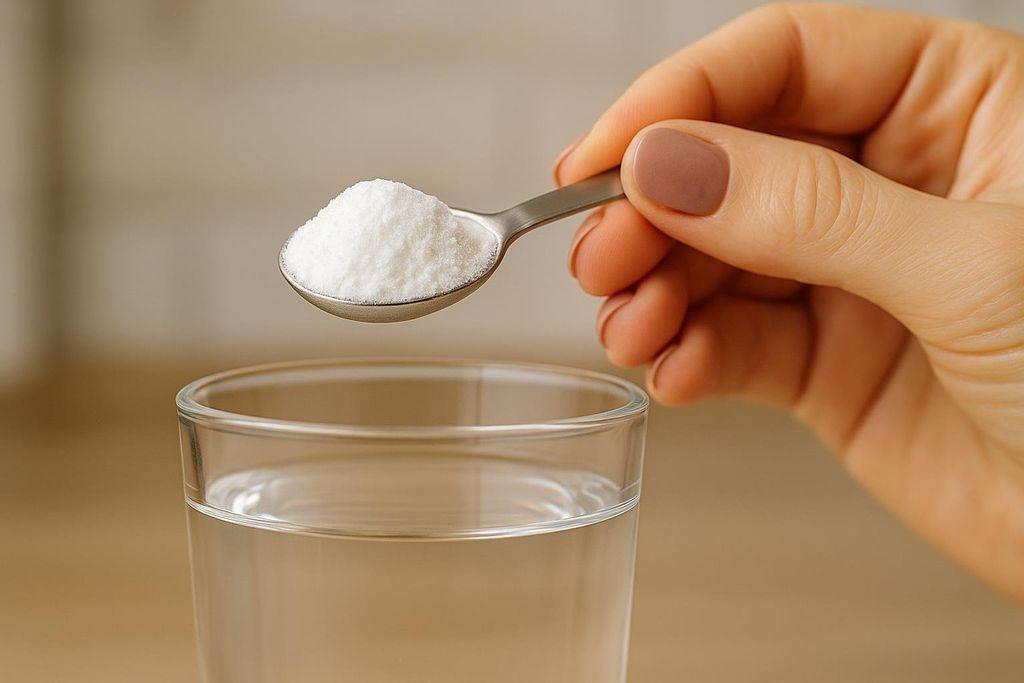
A common maintenance amount studied in adults is 3–5 grams of creatine monohydrate daily. Individual circumstances may justify a different recommendation. NIH Consumer Fact Sheet
That is an evidence-based starting point for a discussion—not a requirement that every woman begin taking it.
Is a loading phase necessary?
Loading is optional.
Higher initial intakes can raise muscle stores more quickly, while a consistent lower daily intake builds stores more gradually. Loading may also be less comfortable for someone prone to digestive symptoms.
NIH describes both loading protocols and lower-dose use in its exercise supplement guidance. NIH Health Professional Fact Sheet
Should you take more for cognition?
Do not assume that a higher dose will resolve brain fog.
Cognitive studies use differing protocols, populations, and outcomes. There is no established universal creatine dose for menopause-related cognitive symptoms. Frontiers in Nutrition
Which form of creatine should you choose?
Creatine monohydrate is the most widely studied form. More expensive formulations are not automatically more effective. NIH Consumer Fact Sheet
When comparing products, look for:
- A clearly stated amount per serving.
- A straightforward ingredient list.
- Verifiable independent quality testing.
- Instructions you can follow consistently.
- Claims that match the evidence.
Dietary supplements do not undergo FDA premarket approval for safety and effectiveness in the same way prescription medications do. NCCIH
Independent certification can provide quality information, but it does not prove that the product will improve menopause symptoms. NCCIH Supplement Label Guidance
Powders, capsules, and gummies should be judged by their contents and verified dose rather than their format alone.
Will creatine make you gain weight?
It can increase scale weight, particularly through water retention. That is different from gaining body fat. NIH Consumer Fact Sheet
For women carefully tracking weight, that distinction can prevent unnecessary frustration.
Assess the trend alongside:
- Training performance.
- Waist measurements.
- How clothes fit.
- The timing of supplementation.
- Overall nutrition and activity.
An early rise on the scale does not establish fat gain. It also does not mean every pound gained is new muscle.
Will creatine make women bulky?
Creatine does not automatically produce a large increase in muscle size.
Muscle growth depends on the training stimulus, nutrition, time, and individual response. Research in women generally supports modest effects rather than dramatic changes from supplementation alone. Frontiers in Nutrition
Whether your goal is athletic performance, maintaining strength, or improving function, the training plan remains central.
Is creatine safe for your kidneys?
Research in studied populations is generally reassuring, but the findings should not be generalized to everyone.
A systematic review and meta-analysis found that creatine could modestly raise serum creatinine without a significant reduction in measured or estimated filtration outcomes overall. Serum creatinine is used in kidney assessment, so supplementation can complicate interpretation. Read the systematic review
Tell your clinician if you take creatine before laboratory testing.
Seek individualized advice before use if you have kidney disease, abnormal kidney results, significant medical conditions, or pregnancy or breastfeeding considerations. Evidence from healthy exercising adults does not automatically establish safety in those situations.
Digestive discomfort can also occur. Persistent symptoms are a reason to reassess the product, amount, and suitability.
How should creatine fit into a health plan?
Start with a specific objective.
For example:
- Supporting a progressive resistance-training program.
- Improving repeated high-intensity exercise capacity.
- Evaluating whether supplementation provides a useful additional benefit.
Then decide how you will assess progress.
Strength records and practical function can be more informative than expecting to “feel” a supplement working.
Keep the larger plan in view: adequate nutrition, appropriate training, recovery, and evaluation of persistent symptoms. A supplement should have a defined role rather than become the explanation for every concern.
Frequently Asked Questions
Is creatine useful for women over 40?
It may be, especially for women doing resistance training or repeated high-intensity exercise. Age alone does not determine whether someone needs it or will benefit. Frontiers in Nutrition
Does creatine cure menopause brain fog?
No. Cognitive findings are promising in selected areas, but menopause-specific symptom relief is not established. Frontiers in Nutrition
Is 3–5 grams daily appropriate?
That is a commonly studied maintenance range in adults. Discuss suitability with your clinician when medical conditions or other concerns apply. NIH Consumer Fact Sheet
Do women need a special menopause creatine blend?
Evidence does not establish that a menopause-branded blend is superior to a suitable creatine monohydrate product. Evaluate each additional ingredient on its own merits.
Can you take creatine without lifting weights?
You can, but expectations should match the evidence. For muscle and strength goals, research is more supportive when supplementation accompanies resistance training. Read the review
Does creatine replace protein?
No. Creatine and dietary protein have different roles. Supplementation does not remove the need for adequate protein and overall nutrition.
Will creatine increase body fat?
Creatine-related scale changes can reflect water retention. They should not automatically be interpreted as fat gain. NIH Consumer Fact Sheet
Does creatine damage healthy kidneys?
Available research is generally reassuring in studied populations. People with kidney disease or abnormal results need individualized advice, and clinicians should know about supplementation when interpreting creatinine. Read the research
Can creatine prevent osteoporosis?
It is not an established osteoporosis treatment or substitute for fracture-risk assessment and appropriate care. Read the research
Is creatine a weight-loss supplement?
It should not be presented as a reliable fat-loss treatment. Its best-supported role concerns exercise performance and training support.
Make your next health decision with clear expectations
You deserve guidance that respects both your goals and the limits of the research.
At 1st Optimal, we help women explore training, nutrition, sleep, menopause symptoms, and appropriate medical next steps. That includes discussing where supplements may help—and where further evaluation matters more.
Take the Next Step Toward Better Health
Book a free consultation with 1st Optimal to discuss your goals and explore a personalized approach to your health.
This article provides general education and does not replace individualized medical advice. Supplement decisions should reflect your health history, medications, and clinical circumstances.