
If you’ve searched anything about hormone therapy, you’ve probably seen this argument explode across the internet:
“HRT is dangerous.”
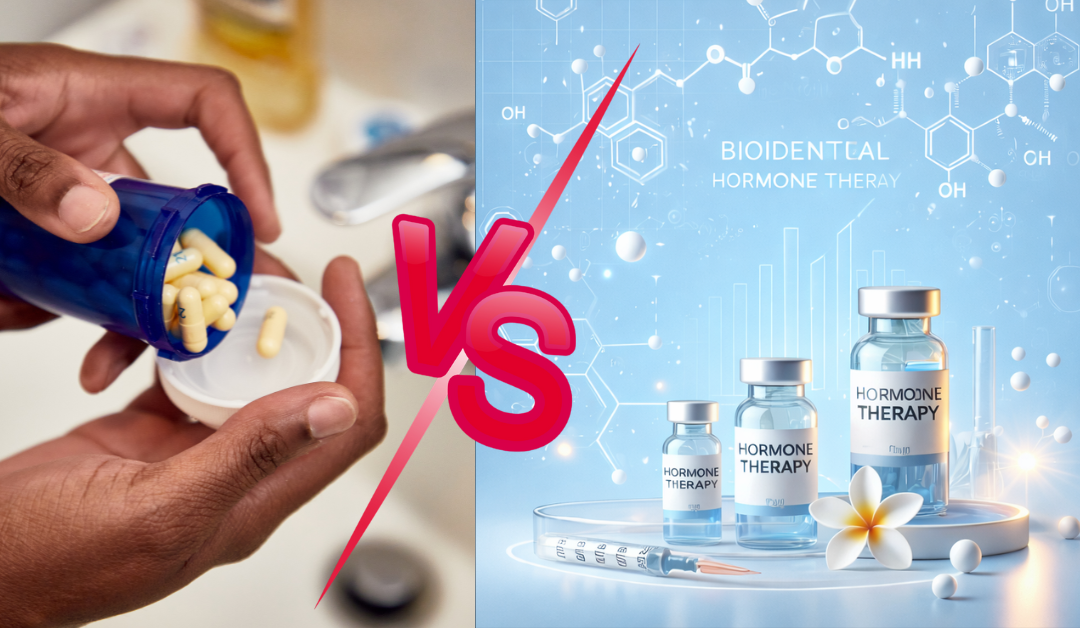
“No, bioidentical hormones are safe.”
“Actually, all hormones are bioidentical.”
“Your doctor doesn’t want you to know this.”
Cool. Helpful. Very calming.
The truth is less dramatic and more useful.
HRT (hormone replacement therapy) and bioidentical hormones are not opposites. One is an umbrella term. The other describes the molecular structure of the hormone itself. The confusion around these terms causes women and men to delay treatment, fear safe options, or end up on therapies that don’t actually fit their biology.
This article breaks down:
- What HRT actually means
- What bioidentical hormones really are
- The science behind safety and effectiveness
- Where misinformation creeps in
- How to decide what actually matters for your health
No hype. No scare tactics. Just clarity.
What Is Hormone Replacement Therapy (HRT)?
Hormone replacement therapy is any medical treatment that replaces hormones your body no longer produces in adequate amounts.
That’s it. That’s the definition.
HRT can include:
- Estrogen
- Progesterone
- Testosterone
- Thyroid hormones
- DHEA
HRT is used in:
- Perimenopause and menopause
- Andropause (age-related testosterone decline)
- Surgical menopause
- Hormonal suppression from stress, dieting, or illness
HRT does not describe:
- The source of the hormone
- Whether it’s synthetic or bioidentical
- The quality of dosing or monitoring
It’s a category, not a verdict.
What Are Bioidentical Hormones?
Bioidentical hormones are hormones that are chemically identical to the hormones your body naturally produces.
That means the molecular structure of the hormone matches what your receptors expect to see.
Common bioidentical hormones include:
- Estradiol (E2)
- Progesterone
- Testosterone
- Estriol (E3)
They are typically derived from plant sources like yams or soy, then processed in a lab to match human hormones exactly.
Important distinction:
- Bioidentical does not automatically mean compounded
- Bioidentical hormones can be FDA-approved or compounded
The Biggest Myth: “HRT vs Bioidentical Hormones”
This is where things go sideways.
You’ll often hear:
- “HRT is bad, bioidentical is good”
- “Doctors prescribe synthetic hormones, functional clinics use bioidentical”
That framing is wrong.
The reality:
- HRT can be bioidentical
- HRT can be non-bioidentical
- Bioidentical hormones are a type of HRT
The real comparison should be:
- Bioidentical vs non-bioidentical hormones
- Personalized dosing vs standardized dosing
- Proper monitoring vs none at all
Non-Bioidentical (Synthetic) Hormones Explained
Some traditional hormone therapies use non-bioidentical hormones, meaning the molecular structure is similar, but not identical, to human hormones.
Examples include:
- Conjugated equine estrogens (derived from horse urine)
- Synthetic progestins (not progesterone)
These hormones still bind to receptors, but they can activate them differently, sometimes affecting:
- Inflammation
- Clotting risk
- Breast tissue
- Mood and cognition
This does not mean all synthetic hormones are dangerous. It means they behave differently.
Why Molecular Structure Matters
Your hormone receptors are very specific. They evolved to recognize exact molecular shapes.
When a hormone is bioidentical:
- It binds more predictably
- It is metabolized along known pathways
- It produces fewer unintended byproducts
Non-bioidentical hormones can:
- Activate additional receptors
- Create metabolites with different risk profiles
- Behave inconsistently across individuals
This difference is one reason many modern protocols favor bioidentical hormones when appropriate.
The Science on Safety
This is where fear tends to drown out facts.
The Women’s Health Initiative (WHI) fallout
Much of the fear around HRT stems from early 2000s studies that:
- Used older synthetic hormones
- Included older, higher-risk populations
- Did not individualize dosing
- Ignored timing of therapy initiation
More recent analyses show:
- Hormone therapy started earlier has a very different risk profile
- Bioidentical estrogen and progesterone behave differently than older synthetics
- Route of delivery matters (oral vs transdermal)
What current evidence suggests:
- Transdermal estradiol carries lower clotting risk than oral estrogen
- Micronized progesterone is better tolerated than synthetic progestins
- Testosterone therapy in women, when properly dosed, is safe and effective
Safety depends on what is used, how it’s used, and who it’s used for.
Effectiveness: What Actually Works Best?
Effectiveness is not about trends. It’s about outcomes.
Bioidentical hormones often show:
- Better symptom control
- Improved sleep quality
- Improved libido and mood
- Better metabolic outcomes
- Higher patient adherence
That said, effectiveness still depends on:
- Proper lab testing
- Correct dosing
- Ongoing monitoring
- Addressing root causes like stress, gut health, and insulin resistance
Hormones do not work in isolation.
FDA-Approved vs Compounded Bioidentical Hormones
Another common point of confusion.
FDA-approved bioidentical hormones:
- Manufactured at scale
- Standardized dosing
- Rigorously tested
- Examples include estradiol patches, gels, and micronized progesterone
Compounded bioidentical hormones:
- Custom dosed
- Tailored to individual labs and symptoms
- Useful when commercial dosing doesn’t fit the patient
- Require high-quality compounding pharmacies
Neither option is automatically superior. The decision depends on:
- Patient needs
- Hormone sensitivity
- Lab results
- Clinical response
What Actually Matters More Than Labels
Here’s the part that rarely gets emphasized enough.
The success of hormone therapy depends far more on:
- Comprehensive lab testing
- Symptom-based interpretation
- Dose titration over time
- Monitoring markers like SHBG, estradiol metabolites, hematocrit, and lipids
- Lifestyle factors like sleep, nutrition, and training
You can use bioidentical hormones poorly and get bad outcomes.
You can use FDA-approved hormones intelligently and get excellent results.
The difference is clinical strategy, not branding.
A Short Real-World Example
A woman in her mid-40s presents with:
- Fatigue
- Weight gain
- Low libido
- Anxiety
- Poor sleep
She was told her labs were “normal.”
Further testing shows:
- Low free testosterone
- Elevated SHBG
- Estrogen dominance metabolites
- Cortisol dysregulation
After personalized bioidentical hormone therapy, gut support, and strength training:
- Energy improves
- Body composition shifts
- Sleep stabilizes
- Mood normalizes
The hormone choice mattered.
But the evaluation and execution mattered more.
Common Myths That Won’t Die
Myth 1: Bioidentical hormones are “natural”
They are structurally identical, not harvested from a garden.
Myth 2: HRT always causes cancer
Risk depends on hormone type, timing, dose, and delivery method.
Myth 3: Compounded hormones are unsafe
Poorly compounded hormones are unsafe. Quality and oversight matter.
Myth 4: You should wait until menopause
Hormone decline starts years earlier. Waiting often makes symptoms worse.
So… Does the Difference Matter?
Yes. But not in the way most people think.
The difference between HRT and bioidentical hormones matters less than:
- Whether you’re properly tested
- Whether therapy is individualized
- Whether progress is monitored
- Whether your provider understands hormone physiology
Hormone therapy isn’t about ideology. It’s about outcomes.
Conclusion
“HRT vs bioidentical hormones” is the wrong debate.
The right questions are:
- Are the hormones appropriate for your biology?
- Are they dosed correctly?
- Are they monitored intelligently?
- Are root causes being addressed?
When hormone therapy is personalized, evidence-based, and supervised, it can be one of the most effective tools for improving quality of life, metabolism, and long-term health.
If you’re confused about hormone therapy, you’re not behind. You’re just missing context.
Book a free consultation with 1st Optimal to review your symptoms, labs, and options with a medical team that actually treats the whole picture.
About Us
1st Optimal is a functional medicine and performance health clinic dedicated to helping high-achieving adults optimize hormone health, weight, energy, and longevity. Follow 1st Optimal on Instagram
Founders:
- Joe Miller – Expert in functional medicine, hormone optimization, and health coaching. Follow Joe on Instagram
- Amber Miller – Operational leader specializing in patient experience, clinic growth, and holistic health. Follow Amber on Instagram
At 1st Optimal, we combine advanced diagnostics, personalized protocols, and coaching partnerships to deliver sustainable health results for midlife adults.
References:
- National Institutes of Health – Hormone Therapy Overview
https://www.nih.gov - North American Menopause Society (NAMS)
https://www.menopause.org - Journal of Clinical Endocrinology & Metabolism
https://academic.oup.com/jcem - Endocrine Society Clinical Practice Guidelines
https://www.endocrine.org - BMJ – Hormone Replacement Therapy Reviews
https://www.bmj.com - PubMed – Bioidentical Hormone Research
https://pubmed.ncbi.nlm.nih.gov - Mayo Clinic – Menopause Hormone Therapy
https://www.mayoclinic.org - Cleveland Clinic – Hormone Therapy Safety
https://my.clevelandclinic.org - Frontiers in Endocrinology
https://www.frontiersin.org - Harvard Health Publishing – Hormones and Aging
https://www.health.harvard.edu