

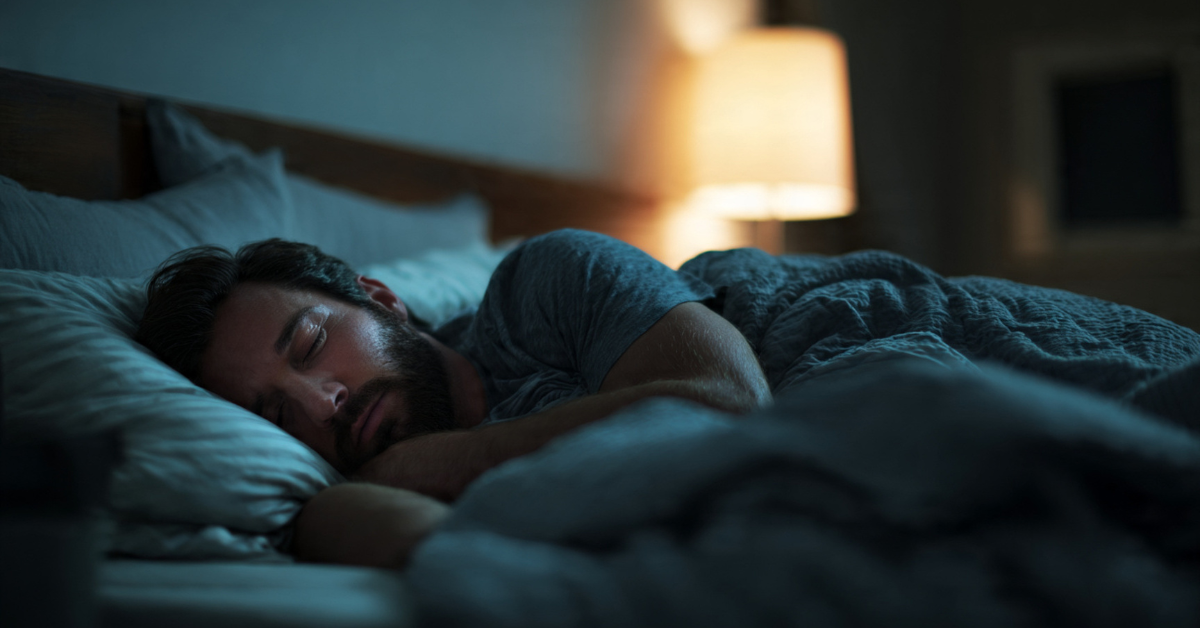
You work out, eat well, and try to manage stress. But if your testosterone levels are off, your sleep could be paying the price. Most people know that poor sleep can lower testosterone, but fewer realize the relationship works both ways. Your testosterone levels directly influence how well you sleep, how long you stay asleep, and how rested you feel in the morning.
Let’s break down the science and give you practical steps to get your sleep back on track.
Key Takeaways:
- Testosterone directly influences sleep architecture, including REM and deep sleep stages.
- Low testosterone creates a vicious cycle with elevated cortisol that progressively worsens sleep quality.
- Signs include chronic fatigue despite adequate sleep time, frequent nighttime awakenings, and morning brain fog.
What you can do: Get your hormone levels tested, optimize sleep hygiene, time exercise strategically, and consider professional hormone optimization if lifestyle changes fall short.
The Testosterone-Sleep Connection: It Goes Both Ways
Testosterone and sleep share a tightly linked, bidirectional relationship. While sleep deprivation is known to lower testosterone levels, the reverse is just as significant: low testosterone can disrupt your sleep quality in ways you might not expect.
Your body produces most of its testosterone during sleep, particularly during the deeper stages. But here is the catch. If your testosterone levels are already low, your brain’s ability to regulate healthy sleep architecture gets compromised. This creates a cycle where poor sleep lowers testosterone further, and low testosterone makes sleep even worse.
Research published in the Journal of Clinical Endocrinology & Metabolism has shown that testosterone influences the hypothalamic-pituitary-adrenal (HPA) axis, which plays a central role in regulating your sleep-wake cycles. When testosterone drops below optimal ranges, this regulatory system can become dysregulated, leading to fragmented sleep, difficulty falling asleep, and reduced time spent in restorative sleep stages.
How Low Testosterone Disrupts Sleep Architecture
Sleep is not a single uniform state. It cycles through distinct stages, each serving different recovery functions. Testosterone affects several of these stages directly.
REM Sleep and Dream Quality
Rapid eye movement (REM) sleep is when your brain consolidates memories, processes emotions, and supports cognitive function. Studies have found that men with low testosterone tend to spend less time in REM sleep. This can show up as brain fog, difficulty concentrating, and feeling mentally sluggish even after a full night in bed.
Slow-Wave (Deep) Sleep
Slow-wave sleep is the most physically restorative stage. This is when your body repairs muscle tissue, strengthens the immune system, and releases growth hormone. Testosterone plays a role in maintaining healthy slow-wave sleep duration. When levels decline, you may notice that you wake up feeling sore, stiff, or unrested, no matter how many hours you logged.
Sleep Onset and Maintenance
Low testosterone is also associated with difficulty falling asleep (increased sleep latency) and staying asleep throughout the night. Many men with declining testosterone report waking up multiple times during the night or struggling to fall back asleep after a 3 a.m. wake-up. These fragmented sleep patterns prevent your body from completing the full sleep cycles it needs for genuine recovery.
Signs Your Testosterone May Be Affecting Your Sleep
If you are experiencing several of the following symptoms together, low testosterone could be a contributing factor:
- Chronic fatigue despite sleeping 7-8 hours: You are getting enough time in bed but still waking up exhausted.
- Frequent nighttime awakenings: Waking up two or more times per night without a clear cause (not bathroom trips or noise).
- Difficulty falling asleep: Lying awake for 30+ minutes despite feeling tired.
- Reduced dream recall: Fewer vivid dreams, which may indicate less time in REM sleep.
- Morning brain fog: Feeling mentally slow, unfocused, or groggy well into the morning.
- Daytime sleepiness: Needing naps or feeling drowsy during the afternoon despite adequate sleep time.
- Mood changes: Increased irritability, low motivation, or mild depression alongside sleep issues.
- Decreased exercise recovery: Feeling more sore or taking longer to recover from workouts, linked to reduced deep sleep.
These symptoms overlap with general sleep disorders, which is why comprehensive lab testing is so important. A simple blood panel can reveal whether your testosterone levels are in the optimal range or contributing to your sleep problems.
Testosterone, Cortisol, and the Stress-Sleep Trap
Testosterone and cortisol have an inverse relationship. When testosterone drops, cortisol levels tend to rise. Cortisol is your body’s primary stress hormone, and elevated levels at night are one of the most common causes of sleep disruption.
Here is how the cycle works:
- Low testosterone reduces your body’s ability to buffer stress responses.
- Elevated cortisol keeps your nervous system in a state of alertness at night.
- Poor sleep quality further depletes testosterone and raises cortisol.
- The cycle repeats, making it progressively harder to break without intervention.
This testosterone-cortisol imbalance is particularly common in high-performing professionals who are already dealing with chronic work stress. The combination of occupational pressure and declining hormones creates a perfect storm for sleep disruption.
If you want to understand more about this dynamic, our guide on how sleep affects testosterone and cortisol levels dives deeper into the cortisol side of the equation.
Testosterone and Sleep Apnea: What You Should Know
The relationship between testosterone and obstructive sleep apnea (OSA) deserves special attention because it is complex.
Low testosterone and sleep apnea often coexist. Research shows that men with OSA frequently have lower testosterone levels. The sleep fragmentation caused by apnea events disrupts the normal nighttime testosterone production cycle, creating a compounding problem.
Testosterone replacement therapy requires careful monitoring for sleep apnea. Some studies suggest that TRT may worsen sleep apnea in certain individuals by affecting upper airway muscles. This is one of the reasons why working with a medical team that monitors your complete hormonal picture is critical. A responsible approach to testosterone optimization includes screening for sleep apnea and monitoring sleep quality throughout treatment.
If you already have sleep apnea, addressing it first or alongside testosterone optimization often produces the best outcomes for both conditions.
What You Can Do: Practical Steps for Better Sleep and Testosterone Balance
1. Get Your Levels Tested
You can not fix what you can not measure. If you suspect low testosterone is affecting your sleep, start with a comprehensive hormone panel that includes total testosterone, free testosterone, SHBG, estradiol, and cortisol. These markers together provide a complete picture of your hormonal sleep environment.
1st Optimal’s membership includes comprehensive blood work and expert interpretation so you know exactly where you stand.
2. Optimize Your Sleep Environment
While addressing testosterone levels is important, these evidence-based sleep hygiene practices work alongside hormonal optimization:
- Keep your bedroom cool (65-68 degrees Fahrenheit is ideal for testosterone production and sleep quality).
- Block out light completely. Even small amounts of ambient light can suppress melatonin production.
- Maintain a consistent sleep-wake schedule, even on weekends. Your circadian rhythm affects testosterone production.
- Limit screen exposure 60 minutes before bed. Blue light disrupts melatonin and can amplify cortisol effects.
3. Time Your Exercise Strategically
Regular exercise supports healthy testosterone levels and improves sleep quality. However, timing matters:
- Resistance training (especially compound movements like squats, deadlifts, and bench press) is one of the most effective natural testosterone boosters. For more evidence-based strategies, check out our guide on how to increase testosterone naturally.
- Avoid intense exercise within 3 hours of bedtime. Late-night workouts can elevate cortisol and body temperature, making it harder to fall asleep.
- Morning or early afternoon workouts tend to produce the best combined benefits for testosterone and sleep.
4. Manage Stress and Cortisol
Since elevated cortisol is a primary driver of the testosterone-sleep disruption cycle, active stress management is essential:
- Practice deep breathing or meditation for 10 minutes before bed.
- Limit caffeine after 2 p.m. (caffeine elevates cortisol and blocks adenosine, your natural sleep signal).
- Consider journaling to offload racing thoughts before sleep.
5. Address Nutritional Gaps
Certain nutrient deficiencies are linked to both low testosterone and poor sleep:
- Magnesium: Supports GABA activity (your brain’s calming neurotransmitter) and is involved in testosterone production. Many adults are deficient.
- Zinc: Essential for testosterone synthesis. Low zinc levels are directly correlated with low testosterone.
- Vitamin D: Functions as a hormone and influences both testosterone levels and sleep regulation.
6. Consider Professional Hormone Optimization
If lifestyle changes alone are not enough, medically supervised testosterone optimization can address the root cause. Testosterone replacement therapy (TRT) has been shown to improve sleep quality in men with clinically low levels, particularly when managed by experienced providers who monitor the full hormonal picture.
At 1st Optimal, our personalized telehealth memberships include ongoing lab monitoring, one-on-one consultations, and customized treatment protocols designed to optimize your hormones safely. Every member works directly with a dedicated Membership Manager who tracks your progress and adjusts your plan based on real data.
When to Seek Help
Do not wait until poor sleep becomes your normal. If you are experiencing persistent sleep problems alongside any of the following, it is time to get your testosterone levels checked:
- Chronic fatigue that does not improve with more sleep
- Loss of muscle mass or increased body fat
- Reduced libido or sexual performance changes
- Difficulty concentrating or persistent brain fog
- Mood changes, including irritability or low motivation
These symptoms together paint a picture that goes beyond simple sleep hygiene. They suggest a hormonal component that lifestyle changes alone may not fully resolve.
Ready to find out if your testosterone levels are affecting your sleep? Take our free men’s hormone quiz to get a personalized assessment, or explore our men’s hormone membership to start working with our team.
If you’re ready to take the next step, explore our 1st Optimal membership to see how we support your health goals.
Our medical weight loss program pairs clinical expertise with personalized protocols for lasting results.
Frequently Asked Questions
Does low testosterone cause insomnia?
Low testosterone does not cause insomnia in the clinical sense for everyone, but it significantly contributes to sleep disruption. Men with low T often experience difficulty falling asleep, frequent nighttime awakenings, and reduced time in deep and REM sleep stages. When testosterone levels are restored to optimal ranges through lifestyle changes or medical intervention, sleep quality typically improves.
Can TRT improve sleep quality?
For men with clinically low testosterone, TRT has been shown to improve several sleep parameters, including total sleep time and sleep efficiency. However, the response varies by individual, and TRT must be carefully monitored. In some cases, particularly at higher doses, testosterone therapy can initially cause sleep disturbances or worsen sleep apnea. Working with experienced medical providers ensures your treatment is optimized for both hormonal health and sleep quality.
How many hours of sleep do you need for healthy testosterone?
Research consistently shows that 7 to 9 hours of quality sleep per night is necessary for optimal testosterone production. Men who regularly sleep less than 5 hours per night have been found to have testosterone levels comparable to someone 10 to 15 years older. The key word is “quality.” Eight hours of fragmented sleep is not the same as seven hours of uninterrupted, restorative sleep.
Does testosterone affect women’s sleep too?
Yes. While testosterone levels are much lower in women, imbalances can still affect sleep quality. Women with polycystic ovary syndrome (PCOS), which involves elevated testosterone, often experience sleep difficulties. Conversely, women going through perimenopause may experience declining testosterone alongside other hormonal changes, contributing to sleep disruptions. Our guide on perimenopause insomnia covers this topic in detail.
What time of day is testosterone highest?
Testosterone follows a circadian rhythm, typically peaking in the early morning (around 7-8 a.m.) and reaching its lowest point in the late evening (around 8 p.m.). This natural rhythm depends on healthy sleep patterns. Disrupted or insufficient sleep can flatten this cycle, reducing the morning peak and leading to chronically low testosterone throughout the day.
Signs Your Testosterone May Be Affecting Your Sleep
If you are experiencing several of the following symptoms together, low testosterone could be a contributing factor:
- Chronic fatigue despite sleeping 7-8 hours: You are getting enough time in bed but still waking up exhausted.
- Frequent nighttime awakenings: Waking up two or more times per night without a clear cause (not bathroom trips or noise).
- Difficulty falling asleep: Lying awake for 30+ minutes despite feeling tired.
- Reduced dream recall: Fewer vivid dreams, which may indicate less time in REM sleep.
- Morning brain fog: Feeling mentally slow, unfocused, or groggy well into the morning.
- Daytime sleepiness: Needing naps or feeling drowsy during the afternoon despite adequate sleep time.
- Mood changes: Increased irritability, low motivation, or mild depression alongside sleep issues.
- Decreased exercise recovery: Feeling more sore or taking longer to recover from workouts, linked to reduced deep sleep.
These symptoms overlap with general sleep disorders, which is why comprehensive lab testing is so important. A simple blood panel can reveal whether your testosterone levels are in the optimal range or contributing to your sleep problems.
Testosterone, Cortisol, and the Stress-Sleep Trap
Testosterone and cortisol have an inverse relationship. When testosterone drops, cortisol levels tend to rise. Cortisol is your body’s primary stress hormone, and elevated levels at night are one of the most common causes of sleep disruption.
Here is how the cycle works:
- Low testosterone reduces your body’s ability to buffer stress responses.
- Elevated cortisol keeps your nervous system in a state of alertness at night.
- Poor sleep quality further depletes testosterone and raises cortisol.
- The cycle repeats, making it progressively harder to break without intervention.
This testosterone-cortisol imbalance is particularly common in high-performing professionals who are already dealing with chronic work stress. The combination of occupational pressure and declining hormones creates a perfect storm for sleep disruption.
If you want to understand more about this dynamic, our guide on how sleep affects testosterone and cortisol levels dives deeper into the cortisol side of the equation.
Testosterone and Sleep Apnea: What You Should Know
The relationship between testosterone and obstructive sleep apnea (OSA) deserves special attention because it is complex.
Low testosterone and sleep apnea often coexist. Research shows that men with OSA frequently have lower testosterone levels. The sleep fragmentation caused by apnea events disrupts the normal nighttime testosterone production cycle, creating a compounding problem.
Testosterone replacement therapy requires careful monitoring for sleep apnea. Some studies suggest that TRT may worsen sleep apnea in certain individuals by affecting upper airway muscles. This is one of the reasons why working with a medical team that monitors your complete hormonal picture is critical. A responsible approach to testosterone optimization includes screening for sleep apnea and monitoring sleep quality throughout treatment.
If you already have sleep apnea, addressing it first or alongside testosterone optimization often produces the best outcomes for both conditions.