

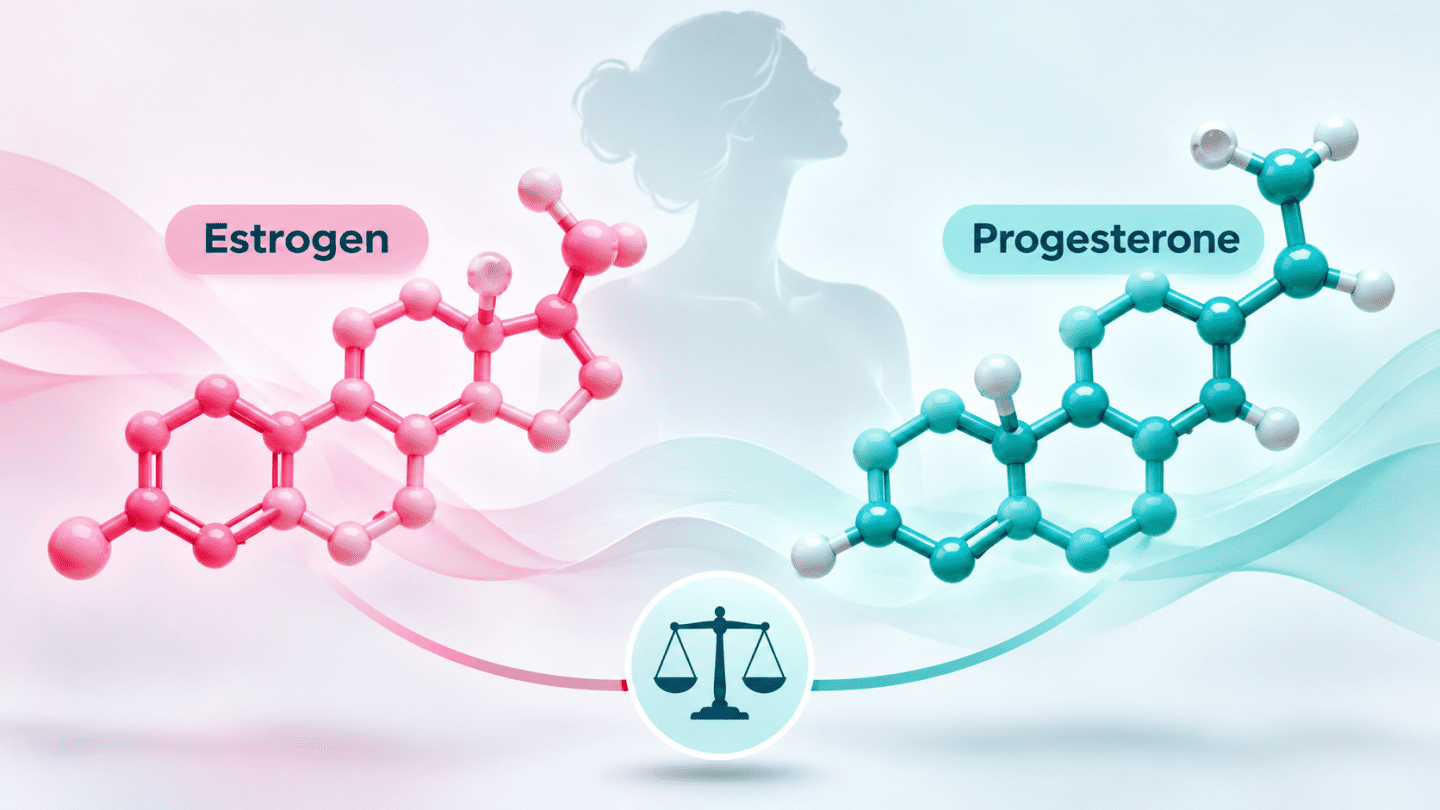
It appears frequently in conversations about hormone imbalance, perimenopause, weight gain, and women’s health. Some wellness resources suggest that estrogen dominance explains nearly every symptom women experience after 35.
But the science is more complicated.
Estrogen is an essential hormone. Its effects depend on your age, menstrual cycle, ovulation, medical history, hormone medications, and other aspects of your health.
At 1st Optimal, we believe understanding these details is more useful than automatically attributing symptoms to a single hormone imbalance.
Key Takeaways
- Estrogen dominance is not a formal, standardized diagnosis. Healthcare professionals instead evaluate specific hormone-related conditions, symptoms, and risk factors.
- Unopposed estrogen is a recognized medical concept. Estrogen stimulation without sufficient progesterone protection can contribute to endometrial hyperplasia in people with a uterus.
- High estrogen is not the same as estrogen dominance. Estrogen levels change naturally throughout the menstrual cycle and during perimenopause.
- Symptoms are not diagnostic. Weight gain, fatigue, breast tenderness, and irregular periods can have many causes.
- Testing and treatment should answer a clinical question. There is no universally validated estrogen-to-progesterone ratio that diagnoses estrogen dominance.
What Is Estrogen Dominance?
Estrogen dominance is a nonstandard term used to describe a perceived imbalance between estrogen and progesterone.
People commonly use the phrase in two different ways:
- Absolute estrogen excess: Estrogen concentrations are unusually high for the person’s clinical situation.
- Relative estrogen exposure: Estrogen continues to affect certain tissues while progesterone exposure is insufficient to provide its usual balancing effects.
These descriptions are not interchangeable.
Someone can have estrogen levels within an expected range and still experience changes associated with irregular ovulation or reduced progesterone production.
Conversely, a higher estradiol measurement may be normal at a particular point in the menstrual cycle.
The Cleveland Clinic’s clinical overview of high estrogen discusses estrogen dominance in connection with unopposed estrogen, particularly its effects on the endometrium, or uterine lining.
Is estrogen dominance an official medical diagnosis?
No. Estrogen dominance does not have a universally accepted diagnostic definition or validated estrogen-to-progesterone ratio used in major menopause guidelines.
However, that does not mean every hormonal concern described using the term is imaginary.
Conditions involving abnormal ovulation, excessive estrogen exposure, or inadequate progesterone protection are medically recognized.
The distinction matters because the appropriate evaluation depends on identifying a specific clinical problem rather than assigning a broad label to nonspecific symptoms.
Estrogen vs. Progesterone: Understanding the Difference
Estrogen and progesterone are essential reproductive hormones that interact throughout the menstrual cycle.
What does estrogen do?
Estrogen contributes to several important functions, including:
- Regulation of the menstrual cycle
- Development and maintenance of reproductive tissues
- Maintenance of bone health
- Support for vaginal and urinary tract tissues
- Effects on temperature regulation and other physiological processes
Estrogen is not inherently harmful. Both excessively low and abnormally high estrogen exposure can be relevant to health, depending on the individual and circumstances.
What does progesterone do?
Progesterone is produced primarily by the corpus luteum after ovulation during a typical menstrual cycle.
It helps prepare the uterine lining for a possible pregnancy and regulates estrogen-related growth of the endometrium.
If pregnancy does not occur, progesterone levels fall, contributing to the shedding of the uterine lining during menstruation.
What happens when ovulation becomes irregular?
When ovulation does not occur, the usual post-ovulation increase in progesterone does not happen.
Estrogen may continue stimulating the uterine lining without the expected progesterone exposure.
This is one situation in which clinicians use the term unopposed estrogen.
According to the American College of Obstetricians and Gynecologists (ACOG), prolonged estrogen stimulation without sufficient progesterone can contribute to endometrial hyperplasia.
Importantly, this established uterine effect does not prove that every symptom attributed to estrogen dominance is caused by the same mechanism.
Estrogen Dominance vs. High Estrogen vs. Unopposed Estrogen
| Term | What It Means | Medical Significance |
|---|---|---|
| Estrogen dominance | A broad term commonly used to suggest estrogen activity exceeds progesterone activity. | Not a standardized diagnosis with a validated universal cutoff. |
| High estrogen | Estrogen concentrations are elevated relative to an appropriate clinical reference. | May warrant evaluation depending on age, cycle timing, medications, and symptoms. |
| Low progesterone | Progesterone is lower than expected for a specific reproductive stage or cycle phase. | Interpretation depends heavily on ovulation and testing timing. |
| Unopposed estrogen | Estrogen stimulates the uterine lining without adequate progesterone or progestogen protection. | A recognized factor in endometrial hyperplasia and related risks. |
| Perimenopausal hormone fluctuations | Estrogen and progesterone patterns become less predictable during the menopause transition. | A normal reproductive transition that may cause symptoms requiring individualized care. |
Common Symptoms Linked to Estrogen Dominance
Searches for “estrogen dominance symptoms” often include complaints such as weight gain, bloating, breast tenderness, headaches, fatigue, and irregular menstrual cycles.
These experiences deserve attention. But no symptom checklist can establish estrogen dominance as a diagnosis.
Many of these symptoms overlap with perimenopause, thyroid disorders, sleep disorders, medication effects, and other conditions.
1. Heavy or irregular periods
Menstrual changes can occur when ovulation becomes inconsistent.
Without regular progesterone production, estrogen stimulation of the uterine lining may continue, sometimes contributing to irregular or heavy bleeding.
However, abnormal bleeding can also be caused by uterine fibroids, polyps, adenomyosis, pregnancy-related conditions, thyroid disorders, and other medical problems.
Persistent or significant bleeding should not automatically be attributed to hormones without an appropriate evaluation.
2. Breast tenderness and swelling
Breast tenderness can change throughout the menstrual cycle and may occur during perimenopause.
Hormonal fluctuations can contribute, but tenderness alone cannot determine whether estrogen is elevated.
New breast lumps, persistent localized pain, or unusual nipple discharge require assessment rather than self-diagnosis.
3. Weight gain and changes in body composition
Many women search for estrogen dominance because they notice changes in abdominal fat or body composition during their late 30s, 40s, or 50s.
Hormonal transitions may influence fat distribution, but weight changes are rarely explained by a single hormone level.
Other contributing factors can include:
- Age-related changes in muscle mass
- Physical activity and nutrition
- Sleep duration and quality
- Medication effects
- Thyroid disorders
- Metabolic health conditions
A change in body composition does not establish that estrogen is too high.
4. Mood changes and irritability
Changes in reproductive hormones may contribute to mood symptoms in some women, especially around menstruation and during perimenopause.
However, anxiety, irritability, or depression should not automatically be attributed to an estrogen-progesterone imbalance.
Sleep problems, life stressors, medications, and mental health conditions may also play important roles.
5. Fatigue, brain fog, and sleep problems
Difficulty sleeping, daytime fatigue, and reduced concentration are common reasons women seek hormone-related care.
These symptoms may occur during perimenopause, particularly when night sweats or other symptoms disrupt sleep.
But they can also result from anemia, thyroid dysfunction, sleep apnea, medication effects, and other causes.
Instead of assuming estrogen dominance is responsible, the goal should be to investigate the most likely contributors.
Symptoms Often Attributed to Estrogen Dominance: What Else Should Be Considered?
| Symptom | Possible Explanations | Useful Clinical Context |
|---|---|---|
| Heavy periods | Ovulatory dysfunction, fibroids, polyps, adenomyosis, bleeding disorders | Bleeding duration, amount, frequency, age, and risk factors |
| Breast tenderness | Normal cycle changes, hormonal fluctuations, medication effects | Timing, new breast findings, and medication history |
| Weight changes | Menopause transition, nutrition, physical activity, thyroid or metabolic conditions | Weight history, body composition, medications, and metabolic risk |
| Fatigue | Anemia, poor sleep, thyroid disorders, medication effects | Sleep history, bleeding history, and targeted testing |
| Mood changes | Premenstrual symptoms, perimenopause, sleep disruption, mental health conditions | Symptom timing, severity, and effects on daily functioning |
| Bloating | Menstrual-cycle changes, constipation, diet-related or gastrointestinal conditions | Relationship to meals, bowel habits, and menstrual cycle |
Bottom line: Symptoms can help guide an investigation, but they cannot identify a specific estrogen-to-progesterone imbalance on their own.
Estrogen Dominance During Perimenopause: What Actually Happens?
Perimenopause is one of the most common settings in which women encounter the term estrogen dominance.
During the menopause transition, ovulation becomes less predictable.
Because progesterone production depends heavily on ovulation, progesterone exposure may become irregular.
Meanwhile, estrogen does not decline in a straight line.
Estrogen levels can fluctuate substantially and may be relatively high, low, or within an expected range at different times.
These changes can contribute to symptoms such as:
- Irregular menstrual cycles
- Hot flashes and night sweats
- Sleep disruption
- Changes in menstrual flow
- Breast tenderness
- Vaginal dryness
- Mood changes
It is therefore misleading to describe perimenopause as a condition in which every woman simply has too much estrogen.
Can estrogen be normal while progesterone is low?
Yes, depending on the menstrual-cycle phase and whether ovulation has occurred.
During a cycle without ovulation, progesterone may remain low because the corpus luteum does not form in the usual way.
But one progesterone measurement cannot establish a persistent hormonal problem without considering cycle timing and the clinical question being investigated.
For most otherwise healthy women over 45 with typical perimenopause symptoms, ACOG advises that routine hormone testing usually is unnecessary to identify the menopause transition.
Age, symptoms, and menstrual history are often more informative.
Testing may be appropriate when menopause-related changes are suspected at a younger age or when another condition needs investigation.
For additional context, read our guide to low progesterone symptoms during perimenopause.
What Can Cause Excess Estrogen Exposure or Reduced Progesterone Protection?
Instead of searching for one universal cause of estrogen dominance, clinicians evaluate specific factors that can affect hormone production, ovulation, and tissue exposure.
1. Irregular ovulation and PCOS
Polycystic ovary syndrome (PCOS) is associated with ovulatory dysfunction.
When ovulation occurs infrequently, progesterone exposure may be reduced, increasing the risk of prolonged endometrial stimulation.
PCOS is not simply a condition of too much estrogen. It involves a more complex set of reproductive and metabolic features.
The 2023 international evidence-based PCOS guideline highlights the importance of addressing prolonged absence of menstruation and related endometrial risks.
2. Perimenopause
During perimenopause, irregular ovulation can change progesterone production while estrogen levels continue to fluctuate.
This does not necessarily mean estrogen is consistently elevated.
Clinical decisions should consider symptoms, age, bleeding patterns, and other risk factors.
3. Menopausal hormone therapy
Systemic estrogen therapy can be appropriate for selected menopausal symptoms.
However, women who still have a uterus generally need appropriate progesterone or progestogen protection when using systemic estrogen therapy.
This helps reduce the risk of endometrial hyperplasia and endometrial cancer associated with unopposed systemic estrogen.
Low-dose local vaginal estrogen therapy has different considerations and should not automatically be treated as equivalent to systemic estrogen therapy.
Learn more from ACOG’s guidance on hormone therapy for menopause.
4. Body fat and estrogen production
Adipose tissue contributes to estrogen production through the conversion of androgens to estrogens.
This pathway becomes particularly relevant after menopause, when ovarian estrogen production declines.
Higher body fat can contribute to increased estrogen exposure in some circumstances.
However, body weight alone cannot diagnose a hormonal disorder, and individuals of any body size can experience reproductive or metabolic health problems.
5. Medications and less common medical conditions
Some medications, hormone preparations, and less common endocrine conditions may alter estrogen exposure.
If estrogen measurements are unexpectedly elevated, a clinician may consider medication use, reproductive stage, and whether additional evaluation is warranted.
A single unexpected result should be interpreted in context rather than treated as proof of estrogen dominance.
What about stress, gut health, and estrogen metabolism?
Stress, liver function, digestive health, and other physiological processes may affect overall well-being and aspects of hormone biology.
However, demonstrating that a biological pathway influences estrogen metabolism is not the same as proving that it causes a particular person’s symptoms.
Claims that gut dysbiosis, impaired methylation, or everyday toxin exposure are the primary explanation for most cases of estrogen dominance go beyond established clinical evidence.
These areas may be relevant to specific research or individual medical questions, but they should not replace evaluation for recognized causes of abnormal bleeding, fatigue, or other symptoms.
Is Estrogen Dominance Dangerous?
The phrase estrogen dominance does not identify a specific disease or predict an individual’s health risks.
However, certain patterns of estrogen exposure can have important consequences.
Unopposed estrogen and endometrial hyperplasia
Estrogen stimulates the growth of the endometrium, the tissue lining the uterus.
Progesterone normally helps regulate this growth after ovulation.
When estrogen stimulation continues without adequate progesterone protection, the uterine lining may become excessively thick.
This is called endometrial hyperplasia.
Some types of endometrial hyperplasia, particularly those involving atypical cellular changes, can increase the risk of endometrial cancer.
Risk depends on the specific condition and other factors. Having symptoms associated with estrogen dominance does not mean someone has hyperplasia or cancer.
ACOG’s clinical guidance on endometrial intraepithelial neoplasia and atypical endometrial hyperplasia explains the importance of distinguishing different types of endometrial changes.
Does estrogen dominance cause breast cancer?
Estrogen signaling is relevant to the biology of certain breast cancers, and lifetime hormone exposure is one of several factors considered in breast cancer risk.
But a nonspecific estrogen dominance label or a symptom checklist cannot determine whether an individual has an elevated breast cancer risk.
Risk assessment should consider personal and family history, reproductive factors, medications, and other established risk factors.
How Are Estrogen and Progesterone Imbalances Evaluated?
There is no single test that confirms estrogen dominance as a standardized medical diagnosis.
Instead, a healthcare provider evaluates the clinical concern and determines whether specific testing is likely to change care.
Step 1: Review symptoms and menstrual history
A useful assessment may begin with questions about:
- Menstrual-cycle frequency and changes in bleeding
- Pregnancy possibility and reproductive goals
- Sleep quality and fatigue
- Hot flashes, night sweats, or vaginal symptoms
- Medications, contraceptives, and supplements
- Previous thyroid, metabolic, or reproductive diagnoses
- Personal and family medical history
Step 2: Decide whether hormone testing is appropriate
Estradiol, progesterone, follicle-stimulating hormone (FSH), and other laboratory tests may be useful for selected clinical questions.
However, they are not universally necessary for women experiencing symptoms during perimenopause.
A progesterone result, for example, must be interpreted in relation to ovulation and menstrual-cycle timing.
There is no universally accepted estrogen-to-progesterone ratio that establishes estrogen dominance.
Step 3: Investigate other possible causes
Depending on the symptoms and medical history, clinicians may consider tests or procedures such as:
| Clinical Concern | Possible Evaluation | Why It May Help |
|---|---|---|
| Heavy or prolonged periods | Complete blood count, pregnancy testing when relevant, pelvic imaging, or endometrial assessment | Investigates anemia and potential causes of abnormal bleeding. |
| Fatigue with relevant symptoms | Targeted thyroid or anemia testing | Checks for treatable conditions that may overlap with hormonal symptoms. |
| Persistent irregular cycles | Evaluation for ovulatory dysfunction or PCOS | Helps identify a specific reproductive condition. |
| Possible early menopause | Clinician-directed hormone testing when indicated | May help evaluate symptoms occurring at an unexpectedly young age. |
| Persistent or unexplained abnormal uterine bleeding | Ultrasound and/or endometrial sampling when appropriate | Evaluates structural abnormalities or concerning endometrial changes. |
Not every patient needs every test. The appropriate workup depends on the clinical situation.
Are saliva or urine hormone tests reliable for diagnosing estrogen dominance?
Commercial saliva and urine hormone panels are sometimes marketed as ways to identify hidden hormone imbalances or optimize hormone therapy.
However, ACOG does not recommend adjunct salivary or urinary hormone testing to guide dosing of compounded bioidentical menopausal hormone therapy because the clinical interpretation and accuracy are insufficient for these purposes.
There is also no established salivary or urinary estrogen-dominance cutoff that has been validated to diagnose the broad syndrome promoted online.
Read ACOG’s clinical consensus on compounded bioidentical menopausal hormone therapy for more information.
Specialized testing may have legitimate roles for specific conditions, but its value should be established by the medical question it answers, not by the number of hormones or metabolites included in the report.
How Is a Suspected Estrogen Imbalance Treated?
There is no universal treatment protocol for estrogen dominance because the term does not refer to one standardized disorder.
Treatment should address an established condition or a clearly defined symptom pattern.
1. Manage the underlying medical condition
When irregular bleeding is caused by ovulatory dysfunction, PCOS, fibroids, or another identifiable condition, treatment depends on the cause and the individual’s needs.
Options may include cycle regulation, appropriate hormonal medications, or other treatments recommended by a licensed clinician.
Persistent abnormal bleeding may require additional investigation before a treatment plan is chosen.
2. Consider hormone therapy when clinically appropriate
Menopausal hormone therapy can be effective for certain symptoms, particularly bothersome hot flashes and night sweats.
It should not be prescribed simply because an unvalidated estrogen-to-progesterone ratio appears abnormal.
For women using systemic estrogen who have a uterus, appropriate endometrial protection is generally necessary.
The choice of medication, route, duration, and monitoring should reflect the patient’s symptoms, medical history, treatment goals, and risks.
3. Support overall metabolic and lifestyle health
Healthy lifestyle practices can support general health during reproductive aging.
These may include:
- Consistent physical activity, including resistance training
- A balanced eating pattern with adequate protein and fiber
- Sleep habits that support recovery
- Reducing excessive alcohol intake
- Managing chronic health conditions
- Seeking support for persistent stress or mood symptoms
These practices have benefits beyond reproductive hormones.
However, they should not be marketed as a guaranteed way to eliminate estrogen dominance or correct a specific hormone ratio.
4. Be cautious with estrogen detox supplements
Products marketed as estrogen detoxes, hormone-balancing cleanses, or estrogen blockers often promise to correct symptoms without first identifying a medical cause.
Evidence that such products treat estrogen dominance as a defined clinical condition is lacking.
Supplements may also have side effects, interact with medications, or be inappropriate for particular medical conditions.
Do not begin estrogen-blocking products, progesterone, or hormone-altering supplements solely on the basis of an online symptom quiz.
When Should You See a Healthcare Provider?
Hormonal fluctuations can be part of normal reproductive transitions. But some symptoms should not be dismissed as normal aging or estrogen dominance.
Arrange a medical evaluation if you experience:
- Periods that are repeatedly much heavier or longer than usual
- Bleeding between periods or after sex
- New or persistent irregular menstrual cycles
- Symptoms that significantly disrupt sleep or daily functioning
- Unexpected changes in your menstrual pattern while using hormone therapy
- Any vaginal bleeding after menopause
Seek emergency medical care for extremely heavy bleeding accompanied by symptoms such as dizziness, faintness, chest pain, or shortness of breath.
According to ACOG’s abnormal uterine bleeding guidance, bleeding that requires changing pads or tampons every hour for more than two consecutive hours, particularly with these concerning symptoms, warrants emergency evaluation.
Any bleeding after menopause should be assessed, even if the amount is small.
What Should You Ask Your Healthcare Provider?
If you suspect a hormonal problem, a focused conversation may be more valuable than asking whether you have estrogen dominance.
Consider bringing these questions to your appointment:
- Could my symptoms be related to perimenopause, ovulatory dysfunction, or another medical condition?
- Are there alternative causes of my fatigue, weight changes, or menstrual symptoms that should be evaluated?
- Would any laboratory testing meaningfully change my treatment plan?
- If I have abnormal bleeding, do I need imaging or an endometrial evaluation?
- If hormone therapy is appropriate, what benefits, risks, and endometrial protection considerations apply to me?
- What should we monitor to determine whether the treatment is helping?
These questions keep the focus on your symptoms, safety, and practical treatment decisions rather than an unvalidated diagnostic label.
How 1st Optimal Approaches Women’s Hormone Health
Women’s hormone health is rarely explained by one laboratory value.
At 1st Optimal, our approach brings functional health coaching together with access to evaluation and care from contracted licensed medical providers.
Depending on individual needs, the discussion may include reproductive symptoms, sleep, metabolic health, thyroid concerns, nutrition, exercise, and appropriate laboratory testing.
Not every woman needs an extensive hormone panel, and not every symptom requires hormone therapy.
The goal is to understand the individual circumstances, identify concerns that warrant medical assessment, and develop reasonable next steps.
Explore our perimenopause resources or read our article on high estrogen versus low estrogen symptoms to learn more.
Frequently Asked Questions About Estrogen Dominance
1. Is estrogen dominance scientifically proven?
Estrogen dominance is not an established, standardized medical diagnosis. The underlying concept of unopposed estrogen is scientifically recognized, particularly in relation to endometrial health. However, evidence does not establish that a single estrogen-progesterone imbalance explains the broad range of symptoms often attributed to estrogen dominance.
2. Can you have estrogen dominance with normal estrogen levels?
Someone can have estrogen levels within an expected range while experiencing irregular ovulation or reduced progesterone exposure. This can matter for the uterine lining in certain circumstances. However, that does not establish a separate estrogen-dominance diagnosis or explain every symptom.
3. Does estrogen dominance cause belly fat?
There is no established evidence that estrogen dominance, as a broadly defined diagnosis, directly causes abdominal fat gain. Menopause-related changes in hormone patterns may influence fat distribution, while aging, physical activity, nutrition, sleep, medications, and metabolic conditions can also contribute.
4. What is the best test for estrogen dominance?
There is no validated universal test for estrogen dominance. Estradiol or progesterone testing may be useful for particular medical questions, but interpretation depends on reproductive stage, cycle timing, medications, and symptoms. Routine hormone testing is generally unnecessary for diagnosing typical perimenopause in otherwise healthy women over 45.
5. Is estrogen dominance common during perimenopause?
The term is commonly used during perimenopause because irregular ovulation can change progesterone production while estrogen fluctuates. However, perimenopause does not necessarily involve consistently high estrogen. A clinician can evaluate the symptoms and menstrual changes without requiring an estrogen-dominance diagnosis.
6. Does progesterone fix estrogen dominance?
Progesterone or other progestogens have established medical uses, including protecting the uterine lining during systemic estrogen therapy in patients who have a uterus. They may also be used for selected menstrual conditions. However, progesterone is not a universal treatment for nonspecific symptoms labeled estrogen dominance, and therapy should be based on an individualized clinical assessment.
7. Can estrogen dominance be treated naturally?
Healthy sleep habits, regular exercise, balanced nutrition, and appropriate weight management can support overall health. But no lifestyle strategy or detox supplement has been established as a universal cure for estrogen dominance. Persistent symptoms or abnormal bleeding require appropriate evaluation to determine whether a recognized medical condition needs treatment.
Final Thoughts: Focus on the Cause, Not Just the Label
Estrogen dominance has become a familiar phrase in conversations about women’s health.
But recognizing that a phrase is popular does not mean it is a medically established diagnosis.
Estrogen and progesterone do interact in important ways. Ovulation changes, hormone medications, and certain medical conditions can create meaningful differences in hormone exposure.
Those processes deserve careful assessment.
What matters most is understanding what is happening in your individual situation.
If you are struggling with irregular periods, fatigue, sleep changes, or other persistent symptoms, a thoughtful assessment can help determine whether hormonal changes, another medical condition, or several contributing factors need attention.
Your symptoms deserve a specific explanation, not just a hormone label.
Take the Next Step With 1st Optimal
Have questions about your symptoms or hormone health goals?
Schedule a health consultation with 1st Optimal to discuss your concerns and explore appropriate next steps.
Our functional health approach connects coaching with access to licensed medical providers when medical evaluation or treatment is appropriate.
Book Your Health Consultation With 1st Optimal
Any medical treatment requires evaluation by a licensed healthcare provider. A consultation does not guarantee a prescription or particular treatment.
Medical References and Further Reading
- American College of Obstetricians and Gynecologists (ACOG).
Endometrial Hyperplasia. - American College of Obstetricians and Gynecologists (ACOG).
Abnormal Uterine Bleeding. - American College of Obstetricians and Gynecologists (ACOG).
Hormone Therapy for Menopause. - American College of Obstetricians and Gynecologists (ACOG).
Do I Need to Have Testing of My Hormone Levels During Perimenopause?.
September 2025. - American College of Obstetricians and Gynecologists (ACOG).
Compounded Bioidentical Menopausal Hormone Therapy.
2023. - American College of Obstetricians and Gynecologists (ACOG).
Management of Endometrial Intraepithelial Neoplasia or Atypical Endometrial Hyperplasia.
2023. - Cleveland Clinic.
High Estrogen: Causes, Symptoms, Dominance and Treatment.
Updated April 2026. - International PCOS Network.
Recommendations From the 2023 International Evidence-Based Guideline for the Assessment and Management of Polycystic Ovary Syndrome.
2023.
Medical Disclaimer: This article is for educational purposes only and does not constitute medical advice, diagnosis, or treatment. Hormone-related symptoms may have multiple causes. Consult a qualified healthcare professional for individualized assessment and treatment decisions.


