
Medically reviewed content. Written by Joe Miller, CEO of 1st Optimal — Bachelor of Education, BS: Kinesiology, Exercise Science, Health, Nutrition | 2-Year Fellowship A4M | Training by Worldlink Medical | Ongoing BHRT Certifications by A4M | NASM Certified | NSCA CSCS
You have been dealing with fatigue that sleep cannot fix, weight gain that defies every diet, or anxiety that appeared out of nowhere. Your standard blood work comes back “normal,” yet something clearly feels wrong. A cortisol test may be the missing piece of your health puzzle.
Cortisol is one of the most powerful hormones in your body. It regulates energy, metabolism, inflammation, blood pressure, and your sleep-wake cycle. When cortisol levels are too high or too low, the effects cascade through nearly every system. Yet most routine checkups never test for it.
Understanding your methylation test results can also provide valuable insights into how your body processes nutrients and clears toxins.
This guide explains everything you need to know about cortisol testing, including the different types, how to interpret your results, what high cortisol symptoms look like, and when advanced testing can uncover problems that basic labs miss.
Ready to find out what your cortisol levels reveal about your health? Schedule a consultation with 1st Optimal to get comprehensive hormone testing with expert interpretation.
What Is a Cortisol Test and Why Does It Matter?
A cortisol test measures the level of cortisol, a steroid hormone produced by your adrenal glands, in your blood, saliva, or urine. Often called the “stress hormone,” cortisol plays a much larger role than managing your response to pressure. It helps regulate blood sugar, control inflammation, maintain blood pressure, support immune function, and govern your circadian rhythm.
Cortisol follows a predictable daily pattern called the diurnal curve. Levels peak within 30 to 60 minutes of waking, typically between 10 and 20 mcg/dL in a morning blood draw, then gradually decline throughout the day. By midnight, cortisol reaches its lowest point, allowing your body to rest and repair. Research published in the Journal of Clinical Endocrinology and Metabolism confirms that disruptions to this natural rhythm are linked to metabolic dysfunction, cognitive decline, and chronic fatigue.
When cortisol stays chronically elevated, drops too low, or loses its natural rhythm entirely, the consequences affect energy, weight, mood, brain function, and long-term health outcomes. A cortisol level test is the first step toward understanding whether this critical hormone is working for you or against you.
What Are the Different Types of Cortisol Tests?
Not all cortisol tests provide the same information. The type your healthcare provider recommends depends on what they are trying to evaluate. Here are the most common options:
Cortisol Blood Test (Serum Cortisol)
A cortisol blood test measures total cortisol in your bloodstream at a single point in time. It is typically drawn between 7 and 9 AM when levels are at their peak. Morning blood cortisol reference ranges are generally 6 to 23 mcg/dL, while afternoon levels (around 4 PM) fall between 3 to 16 mcg/dL.
Blood tests are useful for detecting extreme cortisol abnormalities, such as Cushing’s syndrome (very high cortisol) or Addison’s disease (very low cortisol). However, blood tests measure both bound and free cortisol, which can be influenced by estrogen levels, pregnancy, and medications like oral contraceptives.
Salivary Cortisol Test
Salivary cortisol testing measures free cortisol, the biologically active form. Because saliva samples can be collected at multiple points throughout the day, this method provides a cortisol curve that shows your full daily rhythm. Late-night salivary cortisol is particularly valuable because healthy individuals should have very low levels at bedtime, typically below 0.27 mcg/dL.
Salivary tests are non-invasive, painless, and can be done at home. They are especially useful for assessing HPA (hypothalamic-pituitary-adrenal) axis function and identifying patterns of cortisol dysregulation that a single blood draw would miss.
24-Hour Urinary Cortisol Test
This test measures total cortisol excreted in urine over a full 24-hour period. Normal ranges are typically 10 to 100 mcg per 24 hours for adults. Urinary cortisol provides a broad overview of daily cortisol production and is commonly used to screen for Cushing’s syndrome.
DUTCH Test (Dried Urine Test for Comprehensive Hormones)
The DUTCH test represents the most comprehensive approach to cortisol testing. It measures free cortisol, cortisol metabolites, cortisone, and the cortisol awakening response using dried urine samples collected at specific times throughout the day. Unlike standard tests, the DUTCH test reveals how your body produces, processes, and eliminates cortisol, providing insights that blood and saliva tests alone cannot offer.

How Do You Test Cortisol Levels at Home?
Many cortisol tests can now be completed from the comfort of your home. At-home saliva kits and DUTCH test kits allow you to collect samples throughout the day without visiting a lab. This is particularly important for cortisol testing because the timing of collection directly affects the accuracy of results.
Here is how at-home cortisol testing typically works:
- Order your test kit — a collection kit is shipped directly to your home with clear instructions
- Collect samples at specific times — most at-home tests require saliva or urine samples at 4 to 5 points throughout the day (waking, mid-morning, afternoon, evening, and bedtime)
- Ship samples to a certified lab — pre-paid return packaging is included with most kits
- Receive and review results — a cortisol curve is generated showing your levels across the full day
At-home testing provides convenience and a more accurate picture of your cortisol rhythm compared to a single lab visit. At 1st Optimal, we ship comprehensive hormone testing kits directly to your door and review every result with you during a one-on-one telehealth consultation.
When Should You Get a Cortisol Test?
A cortisol test is worth considering if you experience persistent symptoms that do not respond to standard treatments. Common indicators include:
- Chronic fatigue that does not improve with adequate sleep or rest
- Unexplained weight gain, particularly around the midsection and face
- Sleep disturbances, including difficulty falling asleep or waking between 2 and 4 AM
- Anxiety, irritability, or depression without a clear trigger
- Brain fog and difficulty concentrating
- Muscle weakness or slow recovery from exercise
- Irregular menstrual cycles or worsening perimenopause symptoms
- Blood sugar fluctuations or insulin resistance despite dietary changes
- Frequent illness or a weakened immune response
If you suspect an adrenal condition like Cushing’s syndrome (excess cortisol) or Addison’s disease (cortisol deficiency), your physician will likely order cortisol testing as part of the diagnostic workup. However, many people with subclinical cortisol imbalances fall within “normal” lab ranges while still experiencing significant symptoms.
Experiencing unexplained fatigue, weight gain, or mood changes? Book your comprehensive cortisol assessment with 1st Optimal and get answers from expert providers.
What Do Cortisol Test Results Mean?
Interpreting cortisol results requires understanding that “normal” varies significantly by time of day, test type, and individual factors. Here are the general reference ranges:
Standard Morning Cortisol Blood Test (7 to 9 AM)
- Normal range: 6 to 23 mcg/dL
- Below 3 mcg/dL: May indicate adrenal insufficiency
- Above 23 mcg/dL: May warrant further evaluation for Cushing’s syndrome
Afternoon Cortisol (Around 4 PM)
- Normal range: 3 to 16 mcg/dL
Late-Night Salivary Cortisol
- Normal: Below 0.27 mcg/dL
- Elevated late-night cortisol is one of the most sensitive markers for Cushing’s syndrome
24-Hour Urinary Free Cortisol
- Normal range: 10 to 100 mcg per 24 hours
The most valuable insight from cortisol testing comes from mapping the full daily cortisol curve. A healthy curve shows a sharp morning rise (the cortisol awakening response), a steady midday level, and a gradual decline into the evening.
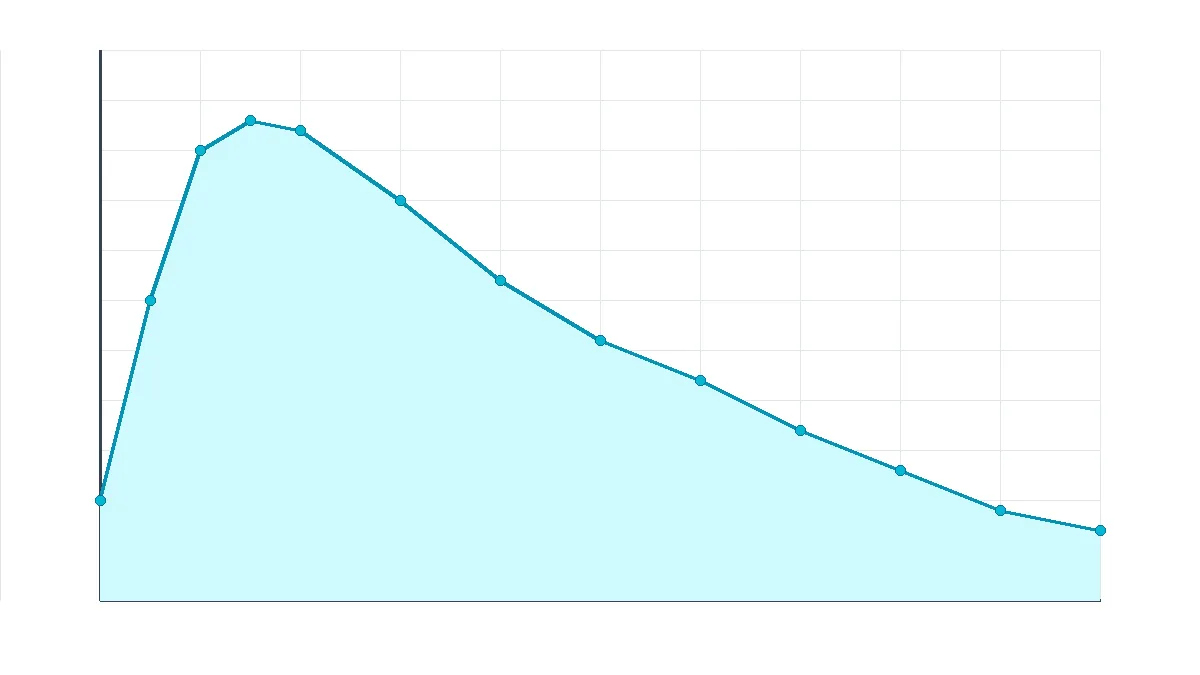
Common dysfunctional patterns include a flat curve (low cortisol throughout the day, often seen in burnout), an inverted curve (low morning with elevated evening cortisol, linked to poor sleep quality), and a persistently elevated curve (high cortisol at all time points, common with chronic stress).
What Causes High Cortisol Levels?
Chronically elevated cortisol creates a cascade of problems throughout the body. The most common causes include:
- Chronic psychological stress — prolonged work pressure, relationship difficulties, or caregiving demands
- Sleep deprivation — consistently getting fewer than 7 hours of sleep disrupts the HPA axis
- Overtraining — excessive exercise without adequate recovery
- Medications — corticosteroids (prednisone, dexamethasone) are the most common cause of exogenous Cushing’s syndrome
- Pituitary or adrenal tumors — rare but serious causes of endogenous cortisol excess
- Metabolic dysfunction — insulin resistance and obesity can both elevate cortisol
Symptoms of high cortisol include central weight gain, a round or puffy face, thinning skin, easy bruising, muscle weakness, high blood sugar, elevated blood pressure, anxiety, and disrupted menstrual cycles. If you are experiencing these symptoms alongside broader hormone imbalance symptoms, comprehensive testing is essential.
What Causes Low Cortisol Levels?
Low cortisol, also known as adrenal insufficiency or hypocortisolism, can be equally debilitating. Causes include:
- Addison’s disease — autoimmune destruction of the adrenal glands (primary adrenal insufficiency)
- Secondary adrenal insufficiency — pituitary gland dysfunction affecting ACTH production
- Abrupt withdrawal from corticosteroid medications — the most common iatrogenic cause
- Chronic stress burnout — prolonged HPA axis activation can lead to cortisol depletion
- Pituitary damage — from tumors, surgery, radiation, or traumatic brain injury
Symptoms of low cortisol include severe fatigue, low blood pressure, dizziness upon standing, unintended weight loss, salt cravings, nausea, darkening of the skin (in Addison’s disease), and difficulty recovering from illness or stress. Without treatment, an adrenal crisis can become a medical emergency.
How Should You Prepare for a Cortisol Test?
Proper preparation ensures accurate cortisol test results. Follow these guidelines:
- Timing matters — for a cortisol blood test, schedule the draw between 7 and 9 AM unless your provider specifies otherwise. Morning draws capture peak cortisol levels
- Discuss medications with your provider — oral contraceptives, estrogen therapy, corticosteroids, and certain antidepressants can directly affect cortisol levels. Some supplements, including ashwagandha and phosphatidylserine, may also alter results
- Manage stress before the test — acute stress can temporarily spike cortisol. Arrive at the lab relaxed and avoid intense exercise the morning of a blood draw
- Follow fasting instructions — while not always required, some providers recommend fasting before a morning cortisol blood test
- For salivary tests — avoid eating, drinking, or brushing your teeth 30 minutes before each collection. Follow the time-specific instructions precisely
- For 24-hour urine tests — collect all urine during the specified period without missing any samples
Why Should You Look Beyond a Basic Cortisol Test?
A single cortisol number provides a limited snapshot. Cortisol does not operate in isolation. It interacts directly with thyroid hormones, sex hormones (estrogen, progesterone, testosterone), insulin, DHEA, and melatonin. Dysfunction in one area often creates imbalances across the entire hormonal system.
This is why comprehensive hormone panels, rather than isolated cortisol tests, often provide the most actionable information. A thorough evaluation might include:
- DUTCH test — cortisol, cortisone, cortisol metabolites, plus sex hormone metabolites
- Complete thyroid panel — TSH, Free T3, Free T4, thyroid antibodies
- Sex hormone panel — testosterone, estradiol, progesterone, DHEA-S, SHBG
- Metabolic markers — fasting insulin, HbA1c, inflammatory markers
- GI-MAP gut health analysis — gut inflammation directly affects the stress response
Understanding the relationships between these systems allows for targeted treatment rather than symptom management.
How Does 1st Optimal Approach Cortisol Testing?
At 1st Optimal, we believe a single cortisol number is never enough to build a treatment plan. Our approach combines advanced diagnostics with personalized, data-driven care.
Advanced Diagnostic Testing
We use the DUTCH test alongside comprehensive blood panels to map your full cortisol rhythm, metabolite pathways, and related hormones. This gives us a detailed picture of how your body produces, uses, and clears cortisol, not just a single snapshot.
Personalized Protocols
Based on your results, our medical providers create individualized treatment plans that may include hormone optimization therapy, lifestyle modifications, stress management strategies, nutritional adjustments, and targeted supplementation. Every protocol is built around your unique lab data.
Telehealth Convenience
All testing and consultations happen through our fully virtual telehealth platform. At-home testing kits are shipped directly to you, and results are reviewed during a one-on-one video consultation with your dedicated provider. No waiting rooms, no scheduling hassles.
Take control of your cortisol and your health. Schedule your consultation with 1st Optimal to start with comprehensive, at-home cortisol and hormone testing.
Frequently Asked Questions About Cortisol Testing
How much does a cortisol test cost?
A basic cortisol blood test typically costs between $20 and $50 with insurance coverage. Without insurance, expect to pay $50 to $150 depending on the lab. Comprehensive cortisol testing like the DUTCH test ranges from $300 to $500 but provides significantly more clinical information. At 1st Optimal, advanced diagnostic testing is included as part of our membership plans.
Can you test cortisol levels at home?
Yes. At-home saliva cortisol kits and DUTCH test kits are widely available. Saliva kits typically require samples at 4 points throughout the day, while DUTCH kits use dried urine strips. Both can be completed at home and mailed to a certified lab for analysis.
What is the best time to test cortisol?
For a single blood draw, between 7 and 9 AM captures your peak cortisol level. However, multiple-point testing throughout the day (available through salivary or DUTCH tests) provides a much more complete and clinically useful picture of cortisol function.
What is the abbreviation for cortisol on a blood test?
Cortisol may appear on lab results as “cortisol, total,” “cortisol, AM,” “serum cortisol,” or simply “cortisol.” There is no single universal abbreviation. Some labs use “CORT” or list it under endocrine or adrenal panels.
How often should you test cortisol levels?
If you are actively addressing a cortisol imbalance, retesting every 3 to 6 months allows you to track progress and adjust your treatment plan. For ongoing monitoring as part of a comprehensive health optimization program, annual cortisol testing alongside your regular hormone panels is recommended.
Can stress alone cause abnormal cortisol levels?
Yes. Chronic psychological stress is the most common cause of cortisol dysregulation in otherwise healthy individuals. Prolonged stress can elevate cortisol for months or years, and eventually lead to HPA axis dysfunction where cortisol production becomes blunted. This is why stress management is a critical component of any cortisol optimization plan.
What is the difference between a cortisol test and an ACTH stimulation test?
A cortisol test measures your current cortisol level. An ACTH stimulation test evaluates how well your adrenal glands respond to adrenocorticotropic hormone (ACTH). Your provider injects synthetic ACTH and then measures cortisol at 30 and 60 minutes. This test is specifically used to diagnose Addison’s disease and secondary adrenal insufficiency.
Medical Disclaimer: This article is for educational purposes only and does not constitute medical advice. Cortisol levels and hormonal health should be evaluated by a qualified healthcare provider. Individual results vary based on medical history, current medications, and overall health status. Always consult your physician before making changes to your health regimen. If you experience symptoms of an adrenal crisis (severe fatigue, confusion, low blood pressure, loss of consciousness), seek emergency medical care immediately.