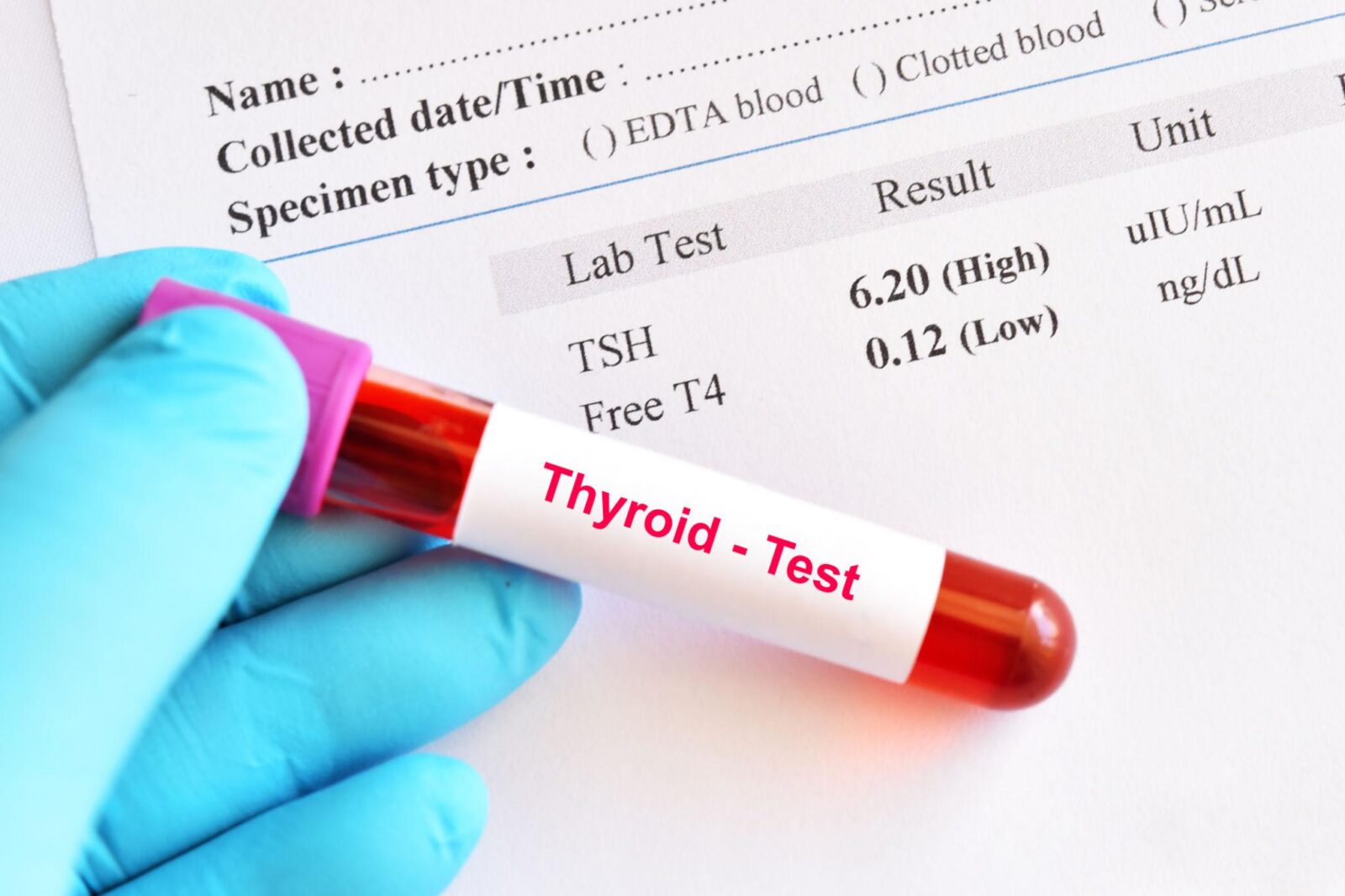


If you’ve ever had your thyroid “checked,” there’s a good chance your lab work came down to one number: thyroid-stimulating hormone, better known as TSH.
And if that number came back inside the reference range, you were probably told your thyroid was normal.
That might be true.
But it might also be incomplete.
TSH is useful. It gives important information about how your brain is signaling your thyroid. But it does not show the full thyroid picture by itself. A complete thyroid panel looks deeper at thyroid hormone production, thyroid hormone conversion, autoimmune activity, and the factors that may be affecting your energy, metabolism, mood, weight, temperature regulation, and overall function.
That matters because many people feel “off” long before their basic thyroid screen looks obviously abnormal.
Fatigue, stubborn weight gain, brain fog, cold hands and feet, dry skin, low mood, hair thinning, constipation, heavy periods, poor recovery, and low motivation can all overlap with thyroid dysfunction. They can also overlap with hormone imbalance, nutrient issues, stress, gut problems, poor sleep, and inflammation.
That is why a one-marker thyroid screen can leave too much unanswered.
What Is TSH?
TSH stands for thyroid-stimulating hormone.
Here’s the part most people miss: TSH is not made by your thyroid. It is made by your pituitary gland, which sits in your brain.
Think of TSH as the message your brain sends to your thyroid.
When your body senses that thyroid hormone may be too low, the pituitary usually sends out more TSH to push the thyroid to work harder. When thyroid hormone is high, TSH often drops because the brain is telling the thyroid to slow down.
That feedback loop is helpful. It is one reason TSH is commonly used as a starting point for thyroid testing.
But TSH is still an indirect marker.
It tells you how loudly your brain is asking your thyroid to work. It does not fully explain:
- How much thyroid hormone your thyroid is producing
- How much active thyroid hormone is available
- How well your body converts inactive hormone into active hormone
- Whether your immune system is attacking thyroid tissue
- Whether nutrient status, inflammation, stress, or gut health may be affecting thyroid function
That is where a complete thyroid panel becomes more useful.
Why TSH Alone Can Be Incomplete
TSH can be normal while someone still has thyroid-related symptoms.
That does not automatically mean the thyroid is the problem. Symptoms need context. But it does mean the conversation should not always stop at one lab value.
Here are a few reasons TSH alone may not tell the whole story.
1. TSH Does Not Show Active Thyroid Hormone
Your thyroid mainly produces T4, also called thyroxine. T4 is important, but it is mostly a storage or precursor hormone.
Your body has to convert T4 into T3, also called triiodothyronine. T3 is the more active thyroid hormone that helps regulate metabolism, body temperature, energy production, digestion, mood, and other key functions.
So your TSH could look normal, and even your Free T4 could look acceptable, while Free T3 is lower than expected.
That can happen when conversion is poor.
2. TSH Does Not Show Autoimmune Thyroid Activity
The most common cause of hypothyroidism in many adults is Hashimoto’s thyroiditis, an autoimmune condition where the immune system targets the thyroid.
TSH may stay normal early in the process. Meanwhile, thyroid antibodies may already be elevated.
This matters because autoimmune thyroid disease is not only a thyroid issue. It can be connected with inflammation, gut health, nutrient status, stress physiology, and other immune triggers.
If antibodies are never tested, Hashimoto’s can be missed until thyroid function becomes more clearly impaired.
3. TSH Does Not Explain Why Symptoms Are Happening
A person may have fatigue, weight gain, constipation, cold intolerance, and brain fog, but those symptoms can come from multiple systems.
A complete thyroid panel helps separate possibilities.
For example:
- Low Free T4 may suggest thyroid hormone production is low
- Low Free T3 may suggest conversion is poor
- Elevated antibodies may suggest autoimmune thyroid activity
- High reverse T3 may suggest stress, illness, inflammation, or under-eating may be affecting thyroid hormone metabolism
- Low ferritin, vitamin D, B12, selenium, zinc, or iodine status may affect thyroid function or symptoms
No single marker explains everything. The pattern matters.
What Should Be Included in a Complete Thyroid Panel?
A complete thyroid panel should look at the thyroid from multiple angles: signaling, production, activation, immune activity, and supporting nutrients.
Here are the core markers to consider.
1. TSH
TSH is still useful. It should not be ignored.
It helps show how much stimulation your brain is sending to your thyroid. A high TSH often suggests the thyroid is underproducing hormone. A low TSH may suggest overproduction, overmedication, or another regulatory issue.
But TSH should be interpreted with symptoms, medication history, age, pregnancy status, health history, and other thyroid markers.
TSH is the starting point.
It should not always be the finish line.
2. Free T4
Free T4 measures the available form of thyroxine, the main hormone produced by your thyroid gland.
This marker helps answer a basic question:
Is your thyroid producing enough hormone?
T4 is not the most active form, but it matters because your body uses it as raw material to make T3.
Low Free T4 may point toward hypothyroidism, depending on the full pattern. High Free T4 may suggest hyperthyroidism, over-replacement, or other issues that need medical evaluation.
When TSH and Free T4 are reviewed together, the thyroid picture becomes clearer.
3. Free T3
Free T3 measures the available form of triiodothyronine, the more active thyroid hormone.
This is one of the most useful markers when someone has symptoms of low thyroid function but their basic labs look “normal.”
T3 helps influence:
- Energy
- Metabolism
- Body temperature
- Mood
- Digestion
- Heart rate
- Recovery
- Cognitive function
Low Free T3 does not automatically mean someone needs thyroid medication. That is where people get reckless, because apparently the wellness internet needed another way to make blood work weird.
But low Free T3 can be a clue.
It may suggest the body is not converting T4 into T3 efficiently. That can happen with chronic stress, low calorie intake, poor sleep, inflammation, illness, low nutrient status, or certain medications.
4. Thyroid Antibodies
Thyroid antibodies help show whether the immune system may be involved.
The two most common antibodies tested are:
- Thyroid peroxidase antibodies, often called TPO antibodies
- Thyroglobulin antibodies, often called Tg antibodies
Elevated thyroid antibodies can point toward Hashimoto’s thyroiditis, the most common autoimmune cause of hypothyroidism.
This is important because someone can have elevated antibodies before TSH becomes clearly abnormal.
That means a person may be told “your thyroid is fine” while an autoimmune process is already active in the background.
If antibodies are elevated, the goal is not to panic. The goal is to understand the immune pattern, monitor thyroid function over time, and address modifiable factors that may be adding stress to the system.
5. Reverse T3
Reverse T3 is not always needed for every person, but it can be helpful in select cases.
Your body can convert T4 into either active T3 or reverse T3. Reverse T3 is inactive. Think of it as a brake on thyroid hormone activity.
Reverse T3 may rise during periods of:
- High stress
- Illness
- Significant inflammation
- Very low calorie dieting
- Overtraining
- Poor sleep
- Chronic under-recovery
This can be the body’s way of conserving energy.
Reverse T3 should not be used in isolation. It is most useful when reviewed alongside TSH, Free T4, Free T3, symptoms, nutrition history, training load, stress, and overall health status.
6. Total T4 and Total T3
Free thyroid hormones usually tell you more about what is available to your tissues.
Total T4 and Total T3 measure both bound and unbound hormone. These can still be helpful in certain cases, especially when thyroid binding proteins may be affected.
Binding proteins can change with:
- Estrogen therapy
- Pregnancy
- Oral contraceptives
- Liver function changes
- Certain medications
- Some inflammatory states
This is one reason lab interpretation should be personalized.
A number that looks normal on paper may mean something different depending on the person in front of it.
Nutrient Markers That Support Thyroid Function
Your thyroid does not work in isolation.
It needs raw materials and cofactors to produce and activate thyroid hormone.
Helpful nutrient-related markers may include:
- Ferritin and iron studies
- Vitamin D
- Vitamin B12
- Folate
- Selenium status
- Zinc status
- Magnesium
- Iodine status when appropriate
This does not mean everyone should start taking thyroid supplements.
In fact, that can backfire.
For example, iodine is essential for thyroid hormone production, but high-dose iodine can be a problem for some people, especially those with autoimmune thyroid disease. Supplement decisions should be based on testing, symptoms, diet, medications, and health history.
The goal is not to throw pills at the thyroid.
The goal is to understand what the thyroid needs and what may be getting in the way.
Metabolic and Hormone Markers That Add Context
If you are dealing with fatigue, weight resistance, low mood, poor sleep, or stubborn body composition changes, thyroid labs should often be reviewed alongside broader metabolic and hormone markers.
That may include:
- Fasting insulin
- Hemoglobin A1c
- Fasting glucose
- Lipid panel
- ApoB
- hs-CRP
- Cortisol pattern when appropriate
- Estradiol
- Progesterone
- Testosterone
- DHEA-S
- SHBG
Why does this matter?
Because thyroid symptoms often overlap with insulin resistance, menopause, perimenopause, low testosterone, chronic stress, poor recovery, gut issues, and nutrient deficiencies.
Someone may think they have a thyroid problem when the bigger issue is blood sugar regulation.
Someone else may be told their thyroid is normal while their Free T3 is low, antibodies are elevated, ferritin is low, and stress is through the roof.
The pattern is the point.
Complete Thyroid Panel vs Basic Thyroid Test
A basic thyroid test often includes only TSH. Sometimes it includes TSH and Free T4.
That can be enough for routine screening in many people.
But if symptoms persist, a complete thyroid panel gives a broader view.
Basic thyroid test may include:
- TSH
- Sometimes Free T4
Complete thyroid panel may include:
- TSH
- Free T4
- Free T3
- TPO antibodies
- Thyroglobulin antibodies
- Reverse T3 when appropriate
- Total T4 and Total T3 when appropriate
- Nutrient markers
- Metabolic markers
- Sex hormone markers when symptoms overlap
A complete thyroid panel is not about ordering every lab just because you can.
It is about asking better questions.
Symptoms That May Warrant a Deeper Thyroid Evaluation
A more complete thyroid evaluation may be worth discussing if you have symptoms like:
- Persistent fatigue
- Brain fog
- Weight gain or weight loss resistance
- Cold hands or feet
- Hair thinning
- Dry skin
- Constipation
- Low mood
- Low motivation
- Poor exercise recovery
- Heavy or irregular periods
- Low libido
- Muscle aches
- Puffy face
- Hoarse voice
- Elevated cholesterol
- Family history of thyroid disease
- History of autoimmune disease
- Symptoms after pregnancy
- Symptoms during perimenopause or menopause
These symptoms do not prove you have thyroid dysfunction.
They are signals.
Testing helps you stop guessing.
Why Thyroid Health Matters for Metabolism and Weight
Your thyroid plays a major role in metabolic rate.
When thyroid hormone activity is low, your body may burn fewer calories at rest. You may also feel more tired, move less, recover poorly, and struggle with motivation.
That combination can make weight loss harder.
But thyroid is not the only factor.
Weight resistance can also be driven by:
- Insulin resistance
- Poor sleep
- Low muscle mass
- High stress load
- Perimenopause or menopause
- Low testosterone
- Under-eating protein
- Over-restricting calories
- Gut symptoms
- Certain medications
- Chronic inflammation
This is why a complete thyroid panel is most powerful when it is part of a bigger health assessment.
At 1st Optimal, we are not looking at one number and calling it a day. We want to understand the full system: thyroid function, hormones, metabolism, gut health, lifestyle, symptoms, and goals.
Because “normal” labs do not always mean optimal function.
Thyroid and Women’s Hormones
Thyroid symptoms and hormone symptoms often overlap, especially for women in their 30s, 40s, and 50s.
Perimenopause and menopause can bring changes in:
- Sleep
- Mood
- Body composition
- Cycle regularity
- Hot flashes
- Libido
- Energy
- Recovery
- Brain fog
Those symptoms can look a lot like thyroid dysfunction.
At the same time, thyroid issues can affect menstrual cycles, fertility, energy, and mood.
That means women are often left in a frustrating gray area.
They may hear:
“Your labs are normal.”
But they still do not feel like themselves.
A complete thyroid panel can help clarify whether thyroid hormone production, conversion, or autoimmunity may be part of the pattern.
It should also be reviewed alongside sex hormones, metabolic markers, stress load, nutrition, and symptoms.
Thyroid and Men’s Health
Thyroid function matters for men too.
Low thyroid function may affect:
- Energy
- Training performance
- Recovery
- Mood
- Libido
- Weight management
- Cholesterol
- Motivation
- Mental clarity
Men often assume these symptoms are just aging or low testosterone.
Sometimes testosterone is part of the picture.
Sometimes thyroid is part of the picture.
Sometimes the real issue is sleep apnea, insulin resistance, stress, overtraining, under-recovery, or poor nutrition.
This is why better testing matters.
The goal is not to chase one hormone.
The goal is to identify the bottleneck.
What to Do If Your TSH Is Normal but You Still Feel Off
If your TSH is normal but you still have symptoms, here are practical next steps.
1. Ask for a fuller thyroid panel
Consider asking your healthcare provider about:
- TSH
- Free T4
- Free T3
- TPO antibodies
- Thyroglobulin antibodies
- Reverse T3 if appropriate
2. Review medications and supplements
Biotin can interfere with some thyroid lab tests. Some medications can also affect thyroid markers.
Tell your provider about everything you take, including supplements, thyroid medication, hormone therapy, GLP-1 medications, peptides, and over-the-counter products.
Tiny detail, apparently important. Biology loves loopholes.
3. Look beyond the thyroid
If thyroid labs do not explain your symptoms, broaden the investigation.
Consider metabolic markers, nutrient status, sex hormones, inflammation markers, sleep quality, gut health, stress physiology, and body composition.
4. Track symptoms over time
Symptoms matter.
Write down what changed, when it started, and what makes it better or worse.
Helpful details include:
- Energy patterns
- Sleep quality
- Body temperature
- Digestion
- Hair and skin changes
- Weight changes
- Cycle changes
- Mood changes
- Training recovery
- Medication changes
- Diet changes
- Stress changes
This gives your provider a clearer picture.
5. Get labs interpreted in context
Reference ranges are not the same thing as optimal ranges.
A lab result can be “normal” and still not match your symptoms, history, or goals.
That does not mean you should self-diagnose. It means your results deserve context.
FAQ: Complete Thyroid Panel
What is a complete thyroid panel?
A complete thyroid panel is a group of blood tests that gives a broader view of thyroid function. It often includes TSH, Free T4, Free T3, thyroid antibodies, and sometimes reverse T3, total T4, total T3, and nutrient markers.
Is TSH enough to check thyroid function?
TSH is useful and commonly used as a first thyroid screening test. But TSH alone may not show active thyroid hormone levels, thyroid hormone conversion, or autoimmune thyroid activity. If symptoms persist, additional markers may be helpful.
What thyroid labs should I ask for?
Common thyroid labs include TSH, Free T4, Free T3, TPO antibodies, and thyroglobulin antibodies. Reverse T3 and nutrient markers may be useful depending on symptoms, health history, and provider judgment.
Can thyroid antibodies be high when TSH is normal?
Yes. Thyroid antibodies can be elevated even when TSH and thyroid hormone levels are still within range. Elevated antibodies may suggest autoimmune thyroid activity, such as Hashimoto’s thyroiditis.
What is the difference between Free T3 and Free T4?
Free T4 is the main hormone produced by the thyroid. Free T3 is the more active thyroid hormone used by cells. The body converts T4 into T3, and that conversion process can be affected by stress, inflammation, under-eating, illness, sleep issues, and nutrient status.
Can thyroid problems cause weight gain?
Low thyroid function can contribute to weight gain or weight loss resistance by affecting metabolic rate, energy, and activity levels. But weight changes can also come from insulin resistance, menopause, low muscle mass, poor sleep, stress, medications, or nutrition issues.
Should everyone get a complete thyroid panel?
Not always. Some people only need basic thyroid screening. But if you have persistent symptoms, a family history of thyroid disease, autoimmune history, abnormal prior labs, fertility concerns, pregnancy-related thyroid changes, or unexplained metabolic issues, a more complete thyroid panel may be worth discussing.
The Bottom Line
TSH matters.
But it is not the whole thyroid story.
A complete thyroid panel can help show how your thyroid is being signaled, how much hormone is available, how well your body may be converting thyroid hormone, and whether autoimmune activity may be involved.
If your thyroid was called “normal” based on one marker but you still feel exhausted, foggy, cold, stuck, or unlike yourself, you may need a closer look.
At 1st Optimal, we use advanced testing and a whole-person approach to connect your symptoms, lab work, hormones, metabolism, and lifestyle into a plan that actually makes sense.
Explore comprehensive lab testing or book a call to review your next steps.