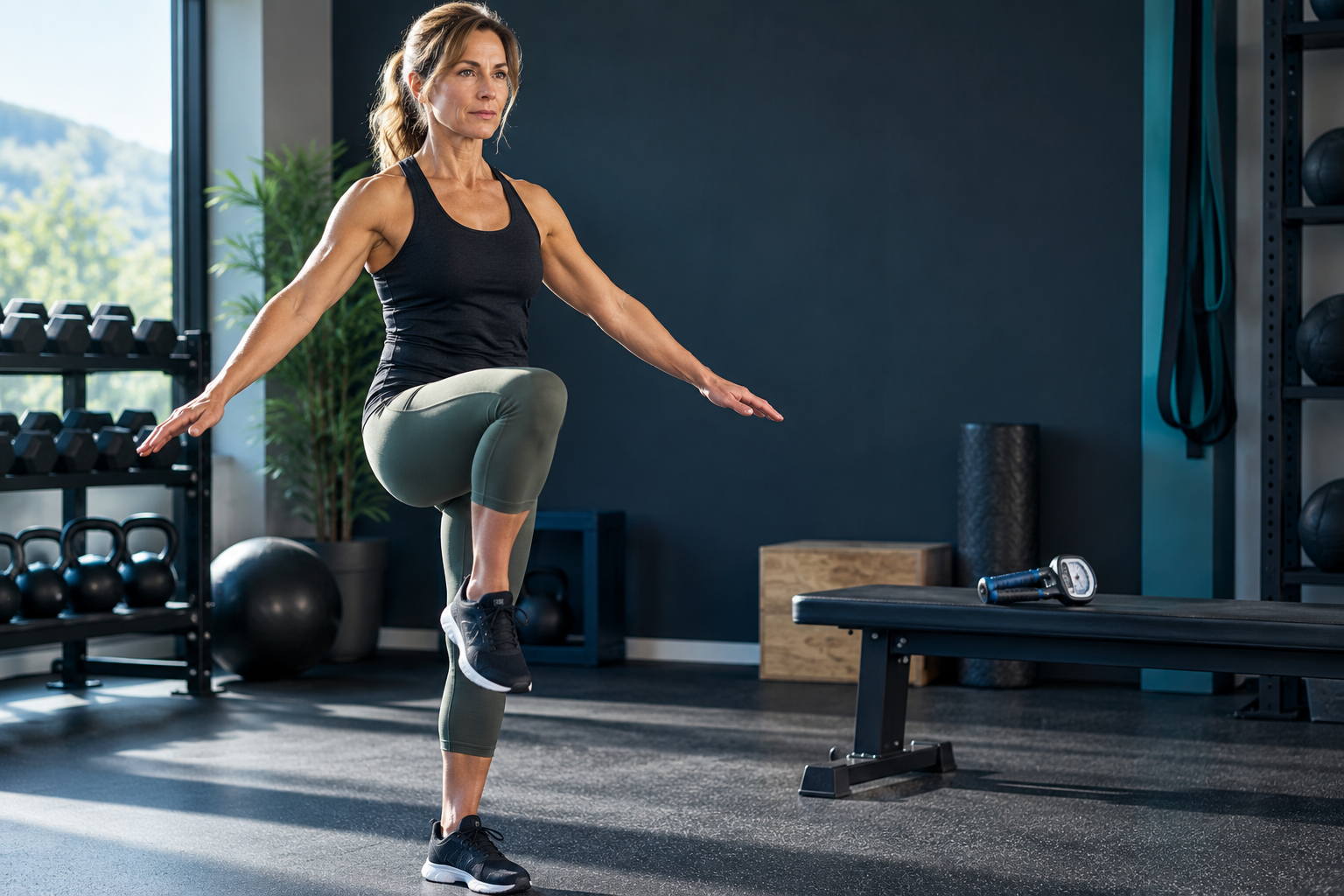


Walking is one of the most accessible forms of exercise available.
But what if a 10-minute walk could place a greater training stimulus on your muscles without requiring heavy weights or high-impact exercise?
That question is behind a growing area of research known as blood flow restriction training, or BFR.
One randomized controlled trial involving adults around age 70 found that adding blood flow restriction to low-intensity walking produced substantially larger improvements in several measures of physical function compared with walking alone.
The researchers reported improvements that were approximately 2.5 to 4.5 times greater across measures of mobility, endurance and lower-body function.
That sounds extraordinary.
But there is more to the story.
Since that study was published in 2017, researchers have conducted systematic reviews, meta-analyses and, most recently, umbrella reviews evaluating BFR training in older adults.
The overall picture is promising, but much more nuanced than a social-media headline might suggest.
Quick Answer: Does Blood Flow Restriction Walking Work for Older Adults?
Possibly, and the strongest evidence appears to be for preserving or improving muscle strength while exercising with relatively low mechanical loads.
A small randomized trial found that sedentary adults around age 70 who walked for only 10 minutes, four times per week for six weeks, while using individualized BFR, improved several physical-function tests more than adults performing the same walking program without BFR.
However, larger reviews show that the evidence is stronger for muscular strength and potentially muscle growth than it is for overall mobility, walking endurance or fall prevention. A major 2026 umbrella review concluded that low-load BFR produces a small-to-moderate strength advantage over ordinary low-load training, while traditional high-load resistance exercise still produces a slight advantage for strength when people can safely perform it.
Key Takeaways
- BFR allows relatively light exercise to create a stronger muscular training stimulus.
- The original older-adult walking trial used 10 minutes of walking at approximately 2.5 mph, four days per week for six weeks, at 60% of individualized limb occlusion pressure.
- Participants using BFR showed roughly 2.5–4.5× greater improvements across several functional tests than the walking-only group.
- Later research generally supports BFR for improving strength and muscle adaptations, but findings for mobility and endurance are less consistent.
- BFR should not be interpreted as superior to traditional strength training in every situation.
- BFR pressure should be individualized and the technique requires appropriate medical and exercise screening—particularly in older adults.
What Is Blood Flow Restriction Training?
Blood flow restriction training involves placing a specialized inflatable cuff around the upper portion of an arm or leg during exercise.
The cuff is inflated enough to partially restrict arterial blood entering the limb while more substantially limiting venous blood leaving it.
Importantly, the goal is not to completely shut off blood supply.
When appropriately applied, BFR allows exercises performed with relatively low loads to produce metabolic and muscular stress that would normally require more demanding resistance exercise.
That makes BFR especially interesting for rehabilitation, older adults, people dealing with joint limitations and others who may not tolerate heavy resistance training well.
The Study Behind the “Over 60? Add This to Walking” Claim
The study featured in the viral image was published in the Journal of Science and Medicine in Sport in 2017.
Its title was:
“Blood flow restriction walking and physical function in older adults: A randomized control trial.”
Researchers Matthew Clarkson, Louise Conway and Stuart Warmington recruited 19 sedentary older men and women and randomized them to either low-intensity walking with BFR or the same walking program without BFR.
Here is what they actually did:
| Study Variable | Protocol |
| Participants | 19 sedentary older men and women |
| Average age | BFR: 69 ± 6; Control: 70 ± 7 |
| Walking duration | 10 minutes |
| Walking speed | 4 km/h, about 2.5 mph |
| Frequency | 4 days per week |
| Program length | 6 weeks |
| BFR pressure | 60% individualized limb occlusion pressure |
| BFR participants | 10 |
| Control participants | 9 |
| Total training sessions | Approximately 24 |
This is worth emphasizing.
Participants weren’t sprinting.
They weren’t performing HIIT.
They weren’t lifting heavy weights.
They were walking at roughly 2.5 mph for 10 minutes.
The major difference between groups was the addition of individualized blood flow restriction.
What Did the Researchers Measure?
Rather than looking only at laboratory measures of muscle size, researchers evaluated abilities connected to everyday physical function.
They included the 30-second sit-to-stand test, which reflects functional lower-body strength; the six-minute walk test, which evaluates walking capacity; the Timed Up and Go test, which involves standing, walking, turning and sitting; and a modified Queen’s College step test.
After six weeks, the BFR walking group generally demonstrated 2.5–4.5 times greater improvement across the physical-function measures compared with the regular walking group.
A subsequent systematic review reported that the six-minute walking distance in this study improved approximately 9% with BFR compared with roughly 2% with walking alone.
The BFR exercise initially felt harder, however. Ratings of perceived exertion were higher in the BFR group, although perceived exertion decreased as participants became accustomed to the training.
Does “4.5 Times Better” Mean BFR Makes Walking 450% More Effective?
Not exactly.
This is one of the most important distinctions when discussing this study.
The researchers reported that the amount of improvement observed in certain tests was several times greater in the BFR group than in the control group.
That does not mean every person over 60 who uses BFR will experience 250% to 450% more strength, muscle or longevity.
The trial included only 19 people, with just 10 participants receiving BFR.
Small trials can produce larger effect estimates than later, larger bodies of research.
The correct interpretation is:
In this particular six-week randomized trial, adding BFR to low-intensity walking produced substantially greater improvements in several measures of physical function than the same walking program without BFR.
It is an intriguing result not a guarantee.
And this is where the research published since 2017 becomes especially valuable.
What Does the Newer Research Say About BFR After 60?
Several systematic reviews and meta-analyses have now evaluated BFR in older adults.
And the evidence generally supports the idea that BFR can make low-load exercise more effective for muscle, although the size of the advantage depends on what outcome you examine.
Evidence for Muscle Strength
A 2022 systematic review and meta-analysis analyzed 10 studies involving 278 healthy older adults.
Researchers found a significant strength advantage from BFR training compared with conventional low-load training.
When BFR was compared with high-intensity resistance training, however, there was no strength advantage for BFR.
The researchers concluded that BFR could be an interesting alternative for older people who are unable to perform high-load exercise.
Another 2022 meta-analysis covering 18 randomized controlled trials and 419 participants similarly found significant improvements in lower-body strength and some measures of physical function when BFR was added to low-intensity exercise.
What About Walking and Mobility Specifically?
A 2024 systematic review examined BFR and mobility in adults over age 60.
Nine studies were included in the systematic review, with eight included in the meta-analysis.
The analysis found improvements in measures including the Timed Up and Go and Short Physical Performance Battery, although it did not find a significant improvement in gait speed.
The researchers concluded that BFR may have greater effects on mobility tasks requiring leg strength than on longer-duration walking performance.
That’s an important distinction.
BFR may not simply turn walking into dramatically better cardio.
Its potential value may instead come from making a relatively light activity create more muscular demand.
What Does the Latest 2026 Evidence Say?
The newest evidence deserves particular attention.
An umbrella review published in BMC Geriatrics in August 2026 evaluated systematic reviews specifically examining adults age 60 and older.
Nine reviews representing 36 unique primary studies were analyzed.
Compared with traditional low-load exercise, low-load BFR demonstrated a small-to-moderate advantage for strength.
But when BFR was compared with high-load resistance training, traditional high-load training maintained a small strength advantage.
Most importantly, the authors rated the evidence for mobility as very low certainty and stated that the existing research does not yet establish clinical safety or demonstrate that BFR prevents falls.
That gives us a much clearer interpretation of the entire body of evidence.
The evidence hierarchy currently looks something like this:
BFR + low-load exercise vs. low-load exercise alone:
BFR appears to provide additional muscular stimulus.
BFR vs. traditional high-load resistance training:
BFR may provide useful adaptations with less mechanical loading, but traditional higher-load resistance training remains extremely valuable and may produce greater strength improvements.
BFR for mobility and fall prevention:
Promising, but considerably less certain.
That is a much more defensible conclusion than simply saying:
“Everyone over 60 should add BFR to walking.”
Why Might BFR Work?
Traditional resistance training creates mechanical tension by forcing muscles to work against relatively heavy loads.
Blood flow restriction creates a different training environment.
Restricting venous blood flow increases local metabolic stress within the exercising muscle. That environment can increase fatigue and recruit muscle fibers that might otherwise not be heavily challenged during easy exercise.
In simple terms:
The muscle may perceive the exercise as more demanding than the external workload would suggest.
This is one reason researchers are interested in BFR for people who need to challenge muscle tissue while reducing loads placed on joints and connective tissue.
Why This Matters More as We Age
Muscle isn’t just about appearance.
Strength and muscle function influence your ability to:
get out of a chair, climb stairs, carry groceries, maintain balance, recover from illness or injury, continue recreational activities and maintain independence.
Age-related reductions in muscle mass, strength and physical activity can make these tasks progressively more difficult.
That is why walking alone, while extremely valuable for cardiovascular health, may not address every component of healthy aging.
Current CDC guidance recommends that adults 65 and older combine aerobic exercise, muscle-strengthening exercise and balance activities. Specifically, adults should generally aim for at least 150 minutes of moderate aerobic activity each week, muscle-strengthening activity on at least two days and activities that improve balance.
BFR may eventually prove to be another useful tool within that larger framework.
It shouldn’t replace the framework.
Is BFR Walking Better Than Strength Training After 60?
For most capable adults, the better question isn’t:
“BFR or resistance training?”
It is:
“What combination of walking, resistance training, balance work and recovery can I safely perform consistently?”
If someone can perform appropriately programmed resistance training without pain or medical limitations, strength training remains one of the most important tools for maintaining physical function with age.
The newest evidence suggests high-load resistance exercise still produces a slight advantage in strength compared with low-load BFR training.
BFR becomes particularly interesting when heavy loading isn’t practical.
Examples might include periods of rehabilitation, orthopedic limitations, joint discomfort, reduced exercise tolerance or situations where a qualified professional deliberately wants to create a greater muscular stimulus with lower external loads.
Is Blood Flow Restriction Safe for Adults Over 60?
This requires more caution than many social-media posts suggest.
The newest umbrella review noted that adverse events in existing BFR studies were often passively reported, and the available coagulation and thrombosis data involved relatively small numbers of participants.
Its authors therefore concluded that clinical safety in older adults has not yet been definitively established.
Clinical screening frameworks recommend particular caution for people with vascular disease, previous blood clots or thromboembolism, uncontrolled or unstable hypertension, certain cardiovascular conditions, clotting abnormalities and other medical conditions that could affect vascular or cardiovascular risk.
Being over 60 doesn’t automatically mean someone shouldn’t use BFR.
It does mean there is more reason to consider medical history, medications, cardiovascular health, circulation and individualized exercise capacity before beginning.
Why You Shouldn’t Copy the Study’s Cuff Pressure Yourself
One of the easiest mistakes to make is seeing “60% pressure” and assuming that means tightening a strap until it feels 60% tight.
It doesn’t.
The Clarkson study used 60% of each individual’s limb occlusion pressure.
Limb occlusion pressure is determined using appropriate equipment and represents the pressure needed to occlude arterial blood flow under specific testing conditions.
The training pressure is then calculated as a percentage of that individualized measurement.
Different cuffs, limb sizes, cuff widths and devices can produce substantially different amounts of vascular restriction at the same numerical pressure.
Therefore:
60% limb occlusion pressure is not the same thing as “make the cuff fairly tight.”
This is one reason BFR is better introduced with someone trained in its application rather than simply using an arbitrary band or cuff pressure at home.
Is 10 Minutes of BFR Walking Enough?
The original Clarkson study certainly makes this question interesting.
Participants walked for only 10 minutes per session, approximately four times per week, for six weeks.
But that protocol shouldn’t be interpreted as a universal exercise prescription.
Other BFR walking studies have used sessions around 20 minutes, different walking intensities, different training frequencies and different percentages of limb occlusion pressure.
The ideal protocol likely depends on the person, their health status, training history, goals, equipment and tolerance.
The valuable lesson from the research isn’t necessarily:
“Walk exactly 10 minutes.”
It’s that exercise does not always need to be extremely heavy or extremely long to produce a meaningful training stimulus.
Could BFR Help Preserve Independence as We Age?
Potentially.
Tests such as standing up from a chair, walking for six minutes and completing a Timed Up and Go assessment aren’t arbitrary laboratory measurements.
They represent qualities closely related to how people function in everyday life.
That’s one reason the research is so interesting.
But we should distinguish between improving a functional test and proving that an intervention prevents disability, frailty or falls.
The 2026 umbrella review specifically found that direct evidence for fall prevention was absent.
So BFR should currently be viewed as a potentially useful training strategy—not an anti-aging cure.
The Bigger Healthy-Aging Lesson
The most interesting part of this study may not actually be the cuffs.
It’s what the research tells us about muscle and physical function as we age.
Maintaining strength becomes increasingly important as we move through our 40s, 50s, 60s and beyond.
That means a comprehensive healthy-aging strategy should look beyond simply hitting a step count.
Walking matters.
Cardiovascular fitness matters.
But so do resistance training, protein intake, nutrition, sleep, recovery, metabolic health and the medical factors that can influence someone’s ability to train and recover.
The goal shouldn’t simply be living longer.
It should be preserving as much strength, mobility, independence and capacity as possible during those years.
That’s where research like this becomes useful.
Not because everyone needs BFR.
But because it reinforces a much larger principle:
Give your body a reason to stay strong.
Frequently Asked Questions About BFR Walking
Does blood flow restriction walking build muscle after 60?
Research suggests BFR combined with walking or low-load exercise can increase the muscular stimulus compared with the same low-intensity exercise without BFR. Earlier meta-analyses also found improvements in muscle size and strength. However, results vary between studies, and BFR should not automatically be considered superior to well-designed resistance training.
Is BFR walking good for seniors?
It may be useful for appropriately screened older adults, particularly when high mechanical loads are difficult to tolerate. Evidence is currently stronger for improvements in strength than for broader mobility outcomes or fall prevention.
How long should you walk with BFR?
There is no universal protocol. The 2017 Clarkson trial used 10-minute walking sessions four times per week for six weeks. Other studies have used different durations and frequencies.
How tight should BFR cuffs be for walking?
BFR pressure should be based on individualized limb or arterial occlusion pressure rather than an arbitrary pressure or subjective feeling of tightness. The Clarkson study used 60% limb occlusion pressure.
Is BFR better than lifting weights for older adults?
Not necessarily. The newest evidence suggests low-load BFR can outperform conventional low-load exercise for strength, but higher-load resistance training maintains a small advantage for strength when it can be safely performed.
Can BFR prevent falls?
That has not been established. While some studies report improvements in functional tests related to mobility, the 2026 umbrella review found no direct evidence establishing a reduction in falls.
Can someone with high blood pressure use BFR?
People with hypertension or cardiovascular risk factors should receive appropriate medical screening before beginning BFR. BFR can create greater cardiovascular responses than comparable exercise performed without restriction.
The 1st Optimal Perspective
At 1st Optimal, we believe healthy aging should be approached as more than the absence of disease.
The objective is to preserve the strength, energy, mobility and physical capacity that allow you to continue doing the things that matter to you.
That means looking at the complete picture: training, nutrition, recovery, metabolic health, hormones and other health factors rather than chasing a single exercise technique or “longevity hack.”
Blood flow restriction is an exciting area of research.
For the right person, it may become another tool in the toolbox.
But the larger message from this research is even more important:
Muscle matters. Strength matters. Movement matters. And what you do today can influence how capable you remain decades from now.
1st Optimal — Functional Health Coaching powered by Functional Medicine.
Optimize You. Uplift Others.
Medical Disclaimer
This article is for educational purposes only and is not intended to diagnose, treat, cure or prevent any disease or medical condition. Blood flow restriction exercise may not be appropriate for everyone. Individuals with cardiovascular, vascular, clotting or other medical conditions, or those taking medications that could affect exercise or vascular risk, should consult an appropriately qualified healthcare professional before beginning a BFR program.