
You know your age.
It is the number on your driver’s license, the candles on your birthday cake, and the number of years since you were born.
But that number does not tell the whole story.
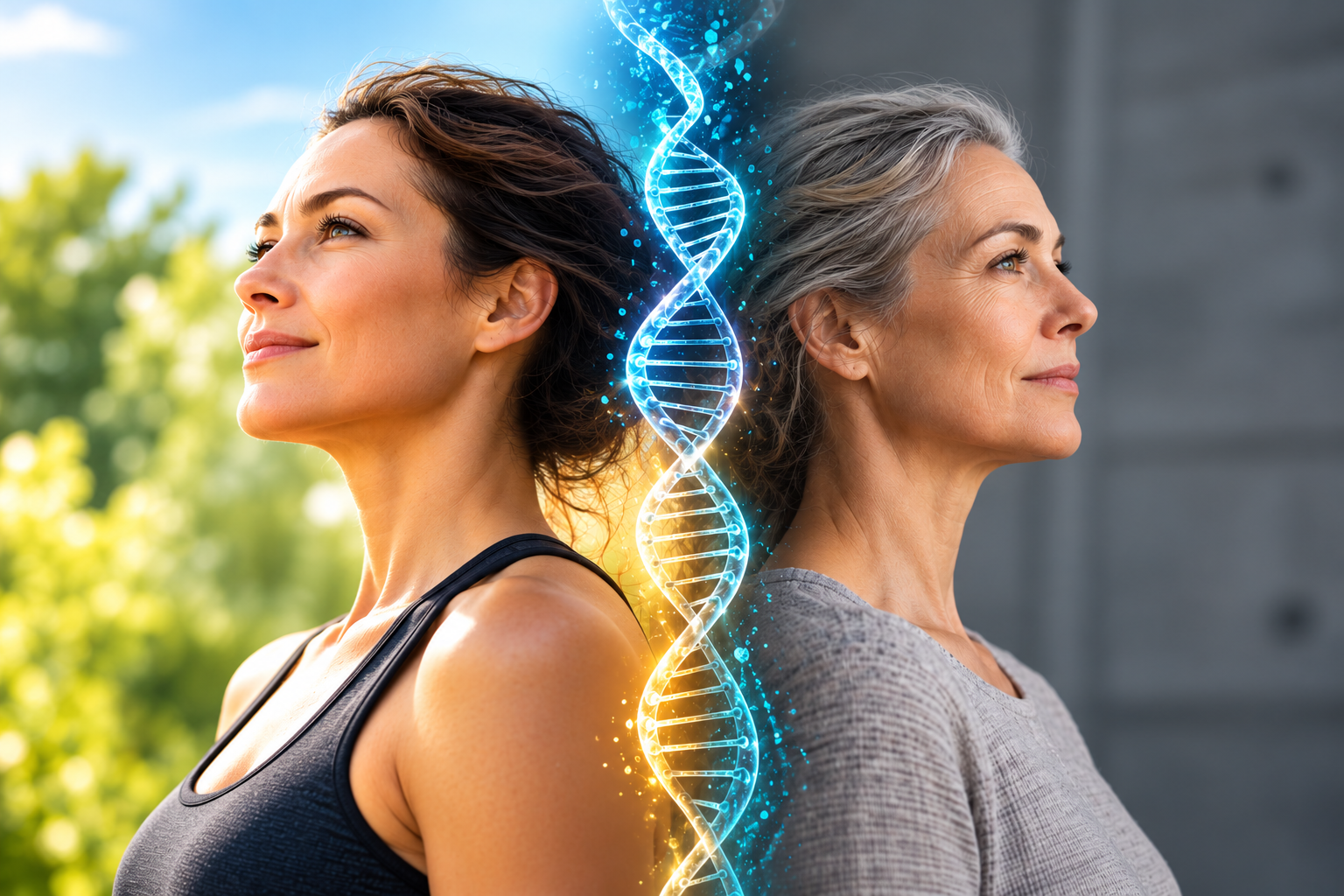
Two people can both be 45 years old and have dramatically different cardiovascular health, metabolic function, muscle mass, inflammation levels, physical fitness, and risk for age-related disease.
One may function more like someone several years younger. The other may be showing signs of accelerated aging.
That difference is where biological age comes in.
Researchers are increasingly developing tools that attempt to measure not simply how long you have been alive, but how your cells, organs, and physiological systems are aging.
So, what is biological age? How is it different from chronological age? Can you actually measure it? And most importantly, can you influence how quickly you age?
Let’s break it down.
What Is Chronological Age?
Your chronological age is simply the amount of time that has passed since you were born.
If you were born 45 years ago, your chronological age is 45.
It is fixed and moves forward at the same rate for everyone.
Chronological age remains one of the strongest predictors of many health outcomes because the risk of conditions such as cardiovascular disease, cancer, osteoporosis, metabolic disease, and cognitive decline generally rises as people get older.
But chronological age has one major limitation:
People do not age biologically at the same rate.
Genetics, physical activity, nutrition, smoking, metabolic health, environmental exposures, sleep, and many other factors can influence how the body changes with age.
That is why researchers became interested in measuring something beyond birthdays.
What Is Biological Age?
Biological age is an estimate of how old your body appears to be based on biological or physiological characteristics rather than simply the number of years you have been alive.
The National Institute on Aging describes biological age as reflecting the apparent age of your cells, tissues, and organ systems based on biological characteristics.
Think of it this way:
Your chronological age tells you how many years have passed.
Your biological age attempts to tell you what those years have done to your body.
For example:
| Chronological Age | Possible Biological Age | Interpretation |
|---|---|---|
| 45 | 39 | Some measurements suggest slower-than-average aging |
| 45 | 45 | Aging roughly in line with peers |
| 45 | 53 | Some measurements suggest accelerated aging |
However, biological age is not a single objective number that can currently be measured with the certainty of blood pressure or body temperature.
Different biological-age models measure different aspects of aging, and the same person may receive different results depending on the test used. Researchers continue to refine these tools.
Biological Age vs. Chronological Age: What’s the Difference?
The simplest difference is this:
Chronological age = how long you have lived.
Biological age = an estimate of how your body is aging.
Chronological age cannot be changed.
Biological aging, however, appears to be influenced by a combination of genetics, environment, health conditions, and lifestyle.
That distinction is one reason biological-age research has become so important in longevity medicine.
Instead of asking only:
“How old are you?”
Researchers can begin asking:
“How quickly are you aging?”
And potentially an even more useful question:
“Which systems in your body may be contributing to accelerated aging?”
Why Can Two People the Same Age Be Biologically Different?
Imagine two 50-year-old adults.
Person A:
- Strength trains several times per week
- Maintains healthy blood pressure
- Has good insulin sensitivity
- Sleeps consistently
- Does not smoke
- Maintains muscle mass
- Has strong cardiorespiratory fitness
Person B:
- Is mostly sedentary
- Smokes
- Has chronically elevated blood sugar
- Carries significant visceral fat
- Has poor cardiovascular fitness
- Sleeps five or six hours most nights
- Has several poorly controlled cardiometabolic risk factors
Both are chronologically 50.
But their bodies may not show the same degree of age-related physiological change.
Large bodies of research associate factors including obesity, physical inactivity, tobacco use, and other environmental or lifestyle exposures with measures of accelerated biological aging, although relationships vary depending on the aging clock being studied.
That is precisely what biological-age researchers are trying to quantify.
How Is Biological Age Measured?
There is no universally accepted biological-age test.
Instead, scientists have developed several approaches.
Some use routine blood markers. Others examine DNA methylation, proteins, physical function, or combinations of hundreds or thousands of biological measurements.
Here are some of the most important.
1. Blood-Based Biological Age
One of the more accessible approaches uses standard clinical laboratory biomarkers.
A well-known example is Phenotypic Age, or PhenoAge.
The original model incorporates chronological age along with nine commonly measured biomarkers:
- Albumin
- Creatinine
- Glucose
- C-reactive protein
- Lymphocyte percentage
- Mean corpuscular volume
- Red cell distribution width
- Alkaline phosphatase
- White blood cell count
These markers collectively provide information related to areas including metabolic health, inflammation, kidney and liver function, immune function, and blood-cell characteristics.
Researchers developed Phenotypic Age around mortality-related risk rather than simply teaching an algorithm to guess someone’s birthday.
That distinction matters.
A biological-age measurement becomes more clinically interesting when it captures something about future health rather than simply reproducing chronological age.
2. Epigenetic Age and DNA Methylation Clocks
One of the most researched areas of biological aging involves DNA methylation.
DNA methylation is an epigenetic process that helps regulate how genes function without changing the underlying DNA sequence.
Patterns of methylation change as people age.
Researchers discovered that certain combinations of these changes can be used to create highly accurate aging models known as epigenetic clocks.
A blood or saliva sample may be analyzed at hundreds or thousands of specific locations across the genome. Algorithms then interpret the methylation patterns.
Different clocks have different purposes.
Horvath Clock
One of the landmark epigenetic clocks developed by Steve Horvath was designed largely to estimate chronological age across different human tissues.
It helped establish that DNA methylation contains a remarkably strong aging signal.
PhenoAge
Later-generation clocks incorporated information related more directly to health outcomes.
DNA methylation PhenoAge was designed using a phenotypic-age measure associated with morbidity and mortality rather than chronological age alone.
GrimAge
GrimAge represents another generation of epigenetic clocks designed to capture mortality- and disease-related biological signals rather than simply predict birthdays.
These later clocks are one reason you may see the term epigenetic age acceleration used in longevity research.
What Does “Age Acceleration” Mean?
Suppose an aging model estimates that your biological age is older than would typically be expected for someone your chronological age.
Researchers may describe this difference as age acceleration.
If the model indicates younger-than-expected biology, it may be described as age deceleration.
But interpreting a result such as:
“Your biological age is 6 years younger”
requires caution.
It does not literally mean every organ in your body has become six years younger.
It means your biological profile resembles the pattern the specific algorithm associates with a different age or risk level.
Different clocks capture different biological processes, which can lead to different answers from the same individual. A 2026 analysis comparing several widely used epigenetic clocks found substantial differences in the biological pathways associated with individual clocks.
That is why trends and clinical context can be more useful than obsessing over one number.
3. Pace-of-Aging Tests
There is another important distinction:
Biological age and pace of aging are not exactly the same thing.
Think of biological age as your current position.
Think of pace of aging as your speed.
One widely studied example is DunedinPACE, a DNA methylation biomarker developed using decades of longitudinal measurements from the Dunedin Study.
Researchers originally tracked changes across multiple indicators of organ-system health and then developed a DNA methylation measurement capable of estimating the pace at which aging was occurring. DunedinPACE has been associated in research with morbidity, disability, and mortality.
This is an important development because, from an intervention standpoint, knowing whether your rate of aging is changing may eventually prove more useful than knowing a single biological-age estimate.
4. Proteomic Aging Clocks
A newer area of longevity research looks at the proteome, meaning the thousands of proteins circulating throughout the body.
Protein concentrations can change with aging, inflammation, immune function, cardiovascular disease, metabolic health, and other physiological processes.
Researchers are using machine-learning models to combine these signals into proteomic aging clocks.
A 2026 review in Nature Aging described these clocks as an emerging approach for quantifying biological age using high-dimensional protein data.
These tools are promising, but like epigenetic clocks, they are still evolving.
5. Telomere Length
Telomeres are protective structures located at the ends of chromosomes.
They tend to shorten as cells divide and as people age, which is why telomere length became one of the earliest popular biomarkers of aging.
But there is an important limitation.
Telomere length varies substantially between individuals and tissues, and it represents only one piece of the aging process.
A review of biological-age predictors concluded that different aging biomarkers reflect different components of aging and that no single measure captures the entire process.
So telomere length should not be viewed as a definitive biological-age score.
What About VO2 Max, Grip Strength, and Muscle Mass?
Not every useful longevity marker needs to produce an age in years.
In fact, some of the most actionable indicators of healthy aging measure function rather than molecular age.
Examples include:
- VO2 max or cardiorespiratory fitness
- Grip strength
- Muscle mass
- Walking speed
- Balance
- Blood pressure
- Glucose regulation
- Body composition
These measurements do not necessarily tell you that your body is “42 instead of 48.”
But they can provide valuable information about how well major systems responsible for long-term health are functioning.
That distinction is important.
The goal should not be to collect the lowest biological-age number possible.
The goal is to identify areas of health that can actually be improved.
What Can Make You Age Faster?
Aging is enormously complex. There is no single switch responsible for how quickly someone ages.
Genetics play a role, but they are only part of the picture.
Research has investigated relationships between biological-age measures and factors including:
Smoking
Tobacco exposure is associated with substantial health risks and has also been linked with accelerated aging measurements in several modern epigenetic clocks.
A nationally representative study of younger U.S. adults, for example, found that tobacco use was associated with faster biological aging across several measurements, with particularly strong associations for GrimAge.
Poor Metabolic Health
Chronically elevated glucose, insulin resistance, excess visceral fat, hypertension, and other components of poor metabolic health are closely tied to diseases of aging.
Obesity has also been associated with accelerated DNA methylation age in multiple studies.
Physical Inactivity
Movement matters far beyond calorie burning.
Regular physical activity supports cardiovascular fitness, metabolic health, muscle, bone, mobility, and functional independence.
A 2026 systematic review and meta-analysis found that higher physical activity was associated with lower biological aging on some DNA methylation clocks, including Horvath and GrimAge measures. However, the authors emphasized that much of the evidence was observational, so causation remains difficult to establish.
Poor Sleep
Sleep affects metabolism, immune function, cardiovascular regulation, recovery, and brain health.
Adults generally continue to need roughly seven to nine hours of sleep as they age.
One bad night is not going to suddenly age you.
The bigger issue is what happens when poor sleep becomes the normal pattern.
Environmental Exposures
Researchers are also studying how environmental factors such as air pollution, cigarette smoke, metals, chemicals, and extreme climatic exposures may influence epigenetic aging.
A 2025 systematic review analyzed more than 100 studies involving over 180,000 people investigating relationships between environmental exposures and epigenetic age acceleration.
Can You Slow Your Biological Age?
This is where the conversation often gets exaggerated online.
You will see claims that a supplement, diet, fasting protocol, peptide, or “anti-aging stack” can reverse your biological age by 10 years.
The science is not that simple.
Biological-age biomarkers can change, and researchers are actively studying whether interventions can meaningfully alter the trajectory of aging.
But changing an aging-clock score does not automatically prove that the aging process itself has been reversed.
Current epigenetic clocks are largely based on statistical relationships, and researchers continue to debate exactly which biological processes different clocks measure and whether changing those measurements necessarily changes aging itself.
A better goal is:
Improve the systems that influence your healthspan.
That means focusing on fundamentals with strong evidence behind them.
1. Build and Maintain Muscle
Muscle is not just cosmetic.
It supports:
- Strength
- Mobility
- Glucose disposal
- Metabolic health
- Bone health
- Physical independence
Resistance training becomes increasingly important as adults get older because maintaining muscle and strength becomes harder with age.
2. Improve Cardiorespiratory Fitness
Your heart, lungs, blood vessels, and muscles all contribute to your ability to use oxygen during exercise.
Improving cardiovascular fitness through appropriately prescribed aerobic activity is one of the most powerful ways to support long-term functional health.
Rather than asking only, “How much do I weigh?” it can be useful to ask:
“How physically capable is my body?”
3. Improve Metabolic Health
Blood sugar regulation, blood pressure, body composition, lipid status, and visceral fat can provide important insight into long-term health risk.
Someone can look healthy while still having significant metabolic dysfunction.
This is one reason deeper health assessment can be valuable.
4. Eat for Long-Term Health
There is no single proven “anti-aging diet.”
What matters most is building a pattern that supports:
- Adequate protein
- Fiber
- Micronutrient sufficiency
- Metabolic health
- Healthy body composition
- Cardiovascular health
The National Institute on Aging identifies healthy food choices, physical activity, adequate sleep, avoiding smoking, and proactive health care as important components of healthy aging.
5. Prioritize Sleep and Recovery
Training harder is not always the answer.
Recovery is part of adaptation.
Chronic sleep restriction can make it harder to regulate appetite, recover from exercise, maintain metabolic health, and perform cognitively and physically.
Sleep should be treated as a core part of a longevity plan, not something you deal with after everything else is optimized.
6. Stop Smoking
Few longevity strategies are as well established as avoiding tobacco.
The National Institute on Aging notes that stopping smoking improves health even among people who quit later in life.
You do not need an expensive biological-age test to know this is one of the highest-value changes a smoker can make.
Should You Get a Biological Age Test?
Potentially, but understand what you are buying.
A biological-age test may be useful when it is treated as one piece of information within a larger health picture.
Before choosing one, ask:
- What exactly does this test measure?
- Has the algorithm been validated in independent populations?
- Was it trained to predict chronological age, disease risk, mortality, or pace of aging?
- How reproducible are the results?
- Can changes in the score be meaningfully interpreted over time?
- Will the result actually change what you do?
That final question is especially important.
If your “biological age” comes back older than expected but you do not understand whether poor blood pressure, low fitness, smoking, metabolic dysfunction, or another modifiable factor contributed to the result, the number may create more anxiety than useful information.
Testing should lead to actionable insight, not just another score to track.
Is a Lower Biological Age Always Better?
Generally, studies associate accelerated biological aging with poorer health outcomes.
For example, systematic reviews have found relationships between accelerated epigenetic aging and mortality as well as cardiovascular disease, diabetes, and other age-related conditions.
But biological age should not become another health competition.
You are not failing because an algorithm says you are three years “older.”
Your result can be influenced by:
- The algorithm used
- Sample type
- Laboratory methodology
- Biological variability
- Health conditions
- Current exposures
- Statistical assumptions built into the model
The most useful question is not:
“Can I make the number lower?”
It is:
“What does my health data suggest I should improve?”
Biological Age Is Only One Part of the Longevity Puzzle
The longevity industry sometimes makes aging sound as though it can be reduced to one number.
It cannot.
A comprehensive view of healthy aging may include:
- Cardiovascular health
- Metabolic health
- Hormonal health
- Muscle and strength
- Body composition
- Bone health
- Inflammation
- Sleep
- Cognitive function
- Physical fitness
- Nutrition
- Psychological health
- Social connection
- Genetics and family history
Biological-age measurements may eventually become extremely useful tools for understanding how these systems interact.
But the field is still developing.
Researchers continue to improve epigenetic clocks, proteomic clocks, multi-omics models, and other measurements in an effort to distinguish chronological time from the biology that determines health span.
The Bottom Line
Your birthday tells you how long you have been alive.
It does not tell you exactly how well your body is aging.
Chronological age is fixed. Biological aging is more variable.
Modern biological-age tools analyze everything from routine blood markers to DNA methylation and thousands of circulating proteins in an attempt to measure that difference.
These technologies are exciting.
But they should not distract us from what we already know.
Your health at 40, 50, 60, and beyond is influenced by the systems you build and maintain over decades.
Muscle matters.
Cardiovascular fitness matters.
Blood pressure matters.
Metabolic health matters.
Sleep matters.
Nutrition matters.
Smoking matters.
And consistent preventive health care matters.
The better question may not be:
“How old is my body?”
It may be:
“What can I measure today that helps me function better 10, 20, and 30 years from now?”
That is where longevity becomes much more useful than simply chasing a younger number.
Frequently Asked Questions
What is biological age?
Biological age is an estimate of how old your cells, tissues, organs, or physiological systems appear based on biological measurements. Unlike chronological age, it attempts to capture differences in how quickly people are aging.
What is the difference between biological age and chronological age?
Chronological age is the number of years since you were born. Biological age attempts to estimate the condition or aging rate of your body using biomarkers such as blood chemistry, DNA methylation, proteins, or physiological measurements.
Can your biological age be younger than your actual age?
Yes. Some biological-age algorithms may estimate a biological age below your chronological age. However, the result depends on the testing method and should not be interpreted as the literal age of every organ or cell in your body.
Can biological age be reversed?
Certain biological-age measurements can move in a younger direction after changes in health or lifestyle, but scientists have not established that lowering an aging-clock score necessarily means aging itself has been reversed. More longitudinal intervention research is needed.
What is an epigenetic age test?
An epigenetic age test measures patterns of DNA methylation at selected areas of the genome. Algorithms use those patterns to estimate chronological age, biological risk, or pace of aging depending on the specific clock.
What is the best test for biological age?
There is currently no universally accepted gold-standard biological-age test. Blood-based models, epigenetic clocks, proteomic clocks, and functional health assessments measure different aspects of aging. The most valuable approach depends on what information you are trying to obtain.
How do I know if I am aging faster than normal?
No single symptom or test can answer this reliably. A comprehensive assessment may look at cardiometabolic health, blood pressure, glucose regulation, body composition, strength, cardiovascular fitness, sleep, lifestyle factors, routine laboratory markers, and potentially validated biological-aging biomarkers.
How can I slow biological aging?
Current evidence supports focusing on established healthy-aging behaviors including regular physical activity, resistance training, cardiovascular exercise, adequate sleep, nutritious food choices, avoiding smoking, maintaining good metabolic health, and appropriately managing medical risk factors.
References
National Institute on Aging. The Epigenetics of Aging: What the Body’s Hands of Time Tell Us.
Belsky DW, et al. DunedinPACE, a DNA methylation biomarker of the pace of aging. eLife.
Levine ME, et al. An epigenetic biomarker of aging for lifespan and healthspan. Aging. 2018.
National Institute on Aging. What Do We Know About Healthy Aging?
Medical Disclaimer: This article is for educational purposes only and is not intended to diagnose, treat, cure, or prevent any medical condition. Biological-age tests are evolving research and clinical tools. Individual health decisions should be made with an appropriately qualified healthcare professional.