

Hormones are powerful chemicals in your body that regulate nearly every function, from your metabolism to your mood, energy levels, and even reproductive health. As we age, our hormone levels naturally fluctuate, and these imbalances can lead to a range of physical and emotional symptoms. If you’re feeling fatigued, stressed, or out of balance, hormone optimization could be the solution to restoring your well-being.
In this comprehensive hormone optimization guide, we’ll walk you through five actionable steps to help you start your journey towards balanced hormones. From understanding the basics of hormone health to knowing what to expect during treatment, this guide will provide you with the tools and knowledge to optimize your hormones effectively.
Let’s get started on your path to feeling better, stronger, and more energized.
Step 1: Understanding Hormone Imbalances
Before diving into any treatments, it’s important to understand what hormone imbalances look like and how they might be affecting you. Hormones play a role in almost every aspect of your health, so even slight imbalances can cause noticeable changes in your body.
Common Symptoms of Hormonal Imbalances
Hormonal imbalances can manifest in different ways, depending on which hormones are out of balance. Here are some of the most common symptoms:
- Fatigue: Feeling tired, even after a full night’s sleep.
- Mood Swings: Sudden emotional fluctuations, including irritability, anxiety, or depression.
- Weight Gain or Difficulty Losing Weight: Unexplained weight gain, especially around the abdomen.
- Changes in Sleep Patterns: Difficulty falling asleep, staying asleep, or feeling unrested.
- Reduced Libido: A decrease in sexual desire or performance.
- Hair Thinning or Loss: Noticeable changes in hair volume or texture.
- Dry Skin: Skin that feels rough, flaky, or thin.
While these symptoms are common in conditions like menopause or thyroid disorders, hormone imbalances can also result from stress, poor diet, or chronic illness. It’s crucial to work with a healthcare provider to determine which hormones are out of balance and why.
Hormones Involved in Optimization
Some of the key hormones that often require optimization include:
- Testosterone: Important for energy, muscle mass, and sexual drive.
- Estrogen: Crucial for reproductive health, mood, and metabolism.
- Progesterone: Plays a role in mood regulation and sleep.
- Thyroid Hormones (T3 and T4): Vital for metabolism and energy.
- Cortisol: The “stress hormone,” which helps regulate your body’s response to stress.
- Insulin: Regulates blood sugar levels and metabolism.
Step 2: Assessing Your Current Hormone Levels
The next step in your hormone optimization journey is getting a comprehensive assessment of your current hormone levels. Without knowing where your levels stand, it’s difficult to create an effective treatment plan.
Blood Work and Tests
To assess your hormone levels, your healthcare provider will typically recommend a range of tests, which may include:
- Comprehensive Blood Panel: Measures levels of thyroid hormones, insulin, cortisol, and sex hormones.
- Saliva or Urine Tests: Used to measure hormones like cortisol and progesterone, often used for more accurate readings of certain hormone levels.
- DHEA and Cortisol Tests: To evaluate adrenal function, which is crucial for managing stress and energy levels.
Working with Your Healthcare Provider
While at-home tests are available, it’s best to work with a healthcare provider who specializes in hormone optimization. They can help you interpret the results and develop a personalized treatment plan based on your specific needs. Make sure to ask your provider about the best time to test, as hormone levels can fluctuate depending on the time of day or where you are in your menstrual cycle.
Step 3: Create a Personalized Hormone Optimization Plan
Once you have your hormone levels assessed, the next step is to create a personalized plan tailored to your individual needs. This plan will typically include lifestyle changes, supplements, and possibly hormone replacement therapy (HRT).
Lifestyle Changes for Hormone Optimization
Before jumping into any treatments, it’s important to address lifestyle factors that can improve hormone balance:
- Diet: A nutrient-dense diet can help support hormone production and balance. Focus on:
- Healthy fats (avocados, olive oil, nuts)
- Lean proteins (chicken, fish, legumes)
- Fiber-rich vegetables and fruits (cruciferous vegetables like broccoli, leafy greens)
- Whole grains (quinoa, oats, brown rice)
- Avoid processed foods and sugar to prevent insulin resistance.
- Exercise: Regular physical activity can help regulate hormones, improve metabolism, and reduce stress. Both strength training and cardiovascular exercise are beneficial for hormone balance.
- Stress Management: High levels of cortisol due to chronic stress can wreak havoc on your hormones. Incorporating stress-reducing activities like meditation, yoga, or deep breathing exercises can help lower cortisol levels.
- Sleep: Prioritize 7–9 hours of quality sleep per night. Poor sleep can negatively affect your hormones, particularly cortisol, insulin, and growth hormone.
Hormone Replacement Therapy (HRT) Options
If your hormone levels are significantly out of balance, your doctor may recommend hormone replacement therapy (HRT) or other treatments such as:
- Bioidentical Hormones: These are hormone treatments that are chemically identical to those your body produces naturally. They can be used to address deficiencies in estrogen, progesterone, testosterone, and thyroid hormones.
- Synthetic Hormones: These are man-made versions of hormones used to treat hormone imbalances.
- Peptide Therapy: Peptides like human growth hormone (HGH) or sermorelin can be used to optimize certain hormones that support metabolism and overall health.
Step 4: Implement the Plan and Monitor Progress
Once you have a hormone optimization plan in place, it’s time to put it into action. Here’s a timeline to guide you through the process and what to expect along the way:
Timeline of Hormone Optimization
Week 1–2:
- Start with lifestyle changes: Adjust diet, introduce exercise routines, and improve sleep hygiene.
- Begin any prescribed supplements or natural treatments.
Week 3–4:
- Continue implementing lifestyle changes.
- Begin hormone replacement therapy (if applicable).
- Monitor how your body is reacting to the changes.
Month 2–3:
- You should start to notice improvements in energy, mood, and possibly weight loss.
- Regular follow-up appointments with your healthcare provider will help assess progress.
- Further blood tests may be required to track hormone levels.
Month 4–6:
- Expect to see significant improvements in your hormone-related symptoms.
- If you’re on HRT, your doctor may adjust dosages based on your body’s response.
What to Expect
Throughout this process, it’s important to be patient and stay committed. While some individuals may see immediate improvements, others may need more time to notice significant changes. Be open with your healthcare provider about any symptoms or side effects you’re experiencing. This will allow them to tweak your plan for optimal results.
Step 5: Maintenance and Long-Term Optimization
Hormone optimization is not a one-time fix but an ongoing process. After reaching an optimal balance, the goal is to maintain it for long-term health.
Ongoing Adjustments
Your hormone levels can fluctuate over time due to various factors such as age, stress, or changes in lifestyle. Regular check-ups and hormone testing are important to ensure your levels remain stable.
You may need periodic adjustments to your hormone replacement therapy or lifestyle habits. Your healthcare provider will guide you through this process.
Continuous Lifestyle Support
To keep your hormones balanced, continue following a healthy diet, staying active, managing stress, and getting quality sleep. These lifestyle habits are essential for long-term hormone optimization.
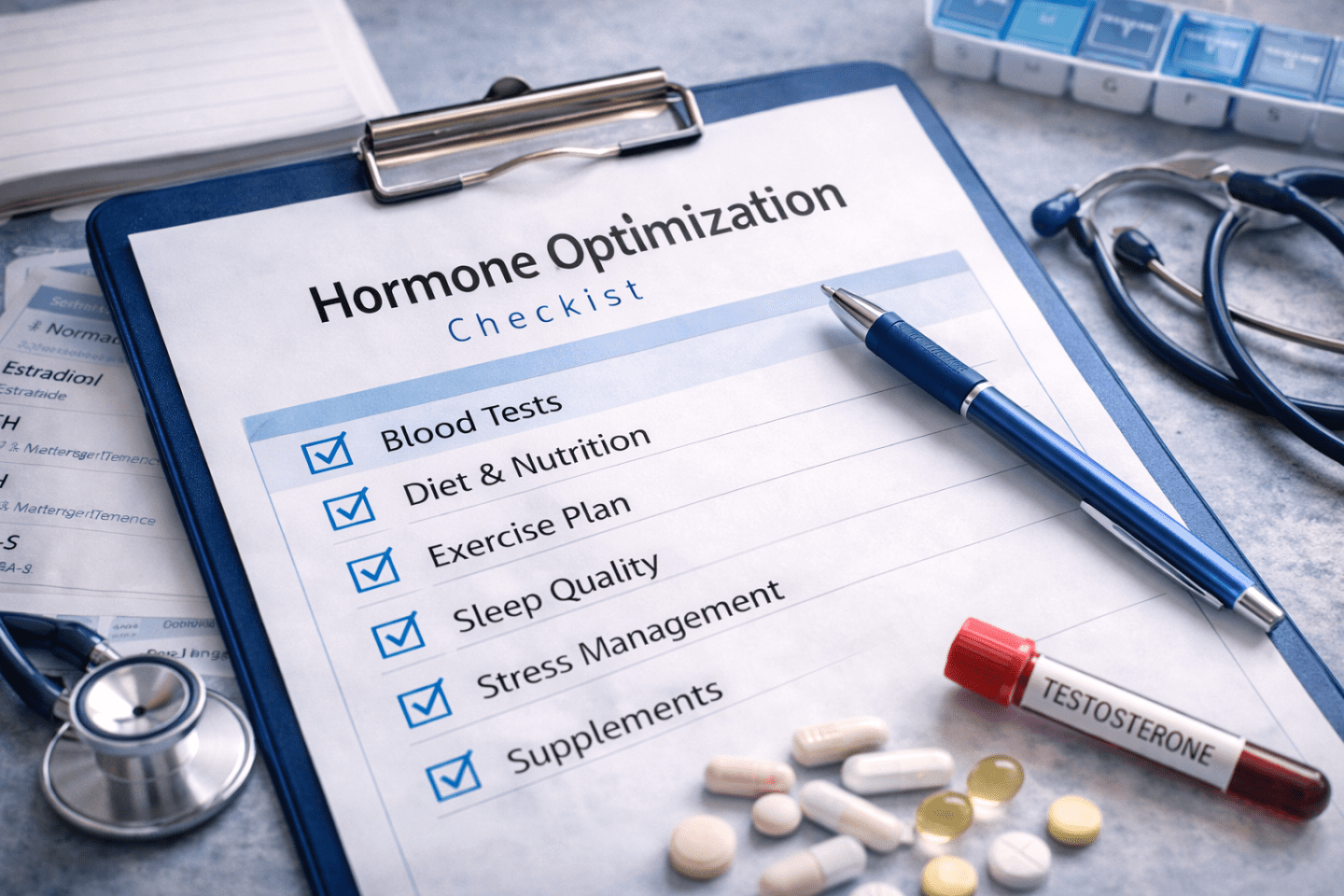
Download Your Hormone Optimization Starter Checklist
To help you get started on your hormone optimization journey, download our starter checklist PDF. This easy-to-follow guide will help you track your progress and stay organized as you work towards better hormone health. [Download Here]
Conclusion: Start Your Hormone Optimization Journey Today
Hormone optimization is a powerful tool for improving your overall health and well-being. By following this five-step hormone optimization guide, you can begin the journey toward feeling your best. Whether you’re looking to improve your energy, mood, or manage weight, optimizing your hormones can help you achieve your goals.
Ready to take the first step? Book your consultation today to discuss how hormone optimization can help you feel more balanced and energized. Let’s create a personalized plan just for you!


