
Introduction
Fat loss during perimenopause can feel like running uphill in sand. You’re training, eating “clean,” tracking macros and the scale won’t budge.
It’s not your fault. Hormonal shifts, stress responses, and outdated diet advice make it harder for women 35–55 to lose weight sustainably.
This guide breaks down what’s really happening inside your body, what doesn’t work, and the data-backed strategies that finally deliver results without overtraining, starvation, or guilt.
Why Perimenopause Changes Everything
Between ages 35 and 55, estrogen and progesterone begin a slow but dramatic shift.
This transition impacts insulin sensitivity, thyroid output, mood, and metabolism.
The result:
- More belly fat, even at the same calorie intake
- Reduced muscle retention
- Higher inflammation and water retention
- Sleep disturbances that amplify cravings
Studies show estrogen declines ~35–50 percent by the late perimenopausal years, altering how your body partitions calories between fat and lean tissue (NIH 2020).
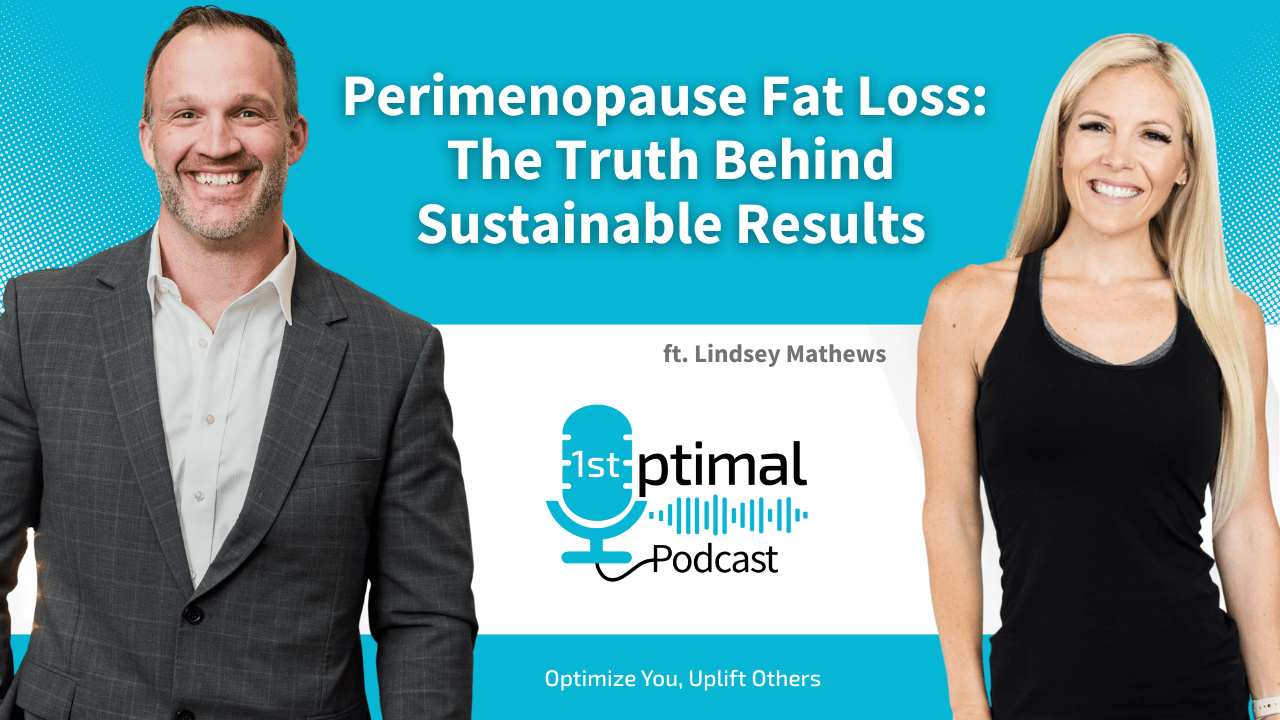
Lindsey Mathews’ Story: 50 Pounds, 1 Lesson
Lindsey Mathews, longtime fitness coach, thought she had everything figured out—until a year after competing in bodybuilding she gained 50 pounds
Her bloodwork told the story:
- Estrogen dominance
- Low progesterone and testosterone
- High cortisol and insulin
- Sluggish thyroid
She reversed it through data not diets using lab testing, recovery, and hormone balance.
That journey now shapes how she coaches women 40–60 to achieve real, lasting change.
The Real Hormone Landscape
Estrogen dominance occurs when estrogen outweighs progesterone. Symptoms: bloating, breast tenderness, stubborn midsection fat.
Low progesterone leads to poor sleep and anxiety.
Low testosterone reduces muscle tone and drive.
High cortisol from chronic stress elevates insulin and locks fat storage around the abdomen.
Balanced hormones allow fat oxidation, stable mood, and metabolic flexibility.
Stress, Cortisol, and Inflammation
Stress is the silent saboteur. Lindsey noted that women gaining 3–5 pounds in a week often show stress-induced inflammation and water retention, not fat gain
Her protocol:
- Pause resistance training for 1 week
- Sleep + 1 extra hour nightly
- Increase hydration × 1.5 (but cap ~1.25 gallons)
- Prioritize walks + sunlight
Within days, inflammation and scale weight often normalize.
Callout: Chronic stress raises cortisol → increases insulin → promotes belly fat. Recovery isn’t laziness—it’s chemistry.
Why “Eat Less, Move More” Stops Working
Decades of crash diets and overtraining create metabolic chaos.
Women commonly underestimate calories by up to 60 percent and overestimate activity by 50 percent (JAMA 2019).
Lindsey’s insight: most clients aren’t lying—they simply forget bites, licks, and tastes (BLTs) that add 300–500 calories a day.
Fix:
- Track food honestly for 7 days.
- Re-learn portion sizes.
- Audit weekends and late-night snacking.
Nutrition That Actually Works in Perimenopause
1. Prioritize Protein
Aim ~1.0 g protein per lb of goal body weight.
Supports muscle retention, thyroid function, and satiety.
2. Eat Carbs Strategically
Carbohydrates are not the enemy. They lower cortisol and support thyroid health.
Best sources:
- Sweet potatoes, oats, quinoa, berries, rice
Use carb timing around workouts or dinner to improve sleep and insulin sensitivity.
3. Don’t Fear Fats—but Measure Them
Healthy fats (avocado, olive oil, salmon) are calorie-dense. A “splash” of oil may add 300 calories.
4. Fiber for Hormone Clearance
Aim 25–30 g daily. Fiber binds excess estrogen and stabilizes blood sugar.
Coach Tip: Add chia or flax to yogurt or oatmeal—5 grams extra fiber, zero stress.
5. Ditch Extreme Fads
Intermittent fasting, keto, and carnivore diets often worsen cortisol dysregulation and fatigue.
Eat balanced meals every 3–5 hours to keep blood sugar steady.
Training Mistakes That Stall Fat Loss
1. Too Much HIIT
F45-style workouts spike cortisol and drive inflammation.
One client dropped 6 pounds in a month simply by pausing HIIT and focusing on progressive overload strength training.
2. Not Enough Muscle Stimulus
Building muscle is the metabolic cheat code.
- 3–4 lifting sessions/week
- 6–10 reps for compound lifts
- Emphasize glutes, hamstrings, back
3. Overtraining and Undereating
Too little fuel = higher cortisol + lower thyroid output.
Result: fatigue, plateau, injury risk.
Metabolic Reset: Sleep, Walking, Recovery
- Sleep 7–9 hours. Sleep-deprived adults lose 2× less fat (Annals of Internal Medicine 2010).
- Walk 8,000–10,000 steps. Low-intensity movement improves glucose control.
- Rest weeks. Every 6–8 weeks, deload training to cut inflammation.
- Hydration. ~0.7–1 oz per lb body weight daily.
These “boring” habits outperform supplements or detoxes long-term.
Lab Testing & Functional Medicine Insights
Perimenopausal women benefit from targeted testing every 6–12 months:
| Category | Key Labs to Check | Why It Matters |
| Hormones | Estradiol, Progesterone, Free & Total Testosterone | Identifies estrogen dominance, low T |
| Thyroid | TSH, Free T3/T4, Reverse T3 | Detects sluggish metabolism |
| Metabolic | Fasting Glucose, Insulin, HOMA-IR | Screens insulin resistance |
| Stress | Cortisol (DUTCH or saliva panel) | Evaluates adrenal output |
| Gut | GI-MAP, IgG/IgE Food Explorer | Finds dysbiosis, inflammation |
1st Optimal integrates these data points with peptide therapy, GLP-1 support, and nutrition to personalize every plan.
💡 Book a Comprehensive Hormone Consult
Schedule Your 1st Optimal Consult Here →
Sustainable Fat Loss Framework
Phase 1: Restore
Sleep, hydration, digestion, stress management.
Phase 2: Recomp & Fuel
Adequate protein, resistance training, carb timing, lab-guided supplementation.
Phase 3: Fat Loss Cycle
12–16 weeks moderate deficit (~15–20%). Includes maintenance weeks.
Phase 4: Reverse & Maintain
Gradually return to maintenance calories, hold weight 6+ months.
Phase 5: Lifestyle Mastery
Intuitive eating, habit stacking, routine labs.
FAQs
Q1. Why is fat loss harder after 40?
Declining estrogen reduces insulin sensitivity and muscle retention. Hormones and sleep disruption compound metabolic slowdown.
Q2. Can I do intermittent fasting in perimenopause?
Short-term fasting may benefit digestion but often raises cortisol and backfires for women with sleep or thyroid issues.
Q3. What workout is best for perimenopausal fat loss?
Strength training 3–4 days/week + Zone 2 cardio + daily steps > endless HIIT.
Q4. Do I need hormone therapy?
Not always. Start with labs. If estrogen/progesterone/testosterone are low, medically supervised HRT or peptide therapy may help.
Q5. How long before I see results?
Expect 4–6 weeks for inflammation reduction, 3–6 months for visible fat loss, and 12+ months for full metabolic reset.
Q6. Is menopause weight gain reversible?
Yes. Research shows resistance training and protein-rich diets can reverse up to 80% of age-related fat gain (Endocrine Society 2022).
Conclusion & Next Steps
Perimenopause fat loss isn’t about perfection, it’s about physiology.
Your hormones aren’t broken. They’re evolving.
When you align nutrition, recovery, and functional testing, you stop fighting your body and start working with it.
That’s where sustainable change begins.
👉 Take the first step: Book Your Personalized Consult with 1st Optimal
🎙 Enjoyed this conversation with Perimenopause Coach Lindsey Mathews?
🔗 Listen to the full episode on your favorite platform:
🎧 Spotify | Apple Podcasts | Amazon Music | Google Podcasts
📺 Watch it on YouTube:
References:
- National Institutes of Health (2020) Perimenopause Hormone Transitions
- Endocrine Society (2022) Resistance Training and Aging Metabolism
- JAMA (2019) Energy Intake Misreporting Study
- PubMed ID 32858723 Estrogen Decline and Insulin Resistance
- NEJM (2018) Effects of Exercise on Menopausal Health
- Harvard Health (2023) Managing Stress Cortisol and Weight Gain
- Mayo Clinic (2022) Perimenopause Symptom Overview