

You can exercise regularly, maintain a relatively stable weight, and feel reasonably healthy while important changes are happening beneath the surface.
Maybe your waistline has started expanding. Your blood sugar is slowly increasing. Or your annual bloodwork shows higher triglycerides than it did a few years ago.
For many adults in their 40s and 50s, these changes raise an important question: Is your metabolism aging faster than you realize?
Insulin resistance is one piece of that conversation.
It can develop gradually, often without noticeable symptoms. During its earlier stages, the pancreas may produce more insulin to maintain relatively normal blood glucose levels.
Over time, insulin resistance can occur alongside changes in blood pressure, cholesterol, body-fat distribution, and other cardiometabolic risk factors.
These changes matter because healthy aging involves more than simply avoiding diabetes. It means preserving the cardiovascular health, physical strength, mobility, and independence that help people maintain quality of life as they age.
At 1st Optimal, we believe metabolic health deserves attention well before someone develops a serious medical condition.
Here is what the research shows, which measurements are clinically useful, and what you can do to support your long-term health.
Key Takeaways
- Insulin resistance often develops without symptoms. Blood glucose can remain within the normal range during earlier stages.
- Metabolic health matters for healthy aging. Insulin resistance is associated with type 2 diabetes, abnormal blood lipids, high blood pressure, and other chronic health conditions.
- Muscle is important for glucose regulation. Regular resistance training helps maintain muscle mass and supports metabolic function as we age.
- Prediabetes can often be addressed early. Evidence-based lifestyle programs can significantly reduce progression to type 2 diabetes in people at elevated risk.
- No single laboratory value defines longevity. Blood glucose, A1C, lipids, blood pressure, activity, sleep, and overall health history should be considered together.
What Is Insulin Resistance?
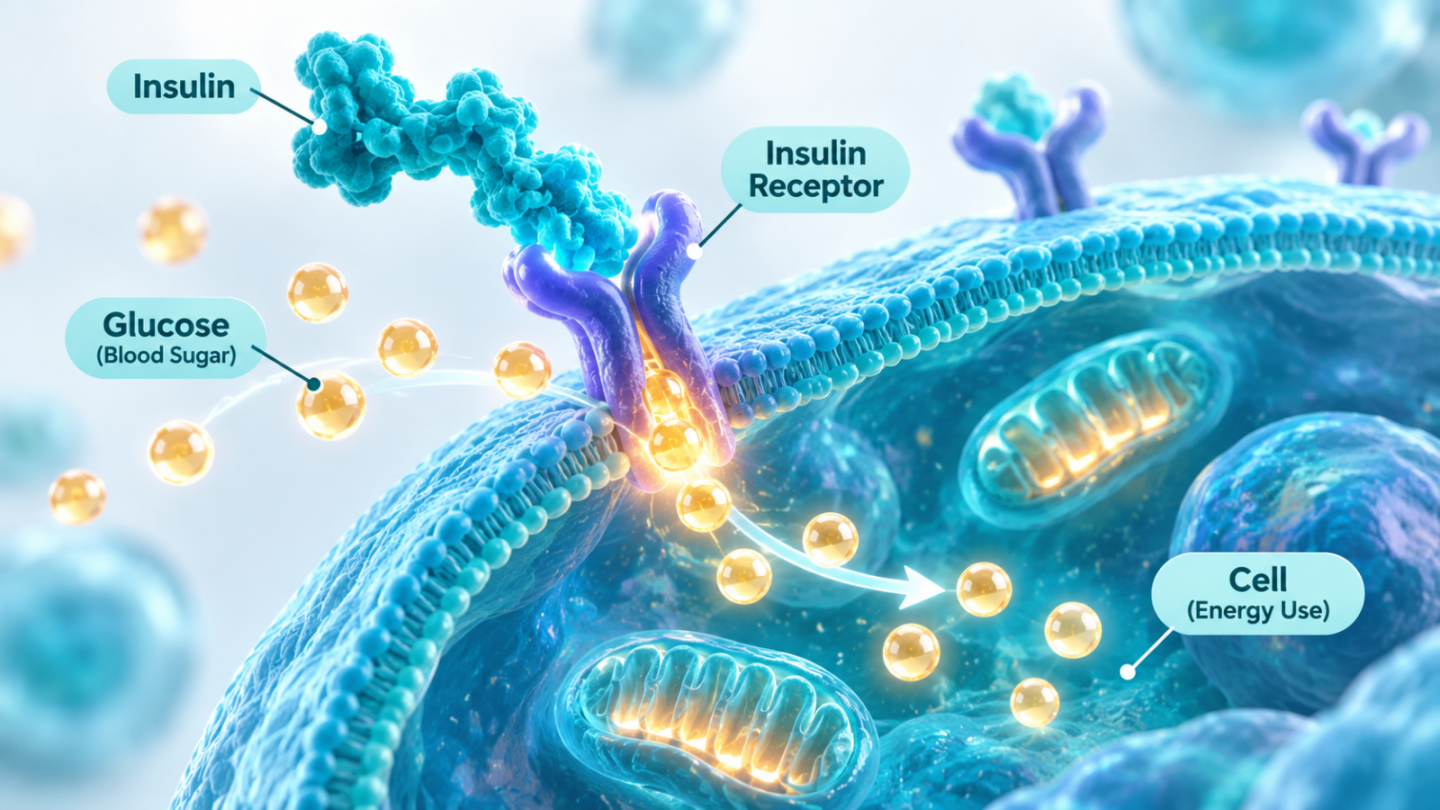
Insulin resistance occurs when cells in the muscles, liver, and adipose tissue become less responsive to insulin.
Insulin is a hormone produced by the pancreas that helps regulate blood glucose and how the body stores and uses energy.
After eating, carbohydrates are broken down into glucose, which enters the bloodstream.
The pancreas responds by releasing insulin.
Insulin helps muscle and fat cells take up glucose and helps the liver regulate glucose production and storage.
When tissues become insulin resistant, the body needs more insulin to achieve some of these effects.
What happens when insulin resistance develops?
The process can develop gradually:
- Insulin sensitivity declines. Muscle, liver, or fat cells become less responsive to insulin.
- The pancreas compensates. Insulin production may increase to maintain blood glucose levels.
- Blood glucose may remain normal. Early insulin resistance does not always appear on routine glucose testing.
- Glucose regulation may worsen. If the pancreas can no longer compensate sufficiently, blood glucose may increase.
- Prediabetes or type 2 diabetes may develop. This progression is not inevitable, and timely lifestyle changes or appropriate medical care can reduce risk.
According to the National Institute of Diabetes and Digestive and Kidney Diseases (NIDDK), insulin resistance can increase the risk of prediabetes and type 2 diabetes, although not everyone with insulin resistance develops diabetes.
The important distinction is that insulin resistance describes a physiological process. Prediabetes and diabetes are defined using established blood glucose criteria.
How Does Insulin Resistance Affect Longevity?
Insulin resistance is associated with several conditions that influence long-term health, including type 2 diabetes, cardiovascular disease, hypertension, abnormal cholesterol levels, and metabolic dysfunction-associated steatotic liver disease (MASLD).
It may also occur alongside chronic low-grade inflammation and excess visceral fat accumulation.
These relationships make insulin resistance relevant to healthy aging, but they do not establish that insulin resistance independently causes every condition associated with it.
What does the longevity research show?
Long-term observational studies have examined insulin resistance markers in relation to mortality.
A 2024 cohort study examining insulin resistance indicators and mortality followed participants for approximately 25 years.
Researchers found that several insulin resistance measures, including fasting insulin and HOMA-IR, were associated with higher all-cause mortality risk after statistical adjustment.
However, observational research has important limitations.
People with greater insulin resistance may also differ in age, physical activity, body composition, existing disease, and other factors that influence longevity.
The findings do not prove that lowering HOMA-IR itself will extend lifespan.
The practical conclusion: Insulin resistance can provide information about metabolic risk, but preventing chronic disease requires addressing the broader factors that affect health.
Metabolic Health, Lifespan, and Healthspan
Longevity discussions often focus on how many years someone might live.
But healthy aging involves two related concepts.
Lifespan
Lifespan refers to the total number of years someone lives.
Healthspan
Healthspan refers to the portion of life spent in relatively good health, with preserved function and limited disease-related disability.
For someone in their 40s or 50s, the difference matters.
Living longer is valuable, but maintaining the ability to move comfortably, exercise, travel, work, and remain independent is also important.
Metabolic health influences several of the systems involved in these abilities, including the cardiovascular system, skeletal muscle, and glucose regulation.
However, metabolic health is only one dimension of healthy aging. Genetics, smoking, preventive healthcare, environmental factors, and other health conditions also matter.
1. Insulin Resistance and Cardiovascular Health
One of the strongest reasons to pay attention to metabolic health is its connection to cardiovascular disease.
Insulin resistance frequently occurs alongside a collection of cardiovascular risk factors, including:
- Elevated triglycerides
- Low HDL cholesterol
- High blood pressure
- Increased abdominal fat
- Abnormal blood glucose regulation
These features can overlap with metabolic syndrome, a recognized clustering of cardiometabolic risk factors.
Insulin resistance and metabolic syndrome are related but are not identical diagnoses.
Why does this matter for healthy aging?
Cardiovascular disease can affect life expectancy, physical function, and quality of life.
The American Heart Association emphasizes that cardiovascular health depends on several modifiable behaviors and measurements.
Its Life’s Essential 8 framework identifies nutrition, physical activity, tobacco avoidance, sleep, weight, blood lipids, blood glucose, and blood pressure as important components of cardiovascular health.
This reinforces a critical point: improving metabolic health is not just about lowering blood sugar.
Someone may improve their A1C while continuing to have elevated LDL cholesterol or uncontrolled blood pressure. Those risks still deserve attention.
2. Visceral Fat and Metabolic Aging
Body weight is only one piece of the metabolic health picture.
Where fat accumulates can also matter.
Visceral fat is adipose tissue located deep inside the abdomen around internal organs.
It differs from subcutaneous fat, which sits directly beneath the skin.
Excess visceral fat is associated with insulin resistance, abnormal blood lipids, inflammation, and increased cardiometabolic risk.
Visceral fat is metabolically active and interacts with the liver and other tissues involved in energy regulation.
Why can visceral fat become more relevant after 40?
Changes in body composition may occur during middle age and later adulthood.
Some adults experience increased abdominal fat even when their total weight changes very little.
Factors such as reduced physical activity, changes in muscle mass, reproductive aging, sleep, and energy balance can contribute.
However, insulin resistance and visceral fat accumulation do not occur at the same rate in everyone.
Someone can have insulin resistance without obvious abdominal obesity, and appearance alone cannot establish metabolic health.
Read our related article: Visceral Fat and Longevity: Why Waist Size Matters Beyond Appearance.
3. Muscle Is Essential for Metabolic Health and Healthy Aging
Muscle is important for much more than physical strength.
Skeletal muscle is a major site of insulin-stimulated glucose disposal, particularly after meals.
When muscle contracts during exercise, glucose uptake can also increase through pathways that do not depend entirely on insulin.
This is one reason physical activity can support glucose regulation.
What happens to muscle as we age?
Muscle mass and strength may gradually decline with aging, although the rate varies substantially.
Physical inactivity, illness, inadequate nutrition, and other factors can accelerate that decline.
Loss of muscle can affect:
- Strength and functional independence
- Balance and mobility
- Recovery from illness
- Ability to remain physically active
- Glucose metabolism and overall body composition
Fortunately, resistance training can improve strength and help preserve muscle across adulthood.
Regular training can also contribute to improved insulin sensitivity and metabolic health.
For people interested in longevity, preserving muscle is valuable because it supports both metabolic function and the physical capacity needed for everyday life.
Learn more: Muscle Loss After 40: How Fast Does It Actually Happen?
4. Insulin Resistance and Chronic Inflammation
Chronic low-grade inflammation and insulin resistance can influence one another.
Adipose tissue, particularly when metabolically dysfunctional, can contribute to inflammatory signaling.
Inflammatory pathways can also interfere with normal insulin signaling.
This relationship is complex and does not mean that inflammation is always harmful.
Normal inflammatory responses are essential for immune defense, tissue repair, and recovery.
The concern is prolonged, inappropriate inflammatory activity associated with certain chronic conditions.
Research continues to investigate how metabolic dysfunction, inflammation, and aging interact.
However, there is no single inflammation test that can determine whether someone is aging faster than expected or predict individual lifespan.
5. Insulin Resistance and Brain Health
Metabolic health may also be relevant to cognitive aging.
Researchers have investigated associations between insulin resistance, type 2 diabetes, vascular health, and cognitive impairment.
Several potential pathways are being studied, including changes in blood vessel function, inflammation, and insulin signaling.
These findings are important, but they require careful interpretation.
Insulin resistance does not automatically cause dementia or Alzheimer’s disease.
Similarly, researchers have not established that lowering insulin resistance in an otherwise healthy adult prevents dementia.
What is more firmly supported is the importance of managing established cardiovascular and metabolic risk factors as part of broader healthy-aging care.
Protecting brain health involves more than blood sugar. Physical activity, blood pressure management, smoking avoidance, sleep, and appropriate preventive care are all relevant.
What Are the Early Signs of Insulin Resistance?
Insulin resistance often causes no noticeable symptoms.
This is one reason screening for metabolic risk factors can be valuable.
People sometimes associate insulin resistance with fatigue, carbohydrate cravings, or difficulty losing weight. However, these symptoms are nonspecific and cannot diagnose insulin resistance.
Clinical clues and associated risk factors may include:
- Increased waist circumference
- Elevated blood pressure
- High triglycerides or low HDL cholesterol
- Prediabetes
- A history of gestational diabetes
- Polycystic ovary syndrome (PCOS)
- Family history of type 2 diabetes
- Physical inactivity
Some individuals with significant insulin resistance develop acanthosis nigricans, which appears as darker, thicker, velvety skin in areas such as the neck or armpits.
However, its absence does not rule out insulin resistance.
Can insulin resistance exist when fasting glucose is normal?
Yes.
During earlier stages, the pancreas may produce enough additional insulin to maintain normal fasting glucose.
But normal fasting glucose does not mean that everyone needs expanded insulin testing.
The decision to investigate further should consider clinical risk factors, medical history, and whether additional results would change management.
What Tests Help Evaluate Metabolic Health and Insulin Resistance?
There is no single laboratory test that fully describes metabolic health.
Clinical assessment usually considers several measures together.
1. Hemoglobin A1C
A1C reflects average blood glucose exposure over approximately the preceding three months.
For most nonpregnant adults, commonly used diagnostic categories include:
- Below 5.7%: Normal range
- 5.7% to 6.4%: Prediabetes range
- 6.5% or higher: Diabetes range, subject to diagnostic confirmation requirements
A1C can be affected by certain conditions, including disorders that alter red blood cell turnover. Clinicians may use other glucose tests when A1C is unreliable.
2. Fasting Plasma Glucose
Fasting plasma glucose measures blood glucose after an appropriate fasting period.
- Below 100 mg/dL: Normal range
- 100–125 mg/dL: Prediabetes range
- 126 mg/dL or higher: Diabetes range, subject to confirmation requirements
These categories are useful for identifying dysglycemia but do not directly measure insulin resistance.
3. Oral Glucose Tolerance Test
An oral glucose tolerance test measures how the body handles a standardized glucose load.
For the conventional 75-gram test in nonpregnant adults, a two-hour glucose value of 140–199 mg/dL is in the prediabetes range.
A value of 200 mg/dL or higher meets a diabetes-range criterion, with confirmation as appropriate.
The test can detect impaired glucose tolerance that may not be apparent from fasting glucose alone.
4. Lipid Panel
A lipid panel provides information about cholesterol and triglycerides.
Insulin resistance may occur alongside elevated triglycerides and reduced HDL cholesterol.
LDL cholesterol and other lipid measures are also important for assessing cardiovascular risk.
5. Blood Pressure
High blood pressure is a major cardiovascular risk factor and frequently overlaps with metabolic dysfunction.
Blood pressure should be evaluated independently of glucose levels because each can require its own management strategy.
6. Waist Circumference and Body Composition
Waist circumference can help identify central adiposity, which is associated with cardiometabolic risk.
It does not directly measure visceral fat, and no single waist measurement determines whether someone is metabolically healthy.
7. Fasting Insulin and HOMA-IR
Fasting insulin and HOMA-IR, a calculated estimate based on fasting glucose and fasting insulin, are frequently discussed in metabolic health and longevity programs.
They can be useful in research and selected clinical contexts.
However, neither test has a universally accepted diagnostic threshold for insulin resistance across all patient populations.
The NIDDK notes that direct testing for insulin resistance is primarily used in research and is not routinely required to diagnose prediabetes.
Routine screening generally relies on established glucose tests rather than an arbitrary fasting insulin or HOMA-IR target.
Metabolic Health Testing: What Each Marker Can Tell You
| Marker | What It Measures | Important Limitation |
|---|---|---|
| A1C | Average glucose exposure over about three months | Can be unreliable in certain medical conditions |
| Fasting glucose | Blood glucose after fasting | May remain normal during earlier insulin resistance |
| Oral glucose tolerance test | Glucose response after a standardized glucose load | Requires more time and preparation than routine screening |
| Fasting insulin | Insulin concentration at one point in time | No universal diagnostic cutoff for insulin resistance |
| HOMA-IR | Calculated estimate of insulin resistance | Research thresholds vary; not a stand-alone diagnosis |
| Lipid panel | Cholesterol and triglyceride levels | Reflects cardiovascular risk factors, not insulin sensitivity directly |
| Blood pressure | Pressure within the arteries | Important independently of glucose and insulin measurements |
| Waist circumference | Abdominal size and a proxy for central adiposity | Does not directly quantify visceral fat |
Source: NIDDK: Insulin Resistance and Prediabetes.
How to Improve Insulin Sensitivity for Healthy Aging
Improving insulin sensitivity does not require a complicated supplement routine or an extreme diet.
Several lifestyle strategies have meaningful evidence supporting their role in glucose regulation, cardiovascular health, and diabetes prevention.
1. Prioritize Strength Training
Resistance training helps maintain muscle mass, increases strength, and can improve glucose regulation.
The CDC’s physical activity guidelines recommend muscle-strengthening activities at least two days per week for adults.
Depending on fitness level and medical history, activities may include:
- Weight training
- Resistance-band exercises
- Body-weight movements
- Machine-based strength training
The goal is progressive, sustainable training that supports strength and physical function.
Someone new to resistance exercise should begin at an appropriate level rather than trying to achieve an advanced training program immediately.
2. Increase Aerobic Activity
Regular cardiovascular exercise supports heart health, glucose regulation, and overall fitness.
Guidelines recommend at least 150 minutes of moderate-intensity aerobic activity per week, or an equivalent amount of vigorous activity.
Brisk walking, cycling, swimming, and other enjoyable activities can all contribute.
Some adults may benefit from gradually increasing activity beyond the minimum recommendations.
The right starting point depends on current fitness, medical conditions, and physical limitations.
3. Reduce Prolonged Sitting
Structured exercise is valuable, but movement throughout the day also matters.
Simple habits such as standing regularly, walking during breaks, and taking short walks after meals can reduce sedentary time.
Post-meal walking has been studied for its ability to reduce short-term post-meal glucose excursions.
However, a smaller post-meal glucose spike does not, by itself, prove a reduction in long-term disease risk or an increase in lifespan.
4. Follow a Sustainable, Nutrient-Dense Eating Pattern
Nutrition can affect blood glucose regulation, body composition, cardiovascular health, and overall metabolic risk.
Evidence-based eating patterns for people with prediabetes can include Mediterranean-style or appropriately structured lower-carbohydrate approaches.
A sustainable eating pattern may emphasize:
- Vegetables and whole fruits
- Beans and legumes
- Whole grains, when appropriate
- Lean and plant-based protein sources
- Nuts and seeds
- Unsaturated fats such as olive oil
- Limiting excessive added sugars and highly processed foods
Different eating patterns can be effective depending on preferences, health conditions, and individual needs.
There is no single macronutrient ratio proven to maximize human lifespan.
5. Maintain Adequate Protein Intake
Protein supports muscle maintenance and repair.
For adults engaging in resistance training or trying to preserve muscle during weight management, protein adequacy can be an important consideration.
Protein needs vary according to body size, age, activity level, kidney function, and other medical factors.
Individualized nutrition guidance is preferable to assuming everyone needs the same high-protein diet.
6. Address Excess Body Fat When Clinically Appropriate
For people with overweight or obesity who are at elevated risk of type 2 diabetes, sustained weight reduction can improve insulin sensitivity and lower diabetes risk.
The American Diabetes Association’s 2026 Standards of Care recommend intensive lifestyle intervention for appropriate high-risk adults, with goals that include approximately 5–7% weight reduction and at least 150 minutes of moderate-intensity activity per week.
Weight loss is not necessary or appropriate for everyone.
For some individuals, the priority may instead be improving fitness, maintaining muscle, or managing specific cardiovascular risk factors.
7. Improve Sleep Quality
Sleep is an important component of cardiometabolic health.
Insufficient or disrupted sleep can influence glucose regulation, appetite, and daytime functioning.
The American Heart Association identifies healthy sleep as one of its eight essential components of cardiovascular health.
Most adults should aim for approximately seven to nine hours of sleep per night, although individual needs vary.
Persistent snoring, excessive daytime sleepiness, or suspected sleep apnea should be evaluated because sleep disorders can affect cardiovascular and metabolic health.
8. Manage Blood Pressure, Lipids, and Other Risk Factors
Improving insulin sensitivity should not distract from other important preventive health priorities.
Depending on personal risk, managing blood pressure, LDL cholesterol, tobacco exposure, and other medical conditions may be equally or more important for long-term outcomes.
A comprehensive longevity approach considers the whole cardiovascular and metabolic picture.
What Does the Diabetes Prevention Program Tell Us?
One of the strongest examples of evidence-based metabolic prevention comes from the landmark Diabetes Prevention Program (DPP).
The original randomized trial enrolled 3,234 participants at elevated risk for type 2 diabetes.
Participants were assigned to a structured lifestyle intervention, metformin treatment, or placebo.
The lifestyle intervention focused on physical activity and sustainable weight reduction.
Over an average follow-up of approximately 2.8 years, the lifestyle intervention reduced the incidence of type 2 diabetes by 58% relative to placebo.
These findings helped establish structured lifestyle modification as an important diabetes prevention strategy.
What this study demonstrates: In people at elevated risk, a structured lifestyle program can substantially reduce progression to type 2 diabetes.
What it does not demonstrate: The trial does not establish that every participant lived longer or that lowering insulin resistance by itself guarantees increased lifespan.
Read the original study: Reduction in the Incidence of Type 2 Diabetes With Lifestyle Intervention or Metformin, New England Journal of Medicine, 2002.
When Might Medical Treatment Be Appropriate?
Lifestyle changes are important, but some individuals also benefit from medical treatment.
The decision depends on the person’s diagnosis, risk factors, medical history, and treatment goals.
For example, clinicians may consider:
- Metformin for selected individuals at particularly high risk of progressing to type 2 diabetes
- Approved weight-management medications for eligible patients with obesity or overweight and qualifying conditions
- Glucose-lowering medication for people with diagnosed diabetes when appropriate
- Blood pressure or lipid-lowering medications for established cardiovascular risk indications
These medications are not interchangeable, and each has specific indications, benefits, limitations, and potential adverse effects.
Metformin, for example, may be considered for diabetes prevention in selected high-risk adults under the ADA’s 2026 recommendations. That does not mean it is a proven longevity drug for healthy people.
Likewise, approved GLP-1-based medications have established roles for particular medical conditions, but they should not be presented as universal anti-aging treatments.
Medication decisions should be guided by licensed healthcare professionals and should not replace ongoing attention to nutrition, activity, sleep, and cardiovascular risk.
How Often Should You Check Your Metabolic Health?
Testing frequency depends on age, medical history, existing results, and individual risk.
The NIDDK notes that adults age 35 or older, as well as certain younger adults with risk factors, may be candidates for prediabetes screening.
For individuals without prediabetes but with relevant risk factors, repeat testing may be recommended at least every three years, depending on the clinical situation.
People with prediabetes are generally monitored more frequently, commonly at least annually, to assess for progression to type 2 diabetes.
More frequent testing may be appropriate in certain circumstances.
There is no established evidence that repeatedly checking fasting insulin or HOMA-IR in every healthy adult improves longevity outcomes.
The most useful testing strategy is one that helps guide meaningful prevention or treatment decisions.
A Practical Metabolic Health Checklist for Adults Over 40
If your goal is to support healthy aging, start with clinically meaningful fundamentals.
- Review your A1C or fasting glucose screening status with a healthcare professional.
- Know your blood pressure and cholesterol-related cardiovascular risk.
- Build a consistent resistance training routine appropriate for your ability.
- Work toward recommended weekly aerobic activity levels.
- Choose a sustainable eating pattern that supports your health needs.
- Address persistent sleep problems.
- Discuss changes in waist circumference or body composition when relevant.
- Review family history, previous gestational diabetes, or other metabolic risk factors.
- Seek medical evaluation for abnormal test results rather than relying on online insulin resistance scores.
- Track meaningful health trends without becoming fixated on one biomarker.
A useful longevity plan should consider both clinical risk reduction and the strength, endurance, and daily function that help people remain independent.
How 1st Optimal Approaches Metabolic Health and Longevity
At 1st Optimal, we believe long-term health requires a broader perspective than body weight or one laboratory measurement.
Our functional health approach combines coaching with access to licensed medical providers for individualized evaluation and care planning when appropriate.
Depending on the person’s goals and clinical needs, relevant areas may include:
- Blood glucose and metabolic risk factors
- Appropriate diagnostic testing
- Body composition and weight-management concerns
- Cardiovascular health and related risk markers
- Sleep and recovery
- Nutrition and exercise habits
- Hormonal or other medical conditions that may affect overall health
Not everyone needs an extensive laboratory panel, and a consultation does not automatically mean that medication is necessary.
The purpose of evaluation is to identify meaningful health concerns and develop appropriate next steps.
For more information, explore visceral fat and longevity and muscle health after 40.
Frequently Asked Questions About Insulin Resistance and Longevity
1. Does insulin resistance shorten your lifespan?
Insulin resistance is associated with conditions that can influence life expectancy, including cardiovascular disease and type 2 diabetes. Observational studies have also linked certain insulin resistance measures with mortality risk. However, insulin resistance alone cannot predict lifespan, and these associations do not prove that directly lowering insulin resistance extends life.
2. Can insulin resistance be reversed?
Insulin sensitivity can often improve through regular physical activity, resistance training, sustainable nutrition changes, weight reduction when clinically appropriate, and management of underlying conditions. The degree of improvement varies. Some people may still require ongoing monitoring or treatment, particularly if they have established diabetes or other medical conditions.
3. Can you have insulin resistance with normal blood sugar?
Yes. During earlier stages of insulin resistance, the pancreas may compensate by producing additional insulin, allowing fasting glucose to remain normal. However, a normal glucose value does not automatically mean that additional insulin testing is needed. Clinical risk factors and established screening recommendations should guide assessment.
4. What is the best exercise for insulin resistance and longevity?
A combination of aerobic activity and resistance training is generally beneficial. Aerobic exercise supports cardiovascular fitness, while resistance training helps preserve strength and muscle mass and can improve glucose regulation. Current physical activity guidelines recommend at least 150 minutes of moderate-intensity aerobic activity and at least two muscle-strengthening sessions per week for adults.
5. What A1C level indicates prediabetes?
For most nonpregnant adults, an A1C between 5.7% and 6.4% falls within the prediabetes range. An A1C of 6.5% or higher is within the diabetes diagnostic range, although confirmation is generally required. A1C should be interpreted by a healthcare professional, especially when medical conditions may affect test accuracy.
6. Does improving insulin sensitivity slow biological aging?
Improving insulin sensitivity can support metabolic health and help reduce certain established disease risks. However, evidence has not demonstrated that a particular improvement in fasting insulin or HOMA-IR reliably slows biological aging or extends human lifespan. Metabolic health is one important part of a broader healthy-aging strategy.
7. Should everyone over 40 test fasting insulin?
No. Fasting insulin is not recommended as a universal screening test for every healthy adult over 40. It lacks standardized diagnostic cutoffs for insulin resistance, and its routine use has not been shown to improve outcomes in all populations. Established screening tests such as A1C and fasting plasma glucose are commonly used when clinically indicated.
Final Thoughts: Healthy Aging Starts With Metabolic Health
Longevity is often presented as something complicated.
There are supplements, advanced laboratory panels, wearable devices, specialized protocols, and an endless stream of new health trends.
But the foundations of healthy aging remain important.
Insulin resistance deserves attention because it can occur alongside health conditions that affect the heart, liver, blood vessels, and long-term glucose regulation.
It is also important to remember that a person is more than one metabolic marker.
Preserving muscle, maintaining cardiovascular fitness, getting adequate sleep, addressing blood pressure and cholesterol, and participating in appropriate preventive care all contribute to long-term health.
You cannot control every aspect of aging.
But improving modifiable health risks can help support the years ahead.
The goal is not simply to live longer. It is to protect your ability to live well for as many years as possible.
Take the Next Step With 1st Optimal
Are you noticing changes in your blood sugar, weight, energy, or other metabolic health markers?
Schedule a health consultation with 1st Optimal to discuss your goals and explore appropriate next steps.
Our functional health approach connects coaching with access to licensed medical providers when medical assessment or treatment is appropriate.
Book Your Health Consultation With 1st Optimal
Any medical testing or treatment should be based on an individualized clinical assessment. A consultation does not guarantee a prescription or particular treatment.
Medical References and Further Reading
- National Institute of Diabetes and Digestive and Kidney Diseases.
Insulin Resistance & Prediabetes.
National Institutes of Health. - American Diabetes Association Professional Practice Committee.
Prevention or Delay of Diabetes and Associated Comorbidities: Standards of Care in Diabetes, 2026.
Diabetes Care. - Diabetes Prevention Program Research Group.
Reduction in the Incidence of Type 2 Diabetes With Lifestyle Intervention or Metformin.
New England Journal of Medicine. 2002;346:393–403. - American Heart Association.
Life’s Essential 8. - Centers for Disease Control and Prevention.
Adult Activity: An Overview. - Insulin-Based or Non-Insulin-Based Insulin Resistance Indicators and Risk of Long-Term Cardiovascular and All-Cause Mortality in the General Population: A 25-Year Cohort Study.
2024.
Medical Disclaimer: This article is intended for educational purposes only and is not a substitute for individualized medical advice, diagnosis, or treatment. Insulin resistance and metabolic risk should be evaluated within the context of an individual’s medical history, clinical findings, and appropriate testing. Consult a qualified healthcare professional before making treatment decisions.


