

You can be active, eat reasonably well, and maintain a relatively stable weight while your body composition changes.
For many adults in their 40s and 50s, those changes become more noticeable around the waist.
Maybe your pants fit differently. Maybe your weight has barely moved, but your waist measurement has increased. Or perhaps you’ve been focused on losing pounds without knowing whether your metabolic health is actually improving.
Here’s what matters: waist size can tell you something about your health that the bathroom scale cannot.
Research increasingly shows that where fat accumulates can be as important as how much total body fat someone carries.
That doesn’t mean a smaller waist automatically guarantees a longer life. It means abdominal fat distribution provides another useful piece of information about cardiovascular risk, metabolic function, and healthy aging.
Understanding that relationship can help you focus on meaningful health improvements rather than appearance alone.
Key Takeaways
- Visceral fat is stored deep inside the abdominal cavity, around internal organs, and differs from the fat directly beneath your skin.
- Excess visceral fat is associated with insulin resistance, abnormal cholesterol levels, fatty liver disease, cardiovascular disease, and other metabolic conditions.
- Waist circumference can reveal potential cardiometabolic risk even when BMI falls within the conventional healthy range.
- A waist-to-height ratio below 0.5 is a useful general screening target for many adults, although individual assessment remains important.
- Regular exercise, appropriate nutrition, adequate sleep, and sustainable weight management can help reduce excess abdominal fat.
- Longevity is about more than reducing body fat. Maintaining muscle, cardiovascular fitness, and metabolic health matters too.
What Is Visceral Fat?
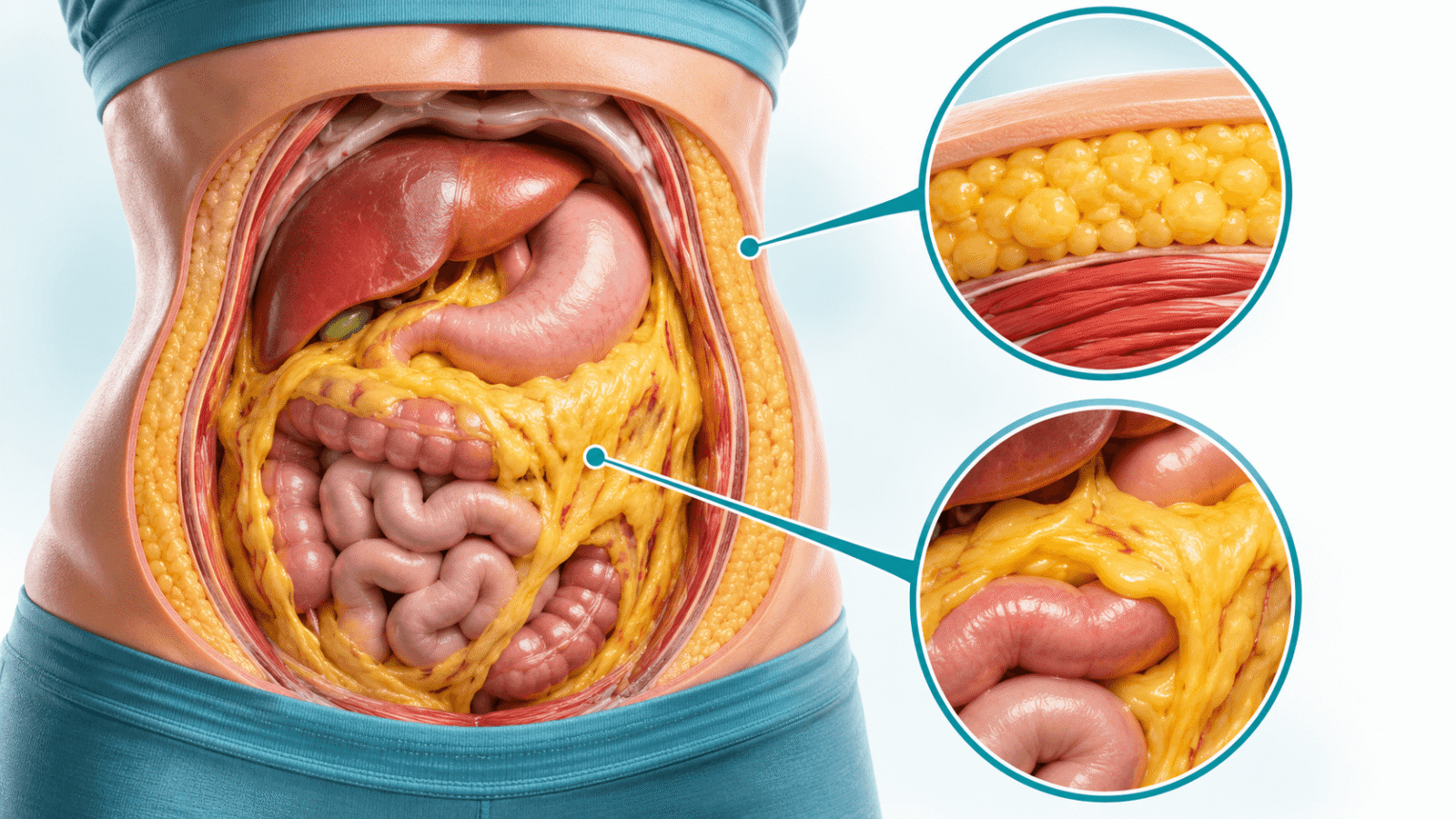
Visceral fat is adipose tissue stored inside the abdominal cavity, surrounding organs such as the intestines.
Your body needs some visceral fat. It is part of normal anatomy and performs important biological functions.
Problems can develop when excess visceral fat accumulates, particularly when the tissue becomes metabolically dysfunctional.
Unlike fat stored immediately beneath the skin, visceral fat is located deeper within the abdomen and is involved in complex interactions with the liver, immune system, and metabolic processes.
Researchers have found that excess visceral fat is associated with changes in:
- Insulin sensitivity and blood sugar regulation.
- Fat metabolism and triglyceride levels.
- Inflammatory signaling.
- Liver metabolism.
- Cardiovascular health.
A 2026 review published in Nature Aging emphasizes that visceral fat is not inherently harmful. Its effects depend on factors including inflammation, lipid storage capacity, genetics, aging, and overall metabolic health.
In other words, the goal is not to eliminate visceral fat. It is to maintain healthy body-fat distribution and metabolic function.
Visceral Fat vs. Subcutaneous Fat: What’s the Difference?
Not all abdominal fat is stored in the same location.
Two important categories are visceral fat and subcutaneous fat.
Subcutaneous Fat
Subcutaneous fat is stored directly beneath the skin.
It can be found around the abdomen, hips, thighs, arms, and other areas.
This tissue helps store energy, provides insulation, and contributes to normal hormone and metabolic processes.
Visceral Fat
Visceral fat is located deeper within the abdomen.
Higher levels of this fat, especially when accompanied by metabolic dysfunction, are associated with greater cardiometabolic risk.
| Feature | Visceral Fat | Subcutaneous Fat |
|---|---|---|
| Location | Deep inside the abdomen, around internal organs | Directly beneath the skin |
| Visibility | Cannot be directly seen or pinched | Often visible or possible to pinch |
| Metabolic function | Strongly connected with abdominal metabolic processes | Stores energy and has important protective and metabolic roles |
| Health implications | Excess accumulation is associated with higher cardiometabolic risk | Risk varies by location, amount, and overall metabolic context |
| Measurement | Most directly quantified using CT or MRI; estimated by certain DXA methods | Can be assessed through body composition and imaging methods |
Important: Having abdominal fat does not tell you exactly how much of it is visceral. A larger waist can reflect both visceral and subcutaneous fat.
Likewise, appearance alone cannot establish whether someone is metabolically healthy.
Why Does Visceral Fat Matter for Longevity?
When researchers study longevity, they examine both lifespan, or how long people live, and healthspan, or how long people remain healthy and functional.
Excess visceral fat matters because it is associated with several conditions that can affect both.
1. Visceral Fat Is Associated With Insulin Resistance
Insulin is a hormone that helps regulate blood glucose.
Insulin resistance occurs when cells become less responsive to insulin’s effects.
The body may initially compensate by producing more insulin. Over time, this process can contribute to elevated blood glucose and increase the risk of type 2 diabetes.
Visceral fat accumulation is strongly associated with insulin resistance.
Researchers believe that changes in fatty acid release, inflammatory signaling, and interactions between visceral fat and the liver help explain this relationship.
However, insulin resistance has multiple contributing factors. Visceral fat is not its only cause.
Learn more in our related article: Insulin Resistance and Longevity: Why Metabolic Health Drives Healthy Aging.
2. Excess Visceral Fat Is Linked to Cardiovascular Risk
Heart disease remains a major concern for long-term health.
According to the American Heart Association’s scientific statement on obesity and cardiovascular disease, abdominal obesity measured through waist circumference is an important cardiovascular risk marker independent of BMI.
Excess visceral adiposity is associated with:
- Elevated blood pressure.
- Higher triglycerides.
- Abnormal cholesterol patterns.
- Insulin resistance.
- Greater cardiovascular disease risk.
This matters because BMI alone does not describe where fat is stored.
Two individuals with similar BMI values can have different abdominal fat distributions and different metabolic risk profiles.
3. Visceral Fat Can Contribute to Chronic Inflammatory Processes
Body fat is more than passive energy storage.
Adipose tissue releases signaling molecules involved in metabolism and immune function.
When visceral fat becomes dysfunctional, it may produce an altered inflammatory environment that contributes to metabolic disease.
A 2024 review in Biochemical Pharmacology describes how dysfunctional visceral adipose tissue can develop inflammation, fibrosis, and abnormal fatty acid release.
These changes can affect liver metabolism and contribute to broader cardiometabolic dysfunction.
However, inflammation cannot be diagnosed from waist circumference alone, and not every person with increased abdominal fat has the same inflammatory profile.
4. Visceral Fat Is Associated With Fatty Liver Disease
Excess visceral fat and metabolic dysfunction frequently occur alongside excess fat accumulation in the liver.
Metabolic dysfunction-associated steatotic liver disease, or MASLD, is a condition characterized by liver fat accumulation in the presence of cardiometabolic risk factors.
Not everyone with visceral fat accumulation develops MASLD, but abdominal adiposity can be one part of the risk picture.
Because liver disease may develop without obvious symptoms, clinicians sometimes consider liver-related evaluation when metabolic risk factors are present.
5. Higher Abdominal Adiposity Is Associated With Mortality Risk
One reason visceral fat receives attention in longevity research is its association with mortality outcomes.
A 2025 cohort study published in JAMA Network Open examined intentional weight loss, waist circumference reduction, and mortality among 58,961 postmenopausal women.
Over approximately 18.6 years of follow-up, intentional weight-loss efforts accompanied by measured reductions in waist circumference were associated with lower all-cause, cardiovascular, and cancer mortality.
This is important but requires careful interpretation.
The study was observational. It does not prove that reducing waist circumference itself caused people to live longer.
Other factors, including changes in physical activity, nutrition, health behaviors, or underlying health conditions, may have contributed to the results.
Bottom line: Abdominal fat distribution is relevant to long-term risk, but no single waist measurement can determine an individual’s life expectancy.
Why Waist Size Matters Beyond Appearance
Most conversations about waist size focus on how someone looks.
But clinically, waist circumference can provide useful information about central adiposity and metabolic health.
Consider two hypothetical adults:
- Person A: Has a BMI within the conventional healthy range but carries a relatively high amount of abdominal fat.
- Person B: Has a higher BMI partly because of greater muscle mass, with a comparatively smaller waist.
Their BMI values alone may not accurately reflect their differences in body composition and cardiometabolic risk.
That does not mean Person B is automatically healthier. Blood pressure, cholesterol, glucose, fitness, medical history, and many other factors remain important.
It simply illustrates why BMI is incomplete when used by itself.
Can You Have Visceral Fat With a Normal BMI?
Yes. A normal BMI does not rule out excess visceral adiposity.
Some individuals have relatively little total body fat but store a higher proportion of it around the abdomen.
The American Heart Association recognizes that increased abdominal fat may reveal cardiovascular risk even among people who do not meet BMI criteria for obesity.
This is one reason clinicians may evaluate waist circumference alongside BMI, rather than replacing one measurement with the other.
What Is a Healthy Waist Size for Men and Women?
Several health organizations use waist circumference to help estimate cardiometabolic risk.
Commonly cited U.S. screening thresholds are:
| Group | Waist Measurement Associated With Increased Risk |
|---|---|
| Adult women | More than 35 inches (88 cm) |
| Adult men | More than 40 inches (102 cm) |
These traditional cutoffs are described by the Centers for Disease Control and Prevention.
However, they are screening thresholds, not universal definitions of health.
Cardiometabolic risk can increase at lower waist measurements in some populations, including many people of Asian ancestry. Age, body composition, ancestry, and individual health conditions can also affect interpretation.
You do not need to cross one of these thresholds before discussing metabolic health concerns with a clinician.
Waist-to-Height Ratio: Another Useful Measurement
Waist-to-height ratio compares waist circumference with total height.
The formula is simple:
Waist-to-Height Ratio = Waist Circumference / Height
Both measurements must use the same unit.
For example, someone who is 68 inches tall with a 34-inch waist has a waist-to-height ratio of 0.50.
The UK’s National Institute for Health and Care Excellence (NICE) recommends that many adults aim to keep their waist circumference below half their height.
| Waist-to-Height Ratio | General Interpretation |
|---|---|
| 0.40–0.49 | Healthy central adiposity range |
| 0.50–0.59 | Increased central adiposity and associated health risk |
| 0.60 or higher | Higher central adiposity and further increased health risk |
These classifications are general screening tools and are particularly useful when assessed alongside BMI in adults with a BMI below 35.
They should not be used to diagnose disease. They also require additional caution in pregnancy, certain medical conditions, and circumstances where body measurements may be inappropriate.
How to Measure Your Waist Circumference Correctly
Waist measurements can vary depending on where and how you place the measuring tape.
For consistent home tracking, the following approach is based on NICE measurement guidance:
- Stand upright and relax your abdomen.
- Find the bottom of your ribs and the top of your hip bones.
- Locate the midpoint between those landmarks, generally just above your belly button.
- Wrap a flexible measuring tape around your waist at this location.
- Keep the tape level without pulling it tightly into the skin.
- Breathe out naturally, then record the measurement.
- Repeat the process consistently when checking changes over time.
Different clinical protocols may use slightly different anatomical landmarks. The important point for tracking is to follow one established method consistently.
A single result is not a diagnosis, and small short-term variations can occur because of measurement technique, abdominal distension, and other factors.
Why Does Visceral Fat Often Increase After 40?
Many adults notice changes in abdominal fat distribution during midlife.
These changes do not always reflect a sudden increase in total body weight.
Several factors can contribute.
1. Changes in Body Composition
Muscle mass and fat distribution can change with aging.
Without sufficient physical activity and resistance training, some people gradually lose lean tissue while gaining fat mass.
This means body composition can worsen even when the number on the scale remains relatively stable.
Read our related guide: Muscle Loss After 40: How Fast Does It Actually Happen?.
2. Menopause and Changes in Fat Distribution
For women, the menopause transition is often accompanied by changes in where body fat is stored.
Declining estrogen levels can contribute to a shift toward greater abdominal fat accumulation.
However, menopause-related body composition changes are multifactorial. Aging, physical activity, diet, sleep, and genetics also matter.
Menopausal hormone therapy should not be viewed as a primary treatment for visceral fat or as a guaranteed strategy for weight loss.
3. Changes in Physical Activity
Work, family responsibilities, injuries, and changing routines may reduce overall daily movement.
Someone might continue exercising several times per week while spending most of the remaining day sitting.
Both structured exercise and everyday movement contribute to energy expenditure and health.
4. Sleep Disruption
Poor sleep can influence appetite, glucose regulation, food choices, and the ability to maintain regular exercise.
Persistent sleep problems may also occur alongside other conditions that affect metabolic health, including obstructive sleep apnea.
Improving sleep is valuable, but there is no reliable way to determine someone’s visceral fat level from sleep quality alone.
5. Genetics, Medications, and Other Health Factors
Body-fat distribution is influenced partly by genetics.
Some medications and medical conditions can also affect weight, appetite, physical activity, and body composition.
When abdominal changes are rapid, unexpected, or accompanied by other symptoms, an individualized medical assessment may be appropriate.
How Is Visceral Fat Actually Measured?
Waist circumference can estimate central adiposity, but it does not directly quantify visceral fat.
Several methods provide different levels of detail.
| Measurement | What It Tells You | Main Limitation |
|---|---|---|
| Waist circumference | Simple indicator of abdominal adiposity and associated risk | Cannot distinguish visceral fat from subcutaneous abdominal fat |
| Waist-to-height ratio | Provides a height-adjusted screening measure | Does not directly measure internal fat |
| BMI | Relates total body weight to height | Cannot distinguish muscle, fat, or fat distribution |
| DXA scan | Estimates fat mass, lean mass, and, with certain equipment, visceral fat | Visceral fat estimates depend on the equipment and methodology |
| CT or MRI | Can directly quantify abdominal fat compartments | Greater cost and limited routine use; CT involves radiation |
| Consumer body composition scales | Provide model-based estimates of body composition | Results can vary with hydration, device algorithms, and other factors |
For many adults, waist measurement, routine cardiometabolic assessment, and clinical history provide a practical starting point.
Advanced imaging is not usually necessary solely to monitor abdominal fat in otherwise healthy individuals.
Learn more about the limitations of body-composition measurements in this review of BMI and alternative adiposity assessments.
How to Reduce Visceral Fat and Improve Metabolic Health
There is no exercise, supplement, or food that selectively removes visceral fat from one part of the body.
However, research supports several strategies that can reduce excess visceral adiposity and improve metabolic health.
1. Make Aerobic Exercise a Consistent Habit
Walking, cycling, swimming, jogging, and other forms of aerobic activity support cardiovascular health and energy expenditure.
A systematic review and network meta-analysis of 84 randomized controlled trials found that several exercise approaches, including aerobic exercise and interval training, reduced visceral adipose tissue in people with overweight or obesity.
Higher-intensity exercise showed strong estimated effects in that analysis, but it is not necessary or appropriate for everyone.
The CDC recommends at least 150 minutes of moderate-intensity aerobic activity per week for adults, or an equivalent amount of vigorous activity.
For many people, brisk walking is an accessible place to start.
2. Prioritize Resistance Training
Reducing excess fat should not come at the expense of muscle health.
Resistance training helps maintain and build muscle strength while supporting physical function.
Research also suggests that resistance training can reduce visceral fat in some populations, although results vary by study and participant characteristics.
Adults are generally advised to perform muscle-strengthening activity at least two days per week.
Examples include:
- Squats or supported sit-to-stand exercises.
- Rows and pulling movements.
- Push-ups or chest presses.
- Hip hinges and deadlift variations.
- Resistance-band or machine exercises.
Choose exercises and resistance levels appropriate for your experience and health status.
3. Improve Nutrition Without Relying on Extreme Diets
No single diet is best for every person.
However, sustainable dietary patterns that support healthy energy intake and cardiometabolic health commonly emphasize:
- Vegetables and fruit.
- High-fiber foods and whole grains.
- Legumes, nuts, and seeds.
- Appropriate protein sources.
- Unsaturated fats in place of excessive saturated fats.
- Limiting frequent consumption of sugar-sweetened beverages and other calorie-dense, nutrient-poor foods.
For people with excess weight, an appropriate energy deficit can help reduce total and visceral fat over time.
But aggressive dieting may be difficult to sustain and can increase the risk of losing lean tissue if nutrition and resistance training are neglected.
The most effective approach is one that supports metabolic health, muscle preservation, and long-term consistency.
4. Protect Your Sleep
A consistent sleep schedule and adequate sleep opportunity support general health.
Sleep problems can affect appetite regulation, daily activity, and glucose metabolism.
If you regularly wake up exhausted, snore loudly, or experience significant daytime sleepiness, ask a clinician whether further evaluation for a sleep disorder is appropriate.
Sleep alone is not a proven standalone treatment for visceral fat, but addressing poor sleep can support broader metabolic health goals.
5. Limit Alcohol When Appropriate
Alcohol can contribute calories without providing essential nutrients.
Higher alcohol consumption may also interfere with sleep, weight-management efforts, and liver health.
Reducing alcohol intake can be one useful component of an overall health plan, particularly for people who consume it frequently or in larger amounts.
6. Consider Medical Weight Management When Clinically Appropriate
For some individuals with obesity or weight-related medical conditions, lifestyle changes alone may not provide sufficient improvement.
Clinicians may consider evidence-based obesity treatments, including approved medications, when appropriate for the patient’s diagnosis and risk factors.
These decisions should consider potential benefits, adverse effects, contraindications, cost, and long-term treatment expectations.
Medications should not be marketed as a guaranteed method of extending lifespan or reducing visceral fat in otherwise healthy people who do not meet treatment criteria.
Any weight-management plan should also consider maintaining strength, adequate nutrition, and physical function.
What Should You Track Besides Waist Circumference?
A useful metabolic health assessment looks beyond any single measurement.
Depending on your medical history and risk factors, a clinician may consider:
| Health Marker | Why It Matters |
|---|---|
| Waist circumference | Helps assess abdominal adiposity trends |
| Blood pressure | Provides information about cardiovascular risk |
| Fasting glucose or A1C | Helps assess diabetes and prediabetes risk |
| Lipid panel | Evaluates cholesterol and triglyceride-related risk |
| Weight and BMI | Provide additional context about changes in body size |
| Strength and physical function | Help assess muscle health and functional capacity |
| Liver-related evaluation when indicated | Can help investigate possible metabolic liver disease |
These measurements provide complementary information.
For example, waist circumference may improve while body weight changes relatively little, especially if someone is simultaneously gaining muscle and losing fat.
However, a shrinking waist does not automatically mean every metabolic marker has improved.
Blood pressure, blood glucose, cholesterol, medical history, and other factors still matter.
A Practical Health Checklist for Adults Over 40
If your goal is better metabolic health and healthy aging, consider the following practical starting points:
- Measure your waist consistently using a standardized method if tracking is appropriate for you.
- Review your blood pressure, cholesterol, and glucose screening status with a clinician.
- Build toward recommended weekly physical activity levels.
- Include regular strength training to maintain muscle function.
- Choose a sustainable nutrition pattern that supports your health needs.
- Address persistent sleep problems rather than ignoring them.
- Evaluate trends over time instead of focusing on a single number.
These steps are more informative than relying solely on the scale or chasing a specific body-fat percentage.
Why Waist Size Should Be Part of a Bigger Longevity Conversation
Longevity is often discussed in terms of advanced testing, supplements, and the latest health technologies.
But basic measurements can still provide valuable information.
Waist circumference is inexpensive, accessible, and useful when interpreted appropriately.
The key is not to turn it into another number to obsess over.
A smaller waist does not automatically mean someone has better cardiovascular fitness, healthier blood glucose, stronger muscles, or lower overall disease risk.
And someone with a larger waist should not be judged as unhealthy based on appearance alone.
A better longevity strategy considers the combination of:
- Metabolic health.
- Cardiovascular risk.
- Muscle mass and strength.
- Physical fitness.
- Sleep and recovery.
- Nutrition.
- Medical history and appropriate preventive care.
The goal is not simply to change how the body looks.
It is to support the health and physical capacity needed for a longer, more functional life.
How 1st Optimal Approaches Metabolic Health and Longevity
At 1st Optimal, we believe improving health requires looking beyond a single number on the scale.
Changes in waist circumference, energy, strength, and body composition may raise important questions about metabolic health.
Our functional health approach brings together coaching, appropriate diagnostic testing, and access to licensed medical providers to help individuals better understand their health goals.
Depending on individual needs and clinical assessment, conversations may include:
- Metabolic and cardiovascular risk factors.
- Blood glucose and lipid health.
- Body composition and weight-management goals.
- Sleep, nutrition, and exercise habits.
- Potential underlying medical contributors to weight changes.
- Appropriate clinician-guided treatment options.
Testing and medical treatment should be selected based on a person’s clinical needs rather than assuming that everyone requires the same extensive panel or intervention.
Our coaching approach emphasizes practical, sustainable changes alongside medical guidance when appropriate.
Frequently Asked Questions About Visceral Fat and Longevity
1. Does visceral fat shorten your lifespan?
Higher visceral adiposity is associated with cardiovascular disease, type 2 diabetes, and greater mortality risk in observational research. However, visceral fat does not determine an individual’s lifespan on its own. The relationship is influenced by genetics, physical activity, smoking, blood pressure, metabolic health, and other factors. Research does not establish that reducing visceral fat by a particular amount adds a predictable number of years to life.
2. What waist size is considered unhealthy?
Common U.S. screening thresholds identify increased health risk at waist circumferences above 35 inches for women and 40 inches for men. However, risk can increase below these values, particularly in some populations. Waist-to-height ratio is another useful measure, with a general target of keeping waist circumference below half your height. These are screening guidelines, not diagnostic rules.
3. Can you have too much visceral fat even if you’re skinny?
Yes. People with a BMI in the conventional healthy range can still carry excess abdominal or visceral fat. Body weight and BMI do not reveal fat distribution. Waist measurements and cardiometabolic assessments can provide additional context.
4. What is the fastest way to reduce visceral fat?
There is no guaranteed rapid method that safely targets visceral fat alone. Research supports regular aerobic exercise, resistance training, and sustainable dietary changes. For people with excess weight, appropriately managed weight reduction often decreases visceral fat. The best approach depends on individual health, fitness, and medical circumstances.
5. Does walking reduce visceral fat?
Walking can contribute to reductions in body fat and improve cardiovascular and metabolic health, particularly when performed regularly at an appropriate intensity. Research supports aerobic exercise as an effective approach for reducing visceral adipose tissue. Results depend on consistency, activity level, energy balance, and other factors.
6. Does menopause increase visceral fat?
The menopause transition is commonly associated with changes in body-fat distribution, including increased abdominal fat accumulation. Declining estrogen may contribute, but aging, physical activity, sleep, nutrition, and genetics also influence these changes. Menopause does not mean visceral fat gain is inevitable.
7. Can visceral fat decrease without losing weight?
Yes, changes in body composition can occur with relatively little change in body weight. For example, someone may lose fat while gaining or maintaining lean tissue. Exercise studies have also reported improvements in visceral fat that do not always correspond to large weight changes. Waist circumference and clinical markers can help provide context, although only appropriate imaging directly quantifies visceral fat.
The Bottom Line: Your Waist Is a Health Marker, Not a Beauty Standard
If your goal is to stay strong, active, and healthy as you age, the scale should not be your only measure of progress.
Waist circumference can offer meaningful information about abdominal adiposity and potential metabolic risk.
And unlike appearance-based judgments, clinical measurements can help start a more useful conversation about cardiovascular health, insulin resistance, body composition, and preventive care.
But no single number tells the whole story.
Healthy aging depends on a much broader combination of muscle strength, fitness, metabolic function, lifestyle, and appropriate medical care.
The goal isn’t simply a smaller waist. It’s a healthier body that supports the life you want to keep living.
Take the Next Step With 1st Optimal
Noticing changes in your waistline, weight, energy, or metabolic health?
You don’t have to rely on guesswork to understand what those changes might mean.
1st Optimal combines functional health coaching with access to appropriate medical evaluation and testing through licensed providers.
Whether your goals involve body composition, weight management, improving metabolic markers, or long-term health, a personalized assessment can help clarify the next steps.
Book a Health Consultation With 1st Optimal to discuss your goals and explore available options.
Any medical testing or treatment requires an individualized assessment by a licensed clinician. A consultation does not guarantee a prescription or a specific health outcome.
Medical References and Further Reading
- Obesity and Cardiovascular Disease: A Scientific Statement From the American Heart Association.
- Visceral Adiposity, Metabolic Health and Aging.
- Overweight and Obesity Management: Identifying and Assessing Central Adiposity.
- Healthy Weight and Diabetes.
- Heart-Healthy Living: Aim for a Healthy Weight.
- Intentional Weight Loss, Waist Circumference Reduction, and Mortality Risk Among Postmenopausal Women.
- Effects of Various Exercise Types on Visceral Adipose Tissue in Individuals With Overweight and Obesity: A Systematic Review and Network Meta-Analysis of 84 Randomized Controlled Trials.
- Adult Physical Activity Guidelines.
- The Pathophysiology of Visceral Adipose Tissues in Cardiometabolic Diseases.
- Strengths and Limitations of BMI in the Diagnosis of Obesity: What Is the Path Forward?
Medical Disclaimer: This article is intended for educational purposes only and does not constitute medical advice, diagnosis, or treatment. Waist measurements and body-composition estimates cannot diagnose visceral obesity or other medical conditions by themselves. Consult a qualified healthcare professional for individualized evaluation and recommendations.