
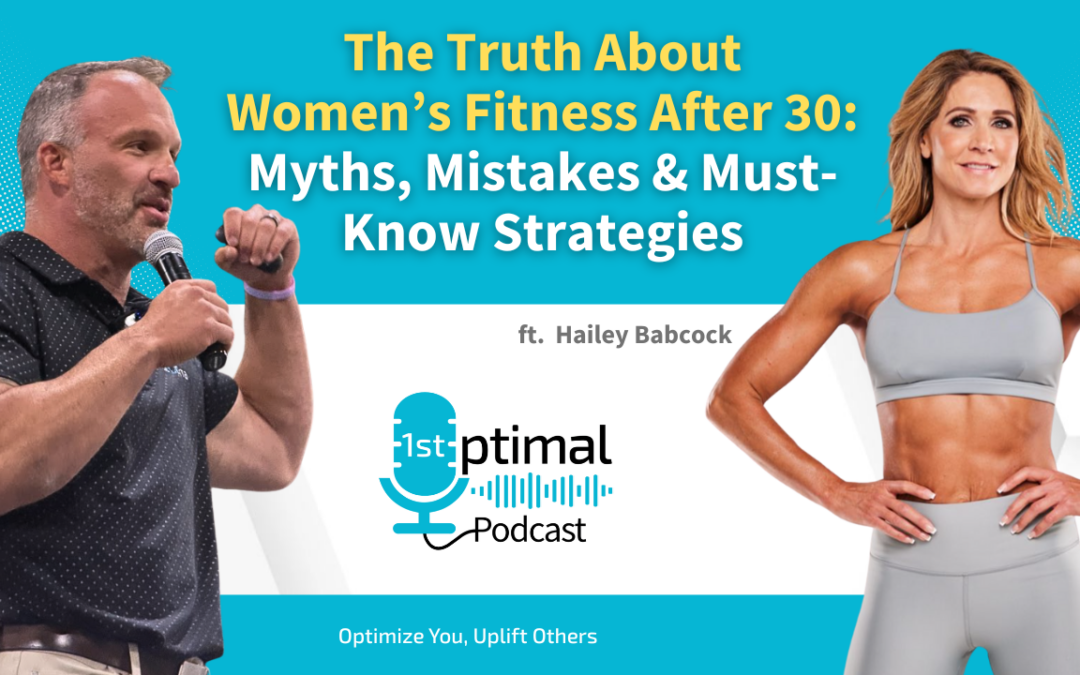
At 1st Optimal, we prioritize women’s health, especially in the critical midlife phase. We recently had the pleasure of hosting Hailey Babcock on our podcast, a health expert who specializes in training midlife women. Hailey’s journey into fitness, combined with her practical approach to strength training, has inspired countless individuals to take control of their health and wellness.
In this episode, Hailey dives deep into how women can optimize their training and nutrition strategies, whether they’re just starting their fitness journey or looking to take it to the next level.
Hailey Babcock’s Journey: From Endurance Training to Strength Training
Hailey’s fitness journey began with endurance sports, including Ironman triathlons. However, after a knee injury sidelined her, she shifted her focus to strength training and began offering online fitness programs to support women’s unique health needs. Through her dedication to continuous learning, Hailey built a network of experts to guide her, eventually leading to partnerships with well-respected figures in the fitness and nutrition fields.
Her transition from endurance to strength training wasn’t just about personal preference, it’s about understanding the unique needs of midlife women. As we age, maintaining muscle mass, bone density, and metabolic function becomes increasingly important.
Key Changes Midlife Women Face in Fitness and Health
As women transition through perimenopause into menopause, they encounter significant hormonal changes that impact their metabolism, muscle mass, and energy levels. These changes, combined with busy lifestyles, can make maintaining an effective fitness regimen challenging. Women in midlife may experience weight gain, decreased muscle strength, and decreased bone density, all of which can be mitigated with the right fitness and nutrition strategies.
Hormonal Shifts and Fitness
During perimenopause and menopause, the decline in estrogen and progesterone, along with an increase in cortisol, can cause a variety of symptoms that interfere with fitness goals. Cortisol, the stress hormone, can contribute to increased belly fat and muscle loss, which is why it’s essential for women to prioritize strength training. Estrogen helps preserve muscle mass and bone health, which is why its decline during menopause significantly increases the risk of osteoporosis and sarcopenia (age-related muscle loss).
The Role of Nutrition
Proper nutrition plays a pivotal role in combating these hormonal changes. As metabolism slows, women must pay closer attention to protein intake, healthy fats, and micronutrients to support muscle maintenance and overall health. A study from the Journal of Nutrition (2022) found that women who maintained a higher protein intake during and after menopause had a higher lean body mass and greater bone density .
From Overwhelmed to Empowered: Women’s Health Today
One of Hailey’s core beliefs is that women today are faced with overwhelming information about fitness and health. Many women feel they’re bombarded with conflicting advice and don’t know where to start. Hailey has observed that, while women in midlife are more knowledgeable about the basics, such as protein intake and the importance of weight training, there’s still a significant gap in understanding how to effectively integrate strength training into their lives.
For women aged 35-55, strength training is more than just an aesthetic goal; it’s a necessity for bone health, muscle preservation, and overall longevity. Yet, many women mistakenly believe that lifting heavy weights will make them bulky. Hailey stresses that it’s about progressive overload, focusing on small incremental increases over time, with a keen focus on form to prevent injuries.
Key Challenges and Solutions for Midlife Women
Hailey’s coaching focuses on midlife women because this is the stage when hormonal changes, joint pain, and lifestyle stresses often disrupt fitness goals. Women in their 40s and 50s are balancing career demands, family life, and caregiving responsibilities, all of which can contribute to physical and mental burnout.
Hailey believes that the solution lies in a combination of proper programming and expert guidance. For example, Hailey’s foundation program, which focuses on restoring muscle balance, is the perfect starting point for women who haven’t done progressive strength training before. This is where most women tend to struggle, correcting muscle imbalances, like strengthening the rotator cuff or learning how to properly hip hinge, can take time, but it’s essential for long-term health.
Strength Training for Women: Key Components of a Well-Rounded Program
While many women shy away from strength training due to fears of becoming “bulky,” Hailey’s program focuses on functional strength, injury prevention, and enhancing longevity. Below is a breakdown of the key components of Hailey’s strength training philosophy:
1. Progressive Overload for Optimal Results
Progressive overload is the concept of gradually increasing the resistance or intensity of exercises to stimulate muscle growth and adaptation. For women, this involves working up from foundational movements like bodyweight exercises and gradually incorporating more resistance training using free weights, machines, or kettlebells.
2. Key Exercises for Strength and Bone Health
Certain exercises should be prioritized in any strength training program for women, especially for those in midlife. These include:
- Squats: Essential for lower body strength and bone density.
- Hip Hinge (Deadlifts, Romanian Deadlifts): Critical for posterior chain development and improving posture.
- Push-Ups: Effective for upper body strength and core stability.
- Overhead Press: Strengthens shoulders and arms, improving functional fitness.
- Pull-Ups or Lat Pulldowns: Vital for upper back strength and preventing slouching.
3. The Importance of Recovery
Recovery is just as important as training itself. For women, who may already experience joint pain or fatigue from hormonal changes, ensuring adequate rest is crucial to avoid overtraining and injury. Active recovery methods like walking, yoga, or swimming can complement strength training without putting undue stress on the joints.
Why Women Need a Tailored Approach to Strength Training
Not all training programs are created equal, and one-size-fits-all solutions don’t work when it comes to women’s health. Hailey’s approach is rooted in the principle of progressive overload, but with modifications that account for hormonal changes and the unique needs of midlife women. She stresses that strength training shouldn’t be rushed. Gradual progression, starting with foundational movements, is critical to prevent injuries and build long-term strength.
Here’s a breakdown of what Hailey recommends for women new to resistance training:
- Hip Hinge and Deadlifts: Many women struggle with hip hinges or deadlifts due to weak posterior chain muscles. This is why teaching proper form with lighter loads is crucial.
- Rotator Cuff Training: Weak rotator cuffs, especially in post-menopausal women, are a common problem. Hailey integrates shoulder stability exercises into her programs to prevent injuries.
- Balance and Stability: Foot stability is often overlooked. Hailey encourages barefoot training or using minimal shoes to improve balance and strengthen stabilizing muscles in the feet.
The Power of Protein, Resistance Training, and Hormonal Health
Nutrition plays a massive role in any strength training program. Hailey underscores the importance of consuming adequate protein at each meal, a habit that many women miss. As women age, the need for protein increases, particularly to maintain lean muscle mass. Hailey advocates for the use of creatine as well, especially for women in their 40s and beyond, to preserve strength and muscle mass.
Moreover, Hailey recommends incorporating hormone optimization and anti-inflammatory treatments as part of the overall health strategy for women. She notes that, as estrogen levels decline, women become more prone to joint pain, which is why muscle maintenance and joint mobility exercises are paramount.
Preventing Injuries and Building Bone Health
Hailey also emphasizes the importance of building strong bones, especially for women in midlife. Weight-bearing activities, like resistance training, help stimulate bone growth and prevent osteoporosis. She recommends including plyometric training carefully, ensuring that women progress slowly to avoid tendon injuries that are common when jumping exercises are introduced too quickly.
For women who struggle with pelvic floor issues or weak glutes, Hailey integrates targeted exercises to strengthen the core and pelvic region. These exercises are critical, especially for women who have experienced childbirth, as they may face challenges with bladder control and stability during more dynamic movements.
Hailey Babcock’s Approach to Sustainable Fitness for Midlife Women
Hailey’s mission is to empower midlife women to take control of their health, focusing on sustainable fitness practices that enhance their quality of life. Through her programs, women not only learn how to lift weights properly but also understand the science behind what’s happening to their bodies as they age.
She encourages women to take the time to build their foundation with the right program, avoid jumping into high-intensity training too soon, and be patient with their progress. By following a structured and progressive approach, women can overcome common fitness obstacles and enjoy a higher quality of life as they age.
Ready to Take the Next Step?
If you’re ready to begin your own fitness journey and take control of your health, Hailey’s programs are a great place to start. Whether you’re looking for foundational strength training or more advanced courses, Hailey’s expertise will guide you through every step of the way.
Book your free consultation with 1st Optimal today and let’s explore how personalized coaching and expert-led strategies can help you achieve your health goals.
🎙 Enjoyed this conversation with Coach Hailey Babcok?
🔗 Listen to the full episode on your favorite platform:
🎧 Spotify | Apple Podcasts | Amazon Music | Google Podcasts
📺 Watch it on YouTube: