

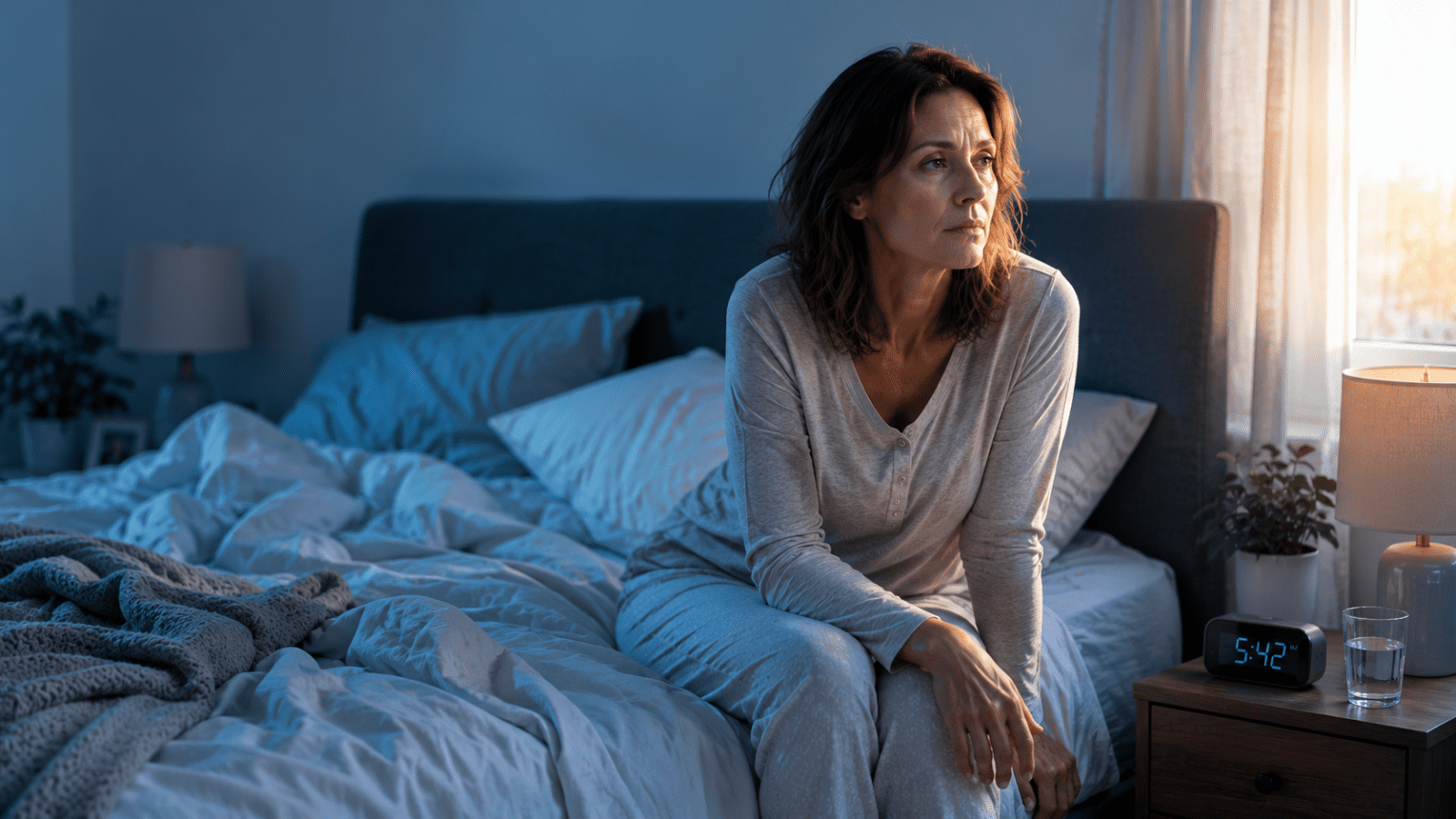
Perimenopause fatigue can feel different from ordinary tiredness.
You may wake up already drained, rely on caffeine to get through the morning, struggle to focus in the afternoon, and still have trouble sleeping when your head finally reaches the pillow.
Hormonal changes can contribute. But fatigue during perimenopause is rarely explained by one estradiol, progesterone, or follicle-stimulating hormone result.
For many women, the more useful question is not simply:
“Are my hormones low?”
It is:
“What is preventing restorative sleep?”
That distinction matters.
Perimenopause can trigger night sweats, temperature changes, anxiety, mood symptoms, and repeated awakenings. Those disruptions can reduce sleep quality even when you spend seven or eight hours in bed.
Sleep apnea, restless legs syndrome, heavy menstrual bleeding, thyroid disease, medication effects, chronic stress, and depression can add another layer. Sleep problems also become more common during the menopause transition and may include difficulty falling asleep, staying asleep, waking too early, or waking repeatedly throughout the night.
The goal is not to dismiss hormones.
It is to stop treating hormones as the only possible explanation.
What Does Perimenopause Fatigue Feel Like?
Perimenopause is the transition leading up to menopause, when ovarian hormone production becomes less predictable and menstrual cycles often begin to change.
Symptoms may start years before the final menstrual period. Menopause is confirmed only after 12 consecutive months without a menstrual period.
Fatigue during perimenopause may show up as:
- Waking without feeling restored
- Needing more caffeine than usual
- Experiencing afternoon energy crashes
- Struggling to concentrate
- Recovering more slowly from workouts
- Feeling less motivated
- Becoming more irritable
- Having less tolerance for stress
- Feeling physically exhausted but mentally alert at night
- Losing interest in routines that previously felt manageable
These symptoms are real, but they are not specific to perimenopause.
The same pattern can occur with insomnia, sleep apnea, iron deficiency, thyroid dysfunction, depression, medication effects, inadequate nutrition, overtraining, chronic stress, or a combination of several factors.
That is why a complete evaluation is usually more useful than assuming fatigue proves a single hormone deficiency.
Why Hormones Still Matter
Estrogen and progesterone interact with systems involved in temperature regulation, mood, breathing, and sleep.
During perimenopause, these hormones may fluctuate substantially rather than declining in a smooth, predictable line. Hormone changes can contribute to hot flashes, night sweats, sleep problems, vaginal symptoms, and menstrual changes.
These shifts may contribute to:
- Hot flashes and night sweats
- Difficulty falling asleep
- Repeated nighttime awakenings
- Early-morning waking
- Anxiety or racing thoughts
- Mood changes
- Menstrual changes that increase the risk of iron deficiency
The American College of Obstetricians and Gynecologists notes that women commonly report trouble falling asleep, staying asleep, waking frequently, or getting up too early during perimenopause and menopause. Hot flashes can directly interrupt sleep, while mood disorders and age-related health conditions may worsen sleep quality.
Hormones may therefore start the disruption.
But once sleep becomes fragmented, fatigue can continue through several pathways that a hormone result alone cannot measure.
Why Sleep Quality May Matter More Than Time in Bed
Many women say, “I sleep eight hours, so sleep cannot be the problem.”
Unfortunately, the body does not award full credit for attendance.
Time in bed is not the same as restorative sleep.
You may spend eight hours in bed but lose meaningful sleep through:
- Brief awakenings you do not remember
- Night sweats
- Snoring or breathing pauses
- Restless legs
- Frequent urination
- Pain
- Alcohol or caffeine
- Stress and racing thoughts
- A partner, child, pet, or phone interrupting sleep
- Long periods of light sleep after waking early
Adults generally need about seven to nine hours of sleep each night. However, duration is only one part of sleep health. Sleep continuity, regularity, timing, and how refreshed you feel also matter.
Poor-quality or insufficient sleep can affect:
- Attention
- Memory
- Reaction time
- Mood
- Appetite regulation
- Glucose metabolism
- Exercise recovery
- Work performance
- Driving safety
Sleep deficiency is also associated with higher long-term risks of obesity, high blood pressure, diabetes, cardiovascular disease, stroke, and depression.
A six-year follow-up study using overnight sleep testing found that women moving from their mid-40s into their early 50s experienced shorter total sleep time, lower sleep efficiency, more awakenings, and more wakefulness after sleep onset. The results also showed that age and menopause-related changes do not affect every part of sleep in the same way.
This is another reason a single hormone value cannot summarize the entire problem.
The Hormone Testing Trap
It is understandable to want one clean number that explains why you feel exhausted.
Lab values appear more orderly than symptoms, irregular cycles, work stress, and family responsibilities. Perimenopause rarely cooperates with that arrangement.
Hormone levels can change across the menstrual cycle and from one day to another during the menopause transition.
The American College of Obstetricians and Gynecologists states that most women do not need hormone testing to identify perimenopause. Clinicians can often make the assessment based on age, symptoms, and menstrual changes. Hormone testing also is not routinely recommended before starting treatment for menopausal symptoms because fluctuating levels may provide limited useful information.
Testing may still be appropriate in selected situations, including:
- Symptoms beginning before age 45
- Possible premature ovarian insufficiency
- Unusual menstrual bleeding
- Fertility concerns
- Symptoms suggesting thyroid or pituitary dysfunction
- Uncertainty about the diagnosis
- Monitoring that is necessary for a specific treatment
The point is not that hormone testing is useless.
The point is that a normal or abnormal result should not automatically end the evaluation.
When fatigue is the main complaint, the assessment should also consider sleep duration, nighttime awakenings, breathing, restless legs, mood, nutrition, bleeding patterns, medication use, exercise recovery, and other medical causes.
Five Sleep Problems That Can Hide Behind “Hormonal Fatigue”
1. Insomnia
Insomnia involves persistent trouble falling asleep, staying asleep, or waking too early despite having enough time and opportunity to sleep.
It also causes daytime impairment, such as:
- Fatigue
- Poor concentration
- Irritability
- Mood changes
- Lower work performance
- Worry about sleep
- Reduced motivation
Insomnia can begin during a period of night sweats, anxiety, pain, or major stress.
Over time, it may continue even when the original trigger improves. Spending excessive time in bed, sleeping late after a poor night, taking long naps, and worrying about sleep can unintentionally reinforce the pattern.
Cognitive behavioral therapy for insomnia, known as CBT-I, is recommended as a first-line treatment for chronic insomnia. It addresses sleep scheduling, conditioned wakefulness, unhelpful beliefs about sleep, and behaviors that can keep insomnia going.
In a randomized trial involving 150 postmenopausal women, CBT-I produced larger and more durable improvements than sleep-hygiene education alone. Participants receiving CBT-I also gained approximately 40 additional minutes of nightly sleep at the six-month follow-up compared with the education and sleep-restriction groups.
A smaller 2026 pilot trial also found that a menopause-specific CBT intervention improved insomnia severity, sleep confidence, and the interference caused by hot flashes.
2. Night Sweats and Hot Flashes
A nighttime hot flash can produce a sudden surge of heat, sweating, and awakening.
Some women remember every episode. Others only notice damp clothing, disrupted bedding, or severe fatigue the following morning.
Hot flashes and night sweats are also called vasomotor symptoms. They occur in up to 80% of women during the menopause transition and may continue for several years. These symptoms can negatively affect sleep, mood, and quality of life.
When vasomotor symptoms repeatedly interrupt sleep, treating them may improve both nighttime rest and daytime function.
Menopausal hormone therapy can be effective for bothersome hot flashes and night sweats in appropriate candidates. Nonhormonal prescription options may also be considered.
Treatment should reflect:
- Symptom severity
- Menstrual history
- Medical history
- Personal risk factors
- Medication use
- Treatment preferences
It should not be based on a generic protocol copied from someone else’s social media feed.
3. Obstructive Sleep Apnea
Obstructive sleep apnea causes repeated narrowing or closure of the upper airway during sleep.
This can lead to drops in oxygen, brief arousals, unrefreshing sleep, morning headaches, poor concentration, and daytime sleepiness.
Women are sometimes underdiagnosed because they may report insomnia, fatigue, mood changes, or brain fog rather than dramatic snoring.
The American College of Obstetricians and Gynecologists identifies menopause as one factor that can increase the risk of obstructive sleep apnea.
Possible warning signs include:
- Loud or frequent snoring
- Gasping, choking, or witnessed breathing pauses
- Morning headaches
- Dry mouth on waking
- High blood pressure
- Severe daytime sleepiness
- Frequent nighttime urination
- Feeling exhausted despite enough time in bed
A home or laboratory sleep study may be appropriate when these symptoms are present.
Better sleep hygiene cannot hold an airway open, despite the internet’s enduring belief that every health problem can be solved with a darker bedroom.
4. Restless Legs Syndrome
Restless legs syndrome causes uncomfortable crawling, pulling, twitching, or aching sensations that create an urge to move the legs.
Symptoms usually:
- Begin or worsen during rest
- Become more noticeable in the evening
- Temporarily improve with movement
- Interfere with falling or staying asleep
Risk factors may include being female, menopause, family history, pregnancy, and iron deficiency.
Heavy or prolonged perimenopausal bleeding may contribute to iron deficiency, which can worsen fatigue and restless-leg symptoms.
Based on symptoms and bleeding history, a clinician may consider:
- A complete blood count
- Ferritin
- Iron
- Total iron-binding capacity
- Transferrin saturation
Do not start high-dose iron simply because fatigue exists.
Excess iron can also cause problems. Testing first is the less exciting but more intelligent approach.
5. Circadian Disruption and Stress
The circadian rhythm is the body’s roughly 24-hour timing system.
Light exposure, darkness, wake time, meals, exercise, travel, work schedules, and evening screen use can influence when you feel alert or sleepy. Hormone changes, stress, anxiety, medications, alcohol, and environmental factors may also interfere with sleep timing.
Perimenopause often arrives during an already demanding stage of life.
Women may be managing:
- Career pressure
- Children or teenagers
- Aging parents
- Relationship changes
- Financial responsibilities
- Changes in body composition
- Increasing recovery needs
- A body that has abruptly developed strong opinions about room temperature
This can create the classic “tired but wired” pattern.
You feel depleted all day, alert at bedtime, awake at 3:00 a.m., and furious about it by 3:07 a.m.
Other Causes of Fatigue That Deserve Attention
Not every case of perimenopause fatigue is primarily a sleep disorder.
A thoughtful evaluation may also look for:
- Heavy menstrual bleeding and iron deficiency
- Thyroid disease
- Depression or anxiety
- Vitamin B12 or folate deficiency when risk factors are present
- Blood sugar problems
- Medication side effects
- Chronic pain
- Autoimmune or inflammatory illness
- Inadequate calorie or protein intake
- Excessive training without enough recovery
- Alcohol or sedating substances
- Cardiovascular or pulmonary disease
Both overactive and underactive thyroid conditions can cause fatigue and menstrual changes. Hypothyroidism may also cause weight gain, constipation, cold intolerance, hair changes, and muscle aches.
Testing should answer a clinical question.
A 70-marker panel may look impressive, but it is not automatically more useful than a focused health history, physical evaluation, and targeted laboratory testing.
How to Tell Whether Sleep Is Driving Your Fatigue
Track your symptoms for two weeks before assuming you need a more complicated treatment plan.
Record:
- Bedtime
- Estimated time you fell asleep
- Wake time
- Number of remembered awakenings
- Night sweats or hot flashes
- Snoring, gasping, or dry mouth
- Restless-leg symptoms
- Alcohol and caffeine timing
- Exercise timing
- Menstrual bleeding
- Morning energy from 1 to 10
- Afternoon energy from 1 to 10
- Mood and concentration
- Naps
- Medications and supplements
Patterns may become visible quickly.
You may find that fatigue follows nights with late caffeine, alcohol, prolonged awakenings, heavy bleeding, intense night sweats, or an inconsistent schedule.
You may also discover that the problem remains regardless of your routine. That is useful information for a clinician.
Wearable devices can support pattern recognition, but they should not be treated as a diagnosis. A medical sleep study may be needed to evaluate obstructive sleep apnea or another sleep disorder.
Treat wearable data as a clue, not a verdict delivered by a glowing ring.
A Practical Plan for Better Sleep During Perimenopause
Keep a Consistent Wake Time
Try to wake within roughly the same 30- to 60-minute range each day, including weekends.
After a poor night, sleeping several hours later may feel necessary. However, it can make it harder to feel sleepy at your normal time the following night.
A regular schedule is one of the basic behavioral strategies recommended for improving sleep.
Get Morning Light
Seek outdoor light after waking when practical.
Light and darkness help regulate the circadian rhythm. Morning outdoor time may support a more consistent sleep-wake schedule.
A brief outdoor walk can also combine light exposure, gentle movement, and a calmer start to the day.
The solution is annoyingly basic, which does not make it ineffective.
Use Caffeine Strategically
Caffeine can temporarily improve alertness, but intake later in the day may make sleep more difficult.
Consider moving your last caffeinated drink earlier, especially if you struggle to fall asleep or wake frequently.
Remember to count:
- Coffee
- Tea
- Energy drinks
- Pre-workout formulas
- Chocolate
- Certain headache medications
Caffeine has a talent for entering the schedule under several aliases.
Be Careful With Alcohol
Alcohol may make you feel sleepy initially, but it can interfere with healthy sleep.
It may also worsen nighttime awakenings, hot flashes, snoring, or breathing-related sleep disruption in some women.
Track the relationship rather than relying on assumptions. A drink that appears to help at 10:00 p.m. may send the invoice at 2:30 a.m.
Make the Bedroom Cooler
Night sweats and temperature sensitivity can make a warm bedroom miserable.
Consider:
- Breathable bedding
- Layered blankets
- Moisture-wicking sleepwear
- A fan
- Adjustable cooling devices
- Keeping replacement clothing nearby
These steps do not treat the underlying cause of vasomotor symptoms, but they may reduce the practical disruption.
Exercise, but Respect Recovery
Regular movement supports sleep, mood, cardiovascular health, glucose regulation, and physical function.
Strength training is especially valuable during midlife because preserving muscle supports metabolic health, independence, and healthy aging.
However, more training is not automatically better.
If you are sleeping poorly, eating too little, and performing high-intensity exercise every day, fatigue may worsen. Match training stress to your current recovery capacity.
Do Not Stay in Bed Fighting Sleep
When you are awake for a prolonged period and becoming frustrated, get out of bed and do something quiet in dim light.
Return to bed when you feel sleepy.
The goal is to rebuild the association between bed and sleep rather than bed and mental negotiations with tomorrow’s calendar.
This approach is part of CBT-I, although individualized treatment may use more structured sleep scheduling.
Treat the Actual Trigger
Sleep habits help, but they cannot fully correct:
- Untreated night sweats
- Obstructive sleep apnea
- Restless legs syndrome
- Depression
- Chronic pain
- Significant iron deficiency
- Medication side effects
Persistent fatigue deserves a real evaluation.
The winning strategy is not choosing between hormones and sleep. It is identifying how they interact and treating the dominant drivers.
When Hormone Therapy May Help
Menopausal hormone therapy can be effective for bothersome vasomotor symptoms such as hot flashes and night sweats.
When those symptoms repeatedly wake someone, improving them may improve sleep.
Research reviews have found that hormone therapy may improve sleep quality in some menopausal women, although the effect varies by symptoms, treatment formulation, and individual characteristics.
Micronized progesterone has also been studied for sleep. A systematic review of randomized trials found improvements in some sleep outcomes, but results were not uniform across every measure or population.
Hormone therapy is not a universal treatment for fatigue or chronic insomnia.
Some women have sleep apnea, restless legs syndrome, anxiety, depression, pain, or behavioral insomnia that will not resolve simply because estrogen or progesterone is prescribed.
Hormone therapy also has benefits and risks and is not appropriate for everyone.
A personalized discussion should consider:
- The symptoms being treated
- Age and stage of the menopause transition
- Menstrual and bleeding history
- Whether the uterus is present
- Personal and family medical history
- Cardiovascular risk
- Blood-clot risk
- Breast health history
- Migraine history
- Medication interactions
- Treatment preferences
The purpose is to select treatment based on the individual, not to chase a laboratory number into a predetermined protocol.
When to Seek Medical Evaluation
Talk with a qualified clinician when fatigue is persistent, worsening, or interfering with work, exercise, relationships, driving, or basic daily function.
Seek prompt medical evaluation for:
- Falling asleep while driving
- Loud snoring with gasping or breathing pauses
- New chest pain, fainting, or shortness of breath
- Very heavy or prolonged bleeding
- Unexplained weight loss
- New neurological symptoms
- Severe depression or hopelessness
- Thoughts of self-harm
- Fatigue accompanied by fever or significant pain
A focused evaluation may include a review of:
- Sleep
- Menstrual changes
- Medications
- Mood
- Nutrition
- Exercise
- Medical history
- Family history
- Cardiovascular risk factors
Depending on the findings, targeted testing might include:
- Complete blood count
- Ferritin and iron studies
- Thyroid-stimulating hormone
- Comprehensive metabolic panel
- Glucose or hemoglobin A1c
- Vitamin levels when clinically indicated
- Sleep apnea screening
- A home or laboratory sleep study
Frequently Asked Questions
Is perimenopause fatigue caused by low estrogen?
Low or fluctuating estrogen may contribute, especially through night sweats, mood changes, and disrupted sleep.
But fatigue is not specific to estrogen deficiency.
Sleep disorders, iron deficiency, thyroid disease, stress, depression, medications, nutritional issues, and inadequate recovery may produce similar symptoms.
Can progesterone improve sleep during perimenopause?
Micronized progesterone may improve certain sleep outcomes for some women, particularly when used as part of an appropriate menopause treatment plan. However, the response varies.
Progesterone is not a substitute for evaluating sleep apnea, chronic insomnia, restless legs syndrome, or other causes of fatigue.
Treatment should be prescribed and monitored by a qualified clinician.
Why am I exhausted after eight hours in bed?
Your sleep may be fragmented by hot flashes, breathing pauses, movement, pain, alcohol, stress, or frequent awakenings.
You may also be spending eight hours in bed but sleeping substantially less.
Sleep quality and continuity matter alongside duration.
Should I test my hormones for perimenopause fatigue?
Hormone testing is not routinely needed to identify perimenopause in women over 45 with typical symptoms and menstrual changes.
Testing may be useful in selected situations, but fatigue usually requires a broader assessment than reproductive hormone levels alone.
What is the best treatment for perimenopause insomnia?
Treatment depends on the cause.
CBT-I is a first-line treatment for chronic insomnia. Vasomotor symptoms, sleep apnea, restless legs syndrome, pain, mood disorders, and medication effects may require additional targeted care.
The Bottom Line
Perimenopause fatigue is not imaginary, and it is not always solved by raising or lowering a hormone level.
Hormonal changes can trigger night sweats, mood shifts, and sleep disruption.
But the fatigue you feel the next day may depend more on:
- How long you slept
- How often you woke
- Whether you were breathing normally
- Whether your legs repeatedly disturbed your sleep
- Whether heavy bleeding has affected your iron status
- Whether another medical issue is draining your energy
Start with the whole picture.
Review sleep quality, bleeding, stress, medications, nutrition, exercise, mood, and medical risk factors.
Use laboratory testing to answer specific questions. Treat hormone-related symptoms when appropriate, but do not let a hormone panel distract from insomnia, sleep apnea, iron deficiency, thyroid dysfunction, or another correctable cause.
At 1st Optimal, we combine clinician-guided evaluation, advanced testing when appropriate, and functional health coaching to help women understand what is actually driving fatigue.
The goal is not simply to make your lab results look better.
It is to help you sleep, recover, think clearly, and feel capable in your own body again.
Book a free health consultation with 1st Optimal to explore a personalized plan for hormone health, sleep, energy, and long-term performance.
Educational only, not medical advice.


