

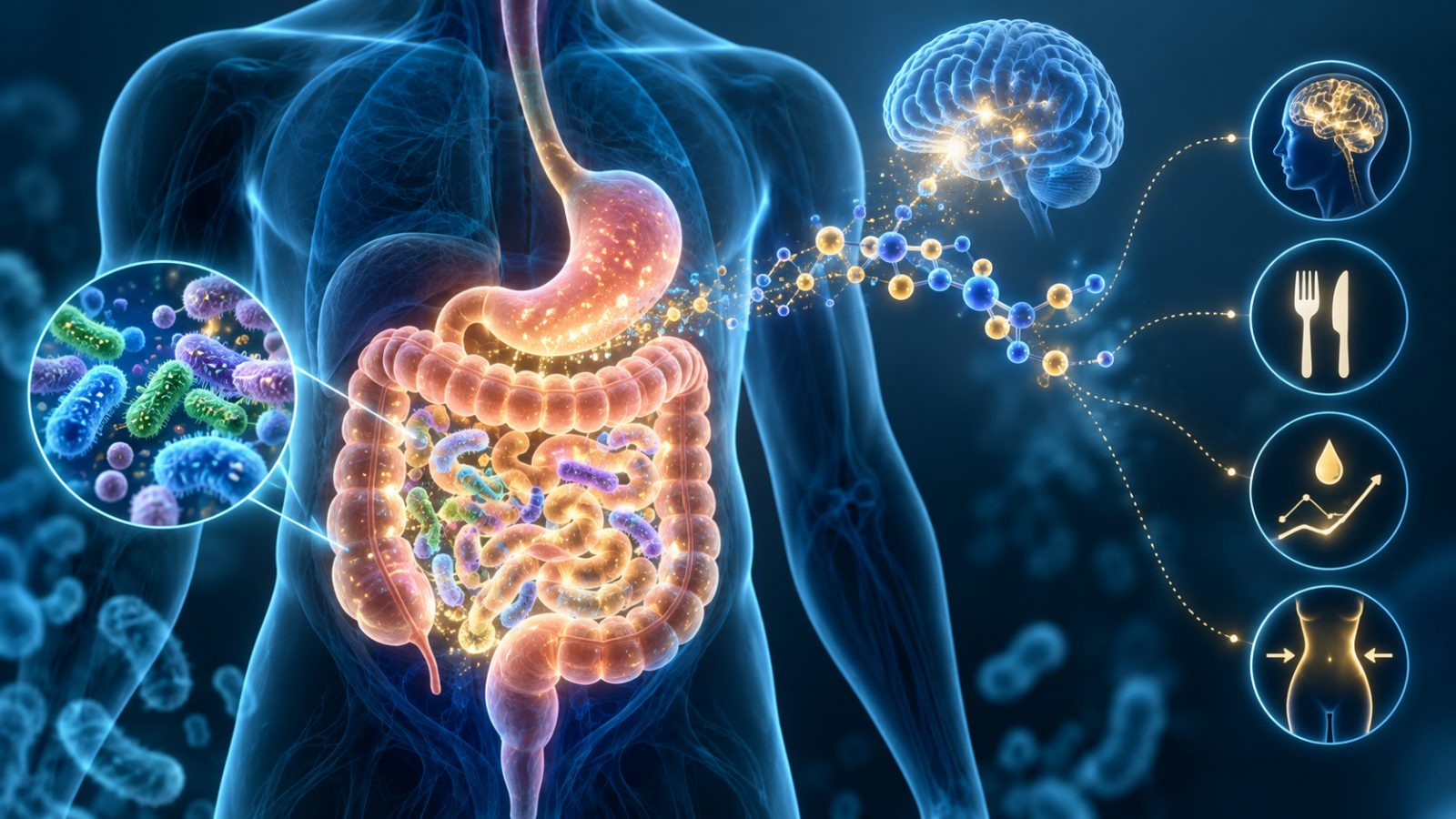
When most people hear GLP-1, they think of medications like semaglutide or tirzepatide.
But GLP-1 did not begin with a prescription.
Your body naturally produces glucagon-like peptide-1, or GLP-1, inside the gastrointestinal tract after you eat. It is one of several hormones involved in appetite, blood sugar regulation, digestion, and energy balance.
And emerging research suggests that the trillions of microorganisms living in your digestive system may influence some of the signals that regulate natural GLP-1 production.
That creates an interesting connection between gut health, appetite regulation, metabolic health, and weight loss.
The important distinction is this: your microbiome does not single-handedly “control” whether you lose weight. Weight regulation involves energy intake, activity, genetics, sleep, hormones, medications, metabolic health, environment, and many other factors.
But the gut microbiome appears to be one part of that much larger system.
Here is what the science currently tells us.
What Is GLP-1?
GLP-1 is an incretin hormone released primarily from specialized enteroendocrine cells in the intestine.
After food enters the digestive tract, these cells sense nutrients and release hormones that communicate with the pancreas, gastrointestinal system, and brain.
GLP-1 helps:
- Increase insulin secretion when blood glucose rises
- Reduce glucagon secretion under appropriate conditions
- Slow gastric emptying
- Support feelings of fullness
- Influence appetite and food intake
- Contribute to glucose regulation
Because of these effects, GLP-1 signaling has become an important target in medical treatment for obesity and type 2 diabetes.
Modern GLP-1-based medications amplify this biological pathway and can produce substantial reductions in body weight for appropriately selected patients.
But medications are only one part of the story.
Your gut is already communicating through GLP-1 every day.
Where the Gut Microbiome Enters the Picture
Your gastrointestinal tract contains a massive ecosystem of bacteria, fungi, viruses, and other microorganisms collectively known as the gut microbiome.
These organisms do much more than help digest food.
They interact with:
- Nutrients
- The intestinal lining
- Immune cells
- Bile acids
- Gut hormones
- Metabolic signaling pathways
- The nervous system
Researchers increasingly view the microbiome as an active participant in human metabolism rather than simply a collection of microorganisms living inside the intestine.
One particularly interesting connection involves microbial metabolites.
Your Gut Bacteria Produce Metabolic Signals
Gut bacteria consume compounds that escape digestion in the small intestine, especially certain types of dietary fiber.
During fermentation, some bacteria produce compounds called short-chain fatty acids, or SCFAs.
The major SCFAs include:
- Butyrate
- Propionate
- Acetate
These compounds can interact with receptors on enteroendocrine cells in the intestine.
Some of those cells produce GLP-1.
Research indicates that SCFAs can activate receptors including FFAR2 and FFAR3, which may contribute to the release of GLP-1 and other appetite-related hormones.
In simplified terms:
Dietary fiber → gut bacteria → microbial metabolites → intestinal signaling → gut hormones
That does not mean eating more fiber produces the same physiological effect as taking a GLP-1 receptor agonist.
It does mean that your microbiome participates in the natural system regulating appetite and metabolism.
Your Microbiome May Influence Appetite
Weight loss is often presented as a simple matter of willpower.
Human appetite biology is considerably more complicated.
Your brain receives constant information about:
- How much food you have eaten
- How quickly nutrients are entering circulation
- Blood glucose
- Energy availability
- Stomach distension
- Gut hormones
- Reward signals
- Sleep status
- Stress
- Previous weight loss
GLP-1 is one of several signals involved in this network.
Others include PYY, GIP, ghrelin, leptin, CCK, insulin, and neural signals traveling between the gastrointestinal tract and brain.
Because microbial metabolites can interact with enteroendocrine cells, changes in the microbiome may influence some of these appetite-regulating pathways.
This is one reason researchers are investigating the gut-brain-metabolic axis as a potential contributor to obesity and metabolic disease.
The Microbiome May Also Affect Blood Sugar Regulation
GLP-1 is not simply an appetite hormone.
It is also deeply involved in glucose regulation.
After eating, GLP-1 helps stimulate glucose-dependent insulin secretion.
That matters because insulin sensitivity and glucose control can influence:
- Hunger
- Energy levels
- Metabolic flexibility
- Fat storage
- Cardiometabolic health
Microbial metabolites may influence incretin signaling, while diet and metabolic health can simultaneously alter the microbial environment.
This relationship appears to work in both directions.
The microbiome may affect metabolic signaling, while diet, medications, weight changes, and metabolic disease can reshape the microbiome.
Bile Acids Are Another Piece of the Gut–GLP-1 Puzzle
Short-chain fatty acids are not the only connection.
Gut bacteria also modify bile acids.
Bile acids were once viewed primarily as substances that helped digest dietary fat. We now know they also function as signaling molecules.
Microbiome-modified bile acids can interact with receptors such as TGR5 and FXR.
Those pathways can influence:
- GLP-1 secretion
- Glucose metabolism
- Lipid metabolism
- Energy expenditure
- Intestinal function
This is another example of how gut microbes can potentially alter metabolic signaling without directly changing calorie intake.
Does an “Unhealthy Microbiome” Cause Weight Gain?
This is where the conversation requires more caution.
Studies have repeatedly found associations between the microbiome, obesity, and metabolic disease.
But association does not automatically prove causation.
People with obesity may have different microbial patterns because of differences in:
- Diet
- Medication use
- Activity
- Metabolic health
- Geography
- Genetics
- Weight itself
- Other environmental factors
Researchers have also found that weight-loss interventions can change the microbiome in some circumstances.
However, meaningful metabolic improvements can occur without major measurable microbiome changes.
That means there is currently no scientifically validated universal “weight-loss microbiome” that every person needs to achieve.
Your microbiome matters.
It is simply not the only thing that matters.
Does the Microbiome Affect GLP-1 Medication Results?
This has become a major research question.
GLP-1 receptor agonists alter several gastrointestinal and metabolic processes, including appetite, gastric emptying, food intake, glucose regulation, and body weight.
Those changes can also alter the intestinal environment.
At the same time, researchers are investigating whether baseline microbiome differences influence individual treatment responses.
A growing body of research describes a potentially bidirectional relationship between GLP-1 therapies and the gut microbiome.
But we are not yet at the point where a routine stool microbiome profile can reliably tell clinicians:
“This person will lose exactly this much weight on semaglutide.”
Or:
“This bacterial strain explains why this medication stopped working.”
Those conclusions would go beyond the evidence.
Personalized microbiome-guided GLP-1 therapy remains an emerging area of research.
Why Some People Experience Gut Problems on GLP-1 Therapy
GLP-1 medications commonly affect gastrointestinal function.
Possible side effects can include:
- Nausea
- Constipation
- Diarrhea
- Bloating
- Abdominal discomfort
- Reduced appetite
- Early fullness
Because appetite often drops dramatically, people may also unintentionally reduce their intake of:
- Fiber
- Fluids
- Protein
- Micronutrients
- Overall food volume
That can create a practical problem.
Someone may be losing weight successfully but eating such a restricted diet that digestive regularity, muscle preservation, or nutrient adequacy begins to suffer.
That is why GLP-1 therapy should not simply be viewed as “take the medication and eat as little as possible.”
The goal should be improving metabolic health while preserving nutrition, lean mass, digestive function, and sustainable habits.
Can You Naturally Increase GLP-1 Through Food?
Certain dietary patterns may support the body’s normal GLP-1 response.
Nutrients that can stimulate gut hormone secretion include:
Protein
Protein stimulates multiple satiety hormones and can help preserve lean body mass during weight loss.
Useful options may include:
- Eggs
- Greek yogurt
- Fish
- Poultry
- Lean meats
- Cottage cheese
- Legumes
- Soy foods
Dietary Fiber
Certain fermentable fibers feed gut bacteria that produce short-chain fatty acids.
Sources include:
- Beans
- Lentils
- Oats
- Barley
- Berries
- Vegetables
- Chia seeds
- Flaxseed
- Whole grains
A 2026 review examining prebiotic interventions described the microbiota-SCFA-incretin pathway as a potential mechanism through which fermentable fibers may influence GLP-1 and glucose metabolism.
Minimally Processed Plant Foods
Plant diversity provides different types of fiber, resistant starches, and polyphenols that can support microbial diversity and function.
That does not mean everyone needs to become vegetarian.
It means eating a broader range of nutrient-dense foods may support a more diverse microbial ecosystem.
What About Probiotics?
Probiotics are frequently marketed as a shortcut to better metabolism.
The reality is more nuanced.
Some probiotic strains are being studied for their potential effects on:
- Gut barrier function
- Inflammation
- Glucose metabolism
- Microbial composition
- Metabolic signaling
But probiotics are strain-specific.
A study involving one bacterial strain cannot automatically be applied to every probiotic supplement on the shelf.
And at this point, probiotics should not be marketed as substitutes for proven obesity treatment.
The strongest foundation still includes:
- Appropriate calorie intake
- Adequate protein
- Fiber-rich foods
- Resistance training
- Regular movement
- Sufficient sleep
- Metabolic risk management
- Medical treatment when indicated
Your Gut Does Not Override Energy Balance
This point matters.
The microbiome can potentially influence both sides of energy regulation by affecting energy harvest, appetite signaling, metabolic pathways, and food behavior.
But it does not eliminate basic physiology.
Sustained fat loss ultimately requires stored energy to be mobilized.
What the microbiome may influence is the biological environment in which that process occurs.
For example, two people trying to lose weight may experience very different levels of:
- Hunger
- Food cravings
- Glucose fluctuations
- Digestive symptoms
- Energy
- Satiety
The gut may contribute to some of those differences.
That makes the microbiome relevant without making it magical.
Five Ways to Support Gut Health During Weight Loss
You do not need to chase exotic supplements to begin supporting your microbiome.
1. Prioritize Protein
Adequate protein supports satiety and lean muscle preservation, particularly during calorie restriction or GLP-1 treatment.
2. Increase Fiber Gradually
A variety of fruits, vegetables, legumes, whole grains, nuts, and seeds provides substrates for beneficial microbial fermentation.
Increase fiber slowly if you are prone to bloating or gastrointestinal symptoms.
3. Eat a Variety of Plants
Instead of obsessing over one “superfood,” focus on diversity across the week.
Different microbes utilize different nutrients.
4. Keep Strength Training
Preserving muscle during weight loss is critical for long-term metabolic health.
GLP-1 therapy should ideally be accompanied by sufficient protein and resistance exercise when medically appropriate.
5. Investigate Persistent Digestive Symptoms
Chronic bloating, diarrhea, constipation, abdominal pain, unexplained nutrient deficiencies, or other gastrointestinal symptoms deserve proper evaluation.
Do not automatically assume every symptom is “dysbiosis.”
There may be another explanation.
When Does Gut Testing Make Sense?
Commercial microbiome testing has expanded dramatically.
But more data does not automatically equal better care.
A useful clinical question is:
Will this test change what we do next?
Gut evaluation may be more relevant when someone has persistent gastrointestinal symptoms, unexplained nutritional problems, suspected malabsorption, or another specific clinical indication.
Testing everyone simply because they are trying to lose weight is harder to justify.
At 1st Optimal, the goal is not to order the longest possible list of labs.
It is to identify the smallest set of useful information that changes the plan.
The Future of Personalized GLP-1 Treatment May Include the Microbiome
Researchers are actively investigating whether microbial patterns could eventually help predict:
- Obesity risk
- Insulin resistance
- Dietary responses
- Medication response
- GLP-1 effectiveness
- Weight-loss maintenance
We are not there yet.
But the potential is significant.
The future of metabolic medicine may increasingly combine information about:
- Glucose
- Insulin
- Lipids
- Body composition
- Hormones
- Genetics
- Lifestyle
- Gut health
- Microbial metabolites
Rather than treating weight as an isolated number on a scale.
The Bottom Line
Your gut microbiome does not independently determine whether you lose weight.
But it is increasingly clear that the gut is part of the hormonal and metabolic network controlling appetite, glucose regulation, digestion, and energy balance.
Gut bacteria produce metabolites that can communicate with intestinal cells.
Those cells produce hormones such as GLP-1 and PYY.
Those hormones communicate with the pancreas and brain.
And together, these pathways help influence how hungry you feel, how you respond to meals, and how your body manages energy.
That is the real gut–GLP-1 connection.
The goal is not to “hack” one bacterial species or chase the newest probiotic.
It is to build a metabolic environment that supports sustainable fat loss, muscle preservation, digestive health, and long-term health.
How 1st Optimal Approaches Weight Loss Differently
Weight loss resistance rarely deserves a one-size-fits-all explanation.
At 1st Optimal, personalized evaluation may include metabolic health, hormone health, body composition, lifestyle, nutrition, digestive symptoms, and advanced testing when clinically appropriate.
For some people, GLP-1 therapy may be part of the strategy.
For others, the priority may be addressing sleep, nutrition, insulin resistance, thyroid function, hormone health, training, or gastrointestinal symptoms first.
The goal is not simply to make the scale move.
It is to understand what is happening underneath it.
Ready to take a deeper look at your metabolic and gut health?
Explore personalized Functional Health Plans or speak with the 1st Optimal team to determine which testing and treatment options may be appropriate for your goals.
This article is for educational purposes only and is not medical advice. Prescription medications, including GLP-1 receptor agonists, require evaluation and supervision by an appropriately licensed healthcare professional.
Frequently Asked Questions
Does gut bacteria produce GLP-1?
Gut bacteria do not directly produce human GLP-1. Instead, microbes produce metabolites such as short-chain fatty acids that can interact with intestinal enteroendocrine cells and influence GLP-1 secretion.
Can poor gut health make it harder to lose weight?
Gut health may influence appetite, glucose metabolism, inflammation, digestion, and other factors related to weight regulation. However, microbiome imbalance is not proven to be the sole cause of weight-loss resistance.
Does fiber increase GLP-1 naturally?
Certain fermentable fibers can be metabolized by gut bacteria into short-chain fatty acids. These metabolites may stimulate receptors involved in natural GLP-1 secretion. The magnitude of the effect varies between individuals.
Can probiotics increase GLP-1?
Certain probiotic strains and microbial metabolites are being investigated for their effects on GLP-1 signaling, but evidence is not strong enough to consider probiotics a replacement for GLP-1 medications or established weight-management treatment.
Do GLP-1 medications change your gut microbiome?
Research suggests that GLP-1 receptor agonists may be associated with microbiome changes, potentially through alterations in food intake, gastrointestinal transit, metabolism, and the intestinal environment. The clinical importance of these changes is still being studied.
Should you take probiotics while using a GLP-1?
There is no universal requirement to take probiotics with GLP-1 medications. Nutrition, hydration, fiber tolerance, gastrointestinal symptoms, medical history, and medication response should be evaluated individually.
References
- Drucker DJ. GLP-1-based therapies for diabetes, obesity and beyond. Nature Reviews Drug Discovery. 2025.
- Sanz Y, Cryan JF, Deschasaux-Tanguy M, et al. The gut microbiome connects nutrition and human health. Nature Reviews Gastroenterology & Hepatology. 2025.
- Carmody RN, Bisanz JE. Roles of the gut microbiome in weight management. Nature Reviews Microbiology. 2023.
- Santos-Hernández M, Reimann F, Gribble FM. Cellular mechanisms of incretin hormone secretion. Journal of Molecular Endocrinology. 2024.
- Gut Microbiome Regulation of Gut Hormone Secretion. 2025.
- Therapeutic potential of prebiotics in modulating postprandial GLP-1, GLP-2, and glucose homeostasis in type 2 diabetes mellitus. Diabetes Research and Clinical Practice. 2026.