
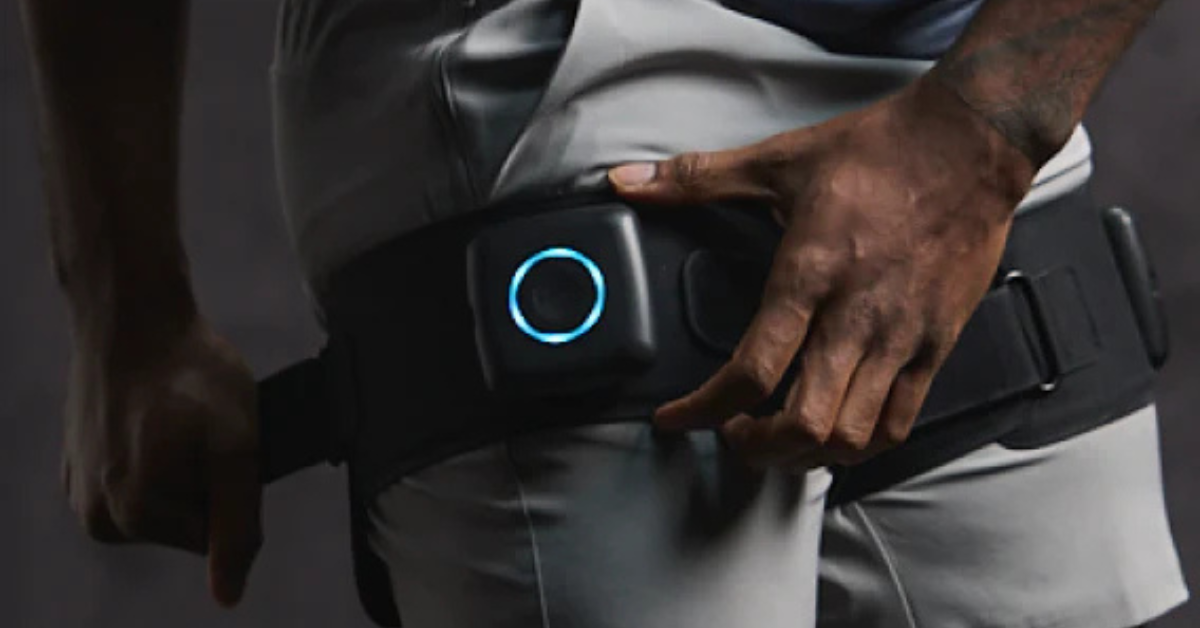
Blood flow restriction training, or BFR, has transformed the way clinicians approach tendon rehabilitation. For adults in the 35–55 range, especially those balancing work, family, stress, and physical training, tendon pain is one of the top reasons exercise gets derailed. Whether it is the Achilles, the rotator cuff, the elbow, or the patellar tendon, midlife tendons lose elasticity, blood supply, and tolerance to high loads. This is where BFR becomes a powerful tool. It allows meaningful strengthening and tendon remodeling with light weights that don’t aggravate symptoms. For women in particular, especially those experiencing perimenopausal or menopausal hormone shifts, tendons weaken at a faster rate due to estrogen decline. BFR offers a way to rebuild collagen, restore function, and accelerate healing even when heavy lifting isn’t possible.
This article breaks down the full science behind BFR, including the 2022 Burton & McCormack scoping review, additional research from 2018–2025, practical rehab protocols, safety considerations, real-world application, and how BFR fits into 1st Optimal’s approach to functional medicine, hormone optimization, and performance health. It also includes direct calls to action for equipment and next steps, since most people need guided application for best results.
Tendon injuries can sideline even the most motivated adults. A small amount of overload, especially when paired with poor sleep, stress, dehydration, or declining hormone levels, is enough to push a tendon into chronic pain. Traditionally, restoring tendon health required heavy mechanical loading, usually 70–85 percent of one-rep max, performed multiple times weekly. But many people with tendon pain simply cannot tolerate that level of force without aggravation.
Blood flow restriction training changes that. By applying a specialized cuff to the arm or leg to partially restrict venous return, the muscles and tendons experience a high-metabolic, high-signaling environment even under very light loads. In other words, the body reacts as if the weight is heavy even when the load is light. This allows tendons to receive the stimulus they need without the mechanical stress they can’t yet tolerate.
For adults in the 35–55 age range, BFR becomes one of the most efficient and joint-friendly ways to rebuild tendon health. It improves pain, enhances collagen production, increases tendon stiffness, supports muscle growth, and speeds return to activity. Better yet, BFR also boosts systemic hormones such as growth hormone and IGF-1, both of which naturally decline with age and are crucial for tissue repair.
Below is a full breakdown of how BFR works, why it’s so effective for tendon rehab, how to use it safely, and how it fits into a personalized health strategy.
WHAT BLOOD FLOW RESTRICTION TRAINING IS
Blood flow restriction training involves applying a cuff or band around the upper arm or upper leg to restrict venous blood flow while allowing arterial flow. This creates a “low oxygen” environment inside the working muscles. Exercising in this environment stimulates powerful hormonal and cellular responses typically seen only with heavy weight training.
But with tendons, the limiting factor is mechanical stress, not metabolic stress. Heavy loads pull directly on tendon fibers, which can cause pain during rehabilitation. BFR allows the tendon to benefit from the endocrine and cellular effects of high-intensity training while protecting it from high mechanical strain.
In practical terms:
- You use 20–30 percent of your normal weight
- You perform higher reps
- Your limbs feel swollen and pumped
- Tendons experience a strong collagen stimulus
- Muscles receive a hypertrophy signal
- Pain often decreases
- Healing accelerates
For tendon rehabilitation, this is ideal.
WHY MID-LIFE TENDONS STRUGGLE
Around age 35, tendons begin to lose:
- collagen density
- elasticity
- blood supply
- water content
- hormonal support
- mitochondrial resilience
These changes accelerate for women in perimenopause and menopause because estrogen plays a major role in connective tissue health. Lower estrogen reduces collagen cross-linking, tendon stiffness, and load tolerance.
This explains why many women in their forties suddenly develop:
- Achilles pain
- rotator cuff irritation
- tennis elbow
- knee tendon pain
- plantar fasciitis
- hamstring tendon pain
BFR offers a workaround for these hormonal and physiological limitations by stimulating tendon repair at lower loads.
HOW BFR WORKS IN TENDON REHABILITATION
The 2022 scoping review identified multiple mechanisms explaining why BFR is so effective for tendon healing. These mechanisms are supported by additional papers across sports medicine, rehabilitation, and physiology.
- Increases Growth Hormone and IGF-1
GH and IGF-1 are key hormones for collagen synthesis, muscle repair, and connective tissue remodeling. BFR raises GH up to 290 percent in some studies. - Stimulates Type I Collagen Production
Tendons are mostly collagen type I. BFR increases mRNA activity for collagen formation. - Recruits Fast-Twitch Muscle Fibers
Even with light loads, BFR activates high-threshold motor units, which improves tendon load capacity indirectly. - Reduces Tendon Pain
Low-load training under occlusion is better tolerated and often decreases pain mid-session. - Enhances Blood Flow After Occlusion
When cuffs release, a “hyperemic flush” increases oxygen and nutrients to the tendon. - Increases Tendon Stiffness and Mechanical Strength
Stiffer tendons store and release energy more efficiently, reducing reinjury risk. - Improves Joint Mechanics
Strength surrounding the joint increases without overloading the tendon itself. - Boosts Satellite Cell Activity
These cells aid in tissue repair and regeneration.
SUMMARY OF THE 2022 SCOPING REVIEW
Burton & McCormack reviewed 13 studies on BFR and tendons.
Breakdown:
- 3 studies: tendinopathy
- 2 studies: tendon rupture (post-surgical)
- 8 studies: healthy tendon physiology
Major conclusions:
- BFR enhances collagen turnover
- BFR improves tendon mechanical strength
- BFR increases muscle hypertrophy
- BFR reduces pain
- BFR is safe when used correctly
- Low loads still trigger tendon adaptation
- Perfect for individuals who cannot tolerate heavy load
The authors conclude that BFR is “promising” and “beneficial” but that more research should refine optimal protocols.
BENEFITS OF BFR FOR ADULTS 35–55
Adults in this age group deal with a unique combination of hormonal decline, high stress, decreased recovery capacity, and a higher likelihood of degenerative tendon changes. BFR helps reverse many of these trends.
Key benefits:
- reduces tendon pain
- decreases inflammation
- accelerates healing
- improves tendon stiffness
- improves collagen organization
- increases muscle strength without heavy load
- protects joints and tissues
- boosts metabolic health
- stimulates anti-aging hormone responses
BFR FOR COMMON TENDON INJURIES
Below are the most common tendon issues BFR improves.
- Patellar Tendinopathy
Perfect for quad and patellar strengthening without painful loading. - Achilles Tendinopathy
Allows early-phase loading and calf activation with minimal strain. - Rotator Cuff Tendinopathy
Upper arm occlusion allows safe deltoid and cuff activation. - Tennis Elbow
Forearm strengthening under occlusion improves pain and endurance. - Gluteal Tendinopathy
Hip abduction and extension exercises under occlusion reduce flare-ups. - Post-Surgical Tendon Repair
Allows strength gains before full mechanical load is permitted.
BFR VS. HEAVY LOAD TRAINING
Heavy loading is effective. But many adults with tendon pain can’t tolerate it.
BFR provides:
- similar signaling
- similar collagen response
- similar strength improvements
- with drastically less mechanical stress.
BFR PROTOCOLS FOR TENDON REHAB
The most validated protocol:
- Load: 20–30% of 1RM
- Sets: 30 + 15 + 15 + 15
- Rest: 30 seconds
- Pressure: 40–80% limb occlusion pressure
- Frequency: 2–4 days weekly
- Duration: 6–12 weeks
SAFETY & CONTRAINDICATIONS
Avoid if you have:
- active DVT
- severe hypertension
- uncontrolled cardiovascular disease
- varicose vein complications
- pregnancy
- clotting disorders
General rules:
- never use elastic bands or cheap bands
- always use calibrated equipment
- ease into pressure ranges
- stop if numbness occurs
HOW 1st OPTIMAL USES BFR
BFR is paired with:
- hormone optimization
- thyroid testing
- GI-MAP gut testing
- inflammation markers
- peptides like BPC-157 and TB-500
- GLP-1 therapy for weight reduction
- nutrient optimization
- personalized training programming
Tendon healing requires a whole-body strategy. BFR is one part of it.
CASE STUDY
A 46-year-old woman had chronic Achilles tendinopathy aggravated by long travel, poor sleep, and high stress. Heavy lifting worsened the pain. A BFR-based rehab plan, paired with BPC-157 peptide therapy, hormone testing, and GLP-1 support, reduced her pain by 65 percent in eight weeks and returned her to running by twelve.
If you want to use professional-grade BFR in your training or rehab:
Buy SAGA BFR cuffs here:
https://ambassadors.saga.fitness/OPTIMAL10
Use code: OPTIMAL10 for savings.
If you want a personalized plan for tendon rehab, peptides, hormone optimization, or performance:
Book a free consult with 1st Optimal:
https://1stoptimal.com/book-a-call/
REFERENCES:
Burton I, McCormack A. Blood Flow Restriction Resistance Training in Tendon Rehabilitation. 2022.
https://www.frontiersin.org/articles/10.3389/fspor.2022.873650/full
Frontiers in Physiology – BFR Mechanisms
https://www.frontiersin.org/journals/physiology
Journal of Applied Physiology – Metabolic Stress
https://journals.physiology.org/journal/jappl
PubMed – BFR Tendon Studies
https://pubmed.ncbi.nlm.nih.gov/?term=blood+flow+restriction+tendon
British Journal of Sports Medicine – Tendon Rehab
https://bjsm.bmj.com/
Journal of Orthopaedic Research – Tendon Remodeling
https://onlinelibrary.wiley.com/journal/1554527x
American College of Sports Medicine – BFR Position Papers
https://www.acsm.org/
National Institutes of Health – Tendon Physiology
https://www.nih.gov/
Menopause Society – Hormonal Decline & Tendons
https://menopause.org/
The Endocrine Society – Estrogen & Connective Tissue
https://www.endocrine.org/
Scandinavian Journal of Medicine & Science in Sports
https://onlinelibrary.wiley.com/journal/16000838
Journal of Sports Rehabilitation
https://journals.humankinetics.com/view/journals/jsr/jsr-overview.xml
Pain Medicine – Tendinopathy Pain
https://academic.oup.com/painmedicine
American Orthopaedic Society for Sports Medicine
https://www.sportsmed.org/
About Us
1st Optimal is a functional medicine and performance health clinic dedicated to helping high-achieving adults optimize hormone health, weight, energy, and longevity. Follow 1st Optimal on Instagram
Founders:
- Joe Miller – Expert in functional medicine, hormone optimization, and health coaching. Follow Joe on Instagram
- Amber Miller – Operational leader specializing in patient experience, clinic growth, and holistic health. Follow Amber on Instagram
At 1st Optimal, we combine advanced diagnostics, personalized protocols, and coaching partnerships to deliver sustainable health results for midlife adults.
