

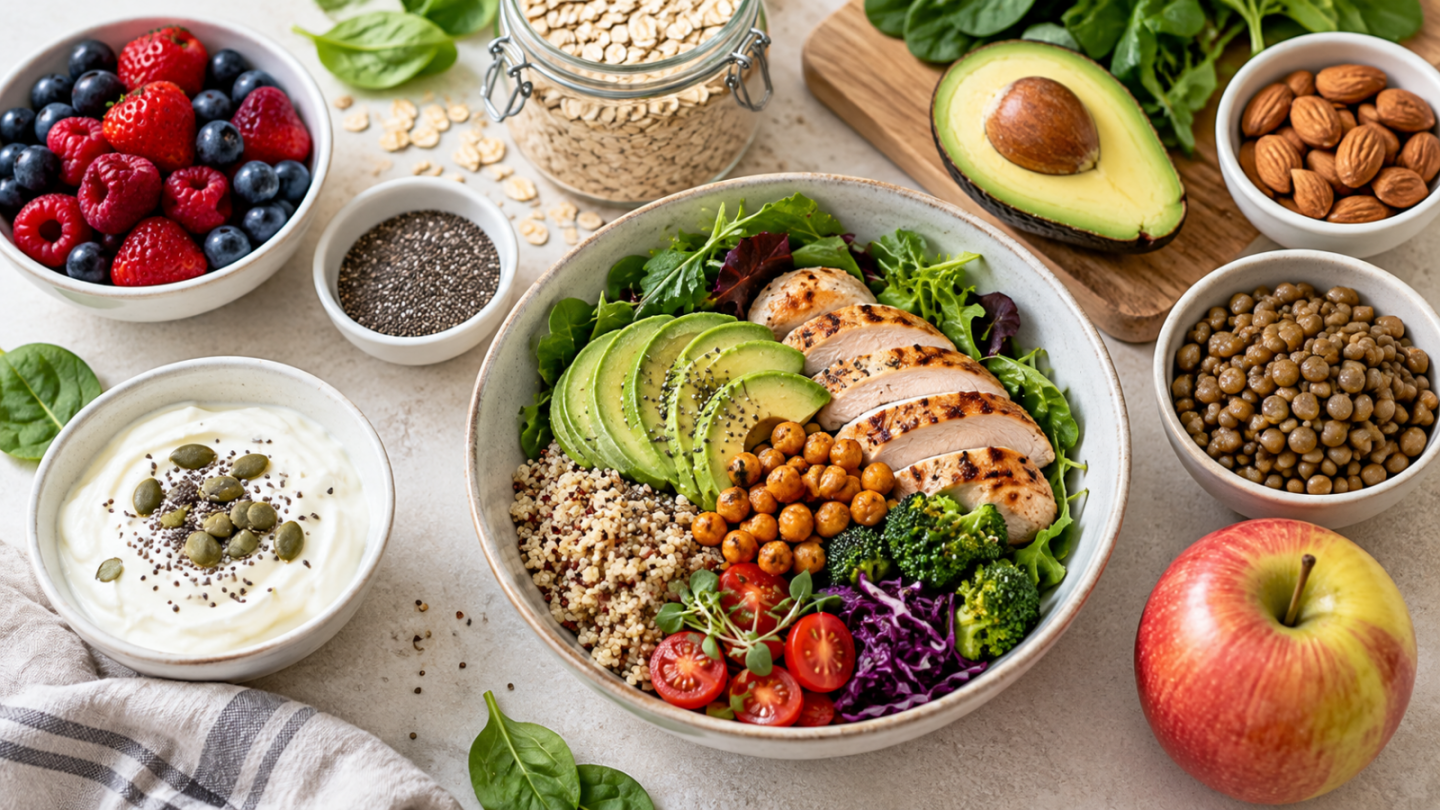
If you are trying to lose fat after 35, you have probably spent plenty of time thinking about calories, protein, carbohydrates, workouts, and hormones.
Fiber rarely gets the same attention.
But it should.
Fiber can influence fullness, digestion, blood sugar response, gut health, and how easy it feels to maintain a calorie-controlled diet.
The question is not whether fiber matters.
The better question is:
How much fiber do women over 35 actually need if fat loss is the goal?
For most women, a good starting point is at least 25 grams of fiber per day, with some women benefiting from a gradual increase toward roughly 25 to 35 grams daily, depending on calorie intake, digestion, food choices, and individual tolerance.
That does not mean more fiber automatically equals more fat loss.
It means fiber can make the behaviors required for sustainable fat loss easier to maintain.
How Much Fiber Do Women Over 35 Need?
Official dietary reference values provide a useful baseline.
Women ages 31 to 50 have an Adequate Intake of approximately 25 grams of fiber per day. After age 50, recommendations decrease slightly, largely because average calorie requirements decline.
Another useful way to think about fiber intake is approximately:
14 grams of fiber for every 1,000 calories consumed.
For example:
- 1,500 calories per day = about 21 grams of fiber
- 1,800 calories per day = about 25 grams
- 2,000 calories per day = about 28 grams
- 2,200 calories per day = about 31 grams
For a woman over 35 pursuing fat loss, however, simply hitting the minimum does not always create the most satisfying diet.
A practical target for many women is:
25 to 35 grams of fiber per day
The key is increasing intake gradually and getting most of it from whole foods rather than aggressively adding fiber supplements.
Does Fiber Actually Help With Fat Loss?
Fiber does not directly “burn fat.”
Its value is more subtle.
Fiber-rich foods can help create an eating pattern that makes calorie control easier.
1. Fiber May Help You Feel Fuller
Certain types of fiber absorb water and increase the volume of food moving through your digestive system.
That can contribute to greater fullness after meals.
Research suggests that some higher-fiber foods, particularly those containing more viscous fibers such as beta-glucan, may improve measures of satiety. However, not every type of fiber produces the same appetite effect.
A 2026 systematic review examining cereal fibers also found favorable effects on measures of satiety, with rye and oat sources showing particularly promising results, although effects on actual calorie intake were more limited.
This distinction matters.
Fiber is helpful, but it is not an appetite suppressant in the same way medication may be.
Think of it as one component of a more filling meal.
2. Fiber Can Increase Food Volume Without Adding Many Calories
Compare these two snacks:
A pastry may contain several hundred calories and relatively little fiber.
A bowl containing berries, Greek yogurt, chia seeds, and a small amount of oats may deliver more physical food volume, protein, and fiber for a similar or potentially lower calorie load.
That combination can make a calorie deficit feel significantly more manageable.
This is one reason high-fiber foods often work particularly well alongside adequate protein.
Protein helps preserve lean mass and supports satiety.
Fiber adds food volume and slows the eating experience.
Together, they create meals that are much harder to accidentally overeat.
3. Higher Fiber Intake Is Associated With Better Weight Management
Observational research in women has found that increasing dietary fiber intake was associated with a lower risk of gaining body weight and body fat over time.
Clinical research examining fiber-fortified foods has also reported modest improvements in body weight and fat mass, although fiber should not be interpreted as a stand-alone weight-loss treatment.
The important word here is modest.
Fiber supports fat loss.
It does not override excess calorie intake, inadequate protein, poor sleep, low activity, hormonal disorders, or medications that may influence body weight.
Why Fiber May Become More Important After 35
There is nothing magical that happens on your 35th birthday.
But the context around weight management often starts changing.
Women in their late 30s, 40s, and early 50s may experience shifts in:
- Physical activity
- Muscle mass
- Sleep quality
- Stress
- Insulin sensitivity
- Menstrual patterns
- Estrogen and progesterone
- Hunger and appetite
- Digestive function
- Lifestyle demands
This can make an eating pattern that once worked feel less effective.
One common response is to simply eat less.
That can backfire if calories drop while protein, fiber, micronutrients, and food quality drop with them.
You may end up eating fewer calories but becoming significantly hungrier.
A smarter fat-loss plan emphasizes nutrient density and satiety, not just restriction.
Fiber plays an important role in that strategy.
The Best Fiber Sources for Women Trying to Lose Fat
You do not need specialty fiber powders or “fat-burning” supplements.
Start with food.
Berries
Raspberries, blackberries, strawberries, and blueberries provide fiber along with vitamins, minerals, and polyphenols.
They also work well in Greek yogurt, oatmeal, smoothies, or as a simple dessert.
Beans and Lentils
Beans and lentils are among the most efficient ways to dramatically increase fiber intake.
They also provide plant protein and carbohydrates.
Try:
- Black beans
- Chickpeas
- Lentils
- Kidney beans
- Edamame
Adding half a cup to lunch or dinner can make a noticeable difference in daily fiber intake.
Chia Seeds
Chia seeds are particularly fiber dense.
They work well in:
- Greek yogurt
- Overnight oats
- Smoothies
- Chia pudding
Start small if you are not accustomed to eating much fiber.
Flaxseed
Ground flaxseed adds fiber and healthy fats to meals.
It can easily be mixed into yogurt, oatmeal, smoothies, or baked foods.
Grinding flax makes it easier to use and digest than whole seeds.
Avocado
Avocado provides fiber alongside monounsaturated fat.
It can be added to salads, eggs, bowls, or sandwiches.
Vegetables
Vegetables should not be treated simply as “low-calorie filler.”
They provide fiber, potassium, folate, antioxidants, and numerous other nutrients.
Good options include:
- Broccoli
- Brussels sprouts
- Artichokes
- Carrots
- Green peas
- Leafy greens
- Cauliflower
Aim to include vegetables at multiple meals rather than trying to squeeze an entire day’s worth into dinner.
Whole Grains
Whole grains can be useful sources of fiber when tolerated well.
Examples include:
- Oats
- Barley
- Quinoa
- Whole-grain bread
- Brown rice
- High-fiber cereals
Oats and barley are particularly useful because they contain beta-glucan, a soluble fiber associated with several metabolic benefits.
Fruit
Whole fruit deserves a place in most fat-loss diets.
Apples, pears, oranges, kiwi, berries, and other fruits provide fiber and water while satisfying the desire for something sweet.
Juice does not provide the same fiber benefit.
A Simple 30-Gram Fiber Day
You do not need to obsessively track fiber forever.
But tracking for several days can help you understand where you currently stand.
Here is one example.
Breakfast
Greek yogurt
Berries
Chia seeds
Small portion of oats
Fiber: approximately 8 to 10 grams
Lunch
Grilled chicken salad
Mixed vegetables
Half a cup of chickpeas
Avocado
Fiber: approximately 9 to 12 grams
Snack
Apple with a small serving of nuts
Fiber: approximately 5 to 6 grams
Dinner
Salmon
Roasted vegetables
Small serving of quinoa
Fiber: approximately 7 to 9 grams
Daily total:
Approximately 29 to 37 grams
Notice something important.
This is not an extreme “high-fiber diet.”
It is simply a diet centered around minimally processed foods.
Should You Eat More Than 35 Grams of Fiber?
Possibly.
But more is not automatically better.
Some people comfortably eat 40 or even 50 grams daily.
Others experience considerable digestive discomfort at those levels.
Your ideal intake depends partly on:
- Current fiber intake
- Total calorie consumption
- Gut health
- Hydration
- Food intolerances
- Irritable bowel symptoms
- Medications
- Physical activity
- Individual microbiome composition
If you are currently eating 10 to 15 grams per day, jumping immediately to 35 or 40 grams can leave you feeling worse rather than better.
Increase Fiber Gradually
One of the biggest mistakes people make is increasing fiber too quickly.
Suddenly adding huge amounts of bran cereal, beans, vegetables, chia seeds, and fiber supplements may trigger:
- Gas
- Bloating
- Cramping
- Constipation
- Loose stools
- Abdominal discomfort
Instead, increase fiber gradually.
For example:
Week 1: 18 to 20 grams
Week 2: 22 to 25 grams
Week 3: 25 to 30 grams
Week 4: Adjust based on tolerance
Drink adequate fluids as fiber intake increases.
Soluble vs. Insoluble Fiber: Does the Type Matter?
Yes, although you do not need to micromanage every gram.
Soluble Fiber
Soluble fiber dissolves or swells in water and may form a gel-like substance in the digestive tract.
Sources include:
- Oats
- Barley
- Beans
- Apples
- Citrus fruit
- Chia seeds
- Psyllium
Certain viscous soluble fibers appear more likely to support fullness than less viscous fibers.
Insoluble Fiber
Insoluble fiber adds bulk to stool and can support regular bowel movements.
Sources include:
- Vegetables
- Wheat bran
- Nuts
- Seeds
- Whole grains
You do not need to choose one type.
Eating a variety of plant foods naturally provides both.
Fiber and Blood Sugar Control
Fiber can also change how quickly carbohydrates are absorbed.
This is especially useful when fiber-rich carbohydrates are combined with:
- Protein
- Healthy fats
- Whole-food carbohydrate sources
For example, compare eating a sweet pastry alone with eating eggs, berries, oats, and Greek yogurt.
Both meals contain carbohydrates.
But their effects on fullness and subsequent eating behavior can look very different.
That does not mean carbohydrates need to be avoided.
It means carbohydrate quality and meal composition matter.
Fiber and the Gut Microbiome
Some dietary fibers are fermented by gut bacteria.
During fermentation, bacteria produce compounds known as short-chain fatty acids.
These metabolites are involved in numerous processes related to intestinal health and metabolism.
This is one reason eating a diverse range of plant foods may be beneficial.
Instead of trying to identify one “perfect” fiber source, consider increasing dietary variety.
Examples include:
- Vegetables
- Fruits
- Legumes
- Whole grains
- Nuts
- Seeds
- Herbs
- Spices
Think in terms of diversity rather than perfection.
Can Fiber Help With Menopause Weight Gain?
Fiber can help support a healthier eating pattern during perimenopause and menopause, but it cannot independently prevent menopausal body-composition changes.
Changes in estrogen can occur alongside changes in body-fat distribution, sleep, insulin sensitivity, and lean mass.
That is why fat-loss strategies for women over 40 should typically consider more than calories alone.
Important pieces may include:
- Adequate protein
- Resistance training
- Daily movement
- Sleep
- Stress management
- Fiber-rich foods
- Overall calorie intake
- Alcohol intake
- Hormone symptoms
- Thyroid health when clinically indicated
- Metabolic health
If significant symptoms accompany unexplained weight changes, clinical evaluation may be appropriate.
What About Fiber Supplements?
Fiber supplements can be useful, but food should generally do most of the heavy lifting.
Common supplemental fibers include:
- Psyllium husk
- Inulin
- Methylcellulose
- Partially hydrolyzed guar gum
Different supplemental fibers behave differently in the gastrointestinal tract.
Research on isolated fibers and appetite is mixed, and benefits vary substantially depending on the fiber type and study design.
A supplement should fill a gap rather than compensate for a diet containing very few plants.
If you use one, increase the dose gradually and follow the product’s fluid recommendations.
Fiber Is Not a Replacement for Protein
Women trying to lose fat sometimes become so focused on vegetables and low-calorie foods that protein intake becomes inadequate.
That is a mistake.
If preserving lean muscle is the goal, especially after 35, meals should generally be structured around a meaningful protein source first.
Then add fiber-rich carbohydrates, vegetables, fruit, and healthy fats around it.
A simple formula is:
Protein + fiber + minimally processed carbohydrates + healthy fat
For example:
Chicken + lentils + vegetables + olive oil
or
Greek yogurt + berries + chia + walnuts
or
Eggs + whole-grain toast + avocado + fruit
These meals support satiety far better than trying to survive on salads and coffee.
Why You Should Not Chase Fiber Without Looking at the Whole Diet
Someone could technically consume 30 grams of fiber while still having a poor-quality diet.
Fiber is only one variable.
For sustainable fat loss after 35, the larger picture matters:
Protein
Supports muscle preservation, recovery, and fullness.
Resistance Training
Helps preserve or build lean mass during fat loss.
Calorie Intake
Fat loss still requires an energy deficit over time.
Sleep
Poor sleep can make hunger, recovery, cravings, and training harder to manage.
Daily Movement
Walking and general activity can contribute significantly to daily energy expenditure.
Hormonal and Metabolic Health
Persistent fatigue, menstrual changes, unusually rapid weight gain, hair changes, sleep disruption, or other significant symptoms may justify deeper clinical evaluation rather than another restrictive diet.
Fiber helps.
It is not the entire strategy.
The Practical Fiber Target for Women Over 35
If you want one simple recommendation:
Aim for at least 25 grams of fiber daily and gradually work toward roughly 25 to 35 grams if your digestion tolerates it.
Then focus on where that fiber comes from.
Prioritize:
- Vegetables
- Berries and whole fruit
- Beans and lentils
- Oats and whole grains
- Chia and flax
- Nuts and seeds
- Avocado
Spread fiber throughout the day rather than consuming nearly all of it at dinner.
And remember that fiber should complement adequate protein, resistance training, movement, sleep, and an appropriate calorie intake.
The Bottom Line
Women over 35 do not need an extreme fiber protocol to lose fat.
They need enough fiber to support a diet that is filling, nutrient-dense, and sustainable.
For many women, that means somewhere around 25 to 35 grams per day, with approximately 25 grams representing the established Adequate Intake for women ages 31 to 50.
Fiber may help improve fullness and support weight management, but its effects are generally modest and depend on the type of fiber, overall diet, and individual response.
If losing fat after 35 feels significantly harder despite consistent nutrition and exercise, the answer is not always to eat less.
Sometimes it is worth looking deeper at sleep, recovery, lean mass, thyroid function, hormones, medications, metabolic health, and your overall nutrition strategy.
At 1st Optimal, the goal is to understand the larger picture and build a health plan around your individual physiology rather than relying on one-size-fits-all advice.
Frequently Asked Questions
How much fiber should a 40-year-old woman eat per day?
The established Adequate Intake for women ages 31 to 50 is approximately 25 grams per day. For women pursuing fat loss, a practical intake of roughly 25 to 35 grams may work well if tolerated.
Is 30 grams of fiber a day good for weight loss?
Thirty grams can be a reasonable target for many women. Fiber may improve fullness and dietary quality, which can make maintaining a calorie deficit easier. It does not cause fat loss independently of overall energy balance.
Can too much fiber stop weight loss?
Fiber itself is unlikely to prevent fat loss, but excessively high intake may cause bloating, gastrointestinal discomfort, or make eating adequate protein and other nutrients more difficult. More is not always better.
What fiber is best for belly fat?
There is no specific type of fiber that selectively burns abdominal fat. Soluble and viscous fibers may support satiety, while an overall high-quality diet, calorie deficit, resistance training, adequate protein, sleep, and metabolic health determine changes in body fat.
Is fiber more important after 40?
Fiber remains important throughout adulthood. After 40, changes in activity, muscle mass, sleep, hormones, and metabolic health can make appetite management and dietary quality increasingly important, which may make adequate fiber especially useful.
Should I take a fiber supplement to lose weight?
Not necessarily. Whole foods should generally be the first choice. Fiber supplements such as psyllium may help individuals who struggle to meet their needs through food, but they should complement rather than replace a nutrient-dense diet.
Ready to understand what may actually be affecting your metabolism, hormones, gut health, and weight?
Explore 1st Optimal’s personalized Functional Health Plans and build a strategy around your individual labs, symptoms, and goals.
Educational only. This article is not medical advice and is not a substitute for individualized evaluation by a qualified healthcare professional.


