

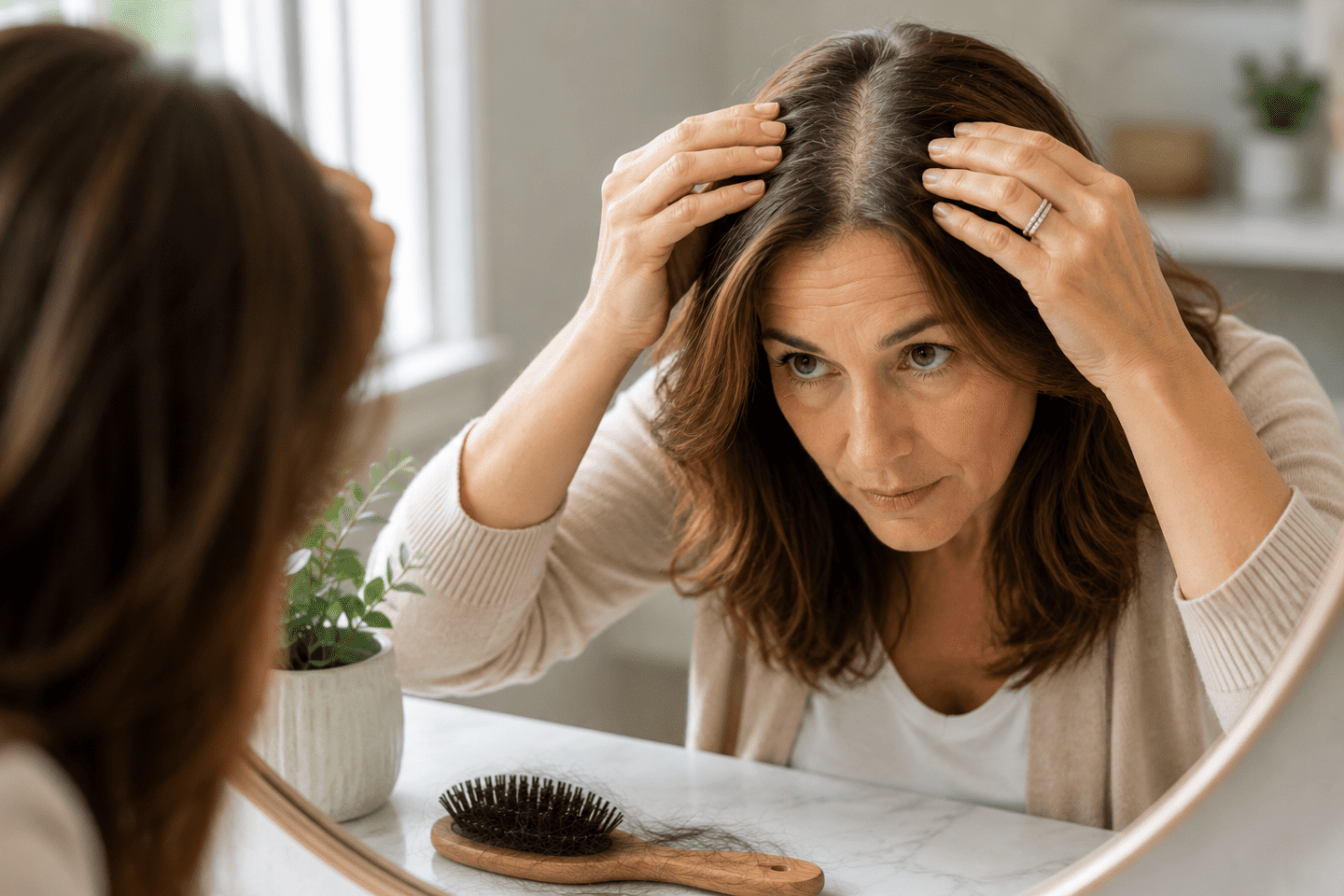
You notice more hair in the shower. Your ponytail feels thinner. Your part looks wider in pictures, and the hair around your temples does not seem as full as it used to.
Then someone tells you it is “just hormones.”
Hormones may be part of the picture, but hair loss during perimenopause is rarely that simple.
Changes in estrogen and progesterone can affect the hair growth cycle. At the same time, thyroid dysfunction, iron deficiency, stress, rapid weight loss, genetics, medications, and scalp conditions may contribute to thinning or excessive shedding.
Some women also experience more than one type of hair loss at the same time. A genetic tendency toward female pattern hair loss may become more noticeable during perimenopause, while poor sleep, heavy periods, illness, or calorie restriction triggers additional shedding.
The goal should not be to guess which supplement, shampoo, or hormone will fix the problem. The goal should be to identify the type of hair loss, evaluate likely contributors, and choose a treatment that matches the cause.
Why Hair Can Change During Perimenopause
Perimenopause is the transition before menopause. During this stage, the ovaries produce hormones less predictably, ovulation becomes less consistent, and menstrual cycles may become shorter, longer, heavier, lighter, or more irregular.
These hormonal fluctuations can affect many tissues, including the skin and hair follicles.
Hair follicles move through a repeating growth cycle:
- Anagen: The active growth phase
- Catagen: A brief transition phase
- Telogen: The resting phase
- Exogen: The stage when the hair releases and sheds
A healthy scalp contains follicles in different phases. Problems develop when too many follicles enter the resting phase at once, follicles gradually shrink, or inflammation damages the follicle.
This distinction matters because sudden shedding and gradual thinning are not necessarily the same condition.
You may have:
- Diffuse shedding caused by telogen effluvium
- Progressive thinning caused by female pattern hair loss
- Hair breakage rather than hair loss from the root
- Patchy autoimmune hair loss
- An inflammatory or scarring scalp condition
- A combination of two or more patterns
Perimenopause may be the time when the problem becomes visible, but it is not automatically the only cause.
1. Hormonal Changes and Perimenopause Hair Loss
Estrogen appears to help support the active growth phase of the hair cycle. During perimenopause, estrogen does not simply decline in a smooth, predictable line. Levels may rise and fall significantly before becoming consistently lower after menopause.
Progesterone also becomes less predictable as ovulation occurs less frequently.
These changes may alter the balance between estrogenic and androgenic activity at the hair follicle. Androgens are hormones such as testosterone and dihydrotestosterone, also called DHT.
This does not necessarily mean a woman has excessively high testosterone.
Many women with female pattern hair loss have androgen levels within the normal laboratory range. Their hair follicles may be more genetically sensitive to androgens, or the relative hormonal environment may have changed enough for an existing tendency to become visible. Female pattern hair loss is especially common during midlife, and the American Academy of Dermatology notes that hormones may play a role because the condition becomes more common after menopause.
Signs hormones may be part of the picture
Hormonal changes may deserve closer evaluation when hair loss occurs alongside:
- Irregular or changing menstrual cycles
- Hot flashes or night sweats
- Sleep disruption
- New acne
- Increased facial or body hair
- Changes in libido
- Unexplained changes in weight or body composition
Sudden, severe androgen-related symptoms require a more urgent evaluation. Rapid scalp hair loss combined with a deepening voice, significant facial hair growth, or other signs of virilization should not be dismissed as routine perimenopause. Current endocrine guidance recommends investigating women with clear clinical or biochemical evidence of significant androgen excess.
Will hormone therapy regrow hair?
Menopausal hormone therapy may help appropriate women manage hot flashes, night sweats, sleep problems, vaginal symptoms, and other menopause-related concerns. It is not an established first-line treatment for female pattern hair loss.
Some women notice improved hair quality when their overall hormonal symptoms, sleep, and nutrition improve. Others notice no change. Certain hormone regimens may even worsen scalp hair loss in women who are especially sensitive to androgenic activity.
Testosterone therapy also requires thoughtful dosing and monitoring. More testosterone does not automatically create thicker scalp hair. In an androgen-sensitive follicle, excessive exposure may contribute to scalp thinning while increasing facial or body hair.
Hormone treatment should therefore address the woman’s broader clinical needs, not be prescribed solely as a hair-growth shortcut.
2. Thyroid Dysfunction and Hair Thinning
The thyroid helps regulate energy use, temperature, heart function, digestion, and many other biological processes. Thyroid hormones also influence the hair growth cycle.
Both an underactive thyroid and an overactive thyroid may contribute to diffuse thinning.
Hypothyroidism, or low thyroid function, may occur with:
- Fatigue
- Feeling unusually cold
- Constipation
- Dry skin
- Brain fog
- Low mood
- Weight changes
- Coarse, dry, or thinning hair
These symptoms overlap heavily with perimenopause. That overlap is precisely why guessing fails so efficiently.
The American Thyroid Association emphasizes that symptoms alone cannot confirm hypothyroidism. Blood testing is needed because many other conditions can cause the same complaints. Thyroid-stimulating hormone, or TSH, and free thyroxine, or free T4, are the main tests used to evaluate suspected hypothyroidism.
Thyroid testing to discuss with your clinician
An initial thyroid evaluation may include:
- TSH
- Free T4
Additional testing may be appropriate based on symptoms, medical history, medications, previous thyroid results, family history, or suspected autoimmune thyroid disease. This may include thyroid peroxidase antibodies, thyroglobulin antibodies, or other targeted markers.
More testing is not automatically better. Results need to be interpreted together instead of treating every value outside an “optimal” internet chart as a diagnosis.
Biotin deserves special mention because many hair supplements contain large doses of it. Biotin can interfere with certain laboratory tests, including thyroid testing, and produce misleading results. Tell your clinician about all supplements before completing blood work rather than letting a gummy vitamin sabotage the investigation.
Does thyroid treatment restore hair?
When true thyroid dysfunction contributes to hair loss, correcting the thyroid problem may allow the hair cycle to recover.
Hair recovery is slow. Even after thyroid levels improve, visible regrowth may take several months because follicles need time to reenter the active growth phase.
Increasing thyroid medication beyond what is medically appropriate will not speed this process. Excess thyroid hormone can create other health risks and may also contribute to hair loss.
3. Iron Deficiency, Ferritin, and Heavy Periods
Iron deficiency is another important consideration, particularly for women experiencing heavy or prolonged bleeding during perimenopause.
Ferritin is a blood marker commonly used to estimate stored iron. A woman can have depleted iron stores before she develops obvious anemia. That means hemoglobin may still fall within the laboratory range while ferritin or other iron markers suggest a developing deficiency.
Possible signs of iron deficiency include:
- Fatigue
- Reduced exercise tolerance
- Shortness of breath with activity
- Restless legs
- Headaches
- Feeling cold
- Brittle nails
- Craving ice
- Diffuse hair shedding
Research examining ferritin and nonscarring hair loss has produced mixed results. Some studies associate low iron stores with increased shedding, while systematic reviews have concluded that the evidence is not strong enough to establish one universal ferritin threshold for hair growth.
That nuance matters.
A ferritin level should not be ignored, but women also should not take high-dose iron indefinitely because a social-media post declared that everyone needs a ferritin above a specific number.
A more complete iron evaluation may include
- Complete blood count, or CBC
- Ferritin
- Serum iron
- Total iron-binding capacity
- Transferrin saturation
Ferritin can also rise during inflammation, infection, liver disease, and other conditions. Clinicians may need to interpret it alongside the CBC, transferrin saturation, symptoms, bleeding history, and inflammatory markers.
Why the cause of low iron matters
Replacing iron without addressing the reason it became low is incomplete care.
Potential causes include:
- Heavy menstrual bleeding
- Low dietary iron intake
- Poor gastrointestinal absorption
- Celiac disease
- Inflammatory bowel disease
- Frequent blood donation
- Gastrointestinal blood loss
- Recent pregnancy
- Restrictive dieting
Heavy or unusual bleeding during perimenopause deserves a medical evaluation. It should not automatically be treated as an unavoidable part of getting older.
Iron supplementation can cause constipation, nausea, abdominal discomfort, and medication interactions. Excess iron can also be harmful. Supplementation should be based on documented need and monitored with follow-up testing.
4. Genetics and Female Pattern Hair Loss
Female pattern hair loss is the most common form of hair loss in women.
It is hereditary, and the genes may come from the mother’s side, the father’s side, or both. Apparently hair follicles refuse to respect the family member everyone hoped to blame.
This condition causes gradual miniaturization of susceptible follicles. Over time, each follicle produces a shorter, finer strand until scalp coverage becomes noticeably reduced.
Common signs include:
- A widening center part
- Reduced density across the crown
- A triangular or “Christmas tree” pattern near the front
- A smaller ponytail circumference
- More visible scalp under bright lighting
- Gradual progression over months or years
- Relative preservation of the front hairline
Female pattern hair loss often becomes noticeable in the 40s, 50s, or 60s. Without treatment, it may continue to progress, although women typically do not develop the same completely bald pattern seen in some men.
Normal testosterone does not rule it out
Female pattern hair loss is not proof of high testosterone.
Most women with isolated female pattern hair loss do not have severe androgen excess. Diagnosis is primarily based on the pattern, history, scalp examination, and exclusion of other causes.
Androgen testing becomes more important when thinning occurs with irregular cycles, significant acne, increased facial hair, infertility history, or rapidly developing androgen-related symptoms. An expert multidisciplinary report recommends evaluating women with female pattern hair loss for possible androgen excess while using additional thyroid, iron, vitamin, zinc, or prolactin testing according to the clinical picture.
Hair Shedding Versus Female Pattern Hair Loss
Understanding how the hair is changing can help narrow the investigation.
Telogen effluvium
Telogen effluvium causes excessive shedding across the scalp. You may notice large amounts of hair in the shower, on clothing, in the brush, or when running your fingers through your hair.
It commonly begins a few months after a physical or emotional stressor, including:
- Major illness or fever
- Surgery
- Significant psychological stress
- Rapid weight loss
- Severe calorie restriction
- Childbirth
- Medication changes
- Stopping hormonal birth control
- Nutrient deficiency
The American Academy of Dermatology states that normal shedding is approximately 50 to 100 hairs daily. Telogen effluvium occurs when substantially more follicles enter the shedding phase. When the trigger resolves, fullness often improves over approximately six to nine months, although ongoing stressors can make shedding last longer.
Female pattern hair loss
Female pattern hair loss usually produces slower, progressive thinning, especially around the center part and crown.
Shedding may occur, but the main problem is gradual follicle miniaturization.
Both can happen together
A woman may have early female pattern hair loss and then develop telogen effluvium after illness, rapid weight loss, heavy bleeding, poor nutrition, or intense stress.
The sudden shedding exposes the underlying pattern, making it seem as though the entire problem appeared overnight.
Treating the temporary trigger may reduce shedding, but the genetic component may still require long-term treatment.
What Tests May Help Evaluate Perimenopause Hair Loss?
There is no universal blood panel that every woman with hair loss needs.
Testing should reflect the pattern of loss, medical history, menstrual changes, diet, medications, symptoms, and physical examination.
A clinician may consider:
- Complete blood count
- Ferritin
- Iron and transferrin saturation
- TSH
- Free T4
- Comprehensive metabolic panel
- Vitamin B12 when deficiency risk is present
- Vitamin D when clinically appropriate
- Zinc when dietary intake or absorption is a concern
When there are signs of possible androgen excess, testing may include:
- Total testosterone
- Free testosterone or calculated free testosterone
- Sex hormone-binding globulin
- Dehydroepiandrosterone sulfate, or DHEA-S
- Prolactin
- Additional ovarian or adrenal testing when indicated
A single estrogen or progesterone result usually cannot explain the entire problem. Hormone levels fluctuate during perimenopause, and one blood draw represents one moment in a highly inconsistent transition.
Blood work also cannot diagnose every hair disorder. A dermatologist may use scalp examination, dermoscopy, a hair-pull test, photographs, or occasionally a scalp biopsy to distinguish between female pattern hair loss, telogen effluvium, alopecia areata, and scarring conditions.
Treatment Options for Hair Loss During Perimenopause
The best treatment depends on the diagnosis. Buying every product labeled “hair growth” is not a treatment strategy, despite the heroic confidence of the supplement industry.
Correct underlying contributors
Treatment may include:
- Replacing iron when deficiency is confirmed
- Treating thyroid dysfunction
- Addressing heavy menstrual bleeding
- Correcting inadequate protein or calorie intake
- Reviewing medications associated with shedding
- Improving recovery after illness
- Reducing extreme dieting
- Managing scalp inflammation
- Improving sleep and stress management
Correcting a trigger does not create immediate regrowth. Hair follicles respond slowly, so progress should be evaluated over months rather than days.
Topical minoxidil
Topical minoxidil is the most commonly recommended treatment for female pattern hair loss. Products containing 2% or 5% minoxidil are approved for use in women.
Important considerations include:
- Temporary increased shedding may occur during the first two to eight weeks.
- Scalp irritation, dryness, itching, or unwanted facial hair may occur.
- Consistent use is required.
- It may take six to twelve months to judge the full response.
- Benefits gradually disappear after treatment stops.
- Women who are pregnant, planning pregnancy, or breastfeeding should avoid it.
Because pregnancy remains possible during perimenopause, reproductive plans still matter when choosing medication.
Prescription treatments
A dermatologist may consider prescription treatments when appropriate.
Options may include spironolactone or other medications that reduce androgen activity at the follicle. These treatments are generally used off-label for female pattern hair loss and require individualized risk assessment.
Spironolactone may affect blood pressure, kidney function, and potassium levels. It is not appropriate during pregnancy, and medication interactions must be reviewed.
Low-dose oral minoxidil is also used off-label by some clinicians. It may cause fluid retention, changes in heart rate, low blood pressure, dizziness, or unwanted body hair. It is not the right choice for every patient and requires medical supervision.
Platelet-rich plasma and light-based devices
Platelet-rich plasma, or PRP, and low-level light devices are sometimes used for female pattern hair loss.
Some studies show potential benefits, but treatment protocols vary, costs can be substantial, and long-term evidence is less established than it is for topical minoxidil. The American Academy of Dermatology describes PRP research as promising but still developing.
Nutrition and supplements
Hair follicles need adequate protein, energy, vitamins, and minerals. That does not mean every person with thinning hair needs a cabinet full of supplements.
Prioritize:
- Adequate daily protein
- Iron-rich foods
- Zinc-containing foods
- Essential fatty acids
- Fruits and vegetables
- Sufficient total calories
Biotin deficiency is uncommon, and high-dose biotin has not been proven to correct most forms of hair loss. It may also interfere with laboratory testing.
Supplement according to documented needs rather than marketing promises. Excessive intake of certain nutrients, including vitamin A and selenium, may worsen hair loss.
Reduce breakage and traction
Hair-care changes will not reverse genetic follicle miniaturization, but they can reduce avoidable damage.
Limit:
- Tight ponytails, braids, or extensions
- Repeated bleaching
- High-heat styling
- Aggressive brushing
- Chemical straightening
- Heavy products that irritate the scalp
Use gentle detangling, lower heat, and hairstyles that reduce tension around the temples and hairline.
When Hair Loss Needs Prompt Evaluation
Schedule an evaluation sooner when hair loss is:
- Sudden or rapidly progressing
- Occurring in round or irregular patches
- Accompanied by scalp pain, burning, redness, scaling, or sores
- Causing a smooth, shiny area where follicle openings seem absent
- Affecting the eyebrows or eyelashes
- Concentrated along a receding frontal hairline
- Associated with severe fatigue, unexplained weight changes, or heavy bleeding
- Accompanied by a deepening voice or rapidly increasing facial hair
Inflammatory and scarring forms of hair loss can cause permanent follicle damage. Early diagnosis matters because regrowing hair becomes more difficult once a follicle has been destroyed.
Frequently Asked Questions
Is hair loss normal during perimenopause?
Hair changes are common during midlife, but noticeable thinning or excessive shedding should not automatically be dismissed as normal.
Perimenopause may reveal female pattern hair loss or overlap with thyroid dysfunction, iron deficiency, stress, illness, medication changes, or inadequate nutrition. Identifying the pattern creates a better chance of slowing progression and supporting regrowth.
Can low estrogen cause hair loss?
Changing estrogen levels may influence the hair growth cycle, but low estrogen is not the only possible cause.
A woman may have hormonal symptoms and still have a separate thyroid, iron, scalp, genetic, or medication-related contributor. One estrogen result also cannot reliably explain hair loss during perimenopause because hormone levels fluctuate significantly.
What ferritin level is best for hair growth?
There is no universally accepted ferritin number that guarantees hair growth.
A low ferritin result may support a diagnosis of depleted iron stores, but it should be interpreted with the complete blood count, iron saturation, symptoms, menstrual history, inflammation, and laboratory reference range.
The goal is to diagnose and treat iron deficiency, not chase an arbitrary online target.
Will hormone replacement therapy stop hair loss?
Menopausal hormone therapy is not a guaranteed hair-loss treatment.
It may improve symptoms such as hot flashes, night sweats, sleep disruption, or vaginal symptoms in appropriate patients. Hair response varies. Treatment decisions should be based on the woman’s full menopause-related health needs, medical history, symptoms, risks, and goals.
How long does it take for perimenopause hair to grow back?
The timeline depends on the cause.
Telogen effluvium may begin improving after the trigger is resolved, but visible recovery often takes six to nine months or longer. Female pattern hair loss usually requires ongoing treatment, and topical minoxidil may take six to twelve months to show its full benefit.
Hair grows slowly. Monthly photographs taken under the same lighting and with the same hairstyle can be more useful than checking the mirror several times a day.
Can rapid weight loss cause hair shedding?
Yes. Significant weight loss, severe calorie restriction, low protein intake, illness, and nutritional deficiencies may trigger telogen effluvium.
This can occur with any aggressive weight-loss approach, including poorly managed medication-assisted weight loss. Adequate protein, resistance training, appropriate calorie intake, and regular monitoring matter when protecting muscle and supporting hair health during fat loss.
Stop Guessing and Identify the Pattern
Hair loss during perimenopause may involve hormones, but it can also involve the thyroid, iron stores, genetics, inflammation, stress, nutrition, or several factors at once.
A thoughtful evaluation should answer three questions:
- Is this excessive shedding, progressive thinning, breakage, or an inflammatory condition?
- Which medical or nutritional factors may be contributing?
- Which treatment matches the actual type of hair loss?
Do not wait until thinning becomes advanced before investigating it. Female pattern hair loss responds best when treatment starts early, and underlying issues such as thyroid dysfunction, iron deficiency, or abnormal bleeding deserve attention for reasons that extend well beyond hair.
At 1st Optimal, we look at symptoms, health history, advanced blood work, hormone patterns, thyroid markers, nutrition, and metabolic health together. The goal is not to blame every symptom on perimenopause. It is to understand what changed and build a plan based on measurable findings.
Ready to take a closer look at your hormone and metabolic health? Complete our free Hormone Health Quiz to learn which areas may deserve a deeper evaluation.
Educational only, not medical advice. Hair loss can have multiple causes. Consult a qualified healthcare professional or dermatologist for individualized diagnosis and treatment.


