
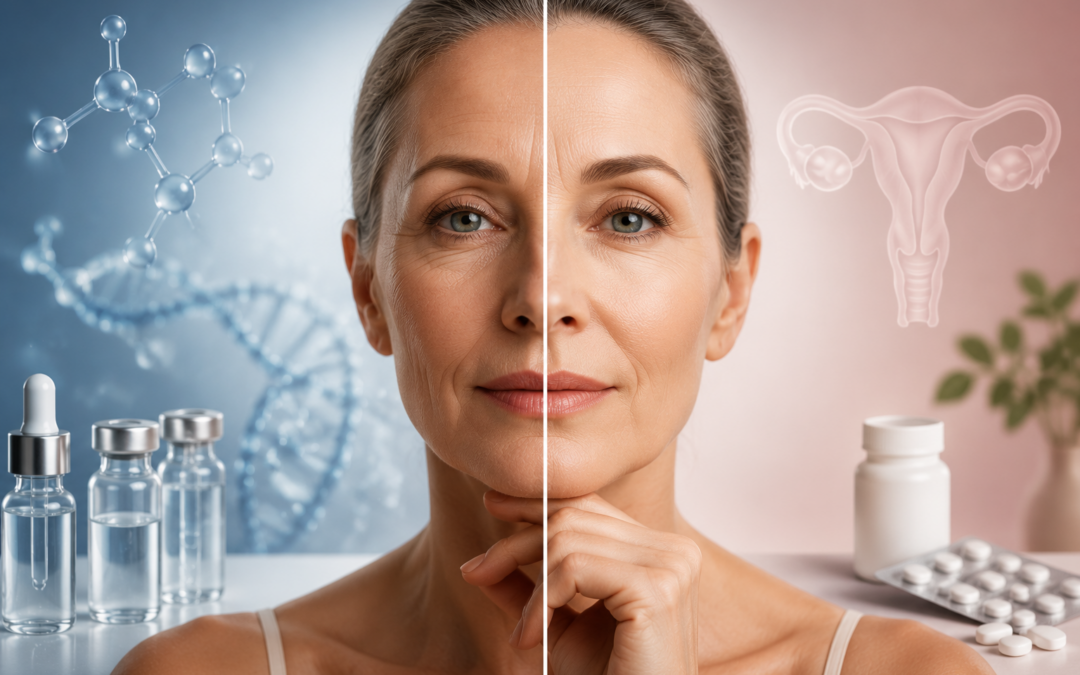
The anti-aging conversation in functional medicine has never been more energized or more confusing for patients trying to make sense of their options. On one side: decades of research supporting hormone replacement therapy’s role in counteracting the physiological effects of hormonal decline. On the other: a rapidly expanding body of evidence for peptide therapy’s ability to support tissue repair, growth hormone optimization, and cellular resilience. In the middle: patients who deserve a clear, evidence-based answer about which approach actually delivers better anti-aging results.
My answer, after years of working with patients in performance and functional medicine: the question is built on a false premise. Asking whether peptides or HRT is “better” for anti-aging is like asking whether a foundation or a roof does more to make a house functional. Both are essential. They address different aspects of the same problem. And the best anti-aging protocols I have built for my patients involve both — thoughtfully integrated, properly sequenced, and calibrated to the individual’s biology.
But the comparison is still worth making carefully, because understanding what each approach does well and where each has limitations is how you build a rational strategy. Let me walk you through it.
How Biological Aging Works: What We Are Actually Fighting
Before comparing therapies, it helps to be clear about what aging actually involves at the biological level, because the therapies that work best are those aligned with the specific mechanisms they target.
Modern longevity research has identified several key hallmarks of aging that drive the decline in physiological function over time. A landmark 2023 update to the original hallmarks framework, published in Cell, identified thirteen interconnected biological processes that collectively constitute aging including genomic instability, telomere attrition, epigenetic alterations, loss of proteostasis, deregulated nutrient sensing, mitochondrial dysfunction, cellular senescence, stem cell exhaustion, and altered intercellular communication (Lopez-Otin et al., 2023).
Hormonal decline is not a hallmark of aging in isolation, it is a thread woven through multiple hallmarks. Declining estrogen accelerates bone loss, cardiovascular aging, and skin collagen degradation. Declining growth hormone and IGF-1 impair cellular repair, lean mass maintenance, and metabolic function. Declining testosterone affects muscle mass, mood, libido, and metabolic health. Declining progesterone affects sleep architecture and neuroprotection.
Peptide therapy and HRT address different subsets of this aging biology. HRT most directly counteracts the hallmarks driven by sex hormone deficiency. Peptide therapy can address a broader range of hallmarks — particularly those related to cellular repair, growth factor signaling, tissue maintenance, and inflammatory regulation.
A comprehensive anti-aging strategy should aim to address as many of these hallmarks as possible through evidence-based interventions. Explore our longevity and health optimization programs here.
What HRT Does Well for Anti-Aging
The anti-aging evidence for hormone replacement therapy — particularly bioidentical HRT initiated appropriately is substantial and often underappreciated by patients who encountered the outdated Women’s Health Initiative narrative without the subsequent corrections and refinements.
Bone Density Preservation: Estrogen is the primary protector of bone density in women. Post-menopausal estrogen loss accelerates bone resorption and dramatically increases fracture risk. HRT is the most effective intervention for preserving bone density during and after menopause. A 2019 systematic review in Maturitas confirmed that estrogen therapy reduces fracture risk by 27-33% in post-menopausal women (Eastell et al., 2019).
Cardiovascular Protection: Estrogen’s cardioprotective effects — including its influence on lipid profiles, vascular tone, and inflammatory markers — are well established when HRT is initiated within the first ten years of menopause or before age 60 (the “timing hypothesis”). A 2022 analysis in the American Journal of Obstetrics and Gynecology confirmed that women initiating HRT during this window experience reduced cardiovascular event risk compared to untreated controls (Baber et al., 2022).
Cognitive Protection: Emerging evidence supports estrogen’s role in neuroprotection, synaptic plasticity, and reduced risk of Alzheimer’s-type dementia when initiated during the perimenopausal transition. Research in Nature Reviews Neuroscience highlighted the estrogen receptor-mediated mechanisms through which estrogen supports neuronal function and the critical window during which this protection is most meaningful (Rocca et al., 2021).
Skin Health: Estrogen directly stimulates collagen synthesis, skin hydration, and dermal thickness. Studies have shown that post-menopausal women on HRT maintain significantly more dermal collagen than non-HRT users of the same age — a meaningful anti-aging benefit for both appearance and skin function.
Body Composition: Estrogen influences fat distribution and lean mass preservation. Its decline during menopause is directly associated with increased visceral adiposity and reduced muscle mass. Testosterone in men has an even more direct anabolic effect on lean mass and metabolic rate.
Where HRT Has Limitations
HRT, even when optimally managed, does not address all dimensions of biological aging.
Growth Hormone Axis: Sex hormone replacement does not restore the age-related decline in growth hormone secretion. The GH axis has its own decline trajectory that runs parallel to but somewhat independently of sex hormone changes. Declining GH/IGF-1 contributes to reduced cellular repair capacity, slower tissue regeneration, diminished skin collagen synthesis, and loss of lean mass, all of which persist even in patients on well-optimized HRT.
Cellular Repair and Regeneration: HRT does not directly address the tissue repair and regenerative capacity that declines with aging. Healing speed, connective tissue integrity, and the body’s ability to recover from physical stress all involve processes that go beyond what sex hormone supplementation alone can support.
Immune Modulation: The age-related changes in immune function (“inflammaging”) that contribute to chronic inflammatory signaling, reduced immune surveillance, and increased susceptibility to infection are not adequately addressed by sex hormone replacement alone.
Systemic Inflammation: While estrogen has anti-inflammatory properties, patients with significant chronic inflammation may need additional targeted interventions to normalize their inflammatory burden.
These gaps are precisely where peptide therapy offers its most meaningful complementary value.
What Peptide Therapy Does Well for Anti-Aging
Peptide therapy’s anti-aging applications span a broader range of biological mechanisms than HRT, though with generally less long-term clinical outcome data to date.
Growth Hormone Axis Restoration: Growth hormone-releasing peptides can stimulate the pituitary to produce more growth hormone in a physiologically patterned, pulsatile fashion. The downstream IGF-1 stimulation supports lean mass maintenance, fat metabolism, cellular repair, and skin health — benefits that do not require sex hormone supplementation but complement it significantly when both are present.
A 2021 review in Journals of Gerontology noted that age-related GH secretion decline contributes meaningfully to the physical frailty and body composition changes that define older age, and that interventions supporting GH axis function show promise in attenuating these changes (Bartke et al., 2021).
Tissue Repair and Regeneration: Several categories of therapeutic peptides have demonstrated evidence in supporting connective tissue repair, wound healing, and tendon/ligament recovery. This regenerative capacity represents an anti-aging mechanism that HRT does not directly address.
Collagen Synthesis: Peptides that support collagen production can meaningfully improve skin quality, joint resilience, and structural tissue integrity. This is particularly valuable in post-menopausal women whose collagen synthesis has declined precipitously.
Metabolic Support: Some peptide categories support insulin sensitivity, mitochondrial function, and metabolic flexibility mechanisms relevant to healthy aging and longevity that go beyond what sex hormone replacement addresses.
Neurological Support: Emerging research on peptides with neuroprotective properties is expanding, with some compounds showing promise in cognitive support and neuroinflammation reduction. This research area is earlier stage but increasingly compelling.
Anti-Aging Outcomes: Side by Side
| Anti-Aging Goal | HRT Effectiveness | Peptide Therapy Effectiveness |
|---|---|---|
| Bone density preservation | Strong evidence | Indirect (via GH axis) |
| Cardiovascular protection | Strong evidence (timing-dependent) | Emerging |
| Skin collagen synthesis | Strong (estrogen) | Strong (collagen-stimulating peptides) |
| Body composition | Moderate-strong | Moderate-strong (GH axis) |
| Cognitive protection | Moderate-strong | Emerging |
| Tissue repair/regeneration | Minimal | Moderate-strong |
| Growth hormone optimization | Minimal | Strong |
| Inflammatory modulation | Moderate (estrogen) | Moderate-strong |
| Sleep quality | Moderate (progesterone) | Moderate (via GH axis) |
The complementary profile is clear. Each approach covers ground the other does not. Learn how we design integrated anti-aging protocols at 1st Optimal.
The Case for Combining Both
This is where the clinical evidence and my practice experience align most clearly: the most comprehensive anti-aging outcomes in appropriately selected patients come from combining well-optimized BHRT with targeted peptide therapy under proper clinical oversight.
The HRT provides the hormonal foundation addressing the sex hormone deficiency mechanisms of aging that have the most robust evidence base. The peptide therapy builds on that foundation to address the growth hormone axis, tissue repair, inflammatory signaling, and other aging mechanisms that HRT alone does not cover.
The combination also creates synergies. Estrogen’s positive influence on GH receptor sensitivity means that women on optimized BHRT may respond more robustly to GH-releasing peptides than those with low estradiol. Testosterone’s anabolic effects complement the lean mass and recovery benefits of growth hormone axis optimization.
A well-designed combination protocol is greater than the sum of its parts.
A Real-World Clinical Example
I want to share a composite patient scenario that reflects what I see in clinical practice not any specific individual, but a profile that many of our patients share.
A 52-year-old woman presents with classic perimenopausal complaints: irregular sleep, warm flushes at night, growing difficulty managing her weight despite consistent exercise, skin that is visibly aging faster than she expected, and a nagging sense of losing her edge mentally and physically. Her labs show low-normal estradiol, low progesterone, testosterone at the lower quartile for her age, and IGF-1 that has declined from her earlier readings.
The approach: Start with optimized bioidentical HRT transdermal estradiol, micronized progesterone, and low-dose testosterone calibrated to her labs and symptoms. After four to six weeks of hormonal stabilization, introduce targeted peptide therapy addressing the GH axis and collagen support. Reassess at three months with repeat labs.
At six months: significantly improved sleep, reduction in vasomotor symptoms, measurable improvement in lean mass to fat ratio, skin quality that her own family members commented on without prompting, and importantly improved energy and cognitive sharpness that she described as feeling like herself again.
Neither HRT alone nor peptide therapy alone would have produced this outcome as completely. The combination, properly sequenced and monitored, did. Book your comprehensive evaluation and we will design a protocol for you.
FAQs:
Q: Are peptides or HRT better for anti-aging? Neither is universally superior, they address different aging mechanisms. HRT is most effective for counteracting the specific physiological consequences of sex hormone deficiency, including bone loss, cardiovascular risk changes, and cognitive vulnerability. Peptide therapy can address growth hormone axis decline, tissue repair, inflammatory aging, and other mechanisms. The most comprehensive outcomes come from combining both under clinical supervision.
Q: Can peptides replace HRT for menopausal women? Peptides can support many aspects of health during menopause, but they do not replace the estrogen-dependent mechanisms that HRT addresses. For women with significant vasomotor symptoms, bone loss risk, or cognitive concerns related to estrogen decline, HRT remains the most evidence-based intervention. Peptides work best as a complement, not a replacement.
Q: How long does anti-aging peptide therapy take to work? Initial benefits in sleep and energy are often noticed within the first four to eight weeks. Body composition changes, skin quality improvements, and recovery enhancements typically become apparent over three to six months. Anti-aging benefits operate on timelines measured in months and years, not days.
Q: What is the best anti-aging protocol for a woman over 50? An evidence-based anti-aging protocol for a woman over 50 should begin with comprehensive labs to establish baseline hormone levels, IGF-1, metabolic markers, and inflammatory status. From that foundation, an individualized approach might include optimized BHRT, targeted peptide therapy, nutritional optimization, resistance training, stress management, and sleep support. No single element is the answer, the integration is.
Q: Is there research supporting peptide therapy for anti-aging? Yes, and it is growing rapidly. Research supports the role of growth hormone-releasing peptides in body composition improvement, GH axis restoration, and metabolic benefits. Research on collagen-stimulating peptides shows meaningful skin and connective tissue benefits. The evidence base is younger than that for HRT but expanding significantly.
Q: What labs should I get to assess my anti-aging status? A comprehensive baseline includes sex hormones (estradiol, testosterone, progesterone, SHBG), IGF-1, thyroid panel, fasting insulin and glucose, HbA1c, inflammatory markers (CRP, IL-6), lipid panel, DHEA-S, and cortisol. This gives a full picture of the hormonal and metabolic landscape and informs an individualized anti-aging protocol. Order your full anti-aging lab panel here.
Conclusion
The peptides vs. HRT debate in anti-aging medicine is ultimately a false binary. These therapies address overlapping but distinct aspects of biological aging, and the most comprehensive anti-aging outcomes come from integrating them thoughtfully under expert clinical guidance. HRT provides the hormonal foundation that addresses estrogen-, testosterone-, and progesterone-dependent aging mechanisms with substantial evidence. Peptide therapy broadens the anti-aging strategy by addressing the growth hormone axis, tissue repair, inflammatory signaling, and other aging processes that hormonal replacement alone does not cover.
At 1st Optimal, we design anti-aging protocols that draw from both toolkits calibrated to your biology, based on your data, and adjusted over time as your physiology evolves. If you are ready to build a real anti-aging strategy rather than chasing individual trends, let’s start with your numbers.
Schedule your comprehensive anti-aging evaluation today.
References:
- Lopez-Otin C, et al. Hallmarks of aging: an expanding universe. Cell. 2023;186(2):243-278.
- Eastell R, et al. Estrogen therapy and fracture prevention. Maturitas. 2019;131:48-54.
- Baber RJ, et al. HRT and cardiovascular disease in menopause timing. Am J Obstet Gynecol. 2022;226(5):S952-S964.
- Rocca WA, et al. Estrogen and cognitive aging in women. Nat Rev Neurosci. 2021;22(7):435-452.
- Bartke A, et al. Growth hormone signaling and aging. J Gerontol. 2021;76(2):197-205.
- Muttenthaler M, et al. Trends in peptide drug discovery. Nat Rev Drug Discov. 2021;20(4):309-325.