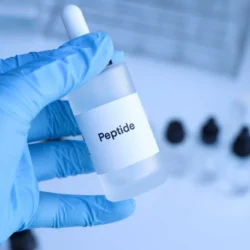


As peptide therapy has grown in popularity, so has the confusing landscape of peptide products available through various channels some through licensed clinicians and compounding pharmacies, others through online supplement retailers or international sources. For anyone trying to navigate this space, understanding the regulatory and access landscape is not just practically important, it is a safety issue.
The short answer: many of the most clinically meaningful therapeutic peptides do require a prescription and should only be obtained through licensed healthcare providers and accredited compounding pharmacies. Over-the-counter peptide products exist, but they are generally topical (skincare formulations) or oral supplements with significantly lower potency and regulatory scrutiny than prescription-grade clinical peptide therapy.
This distinction matters enormously. Using prescription-grade peptides from unverified sources without clinical oversight is both legally and medically risky. And using lower-potency OTC products and expecting clinical-grade results is a setup for disappointment and, potentially, missed appropriate care.
Let me clarify the regulatory landscape and explain what legitimate peptide therapy actually looks like from a clinical standpoint.
The Peptide Regulatory Landscape
The regulatory status of therapeutic peptides in the United States is more complex than most patients realize and more dynamic. The FDA has authority over peptides as drugs, but the category spans a wide range: some peptides are approved as specific drug products for specific indications, many are available through compounding pharmacies as prescribed preparations, and some have been placed on FDA lists that restrict their compounding.
It is important to understand that “not FDA-approved” does not mean illegal or unsafe. Most medications used in functional medicine, including many BHRT formulations, are compounded rather than FDA-approved as standardized products. The regulatory framework for compounding is distinct from the approval framework for commercial drugs.
What does matter from a legal and safety standpoint:
- Whether the peptide is on the FDA’s list of substances that may not be compounded
- Whether the compounding pharmacy is licensed and accredited
- Whether a valid patient-provider relationship and prescription exist
- Whether the product has been tested for purity, potency, and sterility
These four criteria define the boundary between legitimate clinical peptide therapy and the gray-market or black-market peptide products that are unfortunately also available online. Our clinical programs operate within all FDA and regulatory guidelines. Learn more here.
Which Peptides Require a Prescription?
The broad answer: injectable therapeutic peptides including growth hormone-releasing peptides and most systemic therapeutic peptide categories — require a prescription in the United States.
These are compounded medications, which means they are prepared by a licensed compounding pharmacy based on a prescriber’s order for a specific patient. The prescription relationship is essential: without it, there is no legal pathway to obtain these compounds from a legitimate source.
Peptides that are designated as “bulk substances” available for compounding must appear on the FDA’s approved lists or have been adequately supported through formal review processes. The regulatory landscape for specific compounds on these lists has been subject to ongoing FDA guidance updates, making it essential to work with a provider who is current on the regulatory status of the peptides in their programs.
The presence of a clinical indication, a patient-provider relationship, a licensed prescriber, and an accredited compounding pharmacy are the minimum requirements for a legitimate prescription peptide therapy program.
Over-the-Counter Peptide Products: What They Are and What They Are Not
OTC peptide products available without a prescription fall into two main categories:
Topical skincare products: These products apply peptide compounds to the skin surface and are regulated as cosmetics, not drugs. They do not require FDA drug approval, do not require a prescription, and are held to cosmetic rather than pharmaceutical manufacturing standards. They can produce meaningful skin benefits when well-formulated (as discussed in Post 10), but they are not clinical-grade therapeutic peptide therapy.
Oral peptide supplements: These are regulated as dietary supplements under DSHEA (Dietary Supplement Health and Education Act), not as drugs. Oral peptides are generally hydrolyzed by the digestive system before absorption meaning the intact peptide sequence may not survive to reach the bloodstream. Collagen peptide supplements have some evidence supporting their efficacy for skin and joint benefits, likely through a combination of amino acid delivery and some degree of intact peptide signaling. But they are categorically different from prescription-grade injectable therapeutic peptides.
Patients who see “peptide supplements” sold on supplement websites and assume they are equivalent to the clinical peptide therapy discussed in functional medicine contexts are making a significant category error. The clinical effects, the potency, the route of administration, and the regulatory standards are entirely different.
Why Clinical Oversight Is Non-Negotiable
Even if a patient somehow obtained a prescription-grade peptide without going through a proper clinical channel, self-administering without clinical oversight represents several meaningful risks:
No baseline evaluation: Without labs, there is no way to know whether therapy is appropriate, what the starting point is, or what improvements are occurring. Clinical peptide therapy without baseline IGF-1, for example, may be dosing based on anecdote rather than biology.
No dosing individualization: The appropriate dose varies meaningfully by individual biology, health status, body composition, hormonal environment, and goals. A dose appropriate for one person may be insufficient or excessive for another.
No monitoring for adverse effects: Changes in glucose metabolism, water retention, IGF-1 levels rising excessively — these are manageable with proper monitoring and undetected without it.
No quality assurance on the product: Peptides obtained from unaccredited sources are not subject to the purity, potency, and sterility testing required of PCAB-accredited compounding pharmacies. Contaminated or mislabeled products are a genuine risk from gray-market sources.
No legal or medical recourse: If something goes wrong with a product obtained outside a legitimate clinical relationship, neither the patient nor anyone they might seek accountability from has any meaningful recourse.
The clinical relationship is not bureaucratic overhead, it is the safety infrastructure of legitimate peptide therapy.
Red Flags: How to Identify Illegitimate Sources
Red flags in peptide therapy sources:
- Peptides available for purchase without a prescription
- Claims that products are “for research use only” while being marketed for human therapeutic use
- Prices significantly below what accredited compounding pharmacies charge
- No requirement for a provider consultation or labs before ordering
- Products shipped from overseas without legitimate pharmacy documentation
- Websites that promote specific peptides by name alongside aggressive health claims without required disclaimer language
Green flags in legitimate peptide therapy programs:
- Provider-patient relationship established through consultation
- Comprehensive labs required before protocol initiation
- Peptides obtained exclusively through licensed, PCAB-accredited compounding pharmacies
- Clear documentation of the compounding pharmacy, including accreditation status
- Ongoing monitoring and follow-up built into the program structure
- Transparent pricing that includes clinical oversight, not just the product cost
At 1st Optimal, every element of our peptide therapy programs meets these standards. We do not offer peptide therapy as a product. We offer it as part of a comprehensive clinical program that includes evaluation, prescription, pharmacy vetting, and ongoing monitoring. Learn about our clinical standards here.
FAQs:
Q: Do all peptides require a prescription? No. Topical peptide skincare products are sold over the counter as cosmetics. Oral collagen peptide supplements are sold as dietary supplements without a prescription. However, injectable therapeutic peptides the most clinically potent and meaningful category require a prescription and must be obtained through licensed compounding pharmacies.
Q: Can I buy prescription peptides online without a prescription? Not legally, and not safely. Websites offering prescription-grade peptides without requiring a valid prescription-provider relationship are operating outside of regulatory compliance. Products obtained from such sources cannot be verified for purity, potency, or sterility.
Q: What should I look for in a legitimate peptide therapy provider? A legitimate provider will establish a patient-provider relationship through consultation, require comprehensive baseline labs, prescribe through an accredited compounding pharmacy, and maintain an ongoing monitoring program. Be skeptical of any provider who offers peptides without labs, clinical evaluation, or follow-up.
Q: Why are peptides only available through compounding pharmacies and not regular pharmacies? Most therapeutic peptides used in functional medicine are not manufactured as FDA-approved commercial products they must be compounded for individual patients. This is legal and appropriate under the compounding pharmacy regulatory framework, but it does require prescription from a licensed provider.
Q: Are research peptides for humans safe to use? Peptides sold as “research chemicals” or “for research use only” are not intended, vetted, or legally approved for human therapeutic use. Their purity, potency, and sterility cannot be reliably verified, and using them carries meaningful safety risks.
Conclusion
The regulatory and access landscape for therapeutic peptides is genuinely complex, and navigating it correctly requires working with a provider who operates within the legitimate clinical framework. For most clinically meaningful injectable peptides, that means a prescription, an accredited compounding pharmacy, and clinical oversight. For OTC topical or oral peptide products, the regulatory standards are different and the clinical potency is lower.
At 1st Optimal, we are committed to operating entirely within legitimate regulatory guidelines because patient safety is the foundation of everything we do, and because the clinical outcomes of properly managed peptide therapy are genuinely compelling without taking regulatory shortcuts.
If you are ready to explore peptide therapy through a legitimate, clinically supervised program, we are here to guide you through every step of the process.
Schedule your initial consultation and evaluation today.
References:
- FDA. Human Drug Compounding. fda.gov/drugs/compounding.
- Pharmacy Compounding Accreditation Board. pcab.info.
- Muttenthaler M, et al. Trends in peptide drug discovery. Nat Rev Drug Discov. 2021;20(4):309-325.
- FDA. Bulk Drug Substances Nominated for Use in Compounding. Federal Register 2023.