
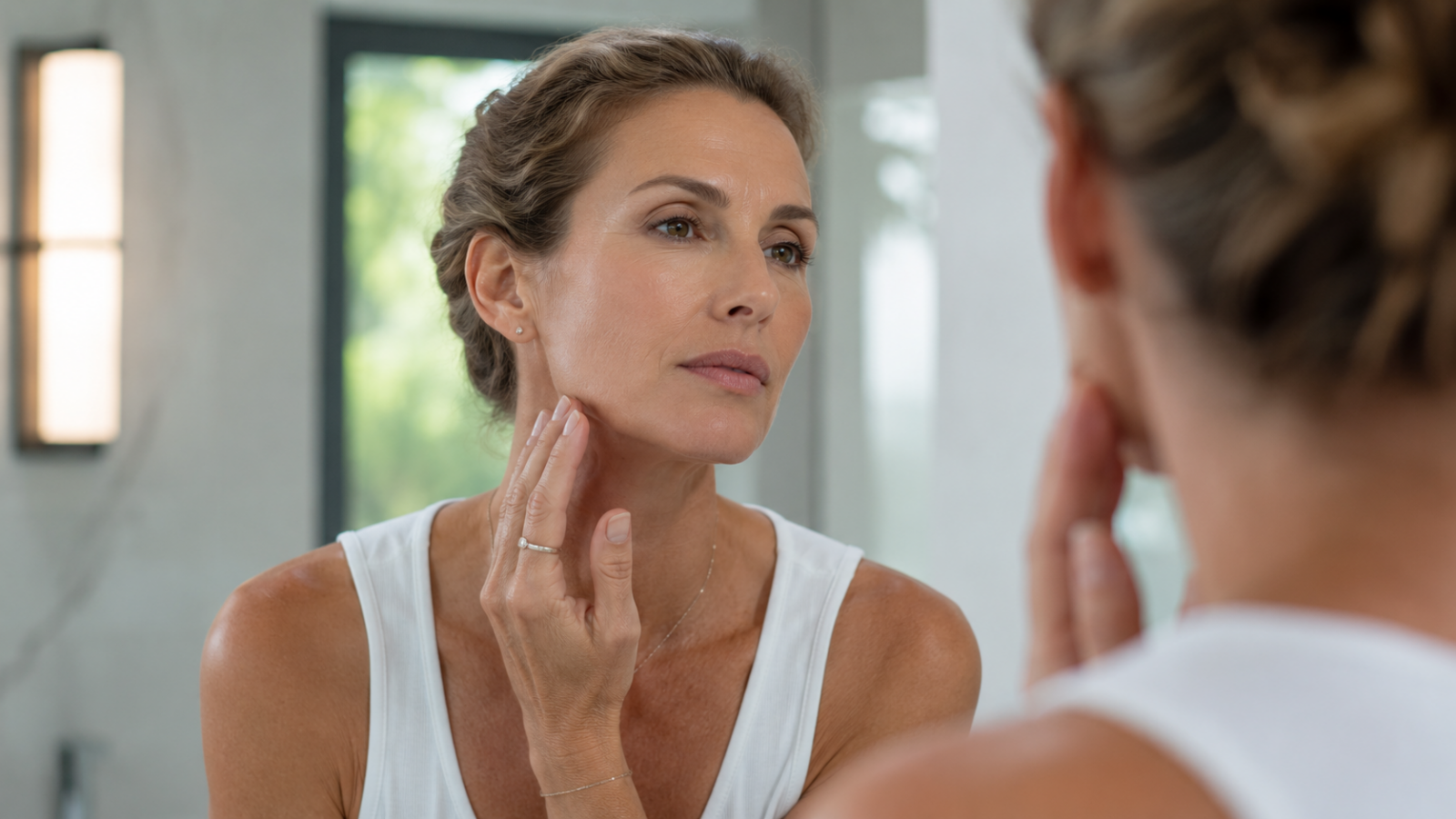
Losing a significant amount of weight can improve blood sugar, mobility, cardiovascular risk, energy, and overall health. But as the body changes, the face often changes too.
Some people notice sharper cheekbones and a more defined jawline. Others see hollow cheeks, deeper facial folds, under-eye shadows, thinner-looking skin, or new laxity around the jaw and neck.
These changes are sometimes called “Ozempic face,” especially when weight loss occurs during treatment with a glucagon-like peptide-1 receptor agonist, or GLP-1 medication. But the term is misleading.
Semaglutide, tirzepatide, bariatric surgery, calorie restriction, illness, and other forms of substantial weight loss can all reduce facial volume. The face is responding to the loss of underlying fat and structural support, not recognizing the brand name of the method used to lose weight.
The larger issue is how quickly the volume changes, how much total weight is lost, and how well the skin can contract around the face’s new shape.
The Short Answer
Rapid or substantial weight loss can:
- Reduce the facial fat pads that support the cheeks, temples, lips, eyes, and jawline
- Make existing wrinkles and folds appear deeper
- Reveal age-related collagen and elastin loss that was less noticeable before
- Increase the appearance of loose skin around the cheeks, lower face, jaw, and neck
- Make the face appear more tired, hollow, or aged even when overall health is improving
The strongest evidence supports facial volume loss and increased skin laxity after major weight loss. Claims that GLP-1 medications directly “destroy collagen” are less established. Weight loss rate, nutritional intake, muscle loss, age, hormones, genetics, sun exposure, smoking history, and starting body composition all influence the final result.
What Counts as Rapid Weight Loss?
There is no single rate at which everyone develops facial hollowing or loose skin.
The Centers for Disease Control and Prevention generally describes gradual weight loss as approximately 1 to 2 pounds per week. People losing weight under medical supervision may sometimes lose more, particularly at a higher starting weight or during the early stages of treatment.
The scale alone does not tell the full story. Losing 10 pounds affects a person who weighs 150 pounds differently than someone who weighs 350 pounds.
More useful questions include:
- What percentage of starting body weight was lost?
- How quickly did the loss occur?
- How much came from fat versus lean tissue?
- Was protein intake adequate?
- Was resistance training included?
- Has weight stabilized?
- What was the person’s skin elasticity before weight loss?
A person who loses 15% to 20% of their body weight may notice facial changes even when the loss occurs over many months. Faster loss can make those changes appear more abrupt because the skin and connective tissue do not always adapt at the same speed as the underlying fat disappears.
Why Losing Weight Changes the Face
The face is not simply skin stretched over bone.
Its appearance depends on several layers:
- Bone provides the structural frame.
- Muscle creates movement and some underlying shape.
- Deep and superficial facial fat compartments provide volume and support.
- Ligaments help suspend the soft tissues.
- The skin provides the visible outer covering.
Facial fat is distributed in separate compartments rather than one uniform layer. Some compartments create youthful fullness in the cheeks and temples. Others influence the jawline, under-eye area, and folds around the mouth.
When body fat decreases, some of these compartments may shrink. This reduces support beneath the skin and can make normal age-related changes look more pronounced.
A 2024 study examining facial changes after massive weight loss found significant fat-volume reduction in the mid-cheek area along with increased laxity in the central neck. Researchers concluded that major weight loss could create an appearance of accelerated facial aging through volume loss and skin laxity.
What Happens to Facial Fat During Rapid Weight Loss?
1. The cheeks may look flatter or hollow
The middle of the face depends heavily on deep cheek fat for projection and support.
When this volume decreases, the cheeks can appear flatter. The transition between the lower eyelid and cheek may become more visible, creating a tired or hollow appearance.
This can also make the nasolabial folds, which run from the sides of the nose toward the corners of the mouth, look deeper. The fold itself may not have suddenly aged. It may simply have lost some of the support that previously softened its appearance.
2. The temples can become more concave
The temples naturally lose volume with age. Substantial weight loss can make this hollowing more visible.
Temple volume loss may create a more angular facial shape and can make the upper face appear older or more skeletal, especially in people who already had a lean face before losing weight.
3. The under-eye area can look more prominent
Fat loss around the midface can expose existing under-eye hollows or tear troughs.
Dark circles may look more noticeable because shadows become deeper. This does not necessarily mean the skin suddenly developed more pigment. Facial contour changes can alter how light falls across the area.
4. The lower face can appear looser
Facial fat supports the skin from underneath. When that support decreases, the skin may settle lower.
This can contribute to:
- Jowling
- A softer jawline
- Downturned corners of the mouth
- More visible marionette lines
- Loose skin under the chin
- Neck laxity
Fat loss itself is not always the enemy. Removing excess fat from under the chin may improve the jawline. The result depends on whether the remaining skin has enough elasticity to contract around the new contour.
5. The lips may appear thinner
Weight loss does not necessarily remove a large amount of fat directly from the lips. However, reduced volume around the mouth can make the lips look less supported.
Changes in hydration, nutrition, age, and estrogen status can also contribute to a thinner or drier appearance.
Does Rapid Weight Loss Reduce Collagen?
This question requires more nuance than most social media posts allow.
Collagen is a major structural protein in the dermis, the deeper layer of the skin. It helps provide firmness and strength. Elastin allows the skin to stretch and return toward its original shape.
Aging gradually decreases collagen production and changes collagen quality. Sun exposure, smoking, menopause, genetics, inflammation, and nutritional status can accelerate this process.
Rapid weight loss does not necessarily dissolve collagen overnight. Instead, several changes may occur at the same time:
- The skin loses support as facial fat decreases.
- Existing collagen loss becomes more visible.
- Reduced calorie or protein intake may limit the nutrients needed for normal tissue maintenance.
- Lean tissue loss can reduce overall structural fullness.
- Older skin may not contract as efficiently around a smaller facial volume.
Current reviews discuss possible effects of GLP-1 treatment and rapid weight loss on collagen, muscle, and skin quality. However, the evidence is stronger for volume loss and laxity than for a proven medication-specific process that directly destroys facial collagen.
In plain English, the face may look as though it suddenly lost collagen when much of the visible change actually comes from losing the fat that had been supporting skin already affected by age, hormones, and sun exposure.
Collagen, Elastin, and Skin Laxity Are Different Problems
People often use “collagen loss” and “loose skin” as if they mean the same thing. They overlap, but they are not identical.
Collagen
Collagen provides strength, thickness, and structural organization.
Lower collagen content may contribute to:
- Thinner skin
- Fine lines
- Wrinkles
- Reduced firmness
- Slower tissue repair
Elastin
Elastin helps the skin stretch and recoil.
Reduced elasticity makes it harder for the skin to contract after underlying volume decreases.
Facial fat
Facial fat provides shape, cushioning, and support.
Losing it may lead to:
- Hollow cheeks
- Sunken temples
- Under-eye shadows
- Sharper folds
- Reduced facial fullness
Someone can have good skin quality but look hollow because of volume loss. Another person can maintain adequate facial volume but develop laxity because their skin has reduced elasticity.
This distinction matters because the treatments are different. A cream cannot replace lost facial fat, and adding volume does not fully correct severely loose skin.
Why Age Matters
Younger skin generally contains more collagen and has greater elasticity. It may contract more successfully after weight loss, although younger adults can still develop facial hollowing or loose skin after a major change.
After age 40, several factors can make the transition more visible:
- Natural collagen production has declined.
- Facial fat distribution is already changing.
- Bone structure may be gradually losing volume.
- Cumulative sun exposure has weakened the skin.
- Muscle mass may be declining.
- Hormonal changes may affect skin thickness and hydration.
This is especially relevant during perimenopause and menopause.
Declining estrogen is associated with reduced collagen production, lower hydration, thinner skin, and decreased elasticity. Rapid weight loss during this stage may reveal facial aging more dramatically because the skin is already undergoing structural change.
This does not mean women should avoid medically appropriate weight loss during menopause. It means the plan should account for protein intake, muscle preservation, skin health, hormones, and a realistic rate of change.
Is “Ozempic Face” Caused by Ozempic?
“Ozempic face” is an informal appearance-related term, not a formal medical diagnosis.
Ozempic is a brand of semaglutide approved for type 2 diabetes. Wegovy is a semaglutide product approved for chronic weight management in appropriate patients. Other medications, including tirzepatide products, may also produce substantial weight loss.
GLP-1 medications reduce appetite and calorie intake, helping many patients lose clinically meaningful amounts of weight. FDA prescribing information states that semaglutide lowers body weight, with more fat mass lost than lean mass overall.
The facial changes associated with these medications are not unique to semaglutide. Similar changes can occur after:
- Bariatric surgery
- Very-low-calorie diets
- Tirzepatide treatment
- Severe illness
- Cancer treatment
- Uncontrolled hyperthyroidism
- Major lifestyle-driven weight loss
- Any substantial decrease in body fat
The medication may enable the degree or speed of weight loss, but the visible facial change largely reflects the loss of underlying volume.
Stopping a medically beneficial medication solely because of a cosmetic concern may sacrifice important health improvements. Medication changes should be discussed with the prescribing clinician rather than made in response to a viral video.
Who Is More Likely to Develop Facial Hollowing or Loose Skin?
Risk varies from person to person.
Factors that may increase the likelihood include:
A larger total weight loss
Losing 20%, 25%, or more of starting body weight produces a larger change in the tissues supporting the face than losing 5%.
A naturally lean or narrow face
Someone with limited facial fat before treatment may notice hollowing earlier.
Older age
Older skin generally contains less collagen and has reduced elasticity.
Perimenopause or menopause
Declining estrogen can affect collagen, hydration, thickness, and elasticity.
Extensive sun exposure
Ultraviolet radiation damages collagen and contributes to premature wrinkles and laxity. Daily broad-spectrum sunscreen and other protective measures help limit additional ultraviolet damage.
Smoking
Smoking contributes to premature skin aging and impaired tissue quality.
Repeated weight cycling
Repeatedly losing and regaining substantial amounts of weight can place additional strain on the skin’s supporting structures.
Low protein or nutrient intake
A severely restricted diet may fail to provide enough protein, essential fatty acids, vitamins, and minerals for normal tissue maintenance.
Loss of muscle and lean tissue
Weight loss is not always pure fat loss. Lean mass can also decrease, especially when calorie intake is very low and resistance training is absent.
Can You Prevent Facial Changes During Weight Loss?
No strategy can guarantee that the face will retain its previous fullness. Genetics and anatomy still get a vote, which seems rude but remains biologically accurate.
However, a well-designed plan may reduce avoidable contributors.
1. Avoid unnecessary crash dieting
The goal should be clinically appropriate fat loss, not the fastest possible drop on the scale.
Gradual weight loss may give the skin more time to adapt and may make it easier to maintain adequate nutrition and training. The ideal pace still depends on starting weight, health conditions, medication, and clinician supervision.
2. Preserve muscle with resistance training
Resistance training sends a signal to maintain or build muscle during a calorie deficit.
It will not preserve facial fat directly, but it can improve body composition, metabolic health, posture, and the proportion of weight lost from fat versus lean tissue.
3. Eat enough protein
Protein supplies amino acids needed for muscle maintenance and normal tissue repair.
Protein requirements depend on body size, age, activity, calorie intake, kidney function, and clinical history. Rather than copying an influencer’s target, patients should use an individualized goal and distribute protein across meals.
Protein supplementation and resistance training have shown benefits for lean body mass in older adults, although protein alone cannot prevent every change caused by significant weight loss.
4. Avoid chronically undereating
A GLP-1 medication can significantly reduce appetite. Some people accidentally consume too little food, protein, fluid, and micronutrients.
Persistent nausea, vomiting, extreme food restriction, dizziness, weakness, hair shedding, or rapid functional decline should be discussed with the prescribing clinician.
A successful treatment plan should improve health without creating preventable malnutrition.
5. Stay adequately hydrated
Dehydration can make the skin look temporarily dull, dry, or less plump.
Drinking more water will not restore lost facial fat or remove excess skin, but adequate hydration supports normal skin function and overall health.
6. Protect the skin from ultraviolet exposure
Use broad-spectrum sunscreen and combine it with shade, protective clothing, and sensible sun avoidance.
Sunscreen cannot restore lost volume, but it can help prevent additional ultraviolet damage to collagen and elastin.
7. Stabilize weight before judging the final result
Appearance may continue to change while weight is actively falling.
Before pursuing major cosmetic correction, many clinicians prefer the patient’s weight to be relatively stable. This makes it easier to evaluate whether the primary problem is volume loss, skin laxity, or both.
Can Skin Care Fix Loose Skin After Weight Loss?
Skin care can improve hydration, texture, pigment, and fine lines. It cannot fully replace deep facial volume or lift substantial excess skin.
Retinoids
Prescription retinoids and some over-the-counter retinol products can support collagen production and improve fine lines over time.
They should be introduced carefully because irritation, peeling, and dryness are common. Pregnant patients or those trying to conceive should discuss retinoid use with a clinician.
Moisturizers
A moisturizer can improve hydration and temporarily make fine lines look softer.
It does not tighten deep tissue or rebuild lost fat.
Vitamin C
A properly formulated topical vitamin C product may support antioxidant protection and collagen-related skin processes.
It should complement sunscreen rather than replace it.
“Firming” creams
The American Academy of Dermatology notes that skin-firming creams generally produce subtle results at best. A cream cannot penetrate deeply enough to lift significant sagging tissue.
Collagen supplements
Some clinical studies suggest that oral collagen peptides may modestly improve skin hydration, elasticity, or wrinkles.
However, supplements do not selectively travel to the cheeks, replace facial fat pads, or correct significant laxity. Product quality, formulation, study size, and industry funding also vary.
Medical and Cosmetic Treatment Options
Treatment should match the actual problem.
A dermatologist, facial plastic surgeon, or board-certified plastic surgeon can assess whether the primary concern is volume loss, skin quality, tissue descent, or excess skin.
Dermal fillers
Hyaluronic acid fillers may restore selected areas of volume loss, including the cheeks, temples, or under-eye region.
Results depend heavily on injector skill and facial anatomy. Excessive filler can create an unnatural or overfilled appearance and carries risks, including vascular complications.
Biostimulatory injectables
Products designed to stimulate collagen may improve gradual firmness and volume in selected patients.
They do not produce an immediate surgical lift, and results develop over time.
Fat transfer
A surgeon can transfer a patient’s own fat to areas of facial volume loss.
Some transferred fat may not survive, and results can change if body weight changes again.
Microneedling
Microneedling creates controlled skin injury to stimulate remodeling. Dermatologists use it for several concerns, including wrinkles, texture changes, scars, and some forms of skin laxity.
Radiofrequency or ultrasound treatments
Energy-based devices heat targeted tissue to stimulate collagen remodeling and produce modest tightening.
Results vary by device, provider, age, degree of laxity, and skin characteristics. These treatments are generally better suited to mild or moderate concerns than severe excess skin.
Laser resurfacing
Certain lasers can improve wrinkles, texture, pigmentation, and skin quality.
Downtime and complication risks vary, particularly across different skin tones.
Facelift or neck lift surgery
Surgery may provide the most meaningful correction when substantial tissue descent or excess skin is present.
It also involves anesthesia, recovery, scarring, cost, and surgical risk. A qualified surgeon should evaluate the patient only after health status and weight stability are considered.
When Facial Changes May Signal a Bigger Problem
Cosmetic changes are not always merely cosmetic.
Contact a healthcare professional when rapid weight loss is accompanied by:
- Persistent vomiting or diarrhea
- Inability to eat adequate food or protein
- Severe weakness
- Dizziness or fainting
- Significant hair loss
- Loss of strength or physical function
- New swallowing difficulty
- Unexplained weight loss without treatment
- Signs of dehydration
- Symptoms of thyroid disease
- Depression, anxiety, or distress around food and appearance
Weight loss should be intentional, monitored, and appropriate for the person’s medical history.
How 1st Optimal Approaches Weight Loss Differently
The goal should not be to make the scale fall as fast as possible.
A stronger medical weight-loss plan considers:
- Starting body composition
- Metabolic health
- Blood sugar and insulin regulation
- Hormone status
- Protein intake
- Strength training
- Sleep and recovery
- Gastrointestinal tolerance
- Medication response
- Long-term weight maintenance
At 1st Optimal, weight management is built around clinical review, laboratory data, nutrition, coaching, and body-composition goals rather than a generic medication dose or crash diet.
Frequently Asked Questions
Is “Ozempic face” permanent?
Not necessarily.
The final result depends on how much volume was lost, age, skin elasticity, weight stability, and whether the main concern is dehydration, fat loss, or true excess skin.
Mild changes may become less noticeable after weight stabilizes and nutrition improves. Significant facial fat loss or advanced laxity may require cosmetic treatment if the person wants correction.
Does semaglutide directly age the face?
There is not strong evidence that semaglutide uniquely ages the face independent of weight loss.
The medication can produce substantial fat loss, and that fat loss may reduce facial volume. Researchers are still studying whether GLP-1 treatment has additional direct effects on skin, collagen, or connective tissue.
Should I stop my GLP-1 medication if my face looks thinner?
Do not stop a prescribed medication without discussing it with your clinician.
The clinician may review your rate of loss, dose, calorie intake, protein intake, side effects, body composition, and whether continued loss is medically appropriate.
Can slower weight loss prevent loose facial skin?
It may reduce abrupt changes and make it easier to maintain adequate nutrition, but it cannot guarantee that laxity or facial hollowing will not occur.
Age, genetics, total weight loss, hormones, sun exposure, and starting facial structure still matter.
Will eating more protein preserve facial fat?
No. Protein cannot direct the body to retain fat in the face.
Adequate protein can help preserve muscle and support normal tissue repair during weight loss. That remains valuable even though it cannot control where body fat is lost.
Can collagen powder restore lost cheek volume?
No.
Collagen supplements may modestly support hydration or elasticity in some people, but they cannot recreate the deep facial fat pads that provide cheek projection.
Will gaining weight restore facial volume?
Weight regain may restore some facial fullness, but fat does not always return in the same amount or distribution.
Regaining weight solely to change facial appearance may also reverse metabolic and cardiovascular benefits. Cosmetic concerns should be evaluated separately from the medical reasons for achieving a healthier weight.
The Bottom Line
Rapid or substantial weight loss can change the face because facial fat provides structural support.
When that volume decreases, the cheeks, temples, eyes, jawline, and neck may look more hollow or lax. Age-related collagen loss, reduced elasticity, menopause, sun exposure, genetics, low protein intake, and loss of lean tissue can make these changes more noticeable.
The answer is not to avoid medically appropriate weight loss. It is to approach weight loss with more precision.
Use an appropriate pace. Protect muscle with resistance training. Eat enough protein and nutrient-dense food. Monitor medication tolerance. Protect the skin from ultraviolet damage. Allow weight to stabilize before deciding whether cosmetic treatment is needed.
The goal is not simply a smaller body.
It is better metabolic health, preserved strength, sustainable fat loss, and a result that supports how you want to look, feel, and function.
Educational only. This article is not medical advice and does not replace evaluation or treatment from a qualified healthcare professional.