
GLP-1 medications can make eating less dramatically easier.
That is part of why they can be so effective for weight management.
But there is an important question that often gets overlooked:
When your appetite drops, are you still eating enough protein to protect your muscle?
Medications such as semaglutide and tirzepatide can significantly reduce hunger and overall calorie intake. For some people, that means meals get smaller, snacks disappear, and foods that once sounded appealing become difficult to finish.
That can be helpful for fat loss.
It can also make it easier to unintentionally under-eat protein.
And during significant weight loss, preserving muscle should be part of the goal, not an afterthought.
Why Protein Matters During GLP-1 Treatment
When you lose weight, the weight you lose is not always exclusively body fat.
Some loss of lean body mass can occur during virtually any substantial weight-loss intervention.
Recent research examining incretin-based therapies has found that lean mass can represent a meaningful portion of total weight lost. A 2026 meta-analysis found that lean mass accounted for roughly 25% to 39% of weight lost across several incretin therapies, although the proportion was broadly comparable with lifestyle-based weight loss. Resistance training produced a more favorable lean-mass profile.
That does not mean GLP-1 medications automatically cause unhealthy muscle loss.
It means body composition deserves attention while weight is coming down.
Protein matters because it provides the amino acids your body needs to maintain and repair muscle tissue.
Adequate protein may also help support:
- Muscle preservation
- Strength
- Exercise recovery
- Satiety
- Bone health
- Healthy aging
- Long-term weight maintenance
But protein alone is not the full solution.
Current GLP-1 nutrition guidance emphasizes combining adequate protein intake with structured resistance training to better preserve muscle during weight loss.
How Much Protein Do You Really Need on a GLP-1?
There is no single protein number that is appropriate for every person taking a GLP-1.
Needs depend on factors such as:
- Body size and body composition
- Age
- Activity level
- Rate of weight loss
- Resistance-training frequency
- Overall calorie intake
- Kidney function
- Existing medical conditions
- Your individual treatment plan
For context, the standard adult Recommended Dietary Allowance for protein is 0.8 grams per kilogram of body weight per day.
During active weight loss, however, higher protein intakes are often considered.
A major 2025 multidisciplinary advisory on nutrition during GLP-1 treatment notes that targets of approximately 1.2 to 1.6 grams of protein per kilogram per day have been proposed during active weight reduction. The advisory also notes that using actual body weight can substantially overestimate requirements in people with obesity, which is why lean body mass, adjusted weight, or simpler absolute targets may sometimes be more practical.
Another recent review proposed daily protein intake of at least approximately 1.2 g/kg, with levels up to about 1.6 g/kg in appropriate adults without chronic kidney disease, depending on the individual.
A Practical Protein Target
For many adults receiving GLP-1 therapy, an easier starting framework may be:
Approximately 80 to 120 grams of protein per day
The 2025 GLP-1 nutrition advisory specifically identifies this as one practical approach when calculating protein from body weight becomes unnecessarily complicated.
That does not mean everyone needs 120 grams.
And it does not mean 80 grams is enough for everyone.
Someone who is smaller and relatively sedentary may need less than an athletic individual who lifts weights four days per week.
The goal is to establish an individualized target that supports your body composition, activity level, and medical needs.
Should You Calculate Protein Using Your Current Body Weight?
This is where many online protein calculators can become misleading.
Imagine someone weighs 250 pounds, or approximately 113 kilograms.
Using a target of 1.6 g/kg based strictly on current body weight would suggest more than 180 grams of protein per day.
That may be unnecessary for many people.
Current clinical guidance acknowledges that there is no universal agreement about whether protein targets for people with obesity should be calculated using:
- Actual body weight
- Ideal body weight
- Adjusted body weight
- Lean body mass
Using estimated lean body mass may sometimes provide a more individualized calculation. The 2025 advisory discusses approximately 1.5 grams per kilogram of fat-free mass as another potential method when accurate body-composition data are available.
This is one reason individualized nutrition planning can be more useful than simply plugging your scale weight into an online calculator.
Why GLP-1 Users Sometimes Struggle to Eat Enough Protein
GLP-1 therapy can change more than hunger.
People may experience:
- Feeling full after a few bites
- Reduced interest in food
- Nausea
- Changes in food preferences
- Difficulty tolerating large meals
- Aversion to heavier foods
Suddenly, a large chicken breast and three side dishes may sound impossible.
If your total food intake falls substantially, protein intake can fall right along with it.
The solution is not necessarily forcing yourself to eat huge meals.
Instead, your nutrition strategy may need to become more intentional.
Try Eating Protein First
When appetite is limited, the order in which you eat your food can matter.
Start with the protein portion of the meal before filling up on lower-protein foods.
For example:
Instead of eating your salad, vegetables, and bread first and discovering you are too full for the chicken, begin with the chicken.
This simple strategy can help make sure the most nutritionally important part of the meal does not continually get left behind.
The 2025 GLP-1 nutrition advisory specifically recommends prioritizing protein-rich foods first when appetite is reduced.
High-Protein Foods That Work Well With Smaller Appetites
You do not necessarily need enormous portions.
Choose protein-rich foods that provide meaningful nutrition in relatively small amounts.
Examples include:
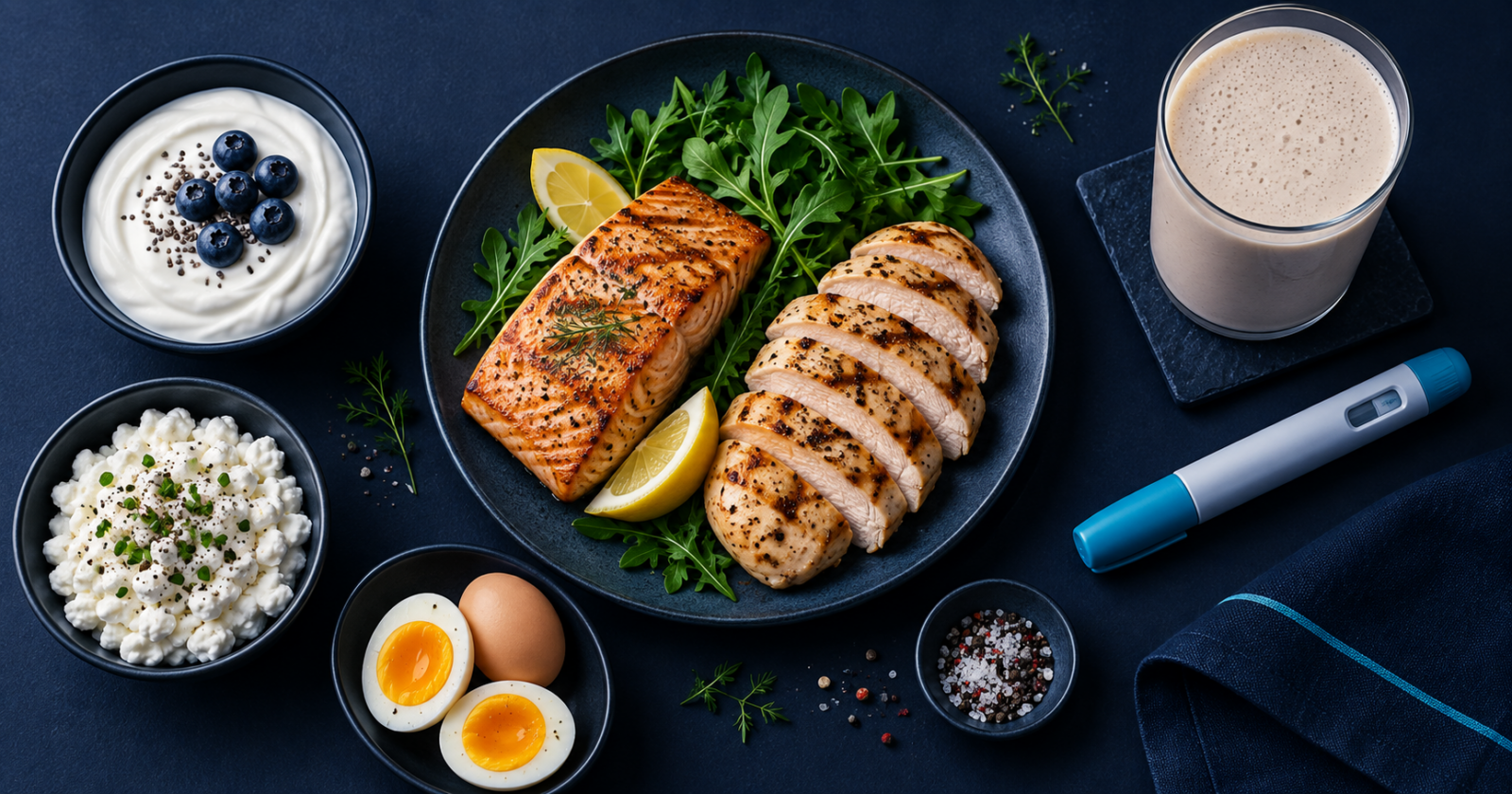
Greek Yogurt
A convenient option for breakfast or a snack that can provide substantial protein without requiring a large meal.
Add berries, nuts, or seeds depending on your nutritional needs and tolerance.
Cottage Cheese
Another high-protein option that works well with fruit, vegetables, or on its own.
Eggs
Eggs are nutrient-dense, versatile, and often easier to tolerate than large portions of meat.
Fish and Seafood
Salmon, tuna, shrimp, cod, and other seafood provide high-quality protein in relatively compact portions.
Lean Poultry
Chicken and turkey can provide substantial protein without requiring high overall calories.
Beans and Lentils
Plant-based protein sources also provide fiber and other nutrients.
Tofu and Tempeh
Useful options for people who prefer plant-based meals.
Protein Shakes
A protein shake can be useful when appetite is particularly low.
It should generally complement an overall nutrient-dense eating pattern rather than become your entire diet.
The GLP-1 nutrition advisory notes that protein drinks, yogurt, cottage cheese, eggs, fish, legumes, nuts, seeds, and other nutrient-dense protein foods may be useful when appetite is limited.
How Much Protein Should You Eat at Each Meal?
You do not necessarily need to consume your entire protein target in one or two meals.
Spreading protein throughout the day may make the target easier to achieve, especially when GLP-1 therapy makes large meals difficult.
For example, someone targeting roughly 100 grams per day might structure their intake like this:
Breakfast: 25 grams
Lunch: 30 grams
Snack: 15 grams
Dinner: 30 grams
That can feel significantly easier than trying to eat 50 grams at lunch and another 50 grams at dinner.
A recent review examining nutritional strategies during GLP-1 therapy proposed approximately 0.3 to 0.4 g/kg of protein per meal as one potential framework, although individual needs still vary.
Protein Is Not Enough to Protect Muscle
This is one of the most important points.
You cannot completely solve muscle preservation simply by drinking more protein shakes.
Muscle needs a reason to stay.
That signal comes largely from resistance exercise.
The 2025 multidisciplinary GLP-1 advisory specifically emphasizes that increasing protein alone is unlikely to fully preserve muscle without structured resistance or strength training.
A simple exercise program might include movements such as:
- Squats
- Lunges
- Rows
- Presses
- Deadlift variations
- Step-ups
- Resistance-band exercises
- Machine-based strength training
Your exact program should reflect your experience, physical limitations, and medical circumstances.
For many adults, two or more strength-training sessions per week can provide a strong foundation.
What Happens If Protein Intake Gets Too Low?
Persistently low protein intake during a calorie deficit may increase the likelihood of losing lean tissue.
A 2024 systematic review and meta-analysis involving adults with overweight or obesity found that higher-protein diets improved muscle-mass retention during weight loss. The researchers reported a greater likelihood of muscle decline when protein intake was below approximately 1.0 g/kg/day, while intake above approximately 1.3 g/kg/day was associated with better muscle outcomes.
This becomes especially relevant when someone taking a GLP-1 says:
“I’m barely hungry, so I just eat once a day.”
The scale may continue moving downward.
But the scale alone cannot tell you what kind of weight you are losing.
Watch the Rate of Weight Loss Too
Faster is not always better.
Very aggressive calorie restriction may make adequate intake of protein, vitamins, minerals, essential fats, and other nutrients increasingly difficult.
Current GLP-1 guidance highlights the importance of considering the rate of weight reduction, dietary intake, hydration, nutrient status, activity level, and body composition rather than evaluating success solely through pounds lost.
Someone losing weight rapidly while becoming weaker, more fatigued, and less capable in the gym may need a different strategy than someone steadily losing fat while maintaining strength.
Signs Your Nutrition Plan May Need Another Look
Talk with your healthcare team if you notice issues such as:
- Significant weakness
- Major decline in gym performance
- Persistent fatigue
- Difficulty consuming adequate food
- Frequent nausea or vomiting
- Dizziness
- Rapid or unexpected weight loss
- Noticeable loss of muscle
- Persistent constipation
- Signs of dehydration
These symptoms can have multiple causes and should not automatically be attributed to protein intake or GLP-1 therapy.
A broader clinical evaluation may be appropriate.
What About Kidney Disease?
High-protein recommendations are not appropriate for everyone.
People with chronic kidney disease or certain other medical conditions may require individualized protein recommendations.
If you have known kidney disease, abnormal kidney function, or have previously been told to limit protein, do not dramatically increase your protein intake without discussing it with your clinician or registered dietitian.
This is another reason generic social-media targets like “eat your body weight in grams of protein” can be inappropriate.
A Simple GLP-1 Protein Strategy
If you are struggling to structure your diet while taking a GLP-1, start with these principles:
1. Establish an Individual Protein Goal
For many adults actively losing weight, protein requirements may be higher than the standard RDA.
A practical target used in current GLP-1 guidance is often approximately 80 to 120 grams per day, although individualized needs may fall outside that range.
2. Build Every Meal Around Protein
Ask yourself:
Where is the protein in this meal?
Do that before worrying about complicated meal plans.
3. Eat Protein First
When appetite disappears quickly, prioritize the nutrient you are most likely to under-consume.
4. Spread Protein Throughout the Day
Three or four smaller protein servings may be easier than two enormous meals.
5. Strength Train
Protein supplies the building blocks.
Resistance training provides the stimulus.
You need both.
6. Track More Than Body Weight
Consider monitoring:
- Strength
- Energy
- Waist circumference
- Body composition when appropriate
- Protein intake
- Exercise performance
- Rate of weight loss
Success should mean improving health and body composition, not simply making the number on the scale smaller.
The Bottom Line
GLP-1 medications can be incredibly effective tools for reducing appetite and supporting meaningful weight loss.
But eating less should not mean paying less attention to nutrition.
It usually means nutrition needs to become more intentional.
For many adults undergoing active weight loss, protein intakes above the standard 0.8 g/kg RDA may be appropriate. Current GLP-1 nutrition guidance discusses approximately 1.2 to 1.6 g/kg/day during active weight reduction in appropriate individuals, while a simpler target of roughly 80 to 120 grams per day may be more practical for many people.
The right number still depends on the individual.
More importantly, protein should be paired with resistance training, adequate micronutrients, hydration, appropriate calorie intake, and ongoing monitoring.
The goal is not just weight loss.
The goal is losing the weight you want to lose while protecting the strength, muscle, and health you want to keep.
At 1st Optimal, GLP-1 treatment is approached as part of a broader functional health strategy. That may include medical oversight, laboratory evaluation, nutrition, strength training, recovery, hormone health, body composition, and ongoing coaching based on the individual.
Because sustainable progress requires more than simply reducing appetite.
It requires protecting the systems that help you feel and perform your best.
Frequently Asked Questions
How much protein should I eat while taking semaglutide?
There is no universal semaglutide-specific protein requirement. During active weight loss, current guidance discusses protein intakes around 1.2 to 1.6 g/kg/day for appropriate individuals, while approximately 80 to 120 grams per day may be a more practical target for many adults. Your needs should be individualized based on body composition, activity level, age, medical history, and kidney function.
How much protein should I eat while taking tirzepatide?
Protein recommendations are generally based on your nutritional needs and degree of weight loss rather than the specific medication alone. The goal is to consume enough protein to support lean mass while maintaining an appropriate overall calorie and nutrient intake.
Can you lose muscle while taking a GLP-1?
Some lean mass loss can occur during substantial weight reduction, including weight loss produced through GLP-1 or related incretin medications. Research suggests resistance training, adequate protein intake, and body-composition monitoring can help support lean-mass preservation.
Are protein shakes good while taking a GLP-1?
They can be useful when appetite is low and meeting protein needs through whole foods becomes difficult. Whenever possible, protein shakes should complement a nutrient-dense eating pattern rather than replace most meals.
Is 100 grams of protein enough on a GLP-1?
For some people, yes. For others, no. Current clinical guidance identifies approximately 80 to 120 grams per day as one practical range, but protein requirements should be individualized.
Should I eat protein before vegetables while taking a GLP-1?
When appetite is very limited, eating the protein portion of your meal first may help you consume enough protein before becoming full. Vegetables, fruit, healthy fats, and high-quality carbohydrates still remain important parts of an overall balanced eating pattern.
References
- Mozaffarian D, et al. Nutritional priorities to support GLP-1 therapy for obesity: a joint Advisory from the American College of Lifestyle Medicine, the American Society for Nutrition, the Obesity Medicine Association, and The Obesity Society. American Journal of Clinical Nutrition. 2025.
- Ueshima J, et al. Enhanced protein intake on maintaining muscle mass, strength, and physical function in adults with overweight/obesity: A systematic review and meta-analysis. Clinical Nutrition ESPEN. 2024.
- Medical nutrition in the glucagon-like peptide-1 (GLP-1) era: Protein strategies, micronutrient monitoring, and lean mass preservation. 2026.
- Lean Mass Changes With Incretin Therapy Versus Lifestyle Intervention: A Systematic Review and Meta-Analysis of Randomised Controlled Trials. 2026.
Medical Disclaimer: This article is for educational purposes only and is not a substitute for individualized medical or nutrition advice. Protein requirements and GLP-1 treatment should be individualized with a qualified healthcare professional, particularly for people with kidney disease or other medical conditions.