

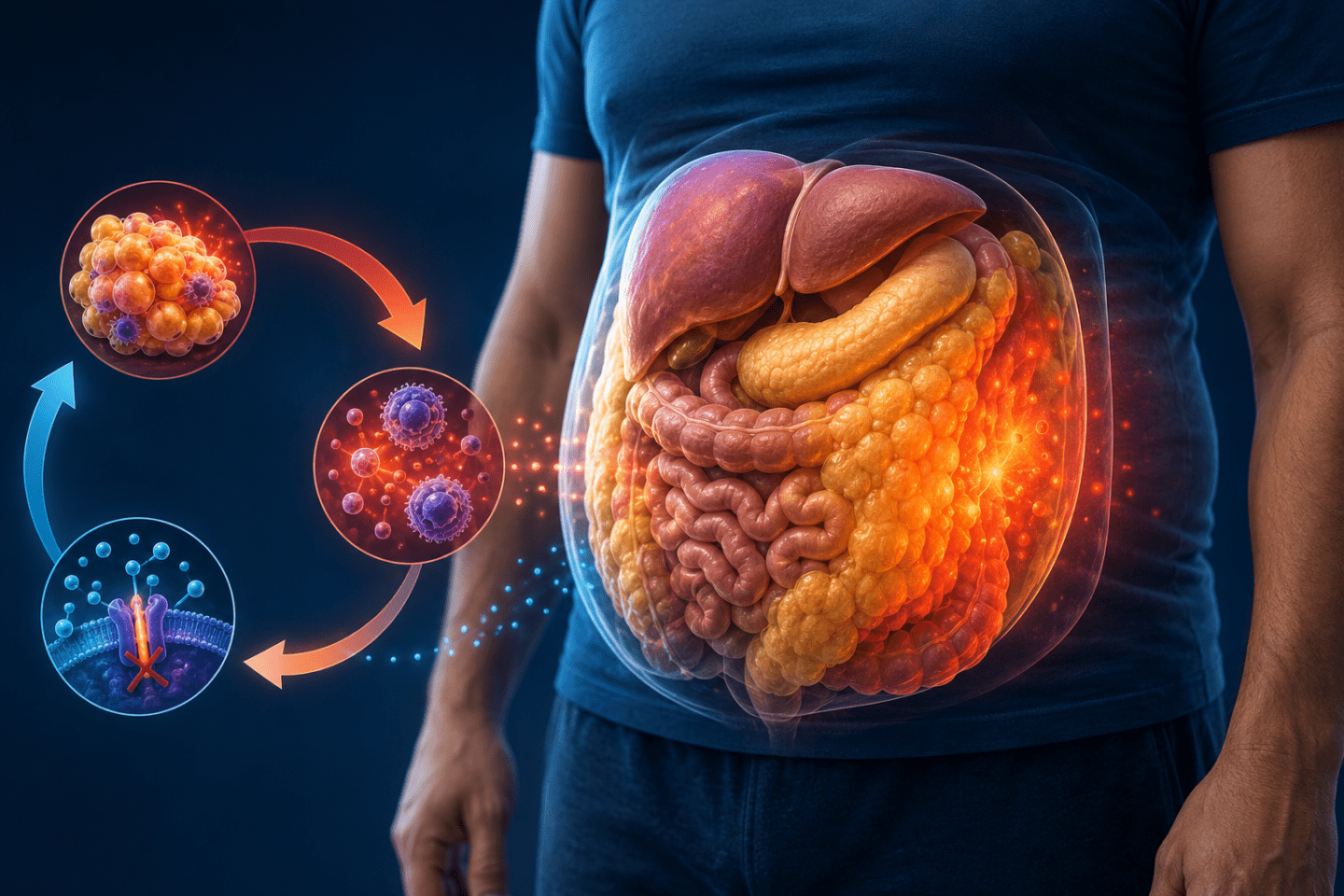
Insulin resistance, excess visceral fat, and chronic inflammation can form a self-reinforcing cycle that affects blood sugar, fat storage, energy regulation, cardiovascular health, and overall metabolism.
When muscle, liver, and fat cells stop responding effectively to insulin, the pancreas may produce more insulin to keep blood sugar controlled. Excess fat stored around the abdominal organs can also release inflammatory signals and fatty acids that make insulin signaling less effective. Over time, this cycle can contribute to metabolic syndrome, prediabetes, type 2 diabetes, metabolic dysfunction-associated steatotic liver disease, and cardiovascular disease.
The important point is that these problems often develop gradually. Blood sugar may remain within the laboratory reference range while the body is producing more insulin to maintain it. A “normal” fasting glucose result therefore does not provide a complete assessment of metabolic health, particularly when waist circumference, triglycerides, blood pressure, liver markers, or other risk factors are changing.
Key Takeaways
- Insulin resistance means muscle, liver, and fat cells do not respond to insulin as effectively as they should.
- Visceral fat is stored deep within the abdomen around internal organs.
- Visceral fat is more metabolically active than the fat stored directly beneath the skin.
- Dysfunctional fat tissue can release fatty acids and inflammatory signals that interfere with insulin action.
- Inflammation can worsen insulin resistance, while insulin resistance can promote further fat accumulation and metabolic stress.
- Insulin resistance and prediabetes frequently produce no obvious symptoms.
- A comprehensive evaluation may include glucose, hemoglobin A1c, lipids, blood pressure, waist circumference, liver markers, and other testing selected for the individual.
- Nutrition, physical activity, sleep, muscle preservation, and sustainable fat loss can improve insulin sensitivity.
- Some people may also benefit from medication or structured medical weight-management support.
What Is Metabolism?
Metabolism is the collection of chemical processes your body uses to convert food into energy, build and repair tissue, maintain body temperature, store fuel, and keep organs functioning.
It includes much more than how quickly someone burns calories. Metabolic health reflects how effectively the body manages:
- Blood glucose
- Insulin
- Stored carbohydrates
- Dietary and stored fat
- Protein and muscle tissue
- Blood pressure
- Cholesterol and triglycerides
- Energy production
- Hunger and fullness signals
- Liver function
- Hormonal and immune signaling
Insulin plays a central role in these processes. After food is digested, glucose enters the bloodstream. The pancreas releases insulin, which helps glucose move into cells for immediate energy or storage. Insulin also signals the liver to store glucose for later use.
A healthy metabolism is not defined by one body weight, glucose reading, or calorie calculator. It is better understood as the body’s ability to switch between fuel sources, control blood sugar, preserve muscle, store fat appropriately, and respond to changing energy demands.
What Is Insulin Resistance?
Insulin resistance occurs when cells in the muscles, liver, and fat tissue do not respond normally to insulin.
The pancreas initially compensates by producing more insulin. This may keep fasting glucose and hemoglobin A1c within normal ranges for a period of time. If the cells become increasingly resistant and the pancreas can no longer compensate, blood glucose begins to rise. This can lead to prediabetes and eventually type 2 diabetes.
Insulin resistance can affect different tissues in different ways.
Muscle Insulin Resistance
Skeletal muscle is an important destination for glucose after a meal. When muscle becomes resistant to insulin, it does not take up glucose as effectively.
Low muscle mass and physical inactivity may reduce the amount of metabolically active tissue available to use and store glucose. Regular physical activity improves insulin sensitivity, while strength training helps build and preserve the muscle that supports glucose disposal.
Liver Insulin Resistance
Insulin normally signals the liver to reduce glucose production after eating. When the liver becomes resistant to insulin, it may continue releasing glucose even when the bloodstream already has enough.
Insulin resistance is also associated with unhealthy blood-fat levels and metabolic dysfunction-associated steatotic liver disease, or MASLD. This condition was previously called nonalcoholic fatty liver disease.
Fat-Tissue Insulin Resistance
Insulin helps regulate the release and storage of fat. When fat tissue becomes resistant to insulin, more fatty acids may enter circulation and accumulate in tissues that are not designed to store large amounts of fat, including the liver and skeletal muscle.
This ectopic fat can interfere with insulin signaling and contribute to metabolic dysfunction. Visceral and ectopic fat are associated with disrupted energy metabolism, inflammation, insulin resistance, fatty liver disease, and cardiovascular risk.
What Is Visceral Fat?
Visceral fat is stored deep within the abdominal cavity around organs such as the liver, pancreas, and intestines.
This differs from subcutaneous fat, which is stored directly beneath the skin and is the type of fat you can usually pinch. Both forms store energy, but excessive visceral fat tends to have a stronger association with insulin resistance and cardiometabolic disease.
Fat tissue is not simply inactive storage. It functions as an endocrine and immune organ, releasing hormones and signaling molecules called adipokines.
When visceral fat cells become enlarged or dysfunctional, the tissue may:
- Release more fatty acids into circulation
- Produce more inflammatory signals
- Attract immune cells
- Alter appetite and energy-regulation signals
- Reduce insulin sensitivity
- Promote fat accumulation in the liver and other organs
Current research increasingly supports looking beyond body mass index, or BMI, when evaluating metabolic risk. BMI estimates weight relative to height, but it does not directly measure body fat, muscle mass, or where fat is stored. Waist circumference, body composition, metabolic markers, and other clinical findings may provide important additional information.
How Are Visceral Fat and Inflammation Connected?
Healthy fat tissue can expand to store excess energy. Problems may develop when fat cells become too large, stressed, poorly supplied with oxygen, or unable to store additional energy safely.
The stressed tissue can release chemical signals that recruit immune cells, including macrophages. These immune cells contribute to local inflammation within the fat tissue. The resulting inflammatory environment can interfere with insulin-signaling pathways and increase the release of fatty acids into circulation.
Some of those fatty acids travel directly to the liver through the portal circulation. This can contribute to liver fat accumulation, abnormal triglycerides, increased glucose production, and worsening insulin resistance.
This does not mean that every person with a larger body has high inflammation or poor metabolic health. It also does not mean that someone with a normal BMI is protected. Fat distribution, muscle mass, genetics, age, sleep, medications, activity level, reproductive changes, and other factors influence individual risk.
How Does Inflammation Worsen Insulin Resistance?
Inflammatory molecules can interfere with the cellular pathways insulin uses to deliver its signal.
When this signaling becomes less effective, cells require more insulin to produce the same response. The pancreas may compensate by releasing progressively larger amounts.
At the same time, insulin resistance may increase circulating glucose and fatty acids, placing additional stress on the liver, blood vessels, pancreas, and fat tissue. This can stimulate further immune activity and inflammatory signaling. Researchers often describe this as a bidirectional or self-reinforcing relationship rather than a one-way cause-and-effect pathway.
The cycle can be summarized as:
- Fat tissue becomes enlarged or metabolically dysfunctional.
- Fatty acids and inflammatory signals increase.
- Insulin signaling becomes less effective.
- The pancreas produces more insulin to compensate.
- Glucose and fat metabolism become increasingly disrupted.
- Additional visceral and ectopic fat may accumulate.
- Metabolic stress and inflammation continue.
Biology has once again declined to provide a single broken switch. It prefers interconnected feedback loops involving multiple organs, hormones, and behaviors.
Can You Have Insulin Resistance With Normal Blood Sugar?
Yes. Insulin resistance may be present before fasting glucose or hemoglobin A1c reaches the prediabetes range.
During the early stages, the pancreas can compensate by producing more insulin. Blood glucose may therefore look acceptable because the body is working harder to keep it controlled. As insulin resistance progresses, the pancreas may eventually become unable to maintain that compensation.
This does not mean everyone with normal glucose requires an extensive insulin panel. It means glucose should be interpreted alongside other information, especially when someone has:
- Increasing waist circumference
- Elevated triglycerides
- Low high-density lipoprotein cholesterol
- High blood pressure
- Fatty liver
- Polycystic ovary syndrome
- Sleep apnea
- A history of gestational diabetes
- A strong family history of type 2 diabetes
- Physical inactivity
- Long-term use of medications that may affect glucose regulation
These factors are associated with a greater likelihood of insulin resistance, prediabetes, or metabolic syndrome.
Does Insulin Resistance Cause a Slow Metabolism?
Insulin resistance does not simply “shut down” metabolism. That phrase is popular because it makes a complex problem sound like a broken household appliance.
Instead, insulin resistance changes how the body manages glucose, fat, hunger, and stored energy. Higher insulin levels may reduce fat release from fat cells, while unstable blood sugar, poor sleep, reduced activity, lower muscle mass, and increased hunger can make weight management more difficult.
A person’s daily energy expenditure still depends on several factors:
- Resting metabolic rate
- Body size
- Lean muscle mass
- Physical activity
- Non-exercise movement
- Food intake
- Age
- Genetics
- Hormonal and medical conditions
- Weight-loss history
- Sleep and recovery
Insulin resistance can influence these systems, but it is not the only explanation for fatigue, weight gain, or difficulty losing fat. Thyroid disorders, menopause-related changes, medication effects, sleep apnea, depression, low calorie intake, and other conditions may produce overlapping symptoms.
What Are the Signs of Insulin Resistance?
Insulin resistance and prediabetes usually do not produce clear symptoms. Many people discover them only after routine blood work or after developing related conditions.
Possible clues include:
- Increased waist circumference
- Elevated fasting glucose
- Elevated hemoglobin A1c
- High triglycerides
- Low high-density lipoprotein cholesterol
- High blood pressure
- Fat accumulation in the liver
- Polycystic ovary syndrome
- Sleep apnea
- A history of gestational diabetes
- Darkened, thickened skin in body folds
- Progression toward metabolic syndrome
People also commonly report fatigue after meals, carbohydrate cravings, difficulty managing weight, and fluctuating energy. These complaints are nonspecific and cannot diagnose insulin resistance. They may also be caused by inadequate sleep, anemia, thyroid dysfunction, nutrient deficiencies, medication effects, or several other health problems.
What Is Metabolic Syndrome?
Metabolic syndrome is a cluster of cardiometabolic risk factors that occur together and increase the risk of type 2 diabetes, heart disease, and stroke.
The five commonly assessed features are:
- Increased waist circumference
- Elevated fasting blood glucose
- Elevated triglycerides
- Low high-density lipoprotein cholesterol
- Elevated blood pressure
A healthcare professional may diagnose metabolic syndrome when at least three relevant criteria are present, based on the guideline and population being used. The National Heart, Lung, and Blood Institute lists fasting glucose, blood pressure, triglycerides, HDL cholesterol, and waist measurement as the central clinical components.
For many U.S. adults, waist measurements associated with increased health risk are:
- More than 35 inches, or 88 centimeters, for women
- More than 40 inches, or 102 centimeters, for men
Different thresholds may be more appropriate based on ethnicity, body frame, age, and clinical context. Waist circumference is a screening measurement, not a direct scan of visceral fat.
How Are Insulin Resistance and Visceral Fat Measured?
There is no single routine blood test that definitively diagnoses insulin resistance in everyday clinical practice. NIDDK notes that direct insulin-resistance testing is used primarily in research, while clinicians commonly evaluate glucose regulation and associated metabolic risk factors.
Foundational Blood-Sugar Tests
Hemoglobin A1c
Hemoglobin A1c estimates average blood glucose over approximately the previous three months.
General diagnostic ranges are:
| A1c Result | General Classification |
| Below 5.7% | Normal |
| 5.7% to 6.4% | Prediabetes |
| 6.5% or higher | Diabetes range |
An abnormal diagnostic result generally requires confirmation unless clear symptoms or other diagnostic criteria are present.
Fasting Plasma Glucose
General fasting glucose ranges are:
| Fasting Glucose | General Classification |
| 99 mg/dL or below | Normal |
| 100 to 125 mg/dL | Prediabetes |
| 126 mg/dL or higher | Diabetes range |
A diabetes-range result generally requires confirmation in the absence of classic symptoms.
Oral Glucose Tolerance Test
An oral glucose tolerance test measures the body’s response after consuming a standardized glucose drink.
A two-hour result of 140 to 199 mg/dL falls within the prediabetes range, while 200 mg/dL or higher falls within the diabetes range.
Additional Metabolic Markers
Depending on symptoms, history, and goals, a comprehensive evaluation may also include:
- Fasting insulin
- Triglycerides
- HDL and LDL cholesterol
- Apolipoprotein B
- Liver enzymes
- Blood pressure
- Waist circumference
- Body composition
- High-sensitivity C-reactive protein
- Thyroid markers
- Kidney function
- Sleep-apnea assessment
Fasting insulin and calculations such as the homeostatic model assessment of insulin resistance, or HOMA-IR, may provide additional context in selected cases. However, laboratory methods and cutoff values vary, and these measurements should not be used as standalone diagnoses.
What Does CRP or hs-CRP Tell You?
C-reactive protein, or CRP, is produced by the liver in response to inflammation. Standard CRP may help identify a broader inflammatory response, but it cannot identify the exact source.
High-sensitivity CRP, or hs-CRP, detects lower concentrations and may contribute to cardiovascular risk assessment. It is a marker that inflammation may be present, not proof that visceral fat or insulin resistance is the cause. A healthcare professional may need to consider recent illness, injury, autoimmune disease, dental disease, smoking, and other possible contributors.
The greatest value usually comes from interpreting hs-CRP alongside:
- Blood pressure
- Glucose and hemoglobin A1c
- Cholesterol and triglycerides
- Apolipoprotein B
- Lipoprotein(a)
- Smoking history
- Family history
- Body composition
- Waist circumference
- Other medical conditions
Why Does Muscle Matter for Metabolic Health?
Muscle is a major site for glucose use and storage. Contracting muscle can increase glucose uptake, and regular physical activity improves insulin sensitivity.
Maintaining muscle also supports strength, mobility, resting energy expenditure, and healthy aging. This becomes particularly important during weight loss because losing weight without adequate protein and resistance training can reduce both fat and lean tissue.
Current physical-activity guidance recommends at least:
- 150 minutes of moderate-intensity aerobic activity each week, or
- 75 minutes of vigorous activity, or an equivalent combination
- Muscle-strengthening activity on at least two days per week
Individual recommendations should account for current fitness, medical conditions, injuries, medications, and recovery ability.
Can Reducing Visceral Fat Improve Insulin Sensitivity?
Reducing excess body fat, particularly abdominal and ectopic fat, can improve insulin sensitivity and several metabolic risk markers.
In the Diabetes Prevention Program, an intensive lifestyle intervention targeting at least 7% weight loss and 150 minutes of weekly activity reduced the incidence of type 2 diabetes by 58% over approximately 2.8 years among high-risk adults. Benefits persisted during long-term follow-up, although the size of the risk reduction changed over time.
NIDDK advises that losing approximately 5% to 7% of starting body weight can meaningfully reduce diabetes risk for many people with prediabetes or elevated risk. The appropriate goal should still be individualized, particularly for people with eating-disorder history, pregnancy, advanced illness, frailty, or other medical considerations.
Not every improvement requires dramatic scale loss. Physical activity can improve insulin sensitivity, strength, and glucose control before major changes in body weight occur. Waist circumference, blood pressure, glucose, triglycerides, strength, energy, and body composition may all provide useful measures of progress.
How Can You Improve Insulin Sensitivity and Metabolic Health?
1. Build Meals Around Protein and Fiber
Include a quality protein source, fiber-rich plants, minimally processed carbohydrates, and healthy fats.
Examples include:
- Eggs with vegetables, beans, and avocado
- Greek yogurt with berries, chia seeds, and walnuts
- Chicken with lentils and roasted vegetables
- Salmon with quinoa and a mixed salad
- Tofu with vegetables and brown rice
A Mediterranean-style eating pattern emphasizes vegetables, fruit, beans, whole grains, nuts, seeds, olive oil, fish, poultry, and minimally processed foods while limiting sugary drinks, refined carbohydrates, and heavily processed meats. The American Heart Association supports this pattern for reducing cardiometabolic risk factors.
2. Reduce Liquid Sugar and Refined Snacks
Sugary drinks deliver rapidly absorbed carbohydrates with little fiber or fullness. Replacing soda, sweet tea, sweetened coffee drinks, and frequent juice with water or unsweetened beverages can reduce glucose exposure and calorie intake.
This does not require eliminating every carbohydrate. Carbohydrate quality, quantity, meal composition, physical activity, and the individual’s glucose tolerance all matter.
3. Walk After Meals
Light movement after meals gives working muscles an immediate opportunity to use circulating glucose.
A practical starting target is 10 to 15 minutes of comfortable walking after one or two meals each day. People using glucose-lowering medications should discuss activity and hypoglycemia risk with their healthcare team.
4. Strength Train Consistently
Two to four resistance-training sessions each week can help preserve or increase muscle, depending on experience, recovery, and medical status.
A basic program can include:
- Squatting or sitting-to-standing movements
- Hip hinges
- Pushing exercises
- Pulling exercises
- Carrying exercises
- Core stability
Training should gradually progress rather than immediately becoming a punishment ceremony for having eaten carbohydrates.
5. Break Up Long Periods of Sitting
Short activity breaks can increase daily movement without requiring another formal workout.
Consider standing, walking, or performing a few minutes of light movement every 30 to 60 minutes during sedentary work.
6. Prioritize Sleep
Insufficient or disrupted sleep can affect appetite, food choices, activity, and glucose regulation. Loud snoring, witnessed breathing pauses, morning headaches, and excessive daytime sleepiness may justify evaluation for sleep apnea, which is associated with insulin resistance and other cardiometabolic risks.
7. Pursue Sustainable Fat Loss When Appropriate
A modest, maintainable calorie deficit can reduce visceral and liver fat while supporting long-term adherence.
The plan should include:
- Adequate protein
- Resistance training
- Fiber-rich foods
- Hydration
- Micronutrient intake
- Recovery
- Regular monitoring
The objective is not simply to make the scale move. It is to improve fat distribution, preserve muscle, and reduce metabolic risk.
8. Address Other Medical Drivers
Metabolic health may also be influenced by:
- Polycystic ovary syndrome
- Menopause-related body-composition changes
- Sleep apnea
- Thyroid disorders
- Cushing’s syndrome
- Long-term glucocorticoid use
- Certain antipsychotic medications
- Fatty liver disease
- Genetic risk
- Previous gestational diabetes
A personalized evaluation helps identify which factors are relevant rather than forcing every person into the same diet and supplement template.
When Is Medical Weight-Loss Treatment Appropriate?
Lifestyle interventions remain foundational, but they are not the only evidence-based option.
Current diabetes and obesity guidance recognizes that some adults may benefit from prescription weight-management medication or metabolic surgery when clinically appropriate. Treatment decisions should consider body composition, metabolic complications, medical history, previous treatment attempts, medication risks, patient preferences, and the ability to preserve nutrition and lean muscle.
Glucagon-like peptide-1, or GLP-1, therapies may be one option for selected patients. They should be used within a structured medical plan that monitors:
- Protein and total food intake
- Gastrointestinal symptoms
- Hydration
- Lean-muscle preservation
- Resistance training
- Blood glucose
- Medication interactions
- Laboratory trends
- Long-term maintenance
Medication does not replace nutrition, sleep, movement, or strength training. It can make those behaviors more achievable for some people by improving appetite regulation and supporting clinically meaningful weight loss.
What Should You Track?
Use a combination of symptoms, physical measurements, and laboratory trends.
Useful markers may include:
- Waist circumference
- Weight trend
- Body-fat and lean-mass estimates
- Strength and exercise performance
- Blood pressure
- Fasting glucose
- Hemoglobin A1c
- Triglycerides
- HDL cholesterol
- Liver enzymes
- Resting heart rate
- Sleep quality
- Energy and recovery
- CRP or hs-CRP when clinically appropriate
Do not expect every marker to change at the same speed. Glucose, water weight, waist circumference, strength, and inflammatory markers can each follow different timelines.
Trends across several months generally provide more useful information than one isolated test completed after an illness, stressful week, hard workout, or unusually enthusiastic restaurant meal.
Frequently Asked Questions
What is the connection between insulin resistance and inflammation?
Insulin resistance and inflammation can reinforce each other. Dysfunctional fat tissue may release inflammatory molecules and fatty acids that interfere with insulin signaling. In turn, disrupted glucose and fat metabolism can place additional stress on fat tissue, the liver, pancreas, and blood vessels.
Does insulin resistance always cause weight gain?
No. People can develop insulin resistance at different body weights. Genetics, fat distribution, muscle mass, activity, sleep, medications, pregnancy history, hormonal conditions, and other factors influence risk.
Can a thin person have visceral fat?
Yes. BMI does not directly measure body fat distribution. A person may have a normal BMI but still carry proportionally more fat around the abdomen or have fat stored in the liver and muscle.
Is belly fat always visceral fat?
No. The abdominal area contains both subcutaneous fat beneath the skin and visceral fat deeper around the organs. Waist circumference estimates abdominal risk but cannot precisely separate the two.
Does fasting insulin diagnose insulin resistance?
Not by itself. Fasting insulin may provide additional context, but laboratory methods and interpretation ranges vary. NIDDK notes that direct tests of insulin resistance are primarily used in research rather than routine diagnosis.
Can A1c be normal with insulin resistance?
Yes. The pancreas may initially compensate for insulin resistance by producing more insulin, keeping average glucose within the reference range. A1c should be interpreted with glucose, lipids, waist circumference, blood pressure, history, and other findings.
Is inflammation the only cause of insulin resistance?
No. Insulin resistance is multifactorial. Genetics, fat distribution, inactivity, sleep, medications, hormonal conditions, aging, and ectopic fat can all contribute. Researchers continue to study how much adipose inflammation drives insulin resistance in different people.
How quickly can insulin sensitivity improve?
Physical activity can improve insulin action relatively quickly, while changes in body composition, A1c, liver fat, and inflammatory markers may require weeks or months. The timeline depends on the starting condition, intervention, medication use, adherence, sleep, and other health factors.
What type of exercise is best for insulin resistance?
A combination of aerobic exercise, resistance training, and increased daily movement is generally more complete than relying on one form alone. Current guidance recommends both weekly aerobic activity and muscle-strengthening exercise.
Can supplements reverse insulin resistance?
No supplement reliably replaces nutrition, activity, sleep, fat loss when appropriate, or medical treatment. Some supplements may be useful for specific deficiencies or clinical situations, but they should be selected based on health history, medications, laboratory findings, and evidence.
The Bottom Line
Insulin resistance, visceral fat, and inflammation are closely connected, but they are not interchangeable diagnoses.
Insulin resistance affects how muscles, the liver, and fat tissue respond to insulin. Visceral fat can contribute to abnormal fatty-acid release and inflammatory signaling. Chronic metabolic stress can then worsen insulin sensitivity, creating a cycle that affects blood sugar, blood fats, liver health, cardiovascular risk, body composition, and energy regulation.
The solution is not to chase one laboratory number or eliminate an entire food group based on a social media video.
A stronger approach evaluates the complete pattern:
- Glucose regulation
- Insulin response
- Waist circumference
- Body composition
- Blood pressure
- Cholesterol and triglycerides
- Liver health
- Sleep
- Muscle mass
- Physical activity
- Inflammatory markers
- Medical and hormonal factors
Once the main drivers are clearer, the plan can become more specific.
Download the Metabolic Health Guide
Use our Metabolic Health and Visceral Fat Checklist to review common risk factors, laboratory markers, symptoms, and questions to discuss with a healthcare professional.
Continue Learning
Inflammatory Markers Explained: What CRP, hs-CRP, and Your Symptoms Can Tell You
Weight Loss vs. Fat Loss: Why the Scale Can Mislead You
Advanced Blood Work After 40: Which Health Markers Matter?
Why Your Labs Can Look Normal When You Still Feel Off
The Anti-Inflammatory Health Guide
Get a More Complete View of Your Metabolism
Metabolic health involves more than fasting glucose or body weight.
A 1st Optimal health expert can help you review your symptoms, health history, body-composition goals, current laboratory results, and options for comprehensive metabolic testing and personalized support.
BOOK A CALL WITH A HEALTH EXPERT
Educational only, not medical advice. Symptoms and laboratory results should be evaluated by a qualified healthcare professional. Do not start, stop, or change medications or supplements based solely on this article.


