

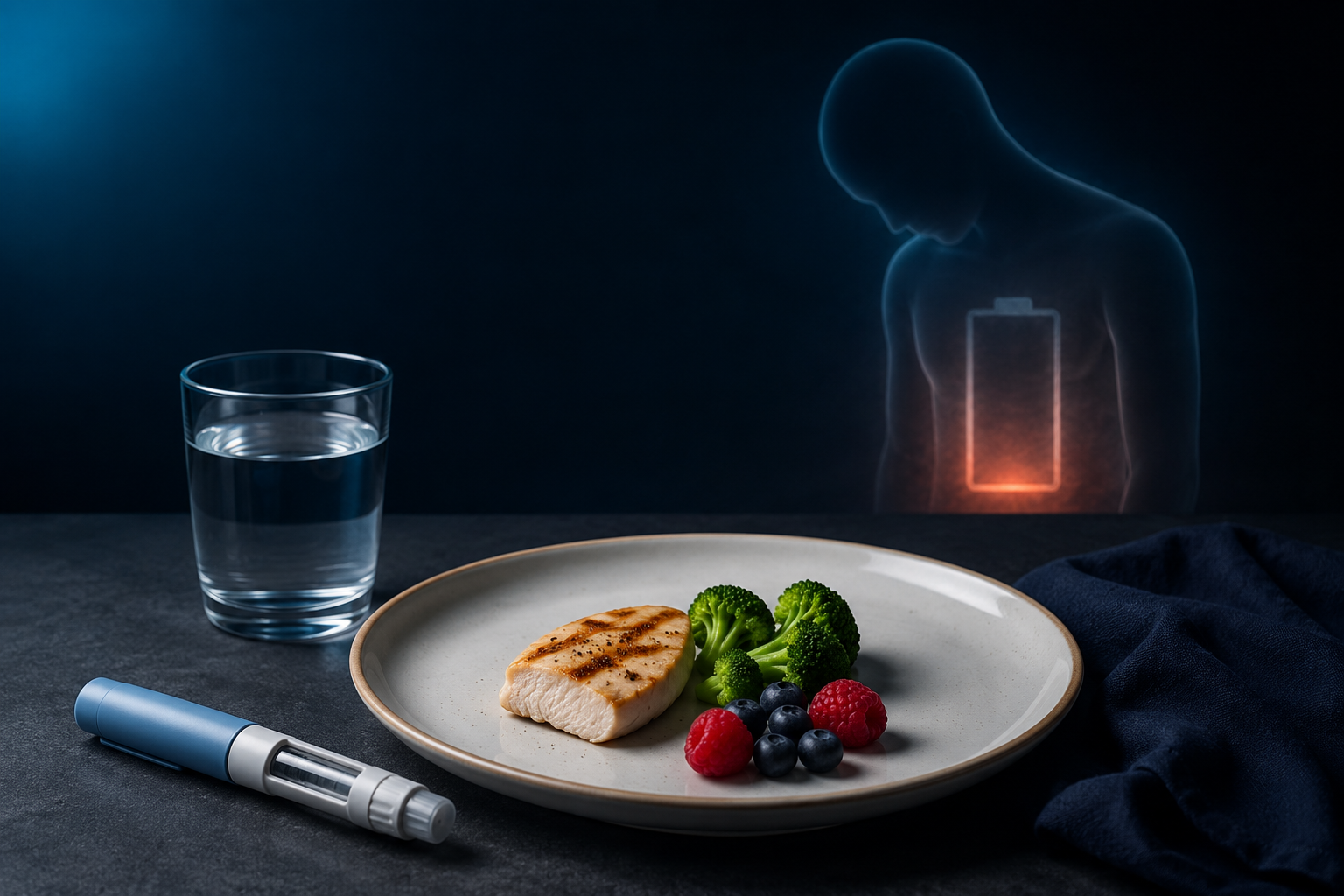
If you started a GLP-1 medication and suddenly find yourself needing an afternoon nap, struggling through workouts, or feeling unusually drained, it is reasonable to wonder:
Is the medication making me tired, or am I simply not eating enough?
The answer can be either. Sometimes it is both.
Fatigue is recognized as a potential adverse effect of medications used for weight management, including semaglutide and tirzepatide. Current FDA prescribing information lists fatigue among common adverse reactions with both Wegovy and Zepbound.
But medication-related fatigue is only one possibility.
GLP-1 and related incretin medications can dramatically reduce appetite. A person who previously ate three full meals may suddenly find themselves eating half a meal, skipping lunch, forgetting to drink water, and consuming far less protein than before.
That can produce weight loss.
It can also produce low energy availability, dehydration, inadequate protein intake, nutrient gaps, loss of lean mass, and fatigue if nutrition is not managed carefully.
Current obesity-care recommendations therefore emphasize monitoring nutritional intake during medication-assisted weight loss, particularly protein and micronutrient adequacy.
The goal of GLP-1 treatment should not simply be to make someone eat as little as possible.
The goal should be to improve health while maintaining enough nutrition to support energy, muscle, metabolic health, and daily function.
Can GLP-1 Medications Cause Fatigue?
Yes.
Fatigue has been reported in clinical trials of GLP-1 and related medications used for chronic weight management.
For example, current FDA prescribing information for Wegovy lists fatigue among the medication’s common adverse reactions.
In clinical trials of Zepbound, fatigue-related adverse events were reported in approximately 5% to 7% of patients receiving the medication, compared with about 3% receiving placebo, depending on dose. These reports included terms such as fatigue, lethargy, malaise, and asthenia.
That means genuine medication-related fatigue can occur.
However, noticing fatigue while taking a medication does not automatically tell us why someone is tired.
Several overlapping factors may be involved.
Why You Might Feel Tired During GLP-1 Treatment
When evaluating fatigue during GLP-1 therapy, it can be useful to look beyond the medication itself.
Common contributors may include:
- Reduced calorie intake
- Inadequate protein
- Dehydration
- Nausea, vomiting, or diarrhea
- Very rapid weight loss
- Loss of lean muscle
- Inadequate carbohydrate intake for activity level
- Iron, vitamin B12, folate, vitamin D, or other nutritional deficiencies
- Low blood pressure
- Blood glucose changes
- Sleep deprivation or sleep apnea
- Thyroid dysfunction
- Other medications
- Underlying medical conditions
The timing of symptoms matters too.
Fatigue that appears temporarily after starting a medication or increasing the dose may have a different explanation than fatigue that progressively worsens after several months of eating very little.
1. Your Calorie Intake May Have Dropped Too Far
The appetite reduction produced by GLP-1 medications is one reason these medications can be effective for weight management.
But reduced appetite can occasionally become too effective.
Someone may say:
“I’m barely hungry anymore.”
That may sound like treatment success, but complete loss of interest in food is not necessarily the goal.
If calorie intake falls substantially below what the body needs for prolonged periods, people may experience:
- Fatigue
- Weakness
- Poor exercise performance
- Dizziness
- Feeling unusually cold
- Difficulty concentrating
- Reduced recovery from training
- Loss of muscle
- Constipation
Current standards of obesity care specifically caution that appetite-suppressing medications can leave individuals vulnerable to inadequate nutrition because they may eat very small portions or skip meals entirely.
This becomes particularly important during periods of rapid weight loss.
Weight Loss Still Requires Nutrition
Weight loss requires an energy deficit.
It does not require nutritional deprivation.
There is a meaningful difference between consuming fewer calories while still meeting nutritional needs and consuming so little food that protein, vitamins, minerals, fiber, essential fats, and overall energy become inadequate.
Your healthcare team should be helping you find that balance.
2. Protein Intake May Be Too Low
Protein becomes especially important during weight loss.
When body weight decreases, some of the lost weight will generally come from lean tissue as well as fat. Adequate protein intake and resistance training can help support the preservation of lean mass.
Recent obesity-treatment standards recommend regularly assessing dietary intake during medication-assisted weight loss and paying particular attention to protein insufficiency.
A 2025 multidisciplinary consensus on nutrition during GLP-1-based therapy also emphasized sufficient high-quality protein, particularly during rapid weight loss.
Why does this matter for fatigue?
Muscle is not simply cosmetic tissue.
Maintaining lean mass supports:
- Physical strength
- Mobility
- Exercise capacity
- Metabolic health
- Recovery
- Functional independence
If appetite becomes so suppressed that someone is living mostly on coffee, crackers, small snacks, and occasional bites of dinner, their total calories may fall while their protein intake falls even faster.
How Much Protein Should You Eat on a GLP-1?
There is no universal target appropriate for everyone.
Protein needs depend on factors including body size, age, kidney function, health conditions, physical activity, calorie intake, and weight-loss goals.
Current obesity standards note a minimum of about 60 grams of protein per day, while higher individualized intakes are often recommended during active weight loss. Some expert recommendations fall around 1.2 to 1.5 grams per kilogram per day during the weight-loss phase, although these targets need to be personalized.
People with kidney disease or certain other medical conditions should not adopt high-protein diets without discussing them with their healthcare provider.
More is also not automatically better.
The objective is adequate protein for the individual, not maximizing protein at the expense of everything else.
Protein Sources That May Be Easier to Eat on GLP-1 Therapy
When appetite is limited, prioritize nutrient density.
Examples may include:
- Eggs
- Greek yogurt
- Cottage cheese
- Fish
- Chicken or turkey
- Lean beef
- Tofu or tempeh
- Beans and lentils
- Milk or fortified soy milk
- Protein shakes when appropriate
Some people tolerate smaller portions divided throughout the day better than trying to consume a large protein-heavy meal at night.
3. You May Be Dehydrated
Reduced appetite sometimes reduces thirst and drinking behavior as well.
Add nausea, vomiting, diarrhea, constipation, increased exercise, hot weather, or alcohol consumption, and fluid losses may become more significant.
Dehydration can cause:
- Fatigue
- Headaches
- Dizziness
- Lightheadedness when standing
- Dry mouth
- Dark urine
- Constipation
- Reduced exercise performance
- Increased heart rate
Experts specifically recommend monitoring hydration during GLP-1 treatment, especially during dose escalation or when nausea, vomiting, or diarrhea occurs.
The FDA labeling for tirzepatide also notes an association between gastrointestinal adverse effects, dehydration, and episodes of hypotension.
How Much Water Do You Need?
There is no single water target appropriate for every person.
Your fluid needs depend on:
- Body size
- Climate
- Exercise
- Diet
- Medications
- Kidney function
- Heart health
- Illness
- Fluid lost through sweating, diarrhea, or vomiting
A simple practical clue is urine color. Persistently dark yellow urine can be one sign that hydration may need attention.
People with kidney disease, heart failure, or prescribed fluid restrictions should follow individualized medical guidance rather than generalized hydration recommendations.
4. Nausea Can Create an Under-Eating Cycle
GLP-1 medications commonly cause gastrointestinal side effects, particularly when treatment begins or the dose increases.
These can include:
- Nausea
- Vomiting
- Diarrhea
- Constipation
- Abdominal discomfort
- Early fullness
- Reflux
These effects often become less pronounced over time, but they can dramatically change eating behavior. Current expert guidance notes that gastrointestinal symptoms are often most prominent during treatment initiation and dose escalation.
A common pattern looks like this:
Nausea → less food → lower energy → more fatigue → even less desire to prepare or eat food.
That cycle can continue unless nutrition and medication tolerability are addressed.
Smaller meals, slower eating, and stopping when comfortably full may help some people. Lower-fat foods can also be easier to tolerate when nausea is prominent.
Persistent vomiting or an inability to maintain adequate fluids and nutrition warrants medical evaluation.
5. Your Carbohydrate Intake May Be Too Low for Your Activity Level
Carbohydrates are sometimes unnecessarily treated as the enemy during GLP-1 weight loss.
They are not.
Carbohydrates provide an important fuel source, particularly for moderate- and high-intensity exercise.
Someone who previously consumed 2,500 calories per day might unintentionally drop to 1,000 calories while also eliminating most bread, rice, potatoes, fruit, and other carbohydrate sources because they believe doing so will accelerate weight loss.
The result may be:
- Poor gym performance
- Reduced endurance
- Fatigue
- Difficulty concentrating
- Reduced training recovery
The solution is not necessarily to eat large quantities of carbohydrates.
Rather, carbohydrate intake should match the individual’s needs, activity level, metabolic health, and overall dietary pattern.
Nutrient-dense options include:
- Fruit
- Potatoes
- Oats
- Beans
- Lentils
- Whole grains
- Rice
- Quinoa
- Dairy products
For someone performing resistance training or endurance exercise, adequate fueling deserves particular attention.
6. Rapid Weight Loss Can Affect Energy and Lean Mass
Seeing the scale fall quickly can feel encouraging.
Faster is not always better.
Rapid weight loss can increase the challenge of maintaining sufficient nutrition and lean tissue.
Current GLP-1 nutritional recommendations emphasize monitoring for excessive weight loss, inadequate appetite, and fatigue as potential signs that nutrition needs reassessment.
If someone is losing weight rapidly while becoming:
- Progressively weaker
- More exhausted
- Less physically capable
- Dizzy
- Unable to exercise
- Unable to eat enough protein
the appropriate response is not necessarily to push harder.
The treatment plan deserves reevaluation.
A successful weight-management program should improve health and function rather than simply produce the lowest possible number on the scale.
7. Micronutrient Deficiencies Can Also Cause Fatigue
Eating significantly less food means consuming fewer opportunities to obtain vitamins and minerals.
Potential deficiencies associated with fatigue include:
- Iron
- Vitamin B12
- Folate
- Vitamin D
- Magnesium
- Thiamine
That does not mean every person taking a GLP-1 needs a long list of supplements.
Nor does it mean everyone with fatigue needs dozens of laboratory tests.
Instead, nutrition and testing should be individualized.
Current standards recommend paying attention to micronutrient sufficiency during obesity pharmacotherapy, especially when overall calorie intake is very low or major nutrient-rich food groups have been eliminated.
Iron deserves particular attention.
You can have depleted iron stores and experience symptoms before classic anemia is obvious on a routine blood count. Other symptoms, dietary history, menstrual blood loss, gastrointestinal conditions, and laboratory markers such as ferritin may help determine whether iron status deserves further evaluation.
Supplementation should be based on clinical need rather than assuming that fatigue equals deficiency.
8. Blood Sugar May Be Relevant, Especially With Diabetes Treatment
GLP-1 medications can lower blood glucose.
For most people using GLP-1 medication alone, severe hypoglycemia is not the expected explanation for routine fatigue.
However, risk can increase when these medications are combined with certain glucose-lowering medications such as insulin or sulfonylureas.
Possible symptoms of hypoglycemia may include:
- Shaking
- Sweating
- Hunger
- Confusion
- Weakness
- Dizziness
- Rapid heartbeat
People with diabetes should follow their clinician’s glucose-monitoring and medication-adjustment recommendations.
Do not automatically attribute unexplained weakness or dizziness to “normal GLP-1 fatigue.”
9. Low Blood Pressure Can Feel Like Fatigue
Weight loss, lower food intake, dehydration, and existing blood-pressure medications can all influence blood pressure.
Symptoms may include:
- Lightheadedness
- Weakness
- Fatigue
- Dizziness when standing
- Near-fainting
The current Zepbound prescribing information reports that hypotension occurred more frequently in treated participants than placebo and could occur in association with gastrointestinal symptoms and dehydration.
If your blood pressure medication was prescribed before substantial weight loss occurred, your healthcare provider may need to reassess your regimen.
Do not change prescription medication on your own.
What Should You Eat When Fatigue Develops on a GLP-1?
Rather than forcing large meals, think about nutritional priority.
If appetite is significantly reduced, each meal has to do more work.
A practical meal might contain:
Protein + produce + a quality carbohydrate or healthy fat
For example:
- Eggs with fruit and whole-grain toast
- Greek yogurt with berries and oats
- Chicken with vegetables and rice
- Salmon with potatoes and greens
- Tofu with vegetables and quinoa
- Cottage cheese with fruit and nuts
Meals do not have to be complicated.
Consistency is more important.
Try a “Protein First” Approach
When you become full quickly, eating the most nutritionally important part of the meal first may help.
For many people, that means beginning with a high-quality protein source.
Then include:
- Vegetables or fruit
- High-fiber carbohydrates when tolerated
- Healthy fats
- Fluids throughout the day
This is not an instruction to avoid carbohydrates or fat.
It simply helps protect protein intake when stomach capacity and appetite are limited.
Consider Your Total Eating Pattern, Not One Perfect Day
A single low-calorie day is usually less informative than the pattern developing across weeks.
Ask yourself:
- Am I routinely skipping meals?
- How many protein-containing meals do I eat?
- Have I stopped eating fruits and vegetables?
- Am I drinking enough?
- Am I losing weight unusually quickly?
- Has my exercise performance deteriorated?
- Am I becoming weaker?
- Is nausea preventing me from eating?
- Did my fatigue begin after a dose increase?
- Am I taking other medications that affect blood pressure or blood sugar?
Those answers often provide more context than simply asking whether fatigue is “a GLP-1 side effect.”
Should You Take a Multivitamin While Using a GLP-1?
Maybe, but supplementation should not replace food quality.
Current obesity treatment standards suggest that a multivitamin-mineral supplement may be considered in selected people who consume very low-calorie diets, eliminate nutrient-rich food groups, have conditions affecting absorption, or are otherwise at elevated risk of deficiencies.
That does not mean everyone needs one.
And taking multiple supplements without understanding what you actually need can create its own problems.
Nutrition should ideally begin with:
- Adequate protein
- Fruits and vegetables
- Whole or minimally processed carbohydrate sources
- Healthy fats
- Sufficient fluids
Then supplements can be considered when there is a specific reason.
When Should Laboratory Testing Be Considered?
Fatigue is nonspecific.
If it persists despite adequate nutrition and hydration, your clinician may consider whether additional evaluation is appropriate.
Depending on symptoms, history, medications, and risk factors, testing might include:
- Complete blood count
- Ferritin and iron studies
- Vitamin B12
- Folate
- Thyroid testing
- Vitamin D
- Electrolytes
- Kidney function
- Liver function
- Glucose or A1c
These tests should be selected based on the clinical picture rather than automatically ordering every available biomarker.
The purpose of laboratory testing is to answer a question.
Not simply to generate more numbers.
Could the GLP-1 Dose Be Too High?
Possibly.
The best dose is not necessarily the highest dose listed on the medication package.
Dose escalation is intended to balance therapeutic response and tolerability.
If a higher dose leads to persistent nausea, inability to eat adequately, dehydration, debilitating fatigue, or excessive weight loss, your prescriber should know.
Obesity-care recommendations specifically note that dose reduction may need to be considered when nutritional intake remains inadequate because of medication effects.
Do not adjust or discontinue prescription medication without discussing it with your healthcare provider.
What About Muscle Loss?
Weight loss commonly involves some reduction in lean mass.
That makes muscle preservation an important component of GLP-1 treatment.
Two factors deserve particular attention:
1. Adequate Protein
Eating enough high-quality protein gives the body amino acids needed to maintain and repair muscle tissue.
2. Resistance Training
Strength training provides a reason for the body to retain muscle.
Current obesity-care guidance recommends combining adequate protein intake with muscle-strengthening activity during pharmacologic weight management.
Examples can include:
- Squats
- Rows
- Push-ups or presses
- Deadlift variations
- Lunges
- Pulling movements
- Machine resistance exercises
Training should be matched to fitness level, medical status, and orthopedic limitations.
If weight is decreasing while strength and physical function collapse, it is worth reassessing the entire strategy.
When Is Fatigue a Reason to Call Your Healthcare Provider?
Persistent or significant fatigue deserves evaluation, particularly if it is interfering with work, exercise, daily activity, or eating.
Contact your healthcare provider if you are experiencing:
- Fatigue that continues or worsens
- Persistent nausea or vomiting
- Inability to maintain adequate food intake
- Signs of dehydration
- Frequent dizziness
- Recurrent low blood glucose
- Very rapid or excessive weight loss
- Noticeable weakness or muscle loss
- Symptoms that started after a medication dose increase
Seek urgent medical attention for severe or concerning symptoms such as fainting, confusion, inability to keep fluids down, severe abdominal pain, signs of severe dehydration, or other acute symptoms.
Medication Effect or Nutrition Problem? Often the Answer Requires Context
There is no single laboratory test that can tell you, “Your GLP-1 is causing fatigue.”
The evaluation is more nuanced.
A provider may look at:
- When the fatigue began
- The medication and dose
- Whether the dose recently changed
- Weight-loss rate
- Daily calorie intake
- Protein intake
- Fluid intake
- Gastrointestinal symptoms
- Exercise patterns
- Sleep
- Blood pressure
- Glucose
- Other medications
- Relevant laboratory markers
Sometimes the medication itself appears to be the primary factor.
Sometimes treatment has indirectly created such a large reduction in food or fluid intake that nutrition becomes the bigger issue.
And sometimes fatigue has nothing to do with the GLP-1 medication at all.
A Better Goal for GLP-1 Treatment
The goal is not:
Eat as little as possible and lose weight as fast as possible.
A better goal is:
Lose clinically meaningful weight while preserving muscle, meeting nutritional needs, supporting energy, and improving long-term health.
GLP-1 medications can be powerful tools.
But appetite suppression does not eliminate the body’s requirement for protein, fluids, vitamins, minerals, movement, sleep, and recovery.
In some ways, nutrition becomes more important when appetite decreases because there is less room for foods that provide very little nutritional value.
The Bottom Line
Fatigue during GLP-1 treatment can be a genuine medication side effect.
But it should not automatically be dismissed as something you simply have to tolerate.
Reduced calories, insufficient protein, dehydration, gastrointestinal side effects, rapid weight loss, micronutrient deficiencies, low blood pressure, glucose changes, poor sleep, thyroid dysfunction, and other medical issues can all produce similar symptoms.
If fatigue develops, ask a better question than:
“Is this normal?”
Ask:
“What changed, and am I still giving my body what it needs?”
Reviewing food intake, protein, hydration, weight-loss rate, exercise, sleep, medications, symptoms, and appropriately selected laboratory results can help distinguish a temporary medication effect from a nutritional or medical problem that deserves attention.
GLP-1 treatment should help you become metabolically healthier.
It should not require sacrificing strength, nutrition, or your ability to function.
Frequently Asked Questions
Is fatigue a normal side effect of semaglutide?
Fatigue is listed among common adverse reactions in current FDA prescribing information for Wegovy. However, fatigue can also result from reduced calorie intake, dehydration, inadequate protein, rapid weight loss, poor sleep, and unrelated medical conditions. Persistent fatigue should be discussed with your healthcare provider.
Does tirzepatide cause fatigue?
It can. In Zepbound clinical trials, fatigue-related reactions occurred in roughly 5% to 7% of treated patients, depending on dose, compared with approximately 3% receiving placebo.
Why am I exhausted after increasing my GLP-1 dose?
Gastrointestinal side effects and appetite suppression may become more noticeable during dose escalation. If you begin eating or drinking significantly less after a dose increase, inadequate nutrition or dehydration may compound medication-related fatigue.
How much protein should I eat while taking a GLP-1?
Protein needs should be individualized. Current obesity standards recommend at least about 60 grams daily as a general minimum for many adults during weight management, while higher individualized amounts are often appropriate during active weight loss. Your provider or dietitian can help establish a target based on your body size, activity, health conditions, and goals.
Can eating too little on semaglutide make you tired?
Yes. Semaglutide can substantially reduce appetite, and chronically consuming too little total energy can contribute to fatigue, weakness, poor exercise performance, and inadequate nutrient intake.
Can dehydration cause GLP-1 fatigue?
Yes. Lower fluid intake, vomiting, or diarrhea may contribute to dehydration, which can cause fatigue, headaches, dizziness, constipation, and reduced exercise capacity. Hydration deserves particular attention during dose escalation and periods of gastrointestinal symptoms.
Should I force myself to eat if I am not hungry on a GLP-1?
You do not necessarily need to force large meals, but chronically failing to meet nutritional needs is not desirable. Smaller, structured meals centered around protein and nutrient-dense foods may be easier to tolerate. Discuss significant appetite suppression or inability to eat adequately with your prescriber.
Should I stop my GLP-1 medication if I feel fatigued?
Do not stop or change a prescription medication without discussing it with your healthcare provider. The cause of the fatigue should first be evaluated, and your clinician can determine whether nutrition, hydration, another medical issue, or the medication regimen itself needs to be adjusted.
References
- U.S. Food and Drug Administration. Current Wegovy (semaglutide) Prescribing Information. Fatigue is included among commonly reported adverse reactions.
- U.S. Food and Drug Administration. Current Zepbound (tirzepatide) Prescribing Information. Clinical trial data include fatigue, gastrointestinal adverse reactions, dehydration-related concerns, and hypotension.
- Pharmacologic Treatment of Obesity in Adults: Standards of Care in Overweight and Obesity. Recommendations emphasize adequate nutrition, protein intake, muscle-strengthening activity, hydration, and monitoring for micronutrient deficiencies during obesity pharmacotherapy.
- Mozaffarian D, et al. Nutritional Priorities to Support GLP-1 Therapy for Obesity: A Joint Advisory From the American College of Lifestyle Medicine, American Society for Nutrition, Obesity Medicine Association, and The Obesity Society. 2025.
- Nutritional and Lifestyle Supportive Care Recommendations for Management of Obesity With GLP-1-Based Therapies. Expert consensus recommendations addressing hydration, protein, gastrointestinal symptoms, lean mass, and nutritional adequacy.
Medical Disclaimer: This article is for educational and informational purposes only and does not constitute medical advice. GLP-1 and related medications should be prescribed and monitored by a qualified healthcare professional. Do not start, stop, or change the dose of any medication or supplement without discussing it with your healthcare provider.