
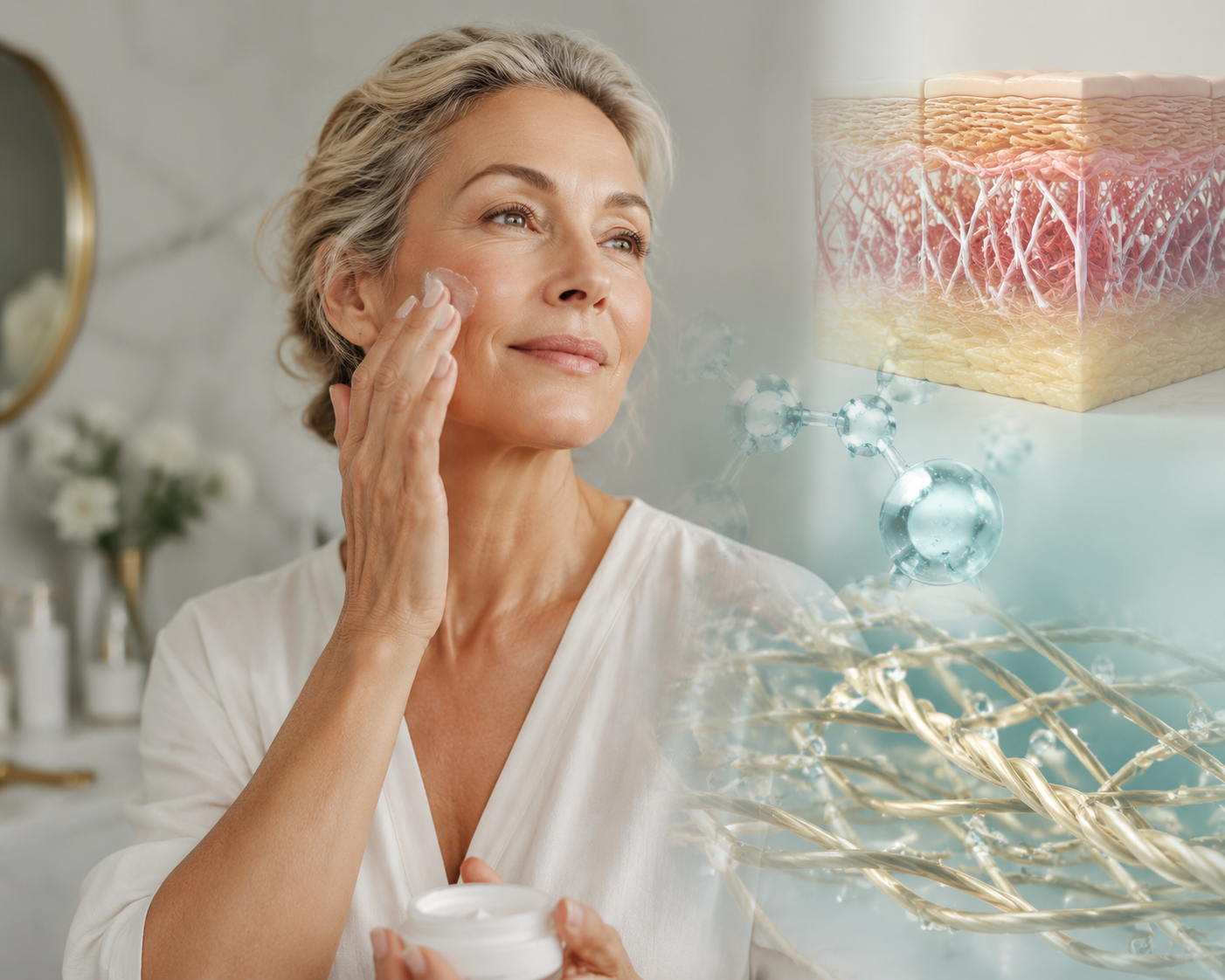
When estrogen drops during menopause, skin changes are not subtle. They are structural. Collagen declines, hydration falls, and the skin barrier becomes more fragile. What used to “work fine” in your 30s often stops working entirely.
The goal is not just anti-aging. It is restoring skin function.
This guide breaks down what actually changes in the skin after estrogen decline and how to rebuild an effective menopause skincare routine.
What Estrogen Actually Does for Your Skin
Estrogen is not just a reproductive hormone. It is a skin-regulating hormone.
When levels are optimal, estrogen supports:
- Collagen production for firmness and elasticity
- Hyaluronic acid for hydration and plumpness
- Skin barrier integrity to prevent dryness and irritation
- Wound healing and cellular turnover
As estrogen declines during perimenopause and menopause, the skin shifts into a low-support state.
What Changes in Menopause Skin
These changes are predictable and well-studied:
1. Collagen Loss Accelerates
Skin loses roughly 1–2% collagen per year after menopause. This leads to:
- Sagging
- Fine lines becoming deeper wrinkles
- Loss of facial structure
2. Skin Becomes Thinner
The dermis becomes less dense, making skin more fragile and sensitive.
3. Dryness Increases
Sebum production declines, leading to:
- Tightness after cleansing
- Flaking or rough texture
- Dull appearance
4. Barrier Function Weakens
The skin loses its ability to retain moisture and defend against irritants.
5. Slower Repair
Cuts, breakouts, and irritation take longer to heal.
The Menopause Skin Care Routine (Science-Backed)
This routine focuses on three goals:
Restore hydration, rebuild collagen signaling, and protect the skin barrier.
Morning Routine (AM)
Step 1: Gentle Cleanser
Avoid harsh foaming cleansers that strip oils.
Look for:
- Cream-based or low-foam cleansers
- pH-balanced formulas
Step 2: Antioxidant Serum (Vitamin C)
Vitamin C helps:
- Support collagen synthesis
- Reduce oxidative stress
- Brighten uneven tone
Step 3: Hydration Layer
Use ingredients like:
- Hyaluronic acid
- Glycerin
- Panthenol
Step 4: Moisturizer (Barrier Support)
Look for:
- Ceramides
- Fatty acids
- Cholesterol
Step 5: Sunscreen (Non-negotiable)
SPF 30 or higher daily.
UV exposure is the fastest accelerator of collagen breakdown during menopause.
Evening Routine (PM)
Step 1: Cleanse (Double Cleanse if Needed)
Remove sunscreen, makeup, and environmental buildup.
Step 2: Retinoid (Key Anti-Aging Step)
Retinoids help:
- Increase collagen production
- Improve cell turnover
- Reduce fine lines and pigmentation
Start slow:
- 2–3 nights per week
- Build tolerance gradually
Step 3: Barrier Repair Moisturizer
Focus on lipid-rich moisturizers to restore overnight repair.
Optional: Peptides or Growth Factors
These can support signaling pathways related to repair and firmness.
Ingredients That Matter Most After Estrogen Decline
Not all skincare ingredients are equal in menopause.
Prioritize:
- Retinoids (collagen stimulation)
- Vitamin C (antioxidant + brightness)
- Niacinamide (barrier + tone + inflammation control)
- Ceramides (barrier repair)
- Hyaluronic acid (hydration retention)
- Peptides (cell signaling support)
Avoid overcomplicating it. Skin in menopause responds better to consistency than complexity.
What Makes Menopause Skin Different From “Normal Aging”
The key difference is hormonal.
Estrogen decline impacts:
- Oil production
- Collagen synthesis
- Inflammation regulation
- Skin hydration capacity
This is why typical “anti-aging” routines often fall short after 40. You are not just aging. You are hormonally shifting.
When Skincare Alone Is Not Enough
If you are doing everything right topically but still seeing:
- Rapid collagen loss
- Severe dryness
- Persistent dullness
- Skin thinning
Then internal factors may be driving the issue:
- Estrogen decline
- Thyroid dysfunction
- Cortisol imbalance
- Insulin resistance
This is where functional lab testing and hormone evaluation become relevant.
Can Hormone Therapy Improve Skin?
In many cases, yes.
Restoring estrogen levels (when clinically appropriate) has been associated with:
- Improved skin thickness
- Increased collagen density
- Better hydration
- Faster wound healing
This should always be evaluated clinically and individualized.
Key Takeaway
Menopause skin is not “bad skin.” It is hormonally altered skin.
A strong routine does three things:
- Rebuilds barrier function
- Stimulates collagen production
- Restores hydration balance
When paired with internal hormone optimization, results are significantly stronger.