
The Longevity Triangle Most People Ignore
When people talk about longevity, they usually talk about heart health, weight loss, blood sugar, hormones, or supplements.
Those matter.
But there’s a quieter triangle that often determines how well you age:
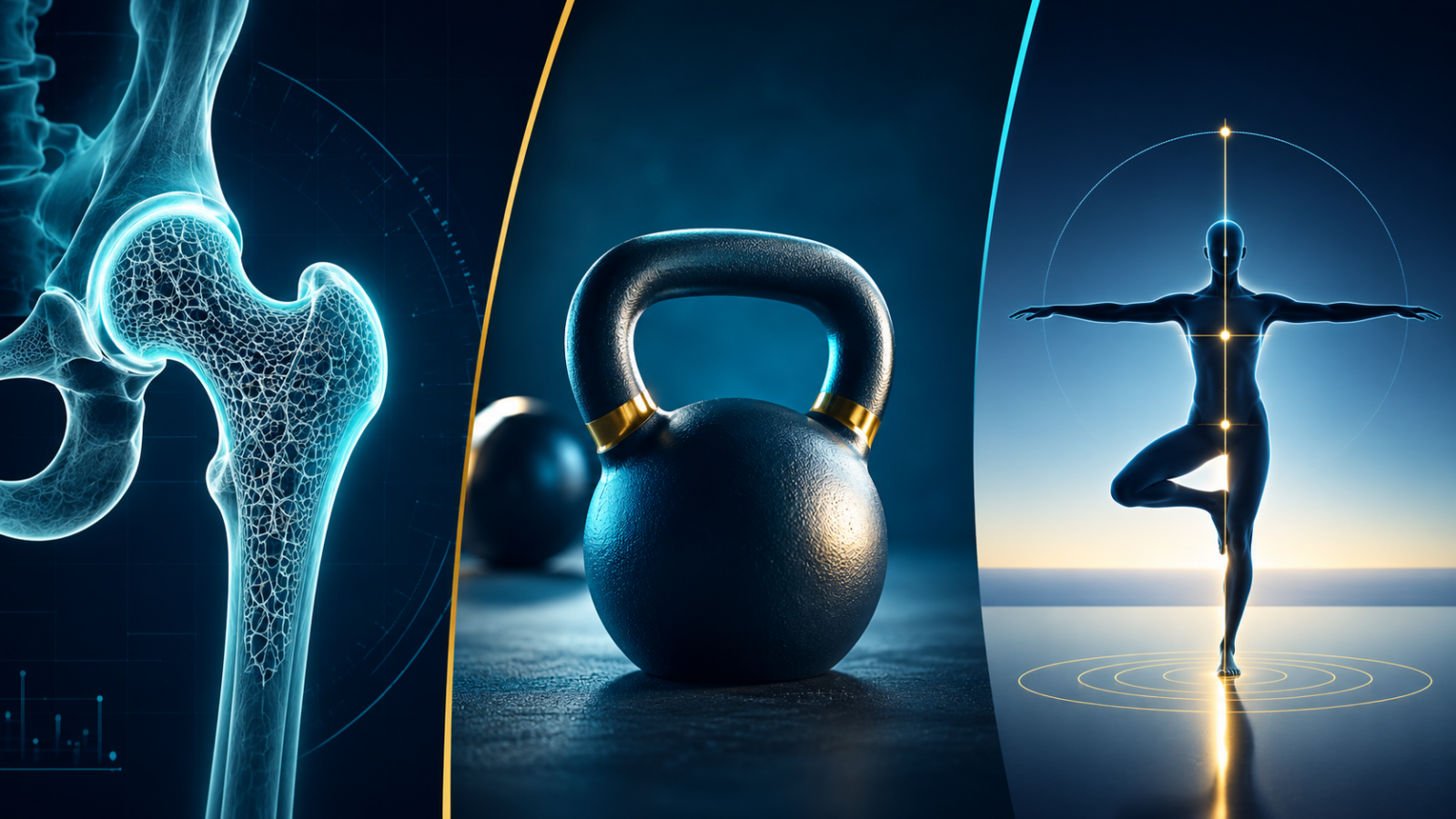
Bone density. Muscle. Balance.
These three systems work together. Stronger bones help protect you from fractures. More muscle helps you move, stabilize, and recover. Better balance lowers your risk of falling in the first place.
Ignore one, and the whole structure gets weaker.
That’s why healthy aging isn’t just about living longer. It’s about staying strong enough, stable enough, and resilient enough to keep doing the things that make life yours.
Why Bone Density Matters More Than You Think
Bone density refers to how much mineral content is packed into your bones. Higher bone mineral density usually means stronger bones. Lower bone density can increase the risk of osteopenia, osteoporosis, and fractures.
Osteoporosis is often called a “silent” disease because many people don’t know they have it until a bone breaks. According to the National Institute of Arthritis and Musculoskeletal and Skin Diseases, osteoporosis can cause bones to become fragile enough to break from a minor fall, bending, lifting, or even coughing in more advanced cases.
This is especially important for women in perimenopause and menopause.
As estrogen declines, bone loss can speed up. Low estrogen after menopause is a recognized risk factor for osteoporosis. Low testosterone can also increase osteoporosis risk in men with conditions that cause testosterone deficiency.
That means bone health is not just an “older person problem.”
It often starts years before someone feels vulnerable.
Muscle Is Your Metabolic and Structural Insurance
Muscle does far more than help you look toned.
It supports:
- Blood sugar regulation
- Metabolic health
- Joint stability
- Posture
- Daily movement
- Recovery from injury
- Bone strength
- Fall prevention
As we age, adults naturally tend to lose muscle mass and strength. This process is often called sarcopenia. Less muscle can mean weaker movement, slower reflexes, worse balance, and higher risk of injury.
The frustrating part, because biology apparently enjoys plot twists, is that muscle and bone talk to each other.
When you lift, pull, push, squat, carry, or climb, your muscles create force through your skeleton. That force gives your bones a reason to stay strong.
The National Institutes of Health notes that exercise can strengthen both muscles and bones, prevent bone loss in adults, improve balance and coordination, and help prevent falls and fractures.
This is why strength training is not optional after 35.
It’s one of the best long-term investments you can make in your independence.
Balance Is the Missing Piece
Most people think about bone density only after a scan.
They think about muscle when their clothes fit differently.
But balance usually gets ignored until someone trips, falls, or starts feeling unstable.
That’s a mistake.
Falls are one of the biggest threats to independence later in life. The CDC reports that falls are the leading cause of injury for adults ages 65 and older, with more than 14 million older adults, about 1 in 4, reporting a fall each year. About 37% of older adults who fall report an injury that requires medical treatment or restricts activity for at least one day.
Balance is not just standing on one foot in a gym while pretending you’re not embarrassed.
It’s your ability to react, stabilize, shift weight, step over obstacles, recover from slips, and move confidently through real life.
Good balance depends on:
- Muscle strength
- Foot and ankle control
- Vision
- Inner ear function
- Nervous system coordination
- Joint mobility
- Reaction time
- Core stability
When balance declines, even strong bones and decent muscle may not be enough.
The goal is not just to survive a fall. The goal is to reduce the chance of falling at all.
How the Longevity Triangle Works Together
Think of bone density, muscle, and balance as one system.
Bone density protects the frame.
Muscle powers and stabilizes the frame.
Balance keeps the frame upright under real-world stress.
Here’s how they connect:
1. Stronger muscle supports stronger bones
Resistance training places healthy stress on bone. This helps signal the body to maintain or build bone strength.
2. Better muscle improves balance
Stronger hips, glutes, calves, feet, and core muscles help you react faster and stabilize better.
3. Better balance protects your bones
A fall onto weak bones can cause a fracture. Improving balance lowers the chance of that fall happening.
4. Better bones preserve independence
A fracture can limit mobility, reduce confidence, and start a cycle of inactivity. That inactivity can then accelerate muscle loss and further weaken balance.
That’s the loop we want to prevent.
Who Should Pay Attention Early?
This topic matters for everyone, but it matters even more if you have risk factors.
You should be proactive about bone density, muscle, and balance if you:
- Are in perimenopause, menopause, or postmenopause
- Have a history of irregular cycles or low estrogen
- Have low testosterone
- Have lost height
- Have had a fracture after age 50
- Have a parent with osteoporosis or hip fracture
- Have low body weight
- Have a history of chronic dieting or low protein intake
- Take long-term steroid medications
- Smoke or drink heavily
- Have thyroid, gut, autoimmune, or inflammatory conditions
- Avoid strength training
- Feel less steady than you used to
- Sit most of the day
The US Preventive Services Task Force recommends osteoporosis screening for women age 65 and older, and for postmenopausal women younger than 65 who have risk factors and are at increased fracture risk. Screening commonly includes a DXA scan, also called dual-energy X-ray absorptiometry, to measure bone mineral density.
For men, screening decisions are more individualized because evidence is less clear at the population level. That does not mean men are immune. It means clinical judgment matters.
The Core Training Strategy
You don’t need a complicated plan.
You need a consistent one.
The CDC recommends that adults 65 and older get aerobic activity, muscle-strengthening activity at least 2 days per week, and activities that improve balance. The same general foundation is useful much earlier than 65, especially for anyone trying to age with strength and independence.
A practical longevity plan should include:
1. Strength Training 2 to 4 Days Per Week
Focus on movements that build real-world strength.
Good options include:
- Squats or sit-to-stands
- Deadlifts or hip hinges
- Step-ups
- Lunges
- Rows
- Pushups or presses
- Carries
- Pulling movements
- Core stability work
You don’t need to crush yourself every session. You need progressive overload, good form, and enough consistency for your body to adapt.
2. Weight-Bearing Movement Most Days
Bones respond well to weight-bearing activity.
Examples include:
- Brisk walking
- Hiking
- Stair climbing
- Dancing
- Pickleball or tennis
- Loaded carries
- Strength circuits
Swimming and cycling are great for cardiovascular fitness, but they are not as bone-loading as walking, lifting, or impact-based movement.
3. Balance Training 3 to 5 Days Per Week
This can be simple and short.
Try:
- Single-leg stands
- Heel-to-toe walking
- Step-downs
- Lateral walks
- Farmer carries
- Walking backward
- Tai chi
- Controlled lunges
- Barefoot foot-strength drills when appropriate
Balance training works best when it is frequent. Five minutes a day can matter.
4. Power and Reaction Work
Aging is not only about losing strength.
It’s also about losing speed.
Power training can help preserve the ability to react quickly. That might mean:
- Medicine ball throws
- Faster step-ups
- Light kettlebell swings
- Low-impact hops, when appropriate
- Quick direction changes
- Controlled agility drills
This should be matched to your current ability, injury history, and joint health.
Nutrition: The Triangle Needs Raw Materials
You cannot train your way out of poor nutrition forever. Annoying, but true.
Bone, muscle, and balance all depend on adequate fuel.
Key nutrients include:
Protein
Protein supports muscle repair, recovery, and lean mass. Many adults under-eat protein, especially during weight loss.
A common performance-focused target is about 0.7 to 1.0 gram of protein per pound of goal body weight per day, adjusted for kidney health, activity, digestion, and medical history.
Calcium
Calcium helps maintain bone structure. Food sources include dairy products, sardines with bones, tofu set with calcium, leafy greens, and fortified foods. NIAMS notes that dairy, leafy greens, fish, tofu, and fortified foods can all contribute to calcium intake.
Vitamin D
Vitamin D helps the body absorb calcium. It also supports healthy muscle function, which matters for balance and fall prevention. NIAMS lists 600 international units daily for adults ages 1 to 70 and 800 international units daily for adults older than 70 as general intake recommendations.
Magnesium
Magnesium supports muscle contraction, relaxation, and vitamin D metabolism. Many people do not get enough from food.
Creatine
Creatine may support strength, power, lean mass, and training performance. It is one of the better-studied supplements for muscle performance, but dosing and suitability should still be personalized.
Labs and Testing to Consider
At 1st Optimal, we look at the full picture because guessing is a weird strategy for adults with actual goals.
Useful testing may include:
- DXA scan for bone mineral density
- Body composition testing when available
- Vitamin D
- Calcium
- Magnesium
- Parathyroid hormone when clinically appropriate
- Thyroid markers
- Estradiol
- Progesterone
- Total and free testosterone
- Sex hormone-binding globulin
- Inflammatory markers
- Fasting insulin
- Hemoglobin A1c
- Comprehensive metabolic panel
- Complete blood count
- Iron and ferritin when relevant
Bone health is not isolated from hormones, metabolism, gut health, inflammation, or recovery.
If someone is training hard but losing muscle, struggling with fatigue, gaining visceral fat, sleeping poorly, or showing signs of hormone imbalance, the plan needs more than “eat less and move more.”
That advice has had a long enough career.
The Biggest Mistakes People Make
Mistake 1: Only Walking
Walking is excellent. But walking alone is usually not enough to build meaningful muscle or preserve bone density long term.
You still need resistance training.
Mistake 2: Waiting Until a Fracture
Bone loss is often silent. Waiting for symptoms can mean waiting too long.
Mistake 3: Ignoring Protein
Many adults trying to lose weight accidentally under-eat protein. That can accelerate muscle loss, especially in midlife.
Mistake 4: Training Hard but Never Training Balance
Strength does not automatically equal stability. Balance needs practice.
Mistake 5: Treating Hormones Like a Side Topic
Estrogen, testosterone, thyroid hormones, cortisol, insulin, and vitamin D all influence the environment your bones and muscles live in.
You don’t need to chase “perfect” labs.
You need to know what’s actually going on.
A Simple Weekly Longevity Triangle Plan
Here’s a practical starting point:
Monday: Strength training, lower body and core
Tuesday: Brisk walk plus 5 minutes balance work
Wednesday: Strength training, upper body and carries
Thursday: Zone 2 cardio plus mobility
Friday: Strength training, full body
Saturday: Hiking, stairs, pickleball, or active recreation
Sunday: Recovery walk, stretching, balance drills
Daily baseline:
- Protein at each meal
- 7,000 to 10,000 steps if appropriate
- 5 minutes of balance practice
- Sunlight or vitamin D support when needed
- Sleep quality protected like it actually matters, because it does
Final Takeaway
Longevity is not just about avoiding disease.
It’s about keeping the physical capacity to live well.
Bone density protects your structure. Muscle gives you strength and metabolic resilience. Balance helps you move through the world without losing confidence, independence, or months of progress from one bad fall.
The earlier you train the longevity triangle, the better.
At 1st Optimal, we help high-achieving adults build personalized health plans using advanced labs, hormone optimization, nutrition, strength-focused strategy, and practical coaching.
Because the goal is not just to add years.
The goal is to stay strong enough to enjoy them.
Next Step:
Ready to understand what your body actually needs?
Book a consultation with 1st Optimal and build a personalized plan for hormones, muscle, metabolism, and long-term health.
Educational Disclaimer
This article is educational only and is not medical advice. Talk with a qualified healthcare provider before starting a new exercise, supplement, hormone, or treatment plan, especially if you have osteoporosis, a history of fractures, balance issues, or a medical condition.