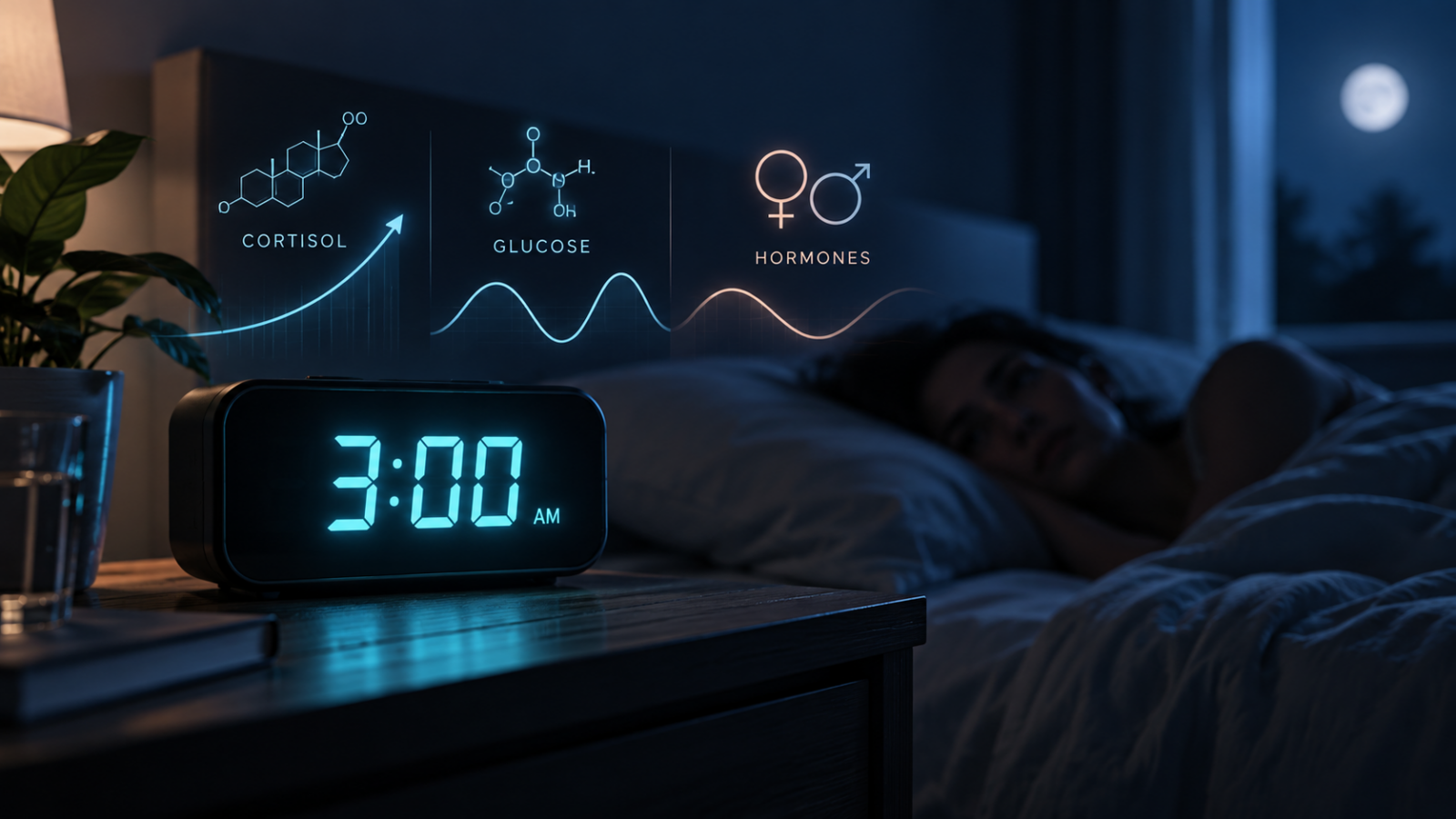


Every week, I speak with people who have been researching peptides and HRT, reading articles and forums, and still are not sure which path makes sense for them. That uncertainty is completely understandable, and honestly, it reflects good judgment. Anyone who tells you the decision is simple is not giving you the full picture.
The truth is that peptides and hormone replacement therapy are not rivals in a debate where one side wins. They address different things, work through different mechanisms, and serve different clinical purposes. The right question is not “which is better?” but “which is appropriate for my situation, and is there a case for using both?”
Making that determination requires something that no article, podcast, or forum thread can provide: a thorough clinical evaluation that includes comprehensive lab work, a detailed symptom history, a review of your health history and goals, and a provider experienced enough to synthesize all of that into a personalized recommendation.
This post is designed to prepare you for that conversation. I will walk you through the key decision points, the questions worth asking, and how we think about this at 1st Optimal, where helping people navigate exactly this decision is something we do every day.
Understanding What Each Approach Actually Does
Before you can make an informed choice, you need clarity on what each approach is actually doing in your body.
Hormone Replacement Therapy HRT directly replaces hormones that have declined below optimal or symptomatic thresholds. For women, this typically means estradiol, progesterone, and often testosterone. For men, testosterone is the primary hormone addressed. HRT addresses deficiency by supplying the hormone that the body is no longer producing in sufficient quantities.
The evidence base for HRT is extensive. Decades of research document its effectiveness for vasomotor symptoms, bone density preservation, sexual health, mood, cardiovascular considerations, and quality of life in appropriate candidates. Modern HRT, particularly when delivered transdermally and using bioidentical hormones, has a refined risk profile compared to older oral synthetic formulations.
Peptide Therapy Peptide therapy does not supply hormones. Most clinical peptides work as signaling molecules that stimulate the body’s own glands or tissues to produce or regulate their functions. Growth hormone-releasing peptides, for example, signal the pituitary gland to release GH naturally rather than supplying GH directly. Tissue-repair peptides signal cellular repair mechanisms. The approach is more about optimization and support than replacement.
This distinction matters clinically. If you have a genuine hormone deficiency, estrogen, testosterone, progesterone, peptides will not replace those hormones. They may offer complementary benefits, but they will not address the primary deficiency. Conversely, for someone whose hormone levels are adequate but who is experiencing the effects of physiological aging beyond hormonal change, peptide therapy may address gaps that HRT cannot.
Who Is a Good Candidate for HRT?
HRT is most clearly indicated when there is a documentable hormone deficiency causing symptoms. This is not simply a matter of age, it requires lab confirmation combined with clinical evaluation.
Candidates for HRT in Women
Women who are most likely to benefit from HRT include those experiencing:
- Moderate to severe vasomotor symptoms (hot flashes, night sweats)
- Documented low estradiol with symptomatic response
- Premature or early menopause (before age 40 or 45)
- Osteoporosis prevention or treatment needs
- Sexual dysfunction related to hormonal decline
- Low testosterone with symptoms of androgen insufficiency
- Cognitive or mood changes in the context of documented hormonal decline
HRT is generally most beneficial, and has the most favorable risk profile, when initiated in women within 10 years of menopause onset or before age 60, as supported by the “timing hypothesis” in HRT research.
Candidates for HRT in Men
Men benefit most from testosterone therapy when they have:
- Documented low testosterone (typically total testosterone below 300 ng/dL or free testosterone below the reference range)
- Symptoms including fatigue, reduced libido, loss of muscle mass, depression, and cognitive difficulty
- Ruled out secondary causes of low testosterone (medications, obesity, sleep apnea, thyroid dysfunction)
Who Should Approach HRT With Caution or Consider Alternatives
Some individuals may not be good candidates for traditional HRT:
- History of hormone-sensitive cancers (breast, endometrial, prostate) requires specialist guidance
- History of blood clots or high clotting risk particularly relevant for oral estrogen
- Personal strong preference to avoid hormone supplementation
- Women with contraindications to estrogen specifically
For people in these categories, peptide therapy, which does not supply hormones directly, may be a more appropriate primary approach.
Who Is a Good Candidate for Peptide Therapy?
Peptide therapy is appropriate in a wider range of situations than HRT, in part because it works through different mechanisms and does not carry the same contraindications.
Well-Suited for Peptide Therapy
- Adults experiencing age-related decline in growth hormone and its effects: decreased muscle mass, increased fat accumulation, poor sleep quality, reduced recovery, and lower energy despite otherwise adequate hormone levels
- Individuals who are not candidates for HRT due to medical history but want evidence-informed support for physiological optimization
- People already on well-managed HRT who want to address residual symptoms particularly around sleep, body composition, or tissue repair
- Those focused on longevity and proactive physiological optimization rather than treating acute deficiency
- Adults with specific goals related to skin health and collagen support
- Athletes or highly active individuals seeking optimized recovery
Where Peptide Therapy Is Less Appropriate
- As a substitute for HRT in someone with documented hormone deficiency and significant symptoms, peptides will not replace estrogen, progesterone, or testosterone
- In individuals with active cancer or a history of hormone-sensitive cancers, this requires careful specialist evaluation
- In pregnant or breastfeeding women
- Without a thorough health evaluation and appropriate lab baseline
When Both Make Sense — The Combined Protocol
This is where I find the most interesting clinical conversations happen. Many people arrive at 1st Optimal asking about peptides or HRT, and leave with a plan that thoughtfully combines both.
The rationale for combining them is straightforward: HRT addresses primary hormone deficiency; peptide therapy addresses age-related physiological decline that exists in parallel with hormonal change. Neither fully addresses the other’s domain.
Consider a 52-year-old woman on well-managed HRT, her estradiol, progesterone, and testosterone are optimized, her hot flashes are controlled, her mood is stable. Yet she still struggles with sleep quality, her body composition has shifted despite good nutrition and exercise, and she feels less resilient than she did a decade ago. Her IGF-1 comes back on the lower end of normal, suggesting GH-related physiological aging beyond what HRT addresses.
For this woman, adding growth hormone-supportive peptide therapy alongside her HRT protocol may provide meaningful additional benefit. This is not layering complexity for its own sake, it is addressing a specific physiological gap with an appropriate tool.
Conversely, a 45-year-old man focused on longevity optimization whose testosterone is genuinely adequate but whose sleep quality and body composition are shifting may be a strong candidate for peptide support without needing HRT.
The combined protocol is appropriate when the evidence supports it, labs confirm the need, and a qualified provider has evaluated the full clinical picture.
The Role of Comprehensive Lab Testing
You cannot make an informed decision about peptides versus HRT, or both without data. And most people who come to us have not had the comprehensive lab evaluation that would make this decision clear.
A standard annual blood panel is not sufficient. The labs we consider essential for this decision include:
For Hormonal Evaluation
- Total and free estradiol (women)
- Progesterone (timed to cycle phase in premenopausal women)
- Total and free testosterone
- Sex hormone-binding globulin (SHBG)
- DHEA-S
- LH and FSH
For GH/Peptide Assessment
- IGF-1 (the most practical proxy for growth hormone activity)
- Complete metabolic panel
For Context
- Complete thyroid panel (TSH, free T3, free T4, reverse T3, thyroid antibodies)
- Fasting insulin and glucose
- HbA1c
- CBC with differential
- Comprehensive metabolic panel
- Inflammatory markers (hsCRP, ESR)
- Lipid panel with fractions
When we review all of this together with a patient’s symptoms and goals, the right path, whether HRT, peptide therapy, or both, becomes considerably clearer. Without this foundation, we are guessing. With it, we can be precise.
Section 6: Questions to Ask Before You Decide
Whether you are evaluating providers or trying to clarify your own thinking, these questions are worth having clear answers to before committing to any protocol.
Questions to Ask Yourself
- What symptoms am I actually experiencing, and how significantly are they affecting my quality of life?
- Have I had comprehensive labs done, or am I going on symptoms alone?
- Do I have any health history that might make certain approaches more or less appropriate for me?
- What are my primary goals, symptom relief, optimization, longevity, body composition, or a combination?
- Am I willing to commit to the monitoring that evidence-based therapy requires?
Questions to Ask a Prospective Provider
- What labs do you run before prescribing, and which do you monitor during therapy?
- How do you individualize dosing, are protocols standardized or truly personalized?
- Where are your compounds sourced, and what quality standards does that pharmacy meet?
- What is your follow-up schedule, and what happens if I have a concern between appointments?
- Are you current with FDA regulatory guidance on the compounds you prescribe?
Red Flags in a Provider
- Prescribing without a thorough evaluation or comprehensive labs
- One-size-fits-all protocols without clear rationale for the specific doses
- Reluctance to answer questions about sourcing or monitoring
- Unusually fast onboarding with minimal information gathering
- Discouraging lab monitoring after therapy begins
Red Flags in the Decision-Making Process
Beyond evaluating providers, I want to address some red flags I commonly see in how people approach this decision that can lead them astray.
Relying Solely on Online Communities Reddit threads, Facebook groups, and wellness podcasts can be valuable for learning what questions to ask. They should not be the basis for your protocol. Anecdotal experiences from anonymous individuals with different health histories, hormone levels, and goals are not a substitute for clinical evaluation.
Assuming Symptoms Equal Deficiency Fatigue, brain fog, and low libido are symptoms that overlap with many conditions — thyroid disorders, sleep apnea, depression, nutritional deficiencies, and anemia among them. Attributing these symptoms to hormonal deficiency and jumping to HRT or peptide therapy without ruling out other causes is a mistake.
Prioritizing Cost Over Quality Cost is a legitimate consideration, and I understand that these therapies represent real out-of-pocket expense. But choosing the cheapest clinic without evaluating provider credentials, sourcing standards, and monitoring protocols is a false economy.
Self-Prescribing From Unregulated Sources I have addressed this in other posts, but it bears repeating here. Purchasing prescription peptides or hormones from unregulated online sources carries quality, dosing, and legal risks that outweigh any convenience benefit.
A Real-World Decision Scenario
Let me share a composite scenario that illustrates how this decision unfolds in practice.
Maria is 49. She is in perimenopause, still having irregular periods, and experiencing hot flashes that are disrupting her sleep. She has also noticed reduced energy, some difficulty maintaining her weight despite unchanged habits, and a decline in libido. She has been reading about both HRT and peptide therapy and is not sure which to pursue.
When we run her labs, we find that her estradiol is fluctuating and trending low for the luteal phase, her testosterone is in the lower quarter of the range, her progesterone is low, and her IGF-1 is also below the midpoint of the reference range. Her thyroid is normal.
For Maria, the clear primary intervention is HRT, she has documented deficiency in estrogen, progesterone, and testosterone that is driving the majority of her symptoms. We build a comprehensive hormonal protocol.
Six months in, her hot flashes are resolved, her libido has improved, and her mood is stable. But she is still not sleeping as well as she would like, and her body composition is slower to shift than she had hoped. We recheck her IGF-1 and it has improved but remains below midrange. At this point, we discuss adding growth hormone-supportive peptide therapy as a complement to her existing HRT, addressing the GH component that remains a separate physiological factor.
This staged, evidence-driven approach, not a generic recommendation to “try both” , is what clinical precision looks like.
FAQs:
- Is HRT or peptide therapy better for anti-aging? They address different mechanisms of aging, so “better” is not the right frame. HRT addresses declining sex hormones and their downstream effects on bone, brain, cardiovascular health, and tissue. Peptide therapy particularly GH-supportive types, addresses the physiological aging associated with GH decline. For comprehensive longevity support, many individuals benefit from both, guided by labs and clinical evaluation.
- Can I just start with supplements before trying HRT or peptides? Foundational habits, sleep, nutrition, strength training, stress management, support any hormonal optimization program and should be optimized first and alongside clinical therapy. Some OTC supplements (like collagen peptides, magnesium, and vitamin D) have evidence for supporting relevant pathways. However, if you have documented hormone deficiency, supplements are not a substitute for clinical intervention.
- How much does it cost to work with a hormone clinic? Costs vary based on the clinic, the protocol, and what labs are included. At 1st Optimal, we provide transparent pricing and work to structure programs that deliver maximum value. Many clients find that the investment in their health significantly reduces other costs associated with poor energy, reduced productivity, and suboptimal function.
- Do I need to try HRT before peptides? Not necessarily. The sequencing depends on your labs, symptoms, and health history. For someone with documented hormone deficiency, HRT is typically the priority. For someone whose hormone levels are adequate but who is experiencing other physiological decline, peptide therapy may be the right first step.
- What if I want to avoid hormones entirely? That is a valid preference that we respect. Peptide therapy, particularly collagen supplementation and GH-supportive clinical peptides (if appropriate), can provide meaningful physiological support without directly introducing exogenous hormones. We will build the best protocol available given your goals and constraints.
- Can men benefit from peptide therapy without testosterone therapy? Yes. Men whose testosterone levels are adequate but who are experiencing the effects of age-related GH decline, changes in body composition, sleep quality, recovery, and energy may benefit significantly from peptide therapy without needing testosterone therapy.
- How do I find a provider qualified to help me make this decision? Look for a provider with specific training in hormone medicine, functional medicine, or metabolic health, not just general practice. They should run comprehensive labs, take a detailed history, and present a personalized protocol with clear rationale. Board certification in relevant specialties, clinical experience with these therapies, and willingness to answer your questions are good signals.
- Is the decision reversible if I change my mind? Generally, yes. Most peptide protocols and many HRT protocols can be discontinued or modified as needed. Peptides clear the system relatively quickly. HRT discontinuation may involve a transition period. Your provider can guide you through any changes safely.
- Does insurance cover these therapies? Traditional HRT (for documented deficiency) is sometimes covered by insurance, though coverage varies significantly. Compounded bioidentical hormones and peptide therapy are generally not covered and represent out-of-pocket costs. We recommend clarifying your coverage before beginning any protocol.
- What is the first step if I want to explore this? The first step is a consultation with a provider who specializes in hormonal and metabolic health. At 1st Optimal, we begin with a comprehensive intake that includes health history, symptom review, and a lab panel ordered before or at your first appointment. This gives us the data needed to make a genuinely personalized recommendation.
Conclusion
The question of whether peptides or HRT is right for you is not one that has a universal answer. It is one that has an answer for you specifically, and finding that answer requires the right data, the right provider, and a genuine conversation about your goals.
What I want you to take from this post is the conviction that you do not have to navigate this alone, and you do not have to settle for generic protocols or guesswork. The tools exist to make this decision with precision. The question is whether you are working with someone qualified to use them.
At 1st Optimal, this is exactly what we do. We take the time to understand your full picture, your labs, your symptoms, your history, and your goals, and we build a plan that is designed for you. Not for a demographic profile. For you.
Schedule your consultation at https://www.1stoptimal.com/consultation
References:
- Harman SM, et al. KEEPS: The Kronos Early Estrogen Prevention Study. Climacteric. 2005.
- Sigalos JT, Pastuszak AW. The safety and efficacy of growth hormone secretagogues. Sex Med Rev. 2018.
- Rudman D, et al. Effects of human growth hormone in men over 60 years old. NEJM. 1990.
- Bhasin S, et al. Testosterone therapy in men with hypogonadism. J Clin Endocrinol Metab. 2018.
- Davis SR, et al. Global consensus position statement on the use of testosterone therapy for women. J Clin Endocrinol Metab. 2019.
- Stuenkel CA, et al. Treatment of symptoms of the menopause. J Clin Endocrinol Metab. 2015.
- Manson JE, et al. Menopausal hormone therapy and health outcomes during the intervention phase of the WHI. JAMA. 2013.
- Brinton LA, et al. Menopausal hormone therapy and breast cancer risk. Endocrinology. 2018.
- Somboonporn W, et al. Testosterone for peri- and postmenopausal women. Cochrane Database Syst Rev. 2005.
- Islam RM, et al. Safety and efficacy of testosterone for women. Lancet Diabetes Endocrinol. 2019.